Showing posts with label film review. Show all posts

Friday, 8 November 2019

Kentmere Pan 400

Kentmere Pan 400
When I bought a few rolls of Ilford Pan 400 earlier this year to test the film, following up my use of Pan 100, I'd been informed that Pan 400 was to be discontinued, and that the Kentmere films, made by Harman, Ilford's parent company, were to fill their budget niche. The Kentmere films had been introduced around a decade ago after Ilford had acquired the old Kentmere brand; in their recent rebranding the Kentmere films had been given a rather prominent 'Pan' to the name (I imagine that photographers are supposed to refer to the film colloquially as 'K-Pan 400'). There have long been discussions online as to whether or not the Kentmere 100/400 emulsions are the same as the Rollei RPX and the (new) Agfaphoto APX films in those speeds (not to forget the Fotoimpex CHM Universal films as well; but these seem to be less widely available). I have used Rollei RPX 400 quite frequently, but particularly in medium format. Kentmere Pan 400, like the Ilford Pan films is only available in 35mm currently, and, having been around for many years is unlikely to suddenly be offered in medium and large format, although this is not impossible: Ilford's Ortho Plus film, a niche sheet film emulsion for decades, has just been introduced in 35mm and 120.

I had used a few rolls of Kentmere 400 (as it had been known) before, but my experience with the film was limited  - and I hadn't tested it in any way. The relatively recent rebranding of the film, with the addition of 'Pan' to its name and the new packaging, as well as the rumour of Ilford Pan 400 being discontinued, suggests that Kentmere Pan 400 is a brand of film to be supported by Harman for the foreseeable future; this seemed to be a good opportunity to write a post about the film, as much as anything as a comparison to Ilford Pan 400.

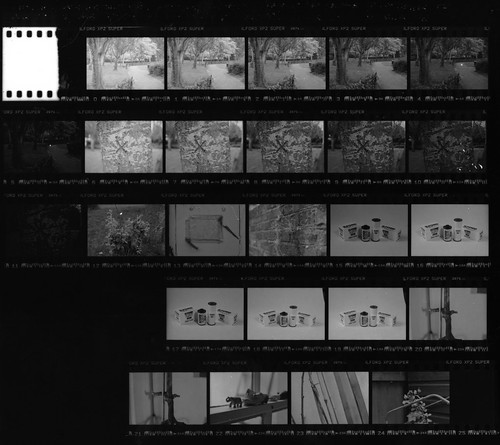
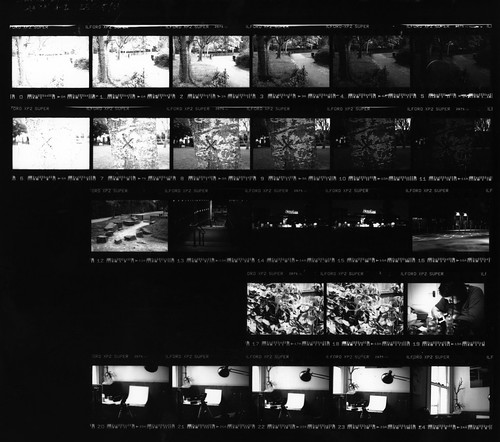
For a first test with Kentmere Pan 400, as with other films, I shot a range of exposures for latitude, then developed the film as for box speed. On the contact sheet below, the first and second rows are rated, from left to right, 100/200/400/800/1600/3200; the third row is at box speed. This film was developed in R09 One Shot diluted 1+25 for 6m45s at 21ºC.

Kentmere Pan 400 latitude test
My immediate impressions, which the contact sheet displays to some degree, is that Kentmere Pan 400 has better latitude than Ilford Pan 400, possibly with lower inherent contrast - to me, the two latitude tests certainly don't look the same. Although there would be some variability in the tests, both were shot with the same Canon A-1, of similar subjects, and developed in R09 at 1+25; the Kentmere Pan 400 was developed at a slightly higher temperature, as this was done on a warm day, which would be more likely to increase contrast, which must have a bearing on latitude.

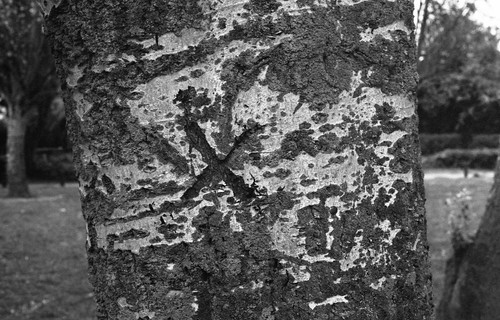
Kentmere Pan 400 rated 100, i.e. two stops overexposed
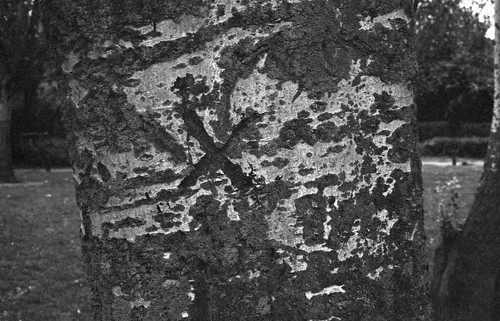
Kentmere Pan 400 rated 1600, i.e. two stops underexposed
At two stops overexposed, some tonal compression was evident but possibly acceptable; two stops underexposed also scanned well enough. Rated 3200, three stops under, shadow detail was clearly being lost to a greater degree at this point. This latitude test gave me some parameters for push processing; the current data sheet for the film only lists times for 400 and 800 (and 320 for Perceptol). The Massive Dev Chart has very few times listed for Kentmere 400 at 1600 - and none with developers I habitually use. Previously, when rating Kentmere 400 at 1600, I'd used stand development with R09 at a dilution of 1+150 for 3 hours, which had been successful enough.

Kentmere 400 rated 1600, stand developed in R09 1+150 for 3 hours
Obviously, three-hour stand development isn't always ideal. For this post, I used the Massive Dev Chart formulation for pushing two stops: multiply the given time at box speed by a factor of two-and-a-half. In Ilfotec LC29 at a dilution of 1+19, this gave a result of 18 minutes at 20ºC - long, but not too long (a shorter result would have been achieved at a dilution of 1+9 of course). The results demonstrated that the film was easily capable of a two-stop push - which the latitude test appeared to show would be the case.

Kentmere Pan 400 rated 1600, developed in Ilfotec LC29 1+19, 18m at 20ºC
It was logical to test the film with a three-stop push, rating it at 3200 to shoot - as with rating it at 1600, without any development times listed for this, I again used the Massive Dev Chart push-processing factors, which give four-and-a-half times for three stops. As the timings were in danger of getting rather long, I used Ilfotec LC29 at a dilution of 1+9, and a time of 19m30s at 20ºC, only later realising that my multiplication had been a little off, and it should have been 20m15s; I doubt an extra 45 seconds would have made much difference to the end result. The negatives showed a marked difference from those rated 1600 - with one further stop, in many of the frames, the shadow detail simply wasn't there any more. This was something that the latitude test bears out: at 3200, there isn't sufficient shadow detail to overdevelop. With scenes such as the one below, overexposure and underdevelopment would help to counteract the inherent contrast present in most urban night scenes; of course, it would not then be possible to take the shot handheld, as I did here. The second image below, taken in daylight, provides a better range of tones, but is still high in contrast with little shadow detail (mostly obscured by the choice of subject matter: the busy frame makes this less noticeable).

Kentmere Pan 400, rated 3200, developed in Ilfotec LC29 1+9, 9m30s at 20ºC
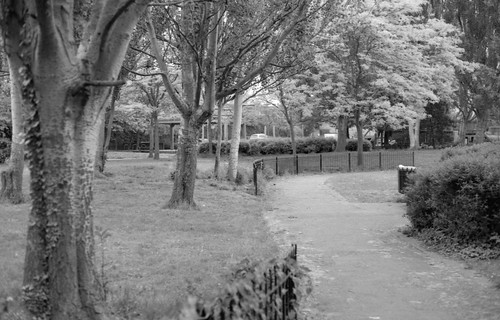
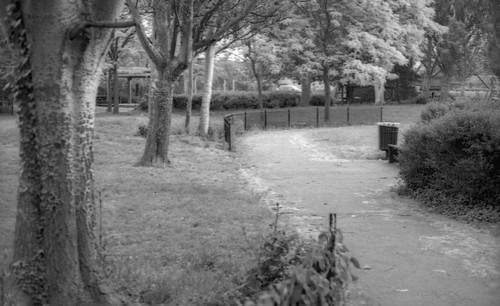
As I was following the same set of parameters as my post for Ilford Pan 400, I did also shoot some Kentmere Pan 400 at 200, as I had done with the Ilford Pan film, although I would very rarely pull film one stop (the one difference with this particular test was that I'd shot the Ilford Pan 400 with a Kiev-4 and the Kentmere Pan 400 with the Canon A-1 again). Here there were development times on the Massive Dev Chart which I did follow: 8 minutes in Ilfotec LC29 at a dilution of 1+19; the effect of pull-processing does appear to show a lessening of contrast in the frames. In the image below, with the near tree and foliage in shadow, and brighter highlights beyond, pulling the negative appears to have given the image more luminosity - although much of this might be through use of a yellow filter.

Kentmere Pan 400 rated 200, developed in Ilfotec LC29, 1+19, 8m at 20ºC
As a general comparison with Ilford Pan 400, despite looking as though it has better latitude, Kentmere Pan 400 does not appear to push quite so well when rated at higher speeds, although the subjects shot with both films on each post aren't strictly comparable. I would however, broadly echo my conclusions on Ilford Pan 400 on my post about that film: there's nothing about Kentmere Pan 400 which is distinctively characteristic to distinguish it from other similar films at the same speed and price range; at the same time it's a perfectly good, competitively priced, all-round 35mm black and white film with a certain flexibility in exposure and development.

Kentmere Pan 400 rated 200, developed in Ilfotec LC29, 1+19, 8m at 20ºC
Kentmere Pan 400 at box speed, developed in R09 One Shot
Kentmere Pan 400 at 1600, developed in Ilfotec LC29 1+19
Kentmere 400 rated 1600, stand developed in R09 1+150 for 3 hours
Kentmere Pan 400, rated 3200, developed in Ilfotec LC29 1+9, 9m30s at 20ºC

Thursday, 27 September 2018

Ilford XP2 Super - Part One

Ilford XP2 Super, shot on XP2 Super, 35mm and medium format 
WHY XP2 SUPER IS DIFFERENT 
XP2 SUPER is a chromogenic film. This means that the dyes which make up the image are formed during development rather than being present in the film or added later. The extremely wide exposure latitude of XP2 SUPER is the result of the unique relationship between exposure and grain in chromogenic films. The best balance of sharpness and grain is obtained when XP2 SUPER is exposed at EI 400/27. However, down-rated or overexposed XP2 SUPER negatives have finer grain, the opposite of that expected and obtained with conventional films. Up-rated or underexposed XP2 SUPER negatives have only a slight loss in quality. Furthermore, standard C41 processing is recommended for the whole of the exposure range.
Ilford XP2 Super data sheet
At some point over the last four decades, all the big four film manufacturers marketed chromogenic black and white films: Agfapan Vario XL was the first such film, followed by Ilford with XP1; Kodak produced BW400CN and Fuji had Neopan 400CN (although this film itself is made in Europe with  Ilford being involved in its manufacture). The reasons that chromogenic black and white films were developed surround the simple logistics of standardised C41 negative processing: once this infrastructure was established - the typical high street one hour photo - the rationale for a black and white film which could be processed in this way was clear. Chromogenic films had an appeal to two distinct types of customers: for the amateur, wanting to use black and white but unwilling to either pay the premium for black and white processing or endure the wait while the film to sent to a specialist lab; for professionals, the film could be developed alongside colour negative film and lab prints from chromogenic film could be treated as proofs for later bespoke printing by hand in a darkroom. In some respects, XP2 Super's distinct features - C41 processing and wide latitude - make it an ideal choice for someone wanting to shoot black and white film for the first time. Ilford XP1 400 was announced at Photokina in 1980, a year after Agfapan Vario XL, and a year after Ilford's centenary. The first version had its own chemistry as well as being able to be processed in standard C41 chemicals. XP2 succeeded XP1 in 1991; the film was "updated" with no name change in 1996; and it reached the current iteration of Ilford XP2 Super twenty years ago this year in 1998. The Super suffix for XP2 would appear to be the equivalent of the 'Plus' versions of HP5 and FP4.

Although of any particular film stock HP5 Plus is almost certainly the film I've used more than any other, Ilford XP2 Super may be the one film I used most intensely, for a number of years when I didn't have access to a darkroom and did not develop at home: I used it as my standard black and white film, mostly through the early 2000s. Since returning to developing negatives myself, I've not used XP2 very much, but, at the end of last year, I bought a brick of 10 24-exposure rolls of 35mm XP2 Super at a clearance price due to being out-dated. The films were dated September 2016 - and as it was then only a year out of date, I've made no adjustments in exposure to compensate for age - and these films were priced at £1.50 per roll, and even though this was closer to £2 each with postage, this was still very economical, and I had no doubt that the age of the film would be as close as negligible in terms of its results.

Ilford XP2 Super latitude test contact sheet (C41 process)
One of Ilford's claims for XP2 Super is that it has exceptional latitude and can be exposed at a range of exposure indexes with no adjustment in processing times:
XP2 SUPER film has a speed rating of ISO 400/27° (400ASA, 27DIN, EI 400/27) to daylight. [...] Although rated at ISO 400/27°, XP2 SUPER can be exposed over the range EI 50/18–800/30. When higher speed is needed, XP2 SUPER can be rated at up to EI 800/30. For finer grain, when speed is less important, rate the film at EI 200/24, although for finest grain it can be rated as low as EI 50/18 if required.
Although I had used XP2 Super a great deal in the past, I hadn't made any kind of systematic tests at the time. Like other films written about on this blog, for this post, I wanted to make some tests as to the film's capabilities, and I began with a latitude test. I shot a roll of XP2 Super with two sequences of six frames rated at exposure indexes rated 50/100/200/400/800/1600. The rest of the roll was rated at 200 and this was processed professionally with C41 development. The results of the tests on this post were scanned; a more comprehensive set of tests would include darkroom printing, but the scanned negatives should provide some relatively comparable results.

Ilford XP2 Super rated EI 50
The suggestion from Ilford's data sheet with regards to the relationship of density to fineness of grain does appear to hold true: I've never had a reason to rate XP2 as low as EI 50 before, but the frames so rated have a smoothness to them that might seem surprising for a 400 ISO film. This is apparently due to the way that the dye clouds which replace the silver in processing overlap. In practice, however XP2 Super is rated, this does have the effect that the grain is finer in overexposed areas, while the grain is more pronounced in the shadow areas, the opposite effect to the case with traditional black and white negative film, where denser areas provide more visible grain. One aspect of this unique peculiarity makes XP2 Super particularly good at rendering skies in landscapes with much smoother tones than one might achieve with a similar speed conventional black and white film, for example. However, when rated at an exposure index of 50 or 100 it appears there is some compression of the tonal range; the date sheet has a curve with a very shallow shoulder. In addition, it would appear that rating the film for 'finest grain' is at the expense of sharpness; this may seem counter-intuitive, but, on consideration, a denser negative would logically be less sharp than a thinner one, though how great a difference one might perceive in a print or scan is not something I've tested for here.

Ilford XP2 Super rated EI 800
At the other end of the exposure scale, grain appears to become apparent in the mid-tones through to the shadows when rated at EI 800, but squeezing an extra stop from the film in low light conditions without any change to processing - and on the same roll as frames exposed at different ratings - is potentially very useful. Ilford do not recommend push processing with Ilford XP2 Super, and I have not test the feasibility of this with C41 processing. However the frames rated EI 1600 displayed quite a pronounced grain, which my tests, looks quite visually unappealing - unlike some traditional black and white films, where the visual texture of the film grain adds something to the image, rather than detracts.

Ilford XP2 Super rated EI 1600
The remainder of this test roll I shot at EI 200, and this became my standard practice when available light allowed while shooting a number of rolls of XP2 Super subsequent to making the latitude test.

Ilford XP2 Super, rated EI 200
One aspect of the film that I was keen to test for this post was the difference between processing XP2 Super as intended by C41, and compare this to XP2 Super developed using traditional black and white chemicals. For this second latitude test, I used the same camera (a Canon A-1) and the same ratings of 50/100/200/400/800/1600 for two successive series of six shots. Again, the remainder of the roll was shot at a rating of EI 200. Ilford does not recommend using black and white chemicals to process XP2, but, like any film, it's based on a silver negative: as with a colour negative film, the developed silver is then bleached and replaced by dyes; unlike a colour negative, of course, there's only one layer. Therefore, there's no reason that it cannot be developed as a black and white negative, but it is not intended for this and so it may not necessarily give the best results - which was something I wanted to test (and unless otherwise stated all the images on this post were from C41 processed negatives). I have previously used stand development with Rodinal with XP2, a good all-round method for developing almost any film, but there are listings on the Massive Dev Chart for a standard small tank development routine with intermittent agitation. The listing for Rodinal is given as 18 minutes at 20ºC at a dilution of 1+25.

Ilford XP2 Super latitude test contact sheet (developed in R09)
In the event, for the test roll in black and white chemicals, I developed the film for two minutes longer at a degree cooler in temperature. With the two latitude tests, I printed contact sheets on variable contrast paper without a contrast filter, with the result that these would be the equivalent of using grade 2 paper. The difference between the use of black and white chemicals and C41 processing was immediately clear: with black and white chemicals the film's contrast is notably greater, and its latitude appears less. In both tests, the frames rated 1600, two stops underexposed, shadow detail appears to dramatically drop off, but this was even more marked with the film developed in R09. One final note on the differences, interestingly, is that there appears to be less base fog with black and white chemicals, which may increase the overall contrast. Further, I did not try push-processing in black and white chemicals (as with C41 development) due in part to the already long development times.

Ilford XP2 Super, rated EI 50, developed with R09
Scanning the negatives developed in RO9, one issue I had was that the density in the highlight areas resulted in noise, which, while distinct from the grain itself, made it difficult to assess the appearance of grain when developed in traditional black and white chemicals. It was immediately obvious that the particular characteristics of XP2 Super are as a direct result of being developed by the C41 process: in black and white chemicals the results are fairly unremarkable. However, some of the images that were rated at EI 200 rather than box speed still had a relatively smooth, fine-grained appearance, and possibly, if not developing XP2 Super as colour negative, this procedure might give the best results.

Ilford XP2 Super, rated EI 200, developed with R09
Other black and white developers will also work with XP2 Super: the Massive Dev Chart has a limited list. One developer that I use frequently not on the list is Ilfotec LC29; I've only used this for one roll of Ilford XP2 (not Super, it had a 'develop before' date of Nov 1996) and made a calculated guess of a dilution of 1+29 with a time of 14 minutes at 18ºC. This worked well enough but I would want to make more tests with Ilfotec LC29 before recommending it with these times and dilutions.

Voigtländer Avus with Ilford XP2 (6x9 medium format) developed in Ilfotec LC29
In terms of XP2 Super's specific characteristics with C41 processing, its latitude can sometimes produce images which appear 'flat' with a fairly straight print or scan, that is without increasing the contrast - or other manipulation such as dodging and burning. The contact sheet of the C41-processed  latitude test film above shows this, especially when compared to the black and white processed film. This latitude is a benefit when shooting scenes with a wide range subject brightness range: it's especially good for maintaining detail in skies for example. The image below has fairly good modelling in the clouds, which, although obscuring the sun, were brightly lit against the overcast landscape of burnt grass, and, with a small amount of digital burning in (only useful if the detail is there to begin with), has the sort of effect one might perhaps achieve with a light yellow filter. In low-light scenes like night time urban settings, which often have isolated highlights and deep shadow areas, XP2 Super does seem to be quite good at managing these wide variations in illumination (it does suffer reciprocity law failure, but the night shots on this post were taken handheld, without long exposures; also, I haven't made accurate comparisons between C41 and R09 processing for such subjects).

Voigtländer Bessa RF (6x9 medium format) with Ilford XP2 Super
Zenit 11 with Ilford XP2 Super
When Kodak announced that BW400CN was to be discontinued in 2014, Ilford took the opportunity to produce a comparison sheet. One of the obvious advantages of Ilford's chromogenic film over Kodak's always was that it was available in medium format as well as 35mm (it is also now available in single use cameras; XP2 was once available in sheet film but this was one format I have neither seen or used). The other notable points of comparison are XP2 Super's wide exposure range: the sheet gives BW400CN as "400 – Not specified in technical data". In addition, BW400CN was coated onto a standard colour negative orange base, which one might imagine to be less than ideal for printing on black and white variable contrast paper, as well as for scanning. Ilford's film has a pink base, which varies in intensity depending on wash times - some of my negatives look almost clear or at least a light grey without much discernible colour, while others are quite pink. Ilford XP2 Super has a fairly distinct place in the film market now, a niche which it shares with Fuji Neopan 400CN (which, although not confirmed by Ilford, is, according to some, the same emulsion). One would hope that its distinct characteristics should mean that XP2 Super has a place in Ilford's range of films for the foreseeable future.

Belomo Agat 18K with Ilford XP2 Super
Praktica nova I with Ilford XP2 Super developed in R09 One Shot
Lomo LCA with Ilford XP2 Super
Zenit 11 with Ilford XP2 Super
Kiev-4 with Ilford XP2 Super
Kiev-4 with Ilford XP2 Super developed in Fomadon R09
Canon A-1 with Ilford XP2 Super (scan from lab print)
Canon A-1 with Ilford XP2 Super
Canon A-1 with Ilford XP2 Super developed in Fomadon R09
Wallace Heaton Zodel camera (rollfilm back with 6x4.5 mask), Ilford XP2 Super
Voigtländer Bessa RF (6x9 medium format) with Ilford XP2 Super
Ilford XP2 Super - part two

Sources/further reading
Ilford XP2 Super data sheet
XP2 Super/BW400CN comparison sheet
In Praise of XP2 Super - Richard Pickup
Ilford XP2 - an under-appreciated film - The Web Darkroom
How to shoot Ilford XP2 Super - The Online Photographer
Ilford XP2 Super in Black & White Chemistry - Christopher Moss

Monday, 10 July 2017

Ferrania P30 Alpha

Film Ferrania P30 Alpha
Earlier this year, Film Ferrania made a surprise announcement: their first commercially available product was to be a black and white negative film, Ferrania P30 Alpha, based on a discontinued motion picture emulsion. The announcement generated a great deal of excitement among film photographers online, more perhaps than other new film stocks that have appeared in recent years, such as Adox Silvermax or Foma Retropan 320 (there have been quite a number of 'new' films, but many of which are essentially the same: namely the 100 and 400 speed Kentmere/Rollei RPX/Agfaphoto APX/Fotoimpex CHM films). This excitement no doubt reflects the enormity of Film Ferrania's project of restarting production of colour transparency film at the original Ferrania factory in Italy, and the support and goodwill that initially accompanied the Kickstarter project of three years ago, and following its success, the numerous problems and delays that followed. The P30 film was initially made to test coating machinery that would be used to manufacture the colour transparency film that was Film Ferrania's original intention; given the delays to this, that a usable film could now be produced, after all the difficulties encountered in getting production running once more, no doubt it has made commercial sense to release this onto the market, albeit in limited amounts, in 35mm only, against what seems to have been a huge demand. I didn't support Ferrania's original Kickstarter campaign, in part due to rarely shooting colour film, but when the first product from Ferrania was announced to be a black and white negative film, I was keen to try it. My order was the from the second production batch, arriving from Germany, not Italy, from Mahn, suggesting that Mahn is handling Ferrania's logistics at this stage.


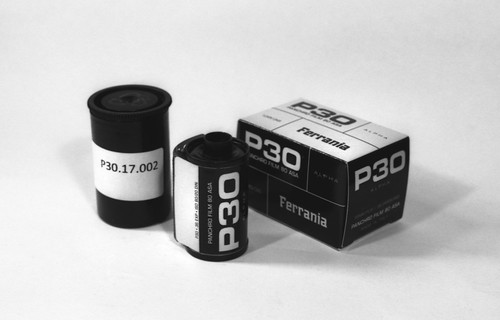
The cartons have no information inside; the plastic tubs have a sticker with the year and production batch. The film canisters are not DX-coded, with labels stuck on to them, rather than designs directly printed onto the metal. Peeling the labels off out of curiosity, the canister underneath was that of a C41 film, Centuria HD 200. Another observation about the packaging is that the film is described as 80 ASA, not ISO, although this makes no practical difference.


As with using other films for the first time, my approach was to test the film for its latitude. For most of the tests in this post, I divided the film in half, which I did for the first test, shot with a Canon FTb-N. The first two rows of the contact sheet below were successively rated at exposure indexes of 20, 40, 80, 160, 320, 640, reading left to right. The test was shot early on a day with bright sunlight; from examples I'd already seen online, I knew it was going to be contrasty.
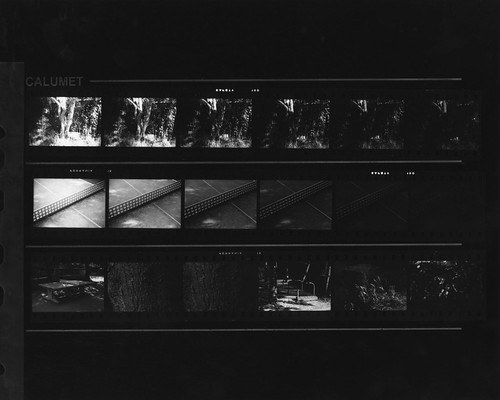
Ferrania P30 Alpha latitude test contact sheet
On the online 'Best Practices' sheet, the only listed developer I use regularly is Rodinal. At the time that I developed my first roll, the developing time given with a dilution of 1+50 was 8 minutes (all rolls of Ferrania P30 Alpha in this post were developed by hand in a small tank with intermittent agitation). The results when I pulled the first roll out of the wash did indeed show negatives of high contrast with very little shadow detail; the results appeared to demonstrate there was little latitude to the film: when overexposed by two stops, the tonal separation between the highlights and midtones made scanning difficult, while the underexposed frames were extremely thin and not worth scanning.
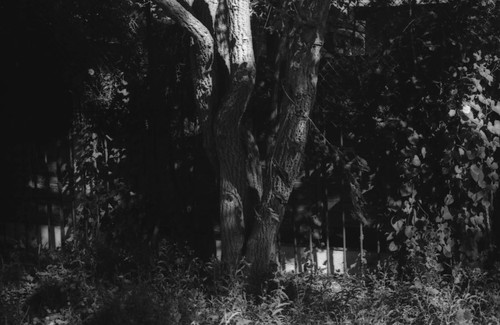
Ferrania P30 Alpha shot at 80, developed in R09 One Shot, 1+50, 8m at 20º
In the image above, there is very little shadow detail; the lower contrast subject below was better, but the first roll of film was initially unsatisfactory.
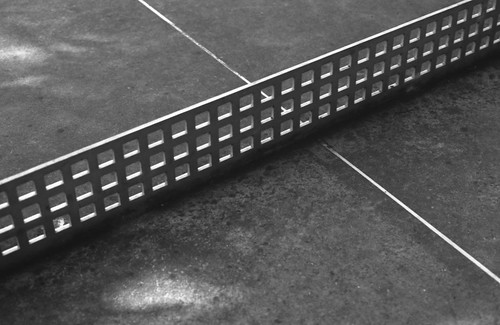
Ferrania P30 Alpha shot at 80, developed in R09 One Shot, 1+50, 8m at 20º
I decided to make a second latitude test, using the same ratings (and camera), this time choosing stand development with Ilfotec LC29, diluted 1+100 for one hour. Ilfotec LC29 was not listed on the 'Best Practices', sheet but it's a developer I use regularly, and seems to give equally good results for stand development as compared to RO9 (the developer does appear to exhaust more rapidly at higher dilutions however).
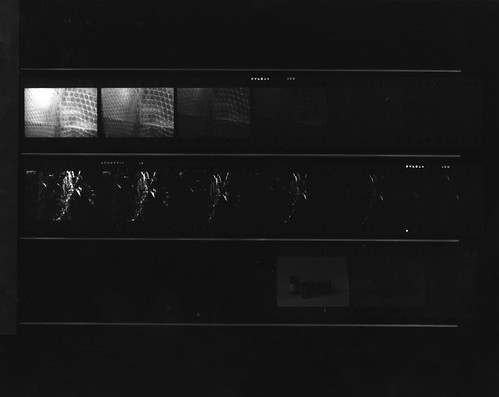
Ferrania P30 Alpha stand development latitude test contact sheet
From this test, the results when rated at 20 and 40 were clearly better than at 80, but the higher-contrast subjects again had no shadow detail at all, appearing to show a very sharp falling off. I had hoped that stand development in highly dilute developer might reduce the contrast of the negatives, but the results from this second test were less successful than the first roll. After the results from the first two tests, I was however able to appreciate that the film's grain is extremely fine (in some dense areas of the negatives, there is scanner noise visible rather than grain itself). In addition, the base has a light grey tint, but is very clear, and the clearness of the film base did show up dust (and a few scratches and my own carelessness in washing) very well in scanning, with the result that I spent a fair bit of time in digital spotting. In comparison to other emulsions, P30 Alpha was quite reminiscent of Rollei RPX 25, which has a number of comparable considerations in exposure and development.
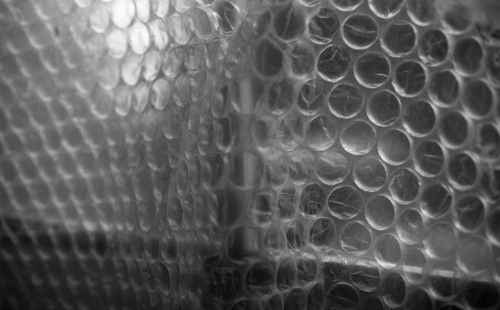
Ferrania P30 Alpha, rated 20, stand developed in Ilfotec LC29
I did wonder whether there might have been problems with metering, having shot both tests with the same camera, and both showing a complete lack of detail in the shadow areas in negatives where the subject contained a wide range of tones. Closer-toned subjects did have better results, but were notably thin when rated at box speed, being better at an exposure index of 40 or 20.

After shooting a third roll in a different camera (a Canon A-1, which I generally trust on metering - and this camera had also just received a new battery), and rating the film at 50, before developing, I checked the recommended time for R09 online, and found that the time given for a dilution of 1+50 had increased to 14 minutes. Evidently one issue with using a new emulsion is the lack of information about developing regimes, and with the release of Ferrania P30 in its Alpha phase, the manufacturers are relying on the film being tested by its purchasers. I first downloaded the 'Best Practices' sheet (as version 1.1) on the 12th of last month; the recommended time with R09 had changed two weeks later, the 'Best Practices' sheet at that point being version 1.3 (the version at the time of writing is now 1.4). The metering recommendation for the new time was still 80 ISO; however, with my experiences so far, I rated the film at 50 instead.
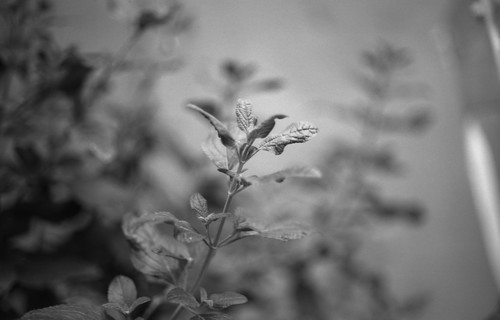
Ferrania P30 Alpha, rated 50, developed in R09 1+50, 14m at 20ºC
The negatives when developed at 14 minutes revealed a fuller range of tones, the image above being one of the best at the new time; however, with this roll, I shot a number images with a large amount of sky. I used a yellow filter to attempt to retain detail in the sky, but the balance between the highlights and shadow areas, made the negatives difficult to scan.
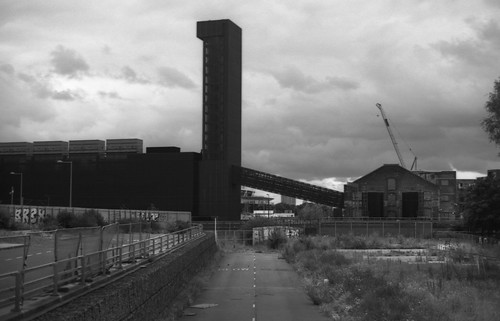
Ferrania P30 Alpha, rated 50, developed in R09 1+50, 14m at 20ºC
In addition to the new time for R09 One Shot, there was also a new developer listed, Ilfotec DD-X. As I happened to have some DD-X, it seemed worth trying this as well. Ilford's standard dilution for DD-X is 1+4; the 'Best Practices' sheet gives a dilution of 1+5 (perhaps to give slightly lower contrast), and to rate the film at 50. I shot some P30 Alpha with the Agat 18K, and developed as on the 'best practices' sheet. This roll was shot mostly in overcast conditions, with the lower contrast in the lighting giving a good, rounded tonal range. Incidentally, the film's fine grain was a good match for the smaller negative format of the 35mm half-frame, while shooting at an exposure index of 50 meant using wide apertures with the Agat 18K, sympathetic to the subject below.
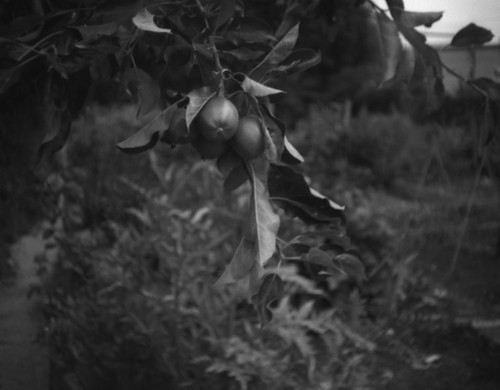
Ferrania P30 Alpha, Agat 18K (half frame), developed in Ilfotec DD-X
Returning to using R09, feeling that the contrast in the negatives could be reduced further, I decided to try a higher dilution - but not with stand development. As with the best results that I had with Rollei RPX 25, I chose a dilution of 1+120. Logically, the time needed to be extended from the 14 minutes at 1+50 in the previous R09 test; in addition, following the old adage to 'expose for the shadows and develop for highlights', I rated the film at 40: the high developer dilution should take care of the highlights, and shooting at a lower exposure index should ensure better shadow detail. The negatives from this roll appeared to demonstrate that this approach was an appropriate one.
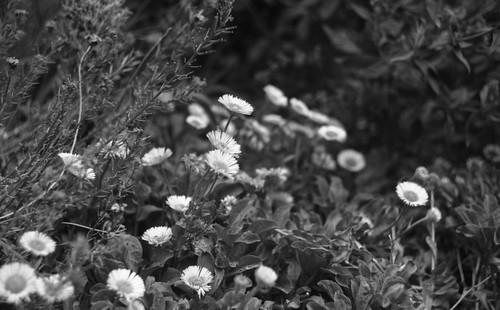
Ferrania P30 Alpha, rated 40, developed in R09 1+120 for 18m at 20ºC
I did bracket some shots, rating a few alternate frames at 80 for comparison. As the pair of images below show, the results at 40 provide much more shadow detail, while the higher dilution of developer appears to have prevented the highlights from blocking too much, making the negatives much easier to scan. The conditions that many of the photographs were shot in continued to be
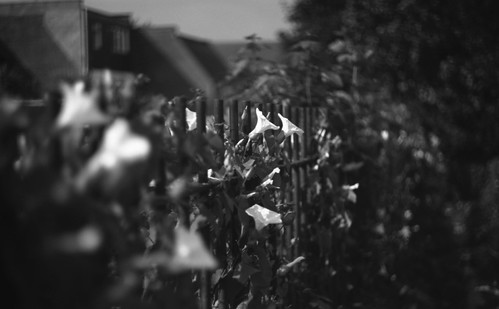
Ferrania P30 Alpha, rated 40, developed in R09 1+120 for 18m at 20ºC
Ferrania P30 Alpha, rated 80, developed in R09 1+120 for 18m at 20ºC
For this test with a higher dilution, I shot the film with a Kiev-4. At the end of the film, in attempting to advance one more frame, the film tore (something I have occasionally done with the Kiev-4). The 'Best Practices sheet' does state: "No Motorized Cameras Please: We have seen some motorized cameras break the film, especially less-expensive point-and-shoot cameras from the 80s and 90s. We really think it’s best to use a fully manual, non-motorized camera".

Having found what seemed to be a good exposure and developer combination with R09, I also was concerned to find an exposure index and developing times for Ilfotec LC29. This is the other main film developer I use, in conjunction with R09 One Shot, and as well as using it for stand development, it seemed that it might be worth finding a time for standard development with agitation.
I shot some film with a Kodak Retina IIa, choosing to rate the film at 80 once more. For the choice of dilution with Ilfotec LC29, I used 1+29, which is considered a 'one shot' dilution (rather than the developers other dilutions of 1+9 or 1+19). For a developing time, I picked a rather speculative estimate, based in part on making comparisons to DD-X, taking 9 minutes, at a slightly lower temperature of 19ºC. These negatives were dense, but did appear to have a good tonal range.
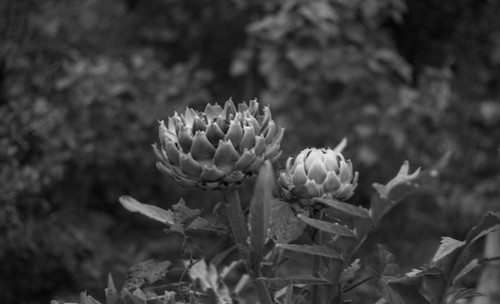
Ferrania P30 Alpha, rated 80, developed in Ilfotec LC29 1+29 for 9m at 20ºC
I made a further test, reducing the developing time to 7 minutes, at 20ºC, keeping the same exposure index of 80.
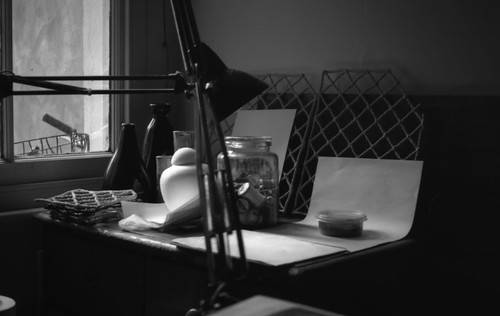
Ferrania P30 Alpha, rated 80, developed in Ilfotec LC29 1+29 for 7m at 20ºC
The results with Ilfotec LC29 might have been better with a little more exposure, but as I had just one roll of film left, I wanted some confirmation of what I considered the best results so far, developing the film with R09 One Shot at 1+120. Given that the negatives appeared a little thin, I decided to extended the development time by a couple of minutes. As I had done perviously, I divided the roll of film, shooting half in the Canon A-1, rated 50, and the other half in the Kiev-4, rating this at 40. Both films were developed together in R09 One Shot at 1+120 for 20 minutes at 20ºC. The first shot below is with the Kiev-4, the second with the Canon A-1.
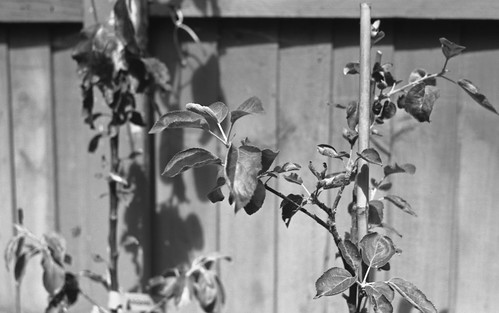
Ferrania P30 Alpha, rated 40, developed in R09 One Shot 1+120 for 20m at 20ºC
Ferrania P30 Alpha, rated 50, developed in R09 One Shot 1+120 for 20m at 20ºC
Again, I had a number of shots in which the sky predominated, with the continuing bright and fine weather giving high contrast lighting conditions. These were difficult to scan and keep detail in both highlights and shadows. Taking advantage of the Canon A-1's capability to double-expose, I also tried to use the technique of 'pre-exposure' on some frames. Essentially, this means exposing the film to a minimum threshold of density, which should provide higher values in the shadow areas in the subsequent exposure while leaving the highlight area unaffected. In practice I used a white door, shooting the pre-exposed frame around three stops below the meter's recommendation (a grey card may have been better). The results are not clearly different; the pre-exposure levels might have been higher, although the danger is that this might appear as a grey veil, the same as fog.
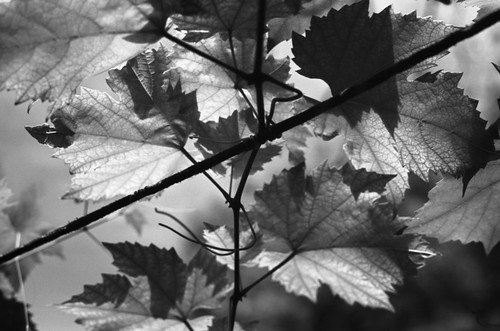
Ferrania P30 Alpha, rated 50, developed in R09 One Shot 1+120 for 20m at 20ºC
Ferrania P30 Alpha, rated 50, with pre-exposure, R09 One Shot 1+120 for 20m at 20ºC
Having used Film Ferrania P30 Alpha quite extensively through all the tests that I made, I did begin to get a feel for how the film behaves and how I would tailor exposure and development to suit my personal preferences. The 'Best Practice' sheet does state that "The cinema heritage of P30® ALPHA means that the film is rather precise in the way it “wants” to be shot and processed. As such, we firmly recommend shooting this film at the box speed of 80 ISO." - in all the tests I made, I found that this was rarely the case. As a qualification of this conclusion, this does of course very much depend on the 'look' one wants to achieve with a particular emulsion, and how successfully this can be done with its inherent characteristics. I generally prefer to start with as long a tonal range as possible in my negatives (within reason), which can then be affected in scanning or printing (all the images on this post with the exception of the contact sheets were scanned from the negatives) - high contrast in a negative itself can be limiting in this regard. With none of the developers I currently use would I rate the film at 80 - with the exception perhaps when using Ilfotec LC29, although I don't feel that I quite got the combination of exposure and development right there. To my mind, P30 Alpha does suit certain subjects over others: the difficulty in retaining detail in bright skies while maintaining good tonal separation in landscape shots was occasionally frustrating; still-life subjects, dramatic, abstract geometrical compositions really benefit, as does any subject with fine texture where the tight grain of the film is beneficial. Hopefully, Film Ferrania will gone on to achieve their original ambition of making colour transparency film in all formats promised; and hopefully there will be a P30 Beta, and then perhaps, in a wider variety of formats other than just 35mm, a large scale production version of the film.
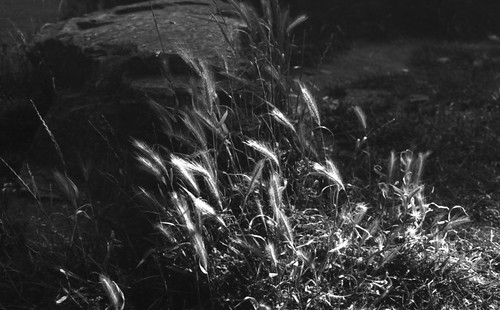
Ferrania P30 Alpha rated 80, developed in R09 One Shot, 1+50, 8m at 20ºC

Ferrania P30 Alpha rated 50, developed in R09 One Shot, 1+50, 14m at 20ºC
Ferrania P30 Alpha, rated 50, developed in Ilfotec DD-X 1+5, 7m30s at 20ºC
Ferrania P30 Alpha, rated 80, developed in Ilfotec LC29 1+29 for 9m at 19ºC
Ferrania P30 Alpha, rated 80, developed in Ilfotec LC29 1+29 for 7m at 20ºC
Ferrania P30 Alpha, rated 40, developed in R09 One Shot 1+120 for 18m at 20ºC
Ferrania P30 Alpha, rated 50, with pre-exposure, R09 One Shot 1+120 for 20m at 20ºC
Ferrania P30 Alpha, rated 40, developed in R09 One Shot 1+120 for 20m at 20ºC