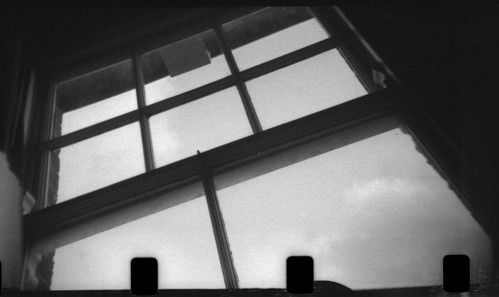
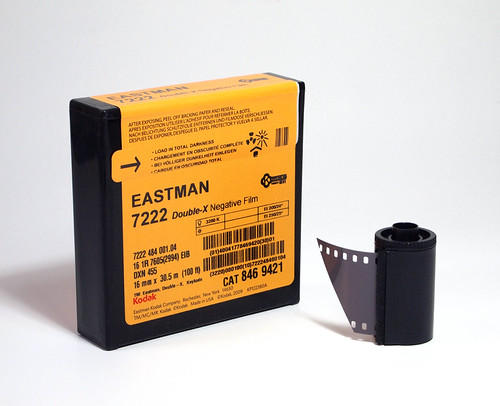
 |
| Eastman Double-X film in 16mm (7222) and 35mm (5222) |
With the discontinuation of
Plus-X,
Eastman Double-X is Eastman Kodak's last surviving black and white motion picture film in 35mm (Tri-X Reversal is available in 16mm and super-8 cartridges). The film is often referred to online in full as
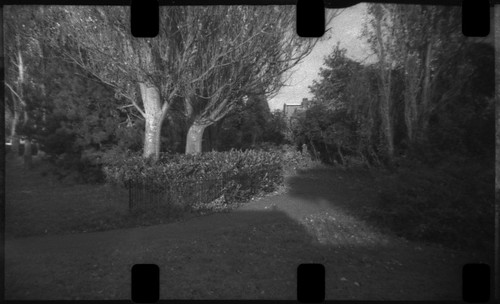
Eastman Double-X 5222, but this explicitly refers to the 35mm film stock; I have also been using the 16mm version in various subminiature cameras, which is given the 7222 suffix: this post is titled
Eastman Double-X to include both formats. As mentioned under my post for
Ilford Mark V, motion picture negative film has a different perforation shape to standard 35mm camera film, but this is not significant enough to cause any problems when using it for still photography. Double-X's speed is half way between
Plus-X at 125 ISO and Tri-X, originally 320, but rated 400 ISO in all but sheet film now. Kodak also made a fast 4-X film which was 500 ISO, although this film was discontinued around 1990.
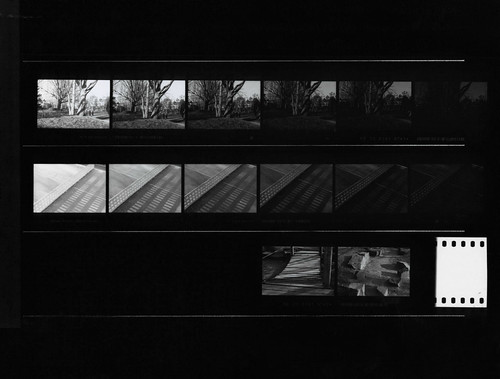 |
| Eastman Double-X latitude test |
Double-X appears to have quite a following among still photographers posting their images online, with numerous discussions about different developing practices. As a motion picture film, Kodak's recommendations are naturally limited: an exposure index at 250 for daylight and 200 for tungsten light; the recommended developer is D96. However, the Massive Dev Chart currently has a fairly wide range of listed
developers, dilutions and times (the listings do give the 5222 suffix, but the 16mm film has the same emulsion, and the information should be equally applicable). Given the relatively limited availability of
new 16mm film stocks, I had already bought some 16mm Double-X for use in my subminiature cameras, but I wanted to try the film in 35mm. There are a number of sources online which sell Double-X: from Kodak as a motion picture stock, it's provided in 400ft or 1000ft lengths of 35mm; but there are resellers which either cut and package shorter lengths (I bought a 100ft roll), and a few that provide Double-X in standard 35mm canisters, such as the
Film Photography Project.
For an initial test with the 35mm film, I made a series of exposures to test Double-X for latitude, using my
Canon A-1. In the contact sheet above, I shot the top two rows at ratings of 64, 125, 250, 500, 1000, 2000 and developed the film in Ilfotec LC29 at a dilution of 1+29 for 8 minutes at 20ºC (the two shots on the end of the film were rated 250). Although the contact sheet above shows a steep drop off at the higher end of underexposure, in scanning the negatives I was able to pull out some detail, although at
two to
three stops under, there wasn't much shadow detail (it's instructive to compare the test above to that of
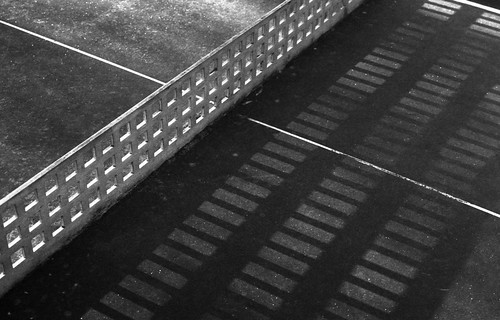
Adox Silvermax, which has excellent latitude). The exposures at 64 appear to have very little highlight detail in the contact sheet, but this was generally present and could be preserved in scanning, although the highlights in some of my tests do appear to block out easily. Notably, of the two subjects shot for the test, the second (an outdoor table-tennis net) had lower contrast, and the results were better.
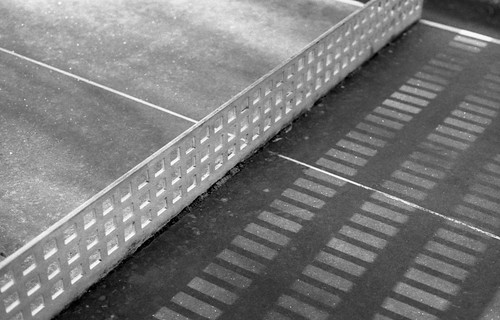 |
| Double-X at EI 64 (two stops overexposed) |
 |
| Double-X at EI 2000 (three stops underexposed) |
Double-X's recommendations for exposure, with different indexes for daylight and tungsten, most likely holds true for any normal panchromatic film (excepting
superpanchromatic films with extended red sensitivity like
Agfa Superpan 200); I imagine that this is made explicit due to is intended use as a motion picture negative stock. For most still photographers, the difference between an exposure index of 200 or 250 whether under tungsten or daylight would no doubt fall well within an acceptable range of negative densities. In some of the tests I shot I did occasionally change the rating to depend on the type of light I was shooting in, but generally I either exposed the whole roll at 200 or 250, apart from tests in push processing. For a more rigorous testing of Double-X, I could have shot the same film in both daylight and tungsten light and used both recommended exposure indexes to get an accurate comparison, but this did feel unnecessary. However, in terms of looking at the film's spectral response, I did shoot some frames with a yellow filter, which I generally use to aid definition in skies with black and white films, but, in the image below, this appeared to affect the rendering of the green foliage more than I might have expected. Again, more tests would have helped to determine how Double-X precisely translates colour into black and white, although the few shots taken with a yellow filter looked promising.
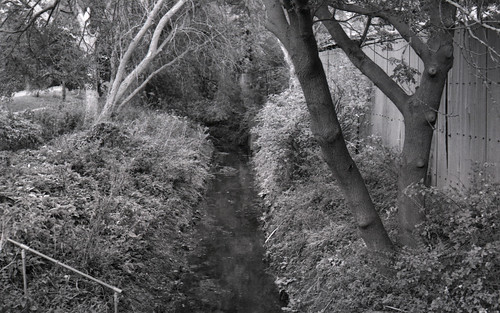 |
| Eastman Double-X, Canon A-1 with yellow filter |
The rationalisation of Kodak's black and white motion picture film around Double-X appears in part to be a demonstration of the film's versatility (or at least Kodak's faith in its versatility); in the field of colour, Kodak still has (essentially) a range of three different negatives sensitivities from 50 to 500. Although making direct comparisons between the use of Double-X as a motion picture negative stock and its use for still photography is perhaps problematic, there's many examples online of Double-X being pushed by a number of stops to counter differing lighting conditions (less common is pull-processing, although some times for ratings as low as 25 are listed on the Massive Dev Chart). Part of testing the film led me to attempt to push the film as far as 3200. Some of the examples of rating Double-X at 1600 or 3200 appear to be simply underexposed - with almost no shadow detail, the highlights and mid-tones essentially carry the image alone.
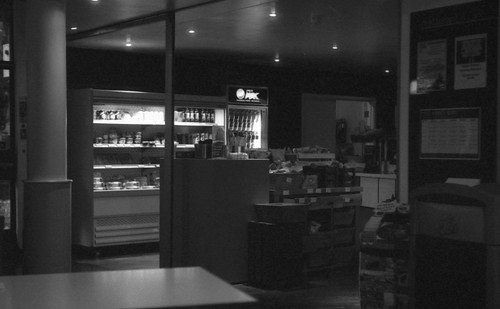 |
| Eastman Double-X rated 3200, Kiev-4, Ilfotec DD-X 1+4 |
Part of the problem in judging these results however is due to shooting the film in generally higher-contrast lighting situations, such as at night, and this complicates the results. My test roll shot at 3200 and developed in Ilfotec DD-X had few useable frames overall, with scanning able to pull out as much detail as possible from the shadow areas. The negatives would, I imagine, be tricky to print in the darkroom (when rating the film at 800 and 1600 the results were better, but not by a significant degree), but in general terms, Double-X does not seem an ideal film for pushing more than one stop. Other than contact prints, I have only made prints from Double-X in 16mm so far, largely because scanning from subminiature negatives doesn't quite provide enough clarity to the images. With the small size of these negatives, the film's grain is very pronounced and the difference between using R09 or Ilfotec LC29 as a developer also appears to be visible, with Ilfotec LC29 providing a little smoother look to the grain. In some of the results shot on 35mm, the grain appears quite pronounced for the speed of the film, compared to other 200 ISO films currently available. Over and above the inherent grain of any film, its appearance depends on a number of factors, but developer is perhaps the most important, as well as differences in scanning or printing.
Having used the film for around a year, testing it with a few different developers, shooting it at a good range of exposure indexes, as well as printing a few 16mm negatives, I still feel undecided about Double-X: some of the results feel quite mixed to me, and I don't think that the film is necessarily distinct enough to be sought out as a film for regular use. On reflection, in the course of writing up this post, I realise that I neglected to explore shooting the film
below its nominal speed and adjusting development accordingly, which may have modified how I feel about the film; having now shot all the 100ft roll of 35mm that I bought a year ago, I may try this in 16mm, but it wouldn't be a good comparison. Although Double-X has many fans, I can't help thinking that it is a shame for Kodak not to have kept
Plus-X as a motion picture stock, as I found this a much more sympathetic film to work with as a still photographer.
Edit 10/05/20 - see also: Eastman Double-X Part Two, in which I reappraise Double-X with D96 developer.
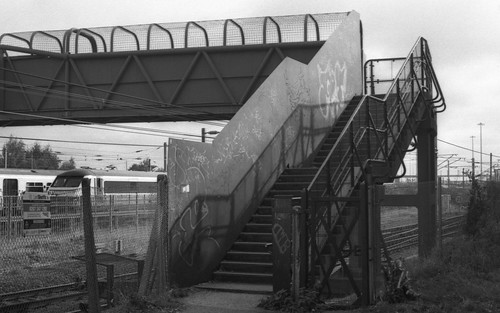 |
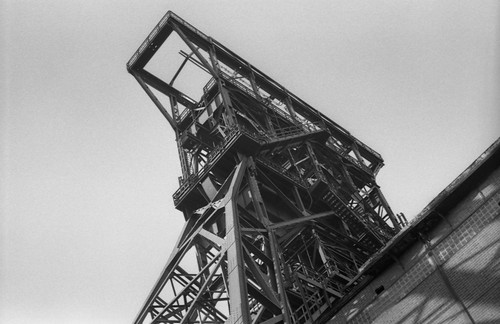
| Canon A-1 with Double-X. rated 200, Ilfotec LC29, 1+29 |
 |
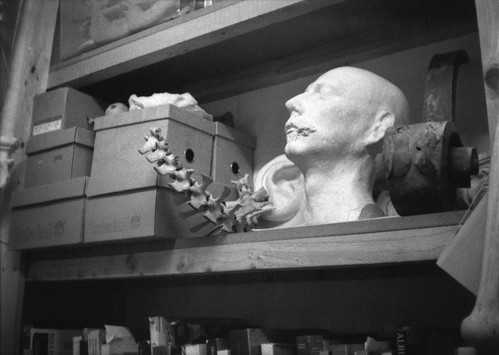
| Kodak Retina IIa with Double-X, rated 200, Ilfotec LC29, 1+29 |
 |
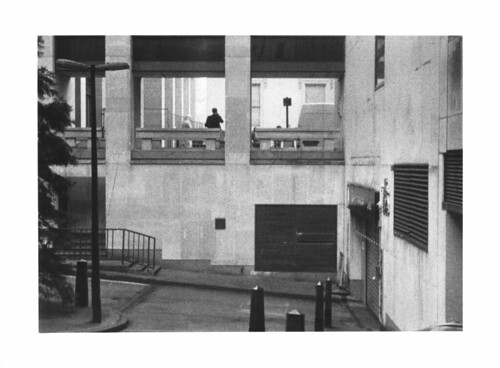
| Agat 18K (half frame) with Double-X, rated 200, Ilfotec LC29, 1+29 |
 |
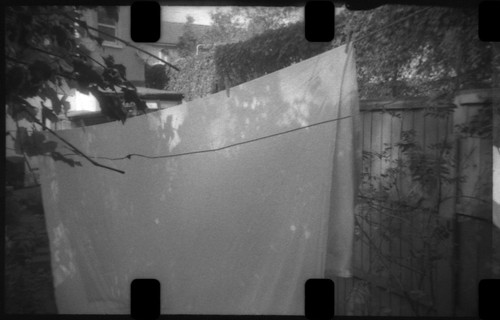
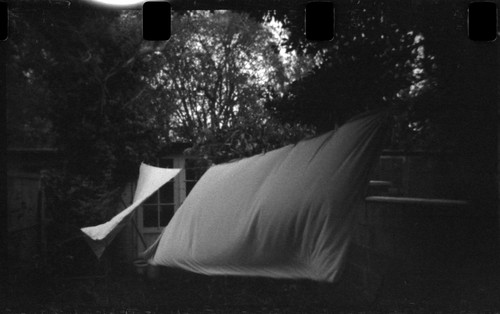
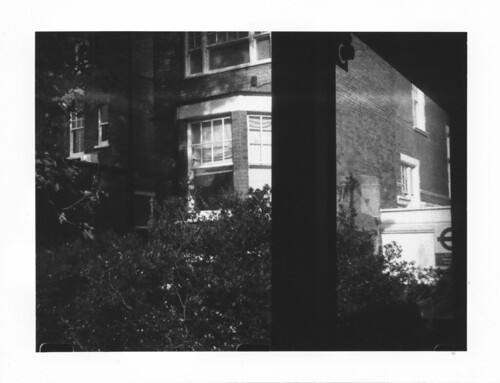
| Mamiya-16 Automatic with Double-X (16mm), rated 200, Ilfotec LC29. 1+29 |
 |
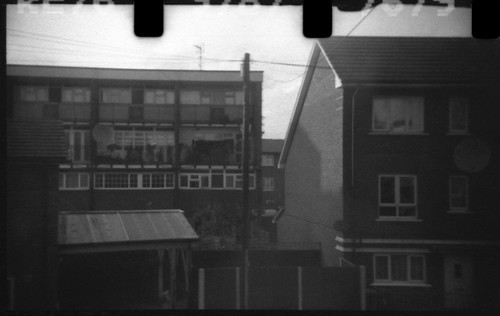
| Kiev-30M with Double-X (16mm), rated 200, Ilfotec LC29, 1+29 |
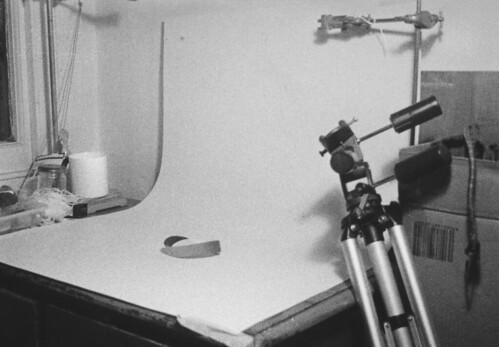 |
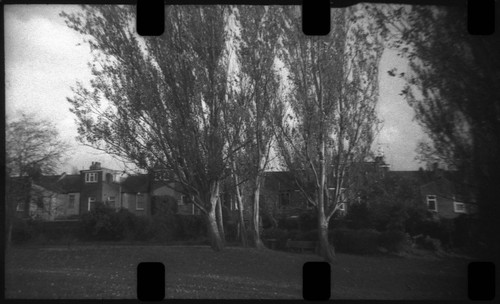
| Rollei 16 with Double-X (16mm), rated 200, R09 One Shot, 1+25 |
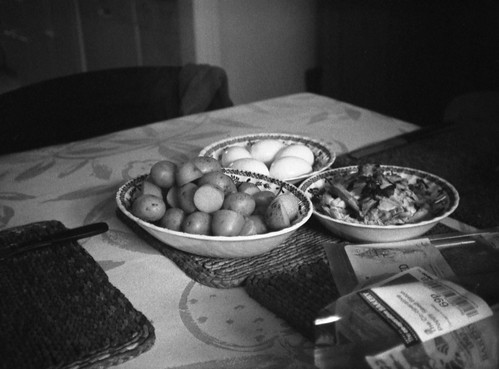 |
| Agat 18K (half-frame) with Double-X, rated 250, developed in R09 One Shot 1+25 |
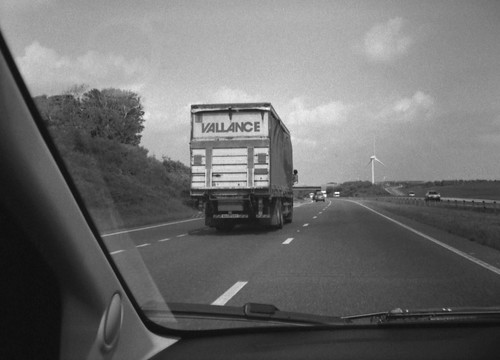 |
| Agat 18K (half frame) with Double-X, rated 250, Ilfotec LC29, 1+29 |
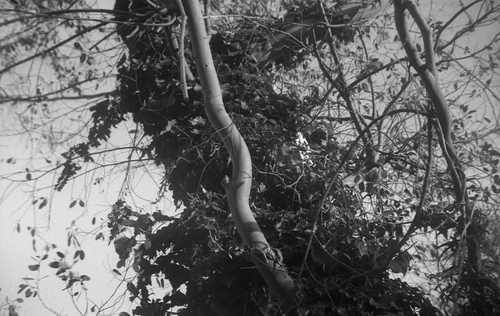 |
| Voigtländer Vito CL with Double-X, rated 250, Ilfotec LC29, 1+29 |
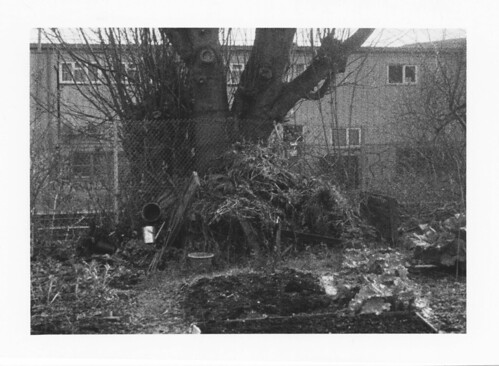 |
| Mamiya-16 Automatic with Double-X (16mm), rated 400, R09 One Shot, 1+50 |
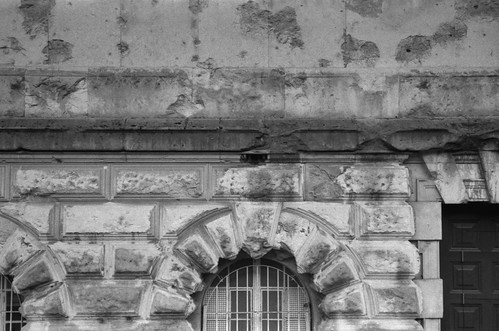 |
| Kiev-4 with Double-X, rated 400, R09 One Shot 1+50 |
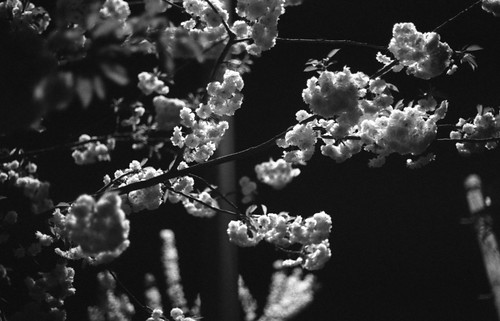 |
| Canon FTb-N with Double-X, rated 800, R09 One Shot 1+50 |
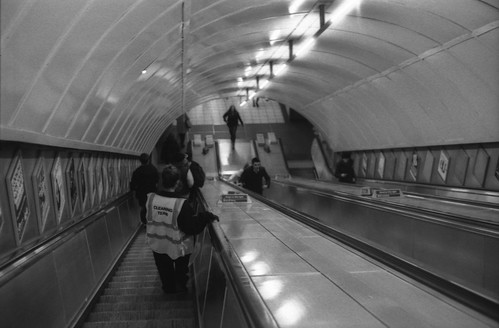 |
| Canon A-1 with Double-X, rated 1600, R09 One Shot 1+20 |
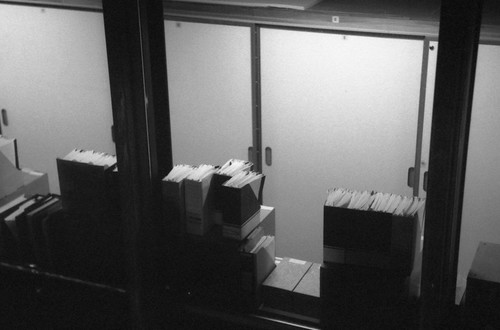 |
| Kiev-4 with Double-X, rated 3200, Ilfotec DD-X 1+4 |
Sources/further reading:
Eastman Double-X data sheet
Project Double-X (archived)
Eastman Double-X on Down The Road
Eastman Double-X on Alex Luyckx Blog