Showing posts with label cross processing. Show all posts

Tuesday, 29 November 2016

Found Film 3


In a recent purchase of a bundle of mostly uninteresting 35mm compact cameras, two of them had part-used rolls of film inside. The cameras were a Polaroid PZ2001 and an Olympus Trip AF.  The films were both Kodak Gold consumer colour negative films, and possibly could have been in both cameras for a number of years, the Trip AF being older, but there was nothing to securely date the films in either. This generation of plastic point and shoot film cameras probably lost value quicker than any other type of camera with the rapid and subsequent replacement of their place in the market by digital, and apart from the odd exceptional model of their kind, these are largely quite forgettable.
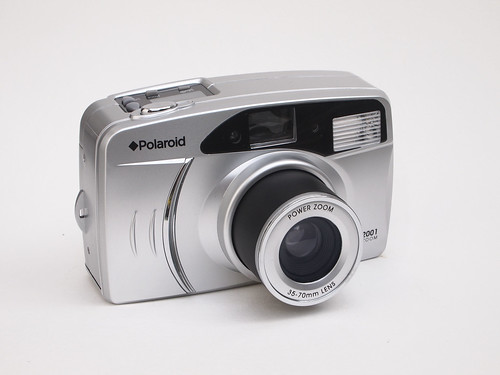
Polaroid PZ2001
Both films were stand developed in Ilfotec LC29 1+100 for one hour for monochrome negatives, rather than have them developed as colour: there might be nothing on either film, but stand development uses a minimal amount of chemistry. The Polaroid yielded the most results, although almost all were out of focus, and many over-exposed. As the Polaroid film hadn't been used up, I did shoot a couple of frames with the camera myself (below) - and got better results than everything else on the film in terms of focus and exposure.


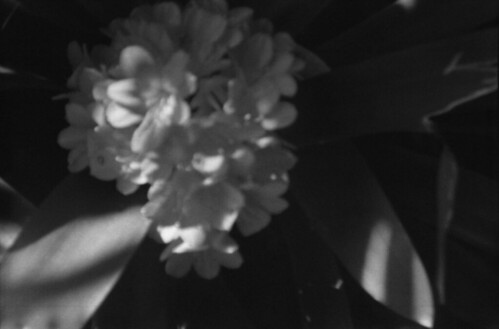
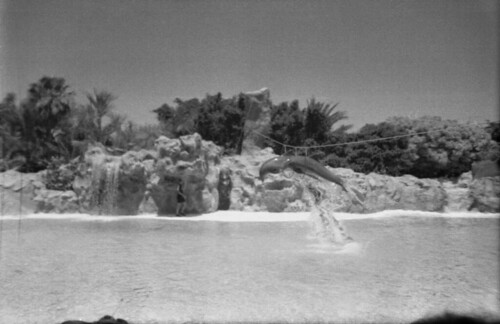
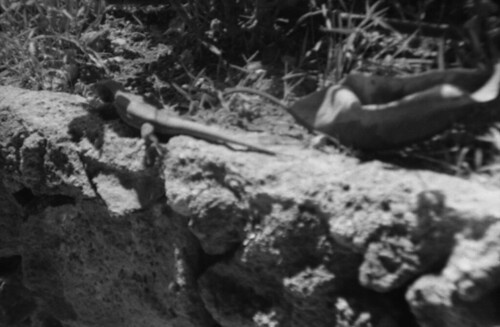
Of the photographs already shot on the roll, most looked liked a holiday somewhere in America, with a Seaworld-type of attraction, what looks like festively decorated holiday apartments - or possibly a church and the decorations are for a wedding, and somewhere in the mountains (this last series of photographs being very overexposed - I imagine that the camera did not possess small enough aperture settings or fast enough shutter speeds to cope with using a fast film in very bright sunlight, but I have attempted to pull all of the detail out of the scans that was there). There are also two close up shots, both out of focus, of a flower and a lizard.
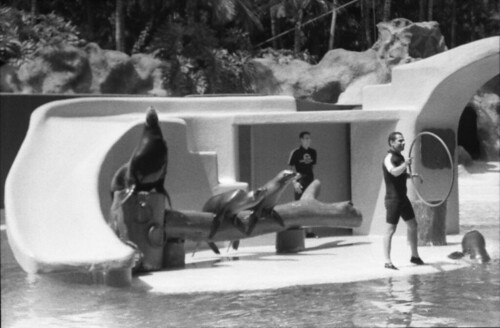
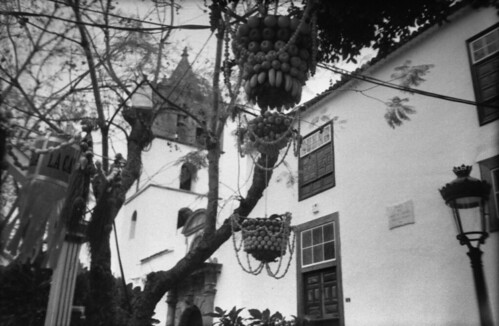
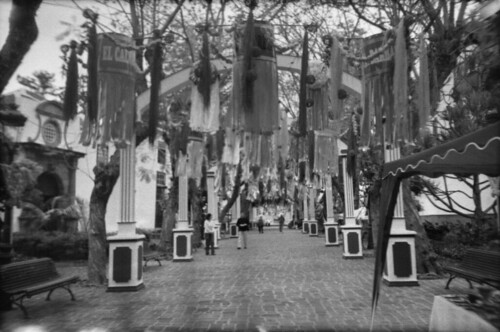
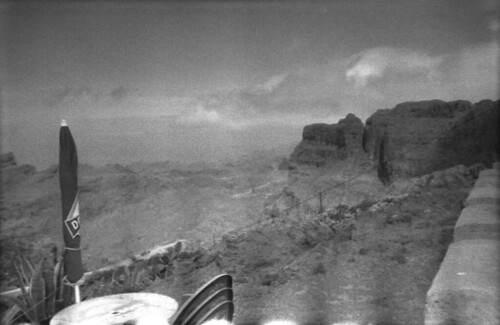

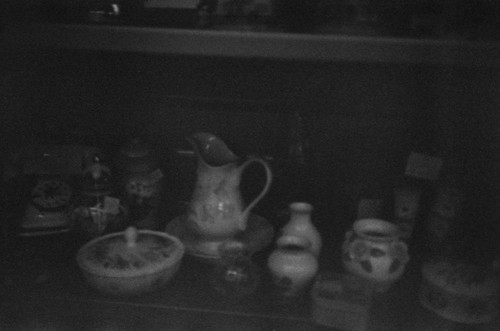
From the Olympus Trip AF there were just three frames that had anything remotely worth scanning - and perhaps not even that - all very underexposed, possibly needing the built in flash which didn't fire. These looked like they were taken in a junk shop, judging from the first photograph, while the other two look like accidental exposures. Given the few shots on the Trip, it feels less precious, but clearly the owner of the Polaroid camera went somewhere special and shot nearly a whole roll of film, before never finishing the roll, never developing it, leading one the speculate as to what the circumstances were that meant they never saw the results; however, this might just be reflective of how photographs were taken by many people before digital: once back from holiday, with the film not quite finished, those last frames weren't to be wasted, and the camera was put away in a drawer to wait for the next special occasion,


Thursday, 13 June 2013

'126 Day'

Kodak Instamatic 277X Camera
Like the '127 days' to encourage the use of the 127 format, yesterday, 12th June, for a '126 day', I shot the last 126 film left from those I had bought at a Paris flea market. I had previously used one of the films in a Kodak Instamatic 50, and found all the results underexposed. As the 126 format was designed with inexpensive snapshot cameras in mind, most have a limited capacity to adjust settings for exposure, but to get results from a colour film nearly forty years old, I wanted to increase the exposure to counter the film's inevitable loss of sensitivity.  I chose to use the Instamatic 277X above in preference to the 50 (which has just two shutter speeds), as this has an adjustable aperture. Around the lens is a band with pictograms for lighting conditions on one side (from 'beach' to 'dark cloud'), and distances for flash on the other: turning this either way has the effect of opening the aperture, which is controlled by two blades giving a square aperture when in the central position, stopped down.

Perutz Daylight Type Colour Reversal Film
I used Perutz Daylight Type Colour Reversal Film, which has a develop before date of May 1974. Originally 64 ASA, I shot the whole film with the camera's aperture at its widest setting. I had wanted to shoot the film in full sunlight, but such was the weather yesterday that I simply went for a walk and tried to shot the frames when gaps in the clouds appeared.

As colour reversal, the Perutz film was originally for slides. The film was 'process paid' and the box contains an envelope to return the film to Perutz for processing, no longer a possibility. The film also requires different chemistry to the E6 reversal process still in use today, as the Perutz film was made for Agfa's C18 process (Perutz, a photographic company founded in the 19th century, was bought out by Agfa in 1960s). Incidentally, there's an advert for Perutz slide film on YouTube : http://www.youtube.com/watch?v=sEYv_pbmcv4

Rather than attempt to develop the film as colour reversal film, it was easier to cross-process it as a black and white negative film. Inside the 126 plastic cartridge is a roll of paper-backed film on a plastic core, rather like any older rollfilm format. The film is the same width as 35mm, which means that it can be put onto a 35mm spool for developing. I used stand development with Rodinal diluted 1:100, for 1 hour. Once developed, the film has a heavy yellow-green cast, but, by giving the film as much exposure as possible, this has resulted in usable negatives.