Showing posts with label Lumiere Scout Box. Show all posts

Sunday, 27 March 2016

Take Your Box Camera To Play Day 2016

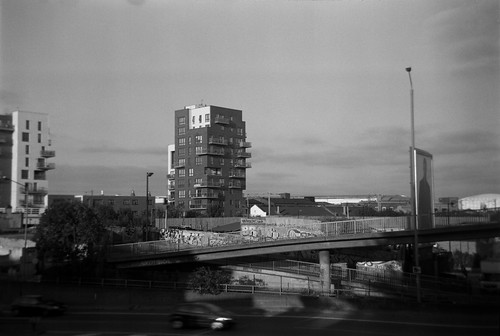
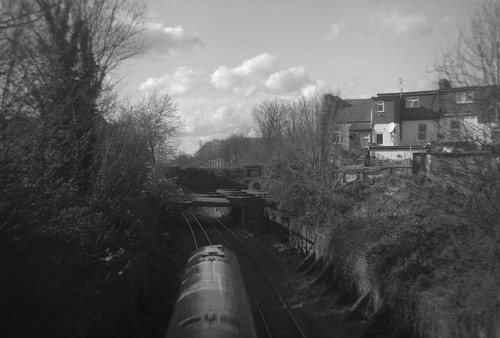
Lumière Scout Box with Rollei RPX 400
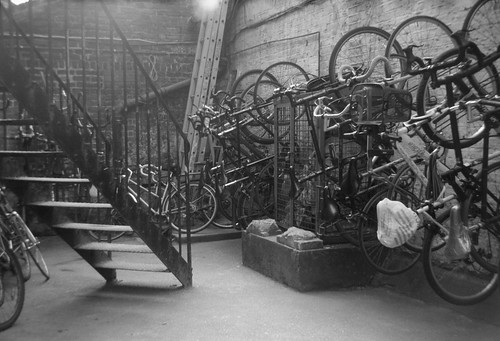
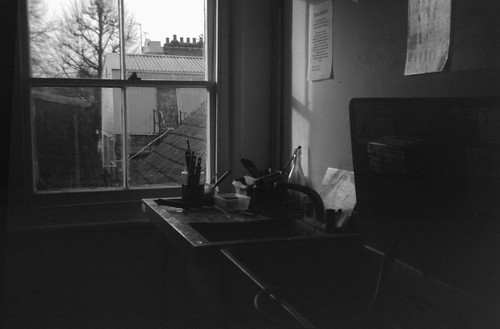
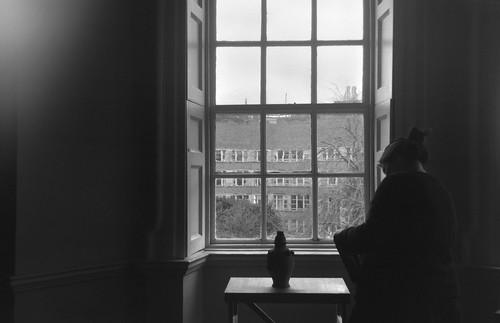
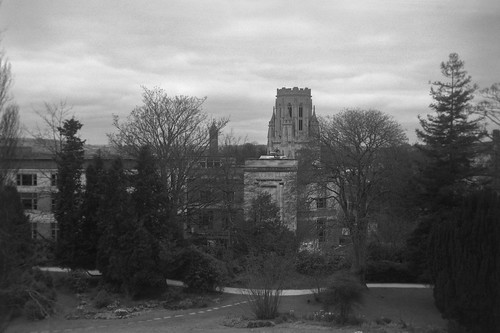
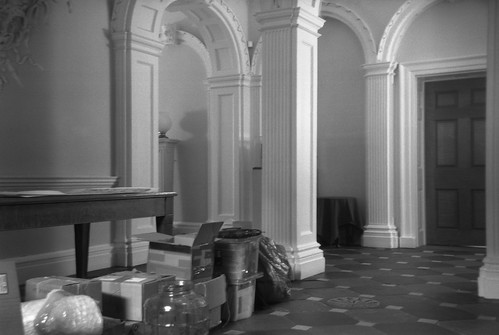
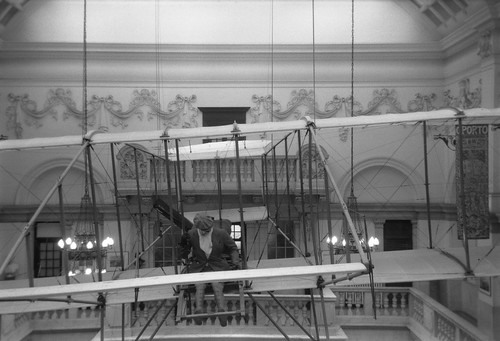
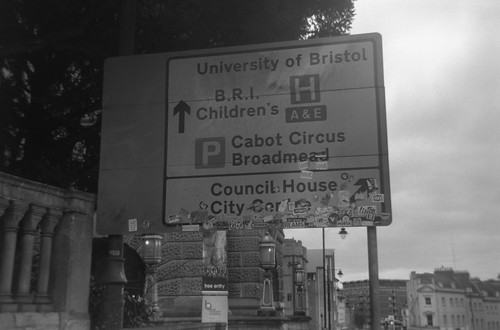
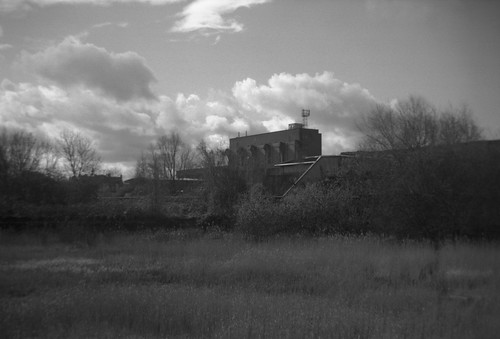
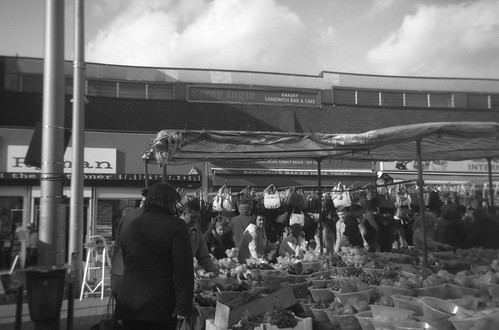
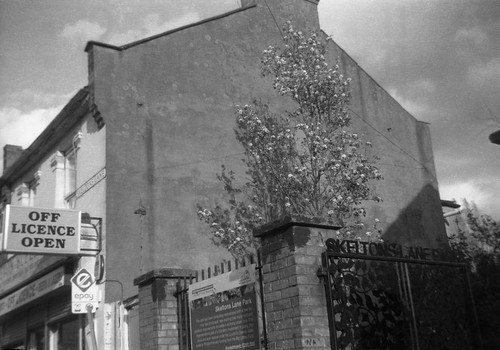
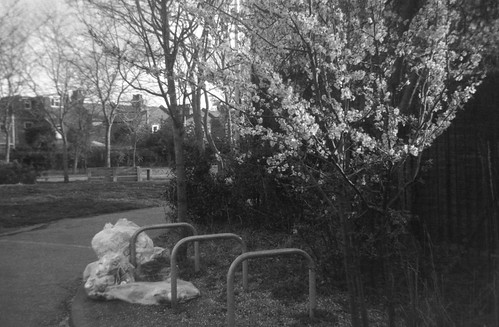
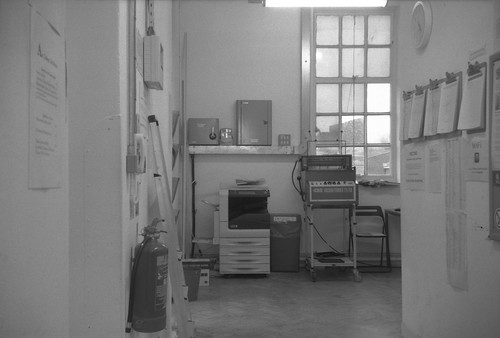
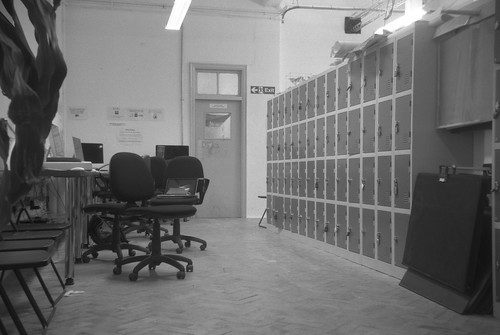
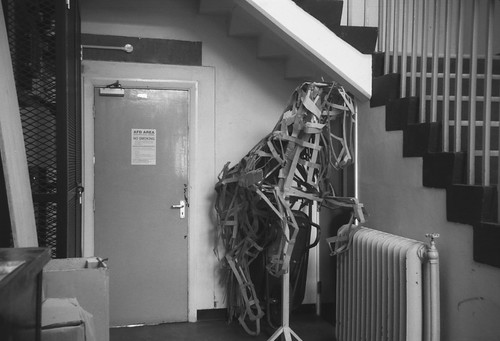
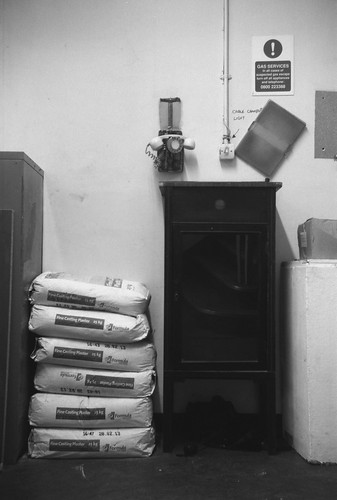
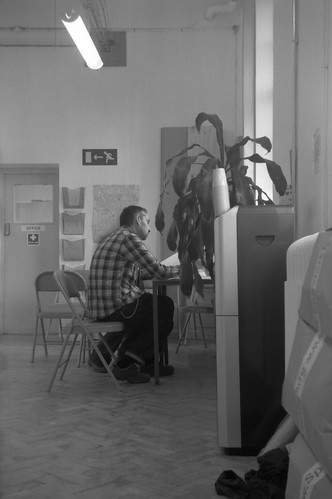
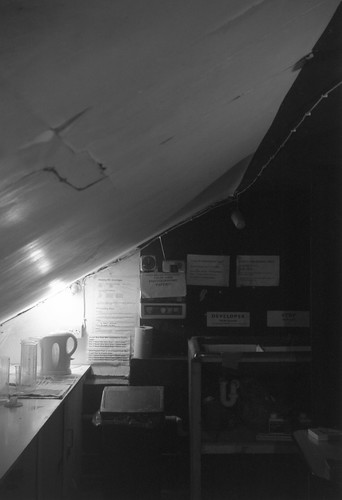
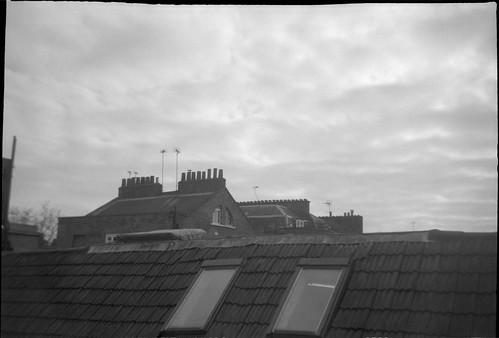
For last weekend's 'Take Your Box Camera to Play Day', I reverted to using Lumière Scout Box rather than the Kodak No.2 Brownie as I had done last year; the Scout Box seems to give better results, despite there being less controls (the Brownie does have three aperture settings). With the Scout Box being more compact than the Brownie, I used the Brownie's case, as the camera fitted in the case with enough space for three cartons of medium format film, plus room to slip a yellow filter in the side.


I shot three rolls of Rollei RPX 400 for its good latitude to guard against variations in conditions, and shot most of the interiors using the 'pneumatique' or time setting, balancing the camera on any available flat surface while holding the shutter open for long exposures. All rolls were developed in R09 One Shot diluted 1+25.

Lumière Scout Box with Rollei RPX 400
See the whole set on Flickr here.

Tuesday, 25 March 2014

Take Your Box Camera To Play Day 2014

Lumière Scout Box with Ilford FP4 Plus
In a spirit of inclusiveness, Flickr member art y fotos suggested a 'Take Your Box Camera To Play Day' for those either fortunate - or unfortunate - not to have to go to work and take part in the 'Take Your Box Camera To Work Day'. It was also suggested that it should be a weekend, Saturday and Sunday 22nd and 23rd of March. Again I used my Lumière Scout Box, with two slower speed rolls as the weather was forecast to be fine and bright, Ilford FP4 Plus (with an expiry date April 2009), and a roll of Rollei RPX 100. Both rolls of film were developed in Ilfotec LC29, diluted 1:19, 10 minutes at 19ºC to provide a push of around one stop.

Lumière Scout Box with Ilford FP4 Plus
The FP4 Plus provided the best results, although as the roll progresses there is a problem with film flatness, which can be seen in the image above where the roof line lightly undulates. A yellow filter might have enhanced the tonal modelling in the skies. The roll of RPX 100 has suffered from the emulsion reacting to the printing on the film's backing paper, with the numbering just visible in the sky of the photograph below. Although I haven't experienced this with Rollei RPX films before, it is a manufacturing problem which has sometimes affected batches of medium format films, which, anecdotally, appears to be confined to the cheaper end of the market (I have never found this happen to Ilford films for example, even those decades old, like the FP4 used for some of the 127 Days).

Lumière Scout Box with Rollei RPX 100
See all the photographs in the Take Your Box Camera To Work Day group pool.

Friday, 7 March 2014

Take Your Box Camera To Work Day 2014

Lumiere Scout Box with Rollei RPX 400
Last week, Friday 28th February was 'Take Your Box Camera To Work Day'. After my recent tests of Rollei RPX 400, it was clear that the film could be a good choice to use for the day with my Lumière Scout Box. Having found RPX 400 to possess good latitude and also take pushing well, it seemed the ideal compromise for both shots with 'Instant', liable to be underexposed, and longer exposures (which most of the interiors were) on the Scout Box's 'Pneumatique' (bulb) setting. I developed the two films shot on the day in R09 One Shot (Rodinal), diluted 1:25, for 15 minutes at 18.5ºC, an effective push of around a stop and a half.

Lumiere Scout Box with Rollei RPX 400
See the whole set of photographs on Flickr.

Friday, 1 March 2013

A few words about the Lumière Scout Box

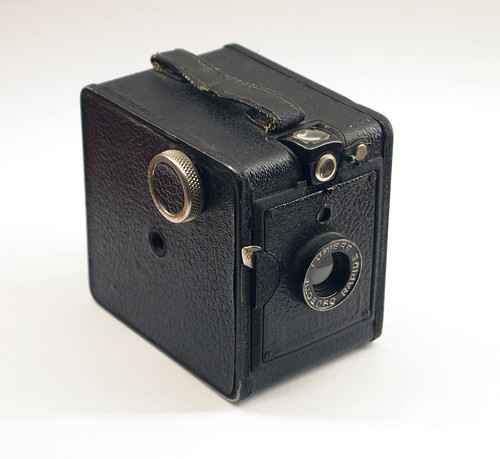
Lumière Scout Box
Simple in construction and use, there isn't much to be written about the Lumière Scout Box, but having used it for the 'Take Your Box Camera To Work Day' yesterday, I felt it deserved a post of its own. There were a number of box camera models that Lumière produced under the Scout Box (sometimes written 'Scoutbox') name. Sylvain Halgand's collection has a comprehensive range of Lumière box camera models (shown under the 'Même Marque' tab), none of which my camera exactly resembles, although it is very close to the inventory number 489, my example lacking flash sync and has a fabric handle rather than plastic.

The camera is a sturdy all metal construction, covered with a coarse-grain leather finish. The metal trim has a black craquelure or craze paint effect, which is also used inside the camera, presumably to reduce internal reflections. It's relatively compact for a medium format box camera taking 6x9 images (the Scout Box's negatives are actually nearer to 6x8): the box itself measures roughly 9x9.5x7cm; a camera such as the Kodak Hawkeye using the same negative format is 11x14.5x7.5cm. The controls are very simple: the shutter lever is on the right hand side of the lens. Above the lens is a pointer that can be switched from 'I' for Instant to 'P' for 'Pneumatique' (bulb - 'B' setting), 'I' or 'P' showing in a small round window. The camera has a single brilliant viewfinder set directly above the lens for portrait orientation; for landscape shots, this rotates on a pivot through 90º. The camera also has tripod mounts for both portrait and landscape.
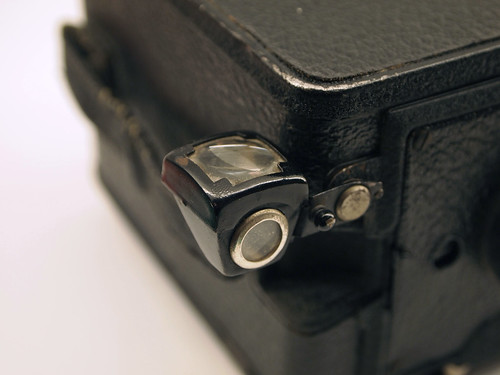
Viewfinder in landscape mode
To open the camera, there's a catch on the left side, which releases the right side of the camera, which slides out and has the film transport mechanism attached. My camera had a 620-sized spool inside, and is described on some websites as taking 620 film, but 120 spools do fit, if a little tightly; inside the camera it has a label stating the camera uses Lumière 49 film.
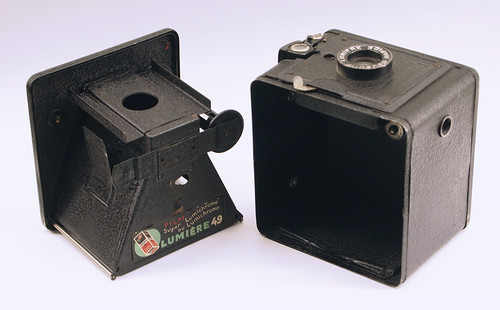
Camera opened for loading
The lens has 'Lumière Objectif Rapid' inscribed around it and this appears to be a meniscus lens. As it's a fixed focus lens with a single aperture, there's no need to provide the user with information on its focal length or aperture. I've measured the focal length to be c.95mm. The aperture is a circular hole in a metal plate behind the lens and shutter, which, although hard to measure without dismantling it, I estimate to be around 4.5mm across (looking through the lens with the shutter open and a ruler behind it): this gives an f number of just under f22 (G. Even's site lists the aperture as f16 and the focal length as 85mm). Even given the need for depth of field to compensate for the fixed focus of the lens, this does seem like a small aperture (when this camera was made 100 ISO was a fast film). I decided to check the shutter speed in Instant mode by recording it with Audacity. Measuring the waveform from peak to peak is 0.019 seconds; which translates as very close to 1/50th (I think the third peak in the waveform is the sound of the shutter swinging back to its original position). An exposure of 1/50th at f22 should give a correct exposure on 100 ISO film in bright sunlight, going by the 'Sunny 16' rule; if the aperture is f16, this would allow for a little less than optimal conditions. None of my measurements are rigorously precise of course, so there could easily be a margin of error of a stop or so.

Lumière Scout Box shutter recorded with Audacity
The first film I ran through the camera was HP5 Plus which I pulled to 200 EI, reasoning that the camera was designed for use with slower film. This test film did lack shadow detail, and all the films I have used in the camera since have been 400 ISO, which have given good results on relatively overcast days.
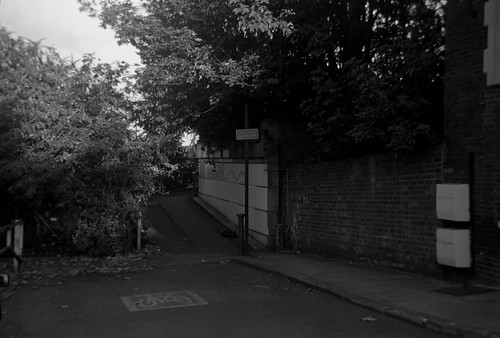
Test roll, HP5 pulled to 200 EI
Rollei RPX 400
Fomapan 400

Sources/further reading:
Scout Box on Collection Sylvain Halgand (in French, with some English translation)
Lumière Scoutbox on Camera-Wiki
G. Even's Lumière Collection (in French)
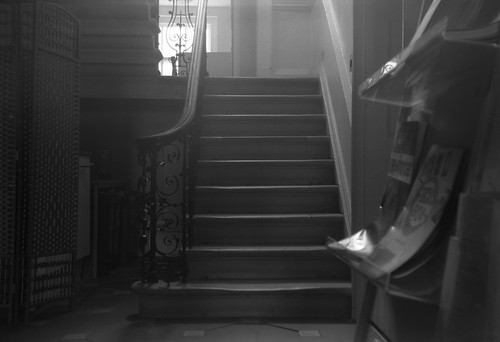
Thursday, 28 February 2013

Take Your Box Camera To Work Day 2013

Today, 28th February, was this year's 'Take Your Box Camera To Work Day'. Like last year, I took my Lumière Scout Box with some Fomapan 400 and Rollei RPX 400 film. I shot two rolls of RPX 400, and a roll of Fomapan 400. One consideration about taking such cameras to work is the fact the most people work inside, and box cameras were designed for taking photographs outside, in daylight. Like many box cameras, the Lumière Scout Box has no controls to change apertures or shutter speeds; however, the shutter can be set to 'Instant' or 'Pneumatique' (bulb). To take photographs inside my place of work, I relied on either finding sufficient natural light (first image below), or finding somewhere to balance or rest the camera for long exposures (second image below, about 2 seconds). I did also take a few shots outside moving between the two sites where I work, and as my place of work includes the darkroom where I processed the film, I took the last shots there, just prior to developing.

Lumiere Scout Box with RPX 400
Lumiere Scout Box with Fomapan 400

See the whole set of photographs on Flickr.

Wednesday, 29 February 2012

'Take Your Box Camera To Work Day'

Lumiere Scout Box Camera
For today's 'Take Your Box Camera To Work Day' (see previous post), I took my Lumière Scout Box to work. The Lumière Scout Box is quite compact for a box camera, smaller than the No.2 Brownie that I used to have. The camera has a single aperture, and the shutter has two settings, 'I' for 'Instant' and 'P' for 'Pneumatique' (or bulb). The lens is a meniscus type, a 'Lumiere Objectif Rapide'. The camera has a single viewfinder which, unusually, rotates through 90 degrees for landscape format shots. Inside the camera is a label instructing the use of 'Lumière 49' film, and the spool which came with the camera looks identical to a 620 spool, though fortunately the camera will also accept 120 spools without the modifications that 620 cameras often require.

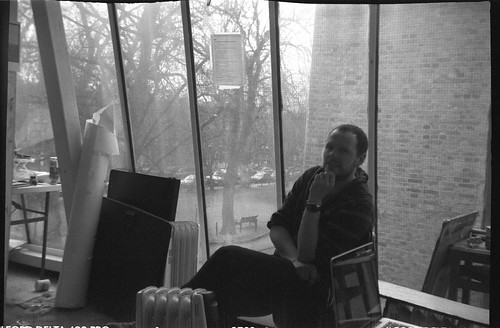
I managed to shoot just one roll of film. As it wasn't a sunny day, and I thought I might be able to shoot inside, I wanted to use a 400 ISO film, but the only film I had in stock was Ilford Delta 400 (the roll I used had an expiry date of January 2009). I would have much preferred HP5, but I'd been given a few rolls of expired Delta 400 and wanted to use it up. The film was developed in Rodinal 1:25, 11 minutes 15 seconds at 18 degrees C. The results are perhaps rather unprepossessing, but I did get a shot of Ben Spiers, one of the other painting tutors at college.

Kennington Rooftops

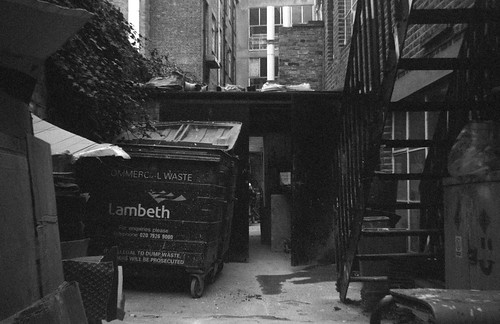
Bin Yard

Painting Studio