 |
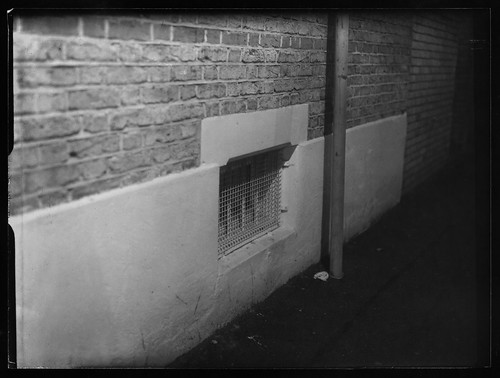
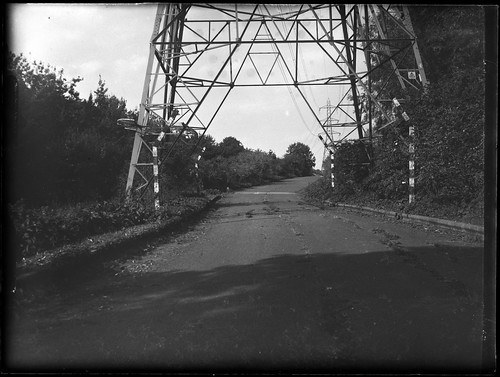
| Ilford R.40 Rapid Process Panchromatic glass plate |
As well as the Selochrome stereo plates written about in
my last post, I have also shot a number of different plates for night photography in recent months. I've used the last of the large format Selochrome plates
written about in 2014 with
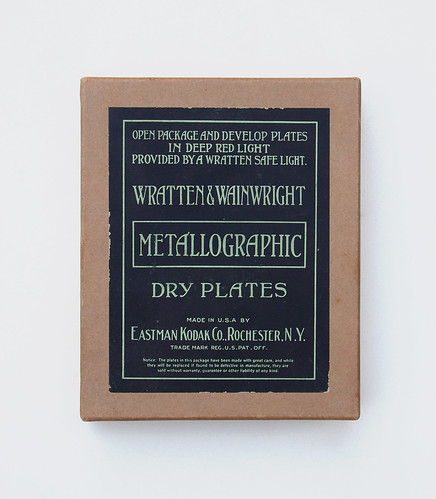
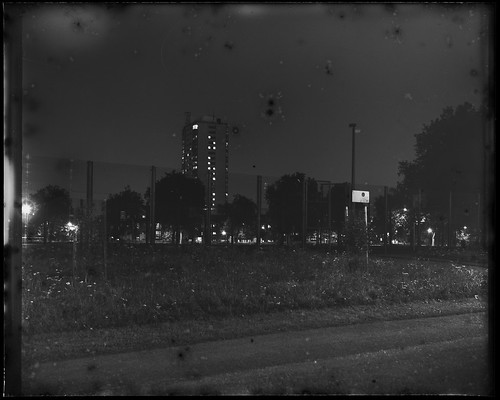
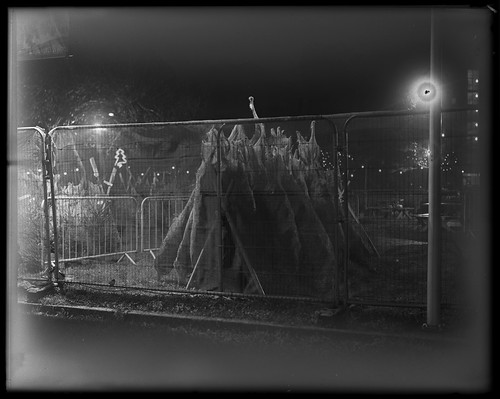
some good results. Also mentioned in that blogpost were the Wratten & Wainwright Metallographic plates which were heavily fogged around the edges, so much so that I had all but written off using the plates. However, as I'd had a couple sitting in a plateholder for months, I decided to expose one on the same night as exposing
this image on one of the Selochrome plates, and giving a moderately long exposure provided an image far less obscured by the fogging around the edges than I'd previously experienced.
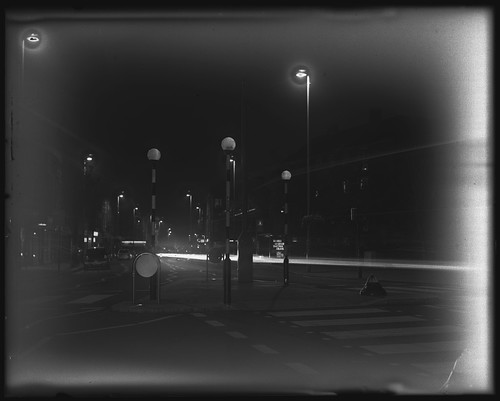 |
| Kodak Wratten & Wainwright Metallographic plate |
As the
Wratten & Wainwright box was sealed when I got it, I don't have a good theory as to why the plates shot recently should be less fogged than the others, except perhaps the fact that these plates would be from the central portion of the box, with a number of plates stacked on top (and below) the two illustrated here - although the edges of the plates themselves remain in the same relation to the edges of the box as those at the top or bottom of the stack.
 |
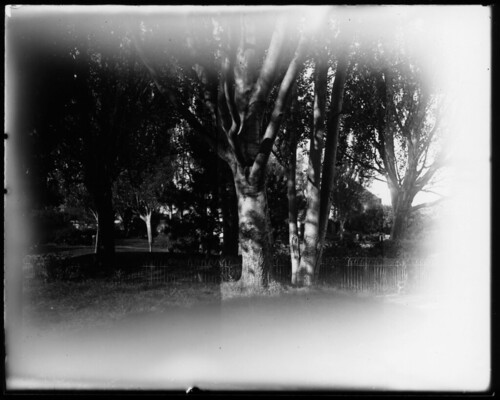
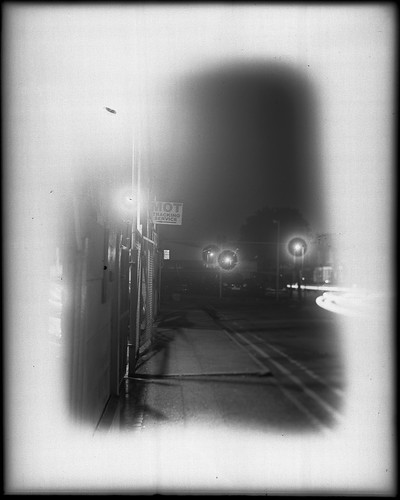
| Wratten & Wainwright glass plate |
Incidentally both plates shown here exhibit true
solarisation - the brightest highlights in the streetlamps have turned black. The term solarisation (when not describing a digital filter) is usually applied to what is more properly known as the
Sabatier effect: the exposure in these highlight areas is such that the negative begins to
lose density beyond the shoulder section of the characteristic curve (this phenomenon gets a brief mention in Ansel Adams'
The Negative when describing his photograph
The "Black Sun", Owens Valley, California). There's still a fair amount of fogging, and exposing for longer to combat this has resulted in what appears to be grain seen in the highlight areas, but this is scanner noise caused by the high density.
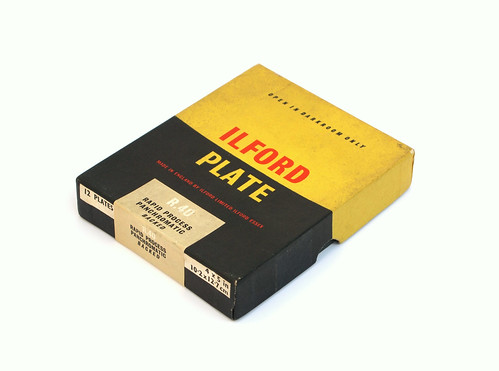
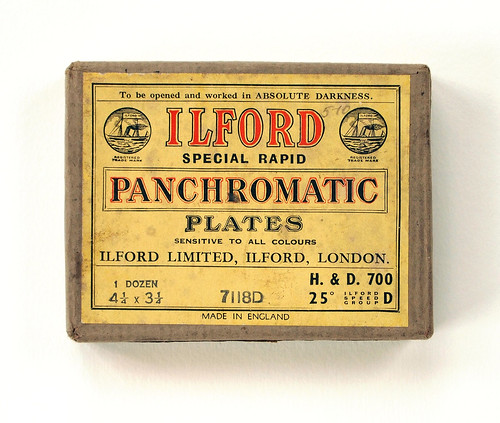
Late last year, I found two boxes of 4x5 inch plates, both
Ilford R.40 Rapid Process Panchromatic - one box had been previously opened, but then resealed with black tape, and no plates had been used from it. I opened the other box for the
information leaflet inside, which provided a date - August 1959.
 |
| Ilford R.40 Rapid Process Panchromatic glass plates |
As described in the
Ilford Manual of Photography (1946), Rapid Process Panchromatic plates were
"For copying coloured originals. A plate of high contrast. The standard plate for colour separation screen negatives for photo-lithography." These were fifth highest in the list of plates by contrast in the Manual, and, as a process plate, it isn't given a speed: these plates were not intended for pictorial photography. The word
Rapid in the name refers I think more to the speed of development rather than sensitivity - the information leaflet with the plates gives a development time of 2 1/2 minutes in ID13. The plates were introduced in 1918, and, according to
Silver By The Ton, were rated 8 ASA in the post-1960 standard: other plates with the term
Rapid in the name around the same time were rated 20 ASA.
 |
| Ilford R.40 Rapid Process Panchromatic test plate |
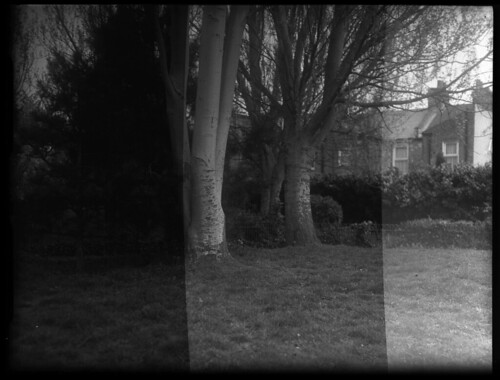
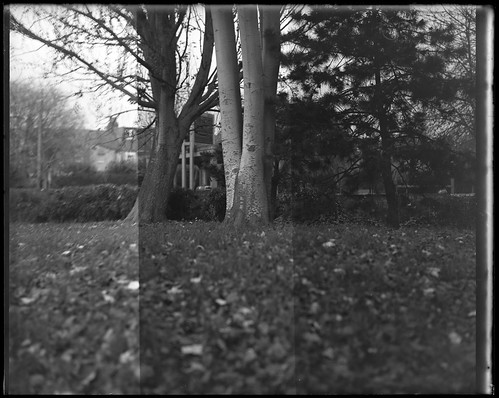
For a test exposure, I rated one plate with an exposure index of 10 as a reasonable starting point, and with three successive exposures by progressively withdrawing the dark slide, gave the plate effective exposure indices of 10, 5, and 2.5 from right to left in the shot above. This was
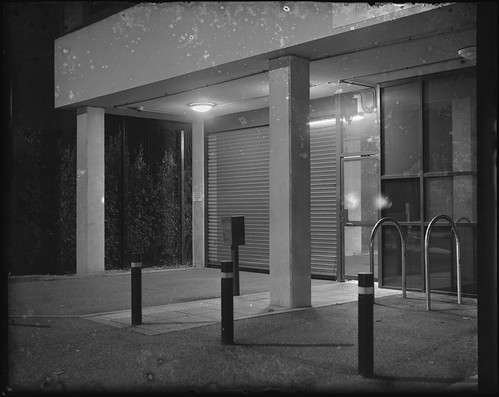
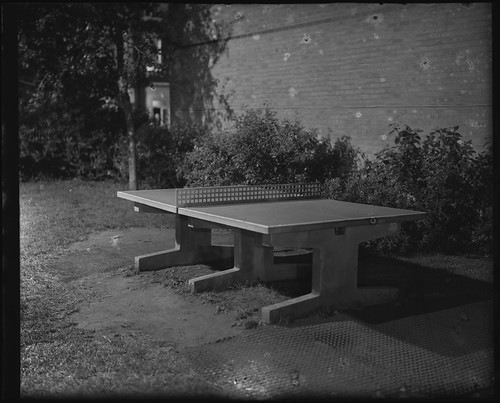
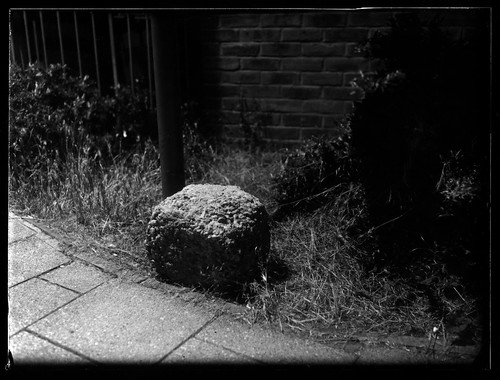
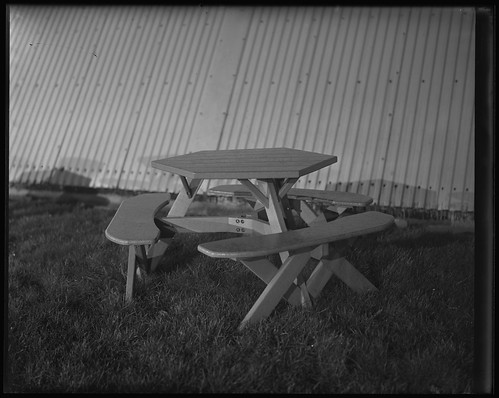
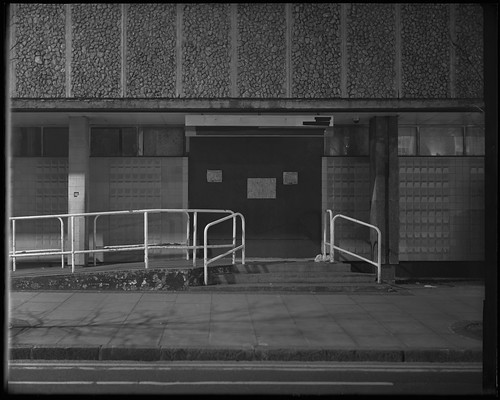
stand developed in RO9 One Shot, diluted 1+150 (to reduce contrast) for one hour. The results were very encouraging. The central section, with an effective rating of 5, looked best from the test plate. However, when shooting them at night, the first set of plates did appear to be overexposed, not helped by using a developer dilution of 1+100, rather than 1+150. The highlights in these negatives are very dense, and this again added noise when scanning in these areas, much like the Wratten & Wainwright plates: the image at the top of this post is one of the plates shot and developed in this fashion. I reduced my exposure times for the next shots by around one stop, and developed these plates at 1+150, as below.
 |
| Ilford R.40 Rapid Process Panchromatic plate |
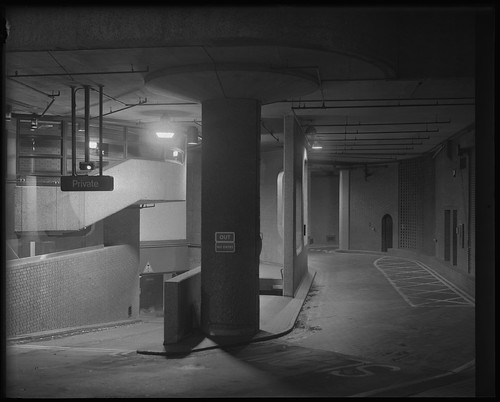
The Rapid Process Panchromatic plates are amongst the best I've used, in terms of the emulsion showing very little age-related deterioration; when coupled with getting the exposure right and developing to reduce the inherent contrast, the plates produce excellent results.
 |
| Ilford R.40 Rapid Process Panchromatic plate |
 |
| Special Rapid Panchromatic plates |
I've also recently used some quarter-plate size
Special Rapid Panchromatic plates. First produced in 1919 at 32 ASA, these are
"Fine grain. Fairly high contrast. General purpose plate. Widely used in scientific; and in the photo-mechanical trade for block making, offset work and photogravure." These are just above the middle of the contrast range of Ilford plates at the time. A leaflet inside the box was dated to 1946.
 |
| Special Rapid Panchromatic plate test |
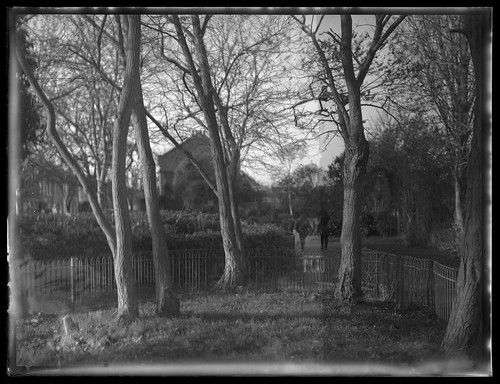
Rather than shooting these plates for the ongoing night photography project, I used most of the plates from the box on the
LAPC photo walk last month; these were just fast enough to use handheld, rated around 10. The test plate above was also rated 10: with three successive exposures, the middle section at an exposure index of 5 provides a fuller negative. The plate below was one that I did shoot at night with a twenty-minute exposure which captured people queuing at a bar better than expected, if still very faint.
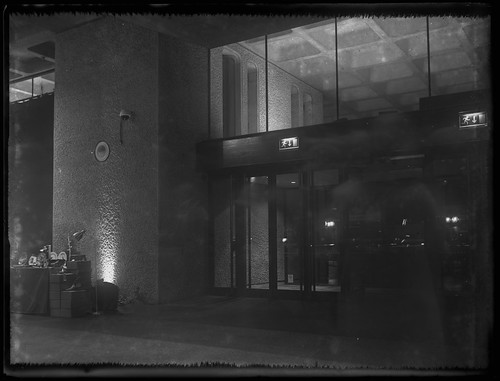 |
| Special Rapid Panchromatic plate |
Some time around 1950 Ilford's plate names gained prefixes with a letter and numerals: the Special Rapid Panchromatic above were later given the prefix R.20 as seen on
this leaflet. I've wondered for some time about how these were constructed, what was the logic to them. The Hypersensitive Panchromatic and Fine Grain Panchromatic emulsions, being new just before the second world war, were not abbreviated in same way as other emulsions later: these were already abbreviated to HP and FP while the films went through their numerical iterations. Most other plates were given the alphabetical prefixes
R,
G and
N (although not all - Selochrome didn't gain a prefix, but this was more of a brand name than a descriptor)
. Looking at the spectral sensitivity of the plates, as all panchromatic plates are given an R, it would appear that the letter are R denotes
red sensitive; G plates are 'highly orthochromatic' with sensitivity extended into the yellow part of the spectrum that perhaps G is for
green sensitive; and N for 'ordinary' plates would possibly mean
not colour sensitive. I haven't found a logic to the numbers. One wonders if photographers stopped calling Soft Gradation Panchromatic plates that, and started referring to them simply as
R.10 plates?
References
The Negative, Ansel Adams, 1981
Silver By The Ton, RJ Hercock and GA Jones,1979
The Ilford Manual of Photography, James Mitchell (ed.), 1946