 |
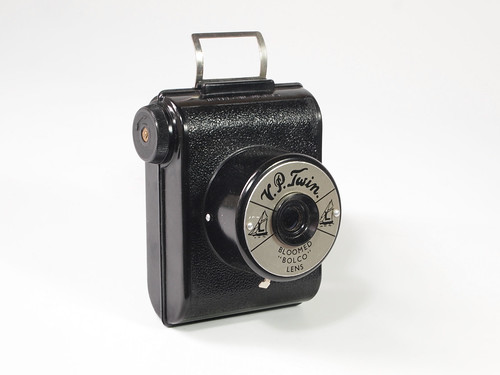
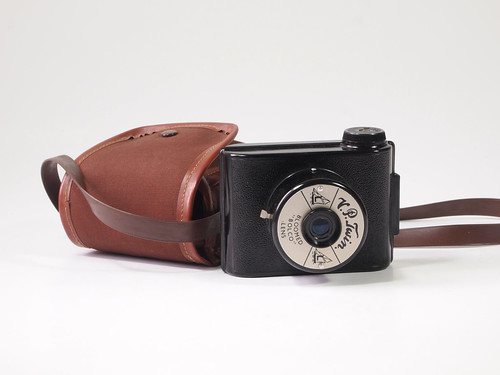
| V. P. Twin with soft case |
Having written a moderately comprehensive post about the
Vest Pocket Kodak, I wanted to write a post about the other camera that I used on this month's
127 Day, the
V. P. Twin. About this, there is rather less to say, but millions of these were made, and as an extremely cheap snapshot camera, the V. P. Twin may well have been the introduction to photography for a great many people, particularly in the UK where it was produced. How well it may have travelled is an unknown - on
Collections Appareils it's listed as being rare in France, but a number are always available on a well-known auction site, and I have on occasion seen V. P. Twins in antique or junk shops.
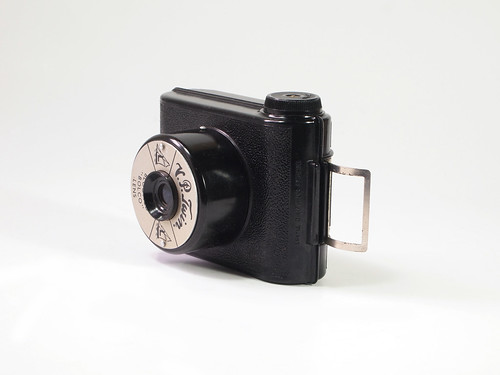 |
| V. P. Twin with wire framefinder folded out for use |
The name derives from the initials for
Vest Pocket, an alternate name for
127 rollfilm, and that the camera uses a frame size of 3x4cm, which means that
two red windows are needed to advance the film, the numbers on the paper backing appearing twice, once in each window, to provide sixteen photographs on a roll. The camera is made from plastic: when first produced in the mid-1930s, this was Bakelite in a number of different coloured variants; my version of the camera dates from after the war, clearly identified by the metal faceplate around the lens. Although many websites don't differentiate, there are some suggestions that, post-war, a different plastic other than bakelite was used. With my example, the plastic appears very much like Bakelite, hard and a somewhat brittle, as evidenced by a small chip broken off inside, but this is not conclusive.
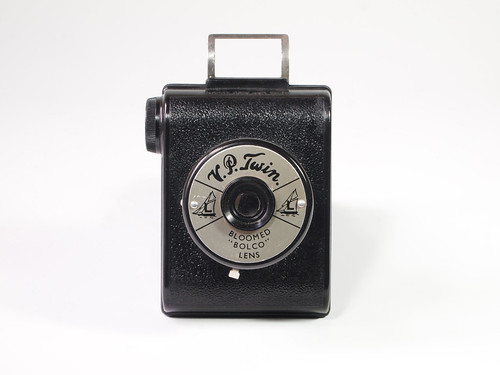 |
| V. P. Twin with wire framefinder |
The camera has a fixed-focus meniscus lens of f12.5 (the instructions recommend a subject distance of eight to ten feet) and a rotary-type shutter that fires when the lever is tripped in either direction. The 1950s version of the V. P. Twin has a metal faceplate with the phrase "BLOOMED "BOLCO" LENS": BOLCo stood for British Optical Company;
bloomed appears to mean that the lens was coated, which, judging from the colour of the reflections, may well be the case, although it might seem an unnecessary refinement given how basic the lens is. To compose a shot, there is a single metal frame which hinges up from the top of the camera. The advance knob provides a loud ratchet sound, making operation of the camera less than discreet given how quiet the shutter is.
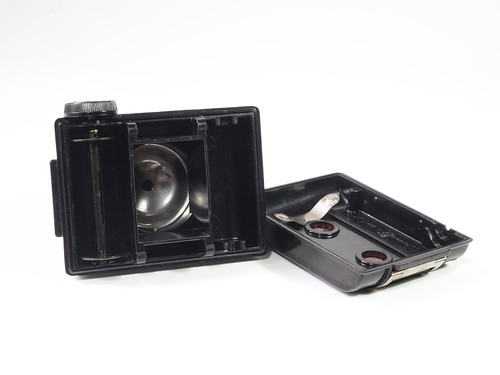 |
| V. P. Twin opened for loading |
Although the instruction manual tells the user to twist a coin between the two projections at the top of the camera, and the letters "INSERT COIN AND TWIST" are embossed on the camera itself, I've found it easy enough to open using my fingers in the slot. The V. P. Twin is famous for having been sold in three individual parts, each for 6d, which, in total, converts to 7.5 pence in new money, surely one of the cheapest cameras ever made (according to one online calculator I've used, this would be the equivalent of £3.73 at 2016 prices). Although this sounds apocryphal, the
onetwoseven site confirms the story. In the 1950s, the V. P. Twin was selling for 7/6, or 37.5 pence, or £6.32 at 2016 prices. For a simple camera, the instruction leaflet is very comprehensive; my camera came with both instruction leaflet and soft case.
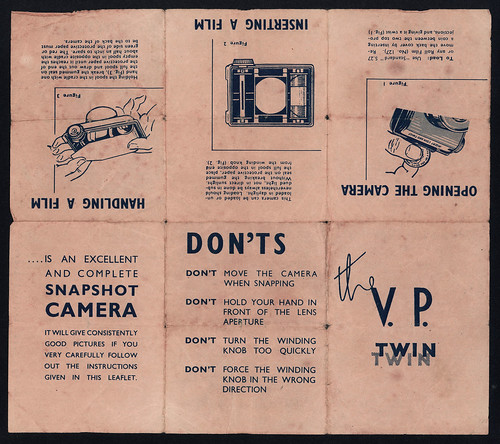 |
| V. P. Twin leaflet front |
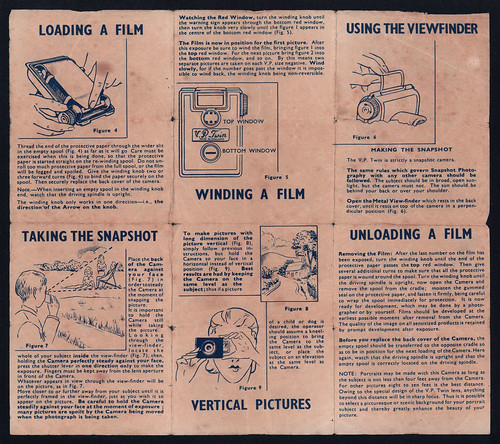 |
| V. P. Twin leaflet back |
I first shot a short roll of
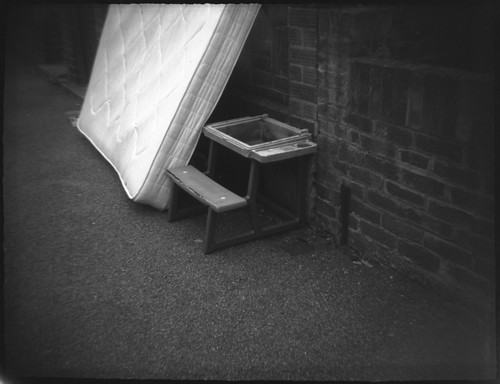
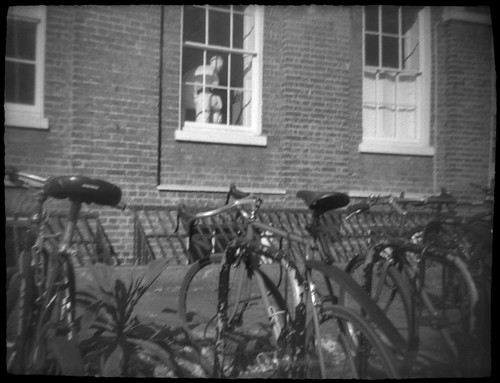
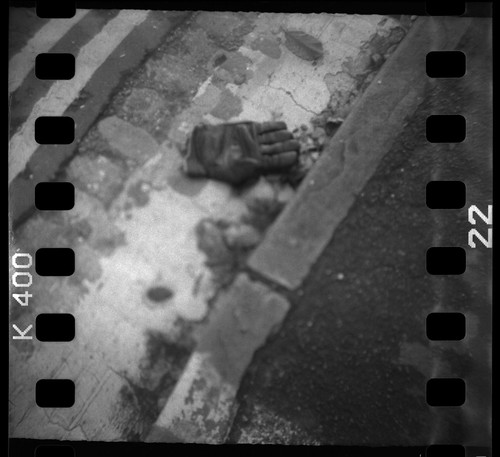
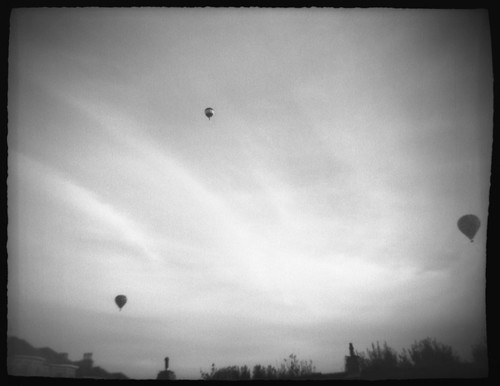
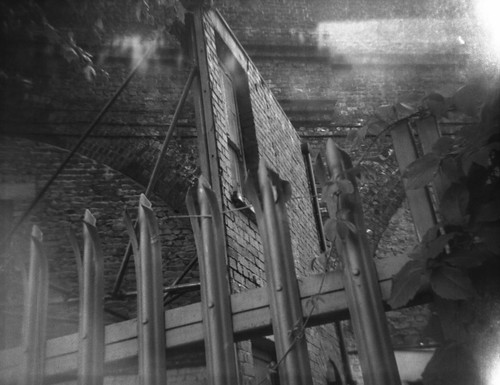
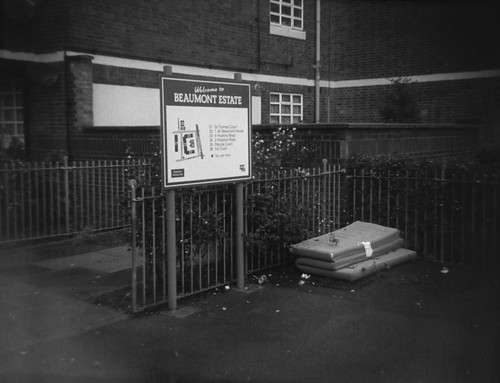
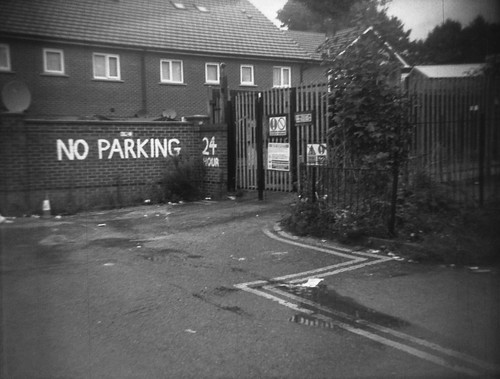
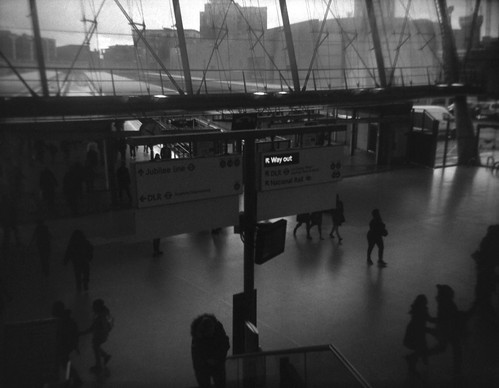
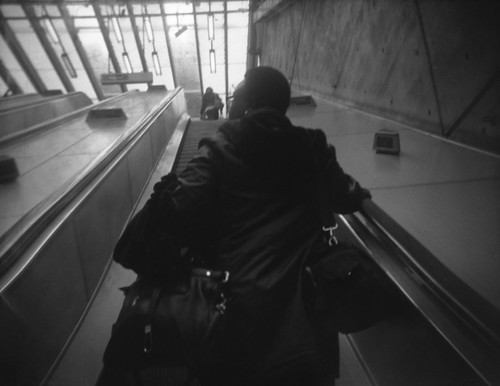
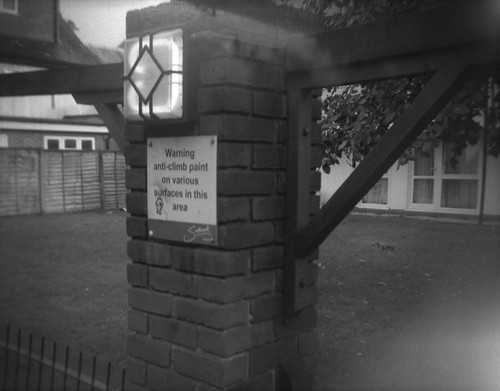
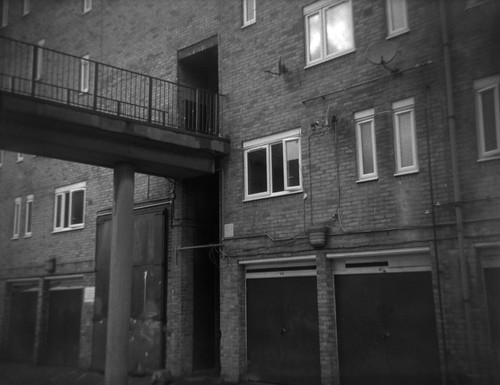
Ilford HP5 Plus cut down from medium format, and the results were very much what I imagined them to be: vignetting, distortion and so on from the meniscus lens. There were also some scratches, which may have been from the
process of slitting the film to 127 size. The shutter looks and sounds very slow, but it's probably around 1/30th; some shots appear to show a small amount of camera shake, but given how little in the frame is truly sharp, it matters less than this might. As I've written about other simple cameras, the use of modern fast emulsion allows a greater flexibility in the situations in which the camera may be used. The instructions state that:
The V. P. Twin is strictly a snapshot camera. The same rules which govern Snapshot Photography with any other camera should be followed. The subject should be in broad, open sunlight, but the camera must not. The sun should be behind your back or over your shoulder.
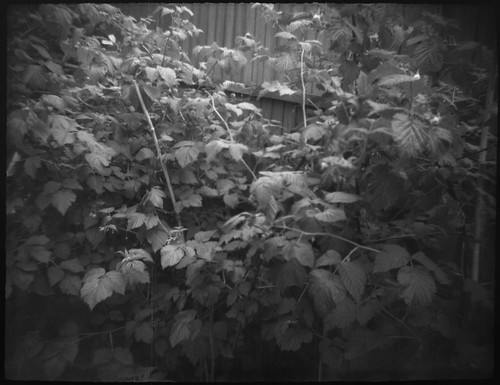 |
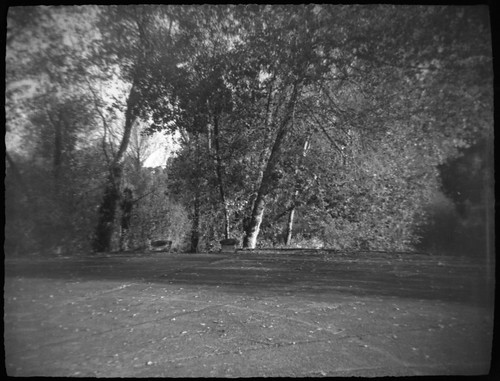
| V. P. Twin test roll with Ilford HP5 Plus |
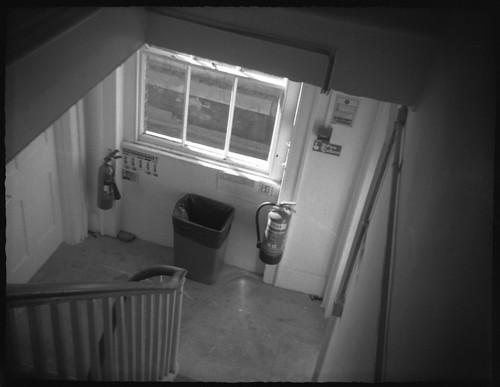
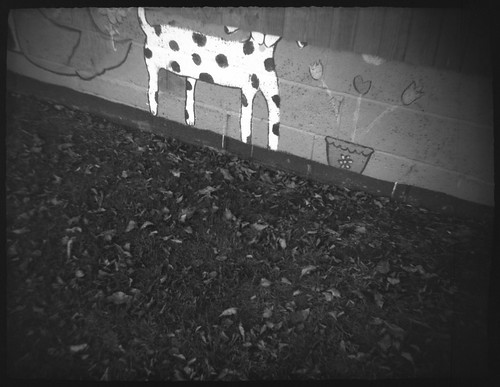
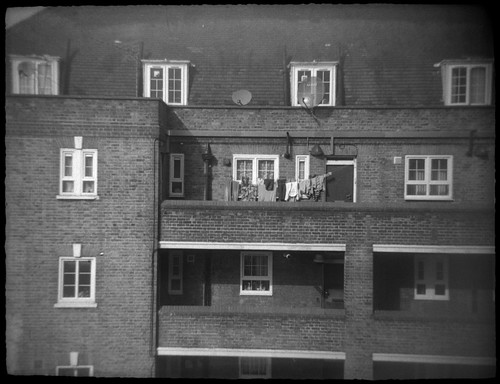
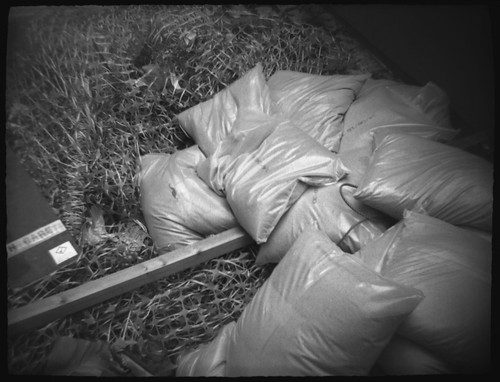
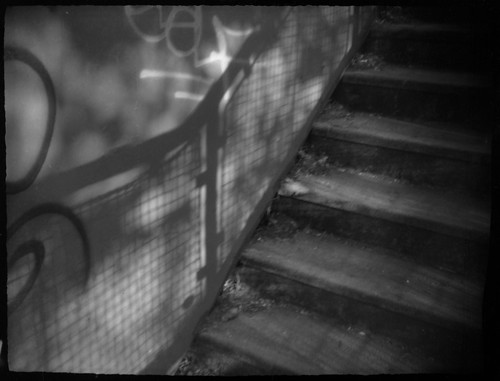
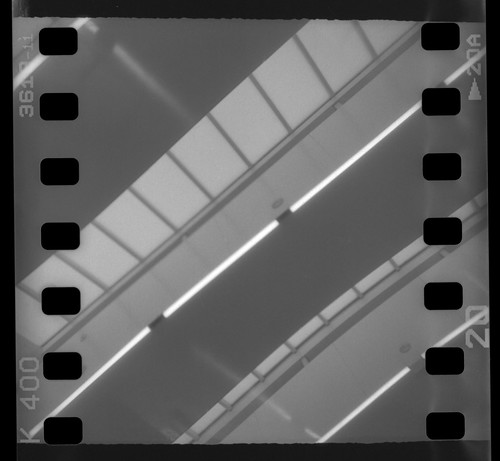
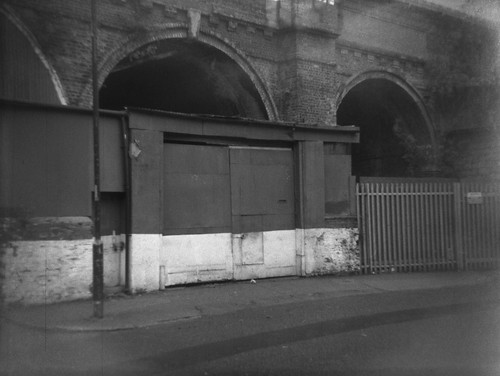
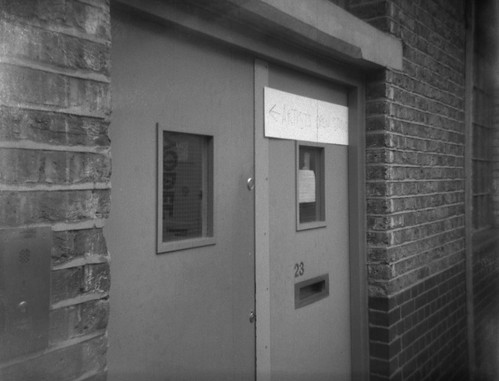
Given the typical film speeds of the 1930s when the film was first produced this advice would have been well heeded; today, being able to use a 400 ISO film with both lower contrast and good latitude means being able to ignore that stricture: the photograph above was taken on an overcast day, with plenty of shade from a nearby tree. Shooting longer rolls of film for the 127 Day did show some issues with film flatness which appeared to increase over the length of a roll; the camera has one flat tension spring at one end of the camera inside, as seen in one of the images above, which does not seem sufficient to keep the film tight as the amount on the take-up side builds up. This lack of flatness shows up as distortion, especially clear in straight lines, as shown in the second-to-last image on this post.
Maurice Fisher, on the
Photographic Memorabilia website nicely sums up using the V. P. Twin as his first camera, replete with camera shake and framing errors. Accurate framing is very difficult to achieve; it's probably best to simply ensure whatever motif being photographed is simply centred. Camera shake with the V. P. Twin is partly due to the camera being so small and light, but not insurmountable if the instructions are followed to hold the camera tightly against the face to steady it; I also steadied a few shots by balancing the camera on a flat surface. As a cheap, snapshot camera, I did find the V. P. Twin to have a certain charm, and the quality of the images is easily the equivalent to the toy cameras that have become popular in recent years.
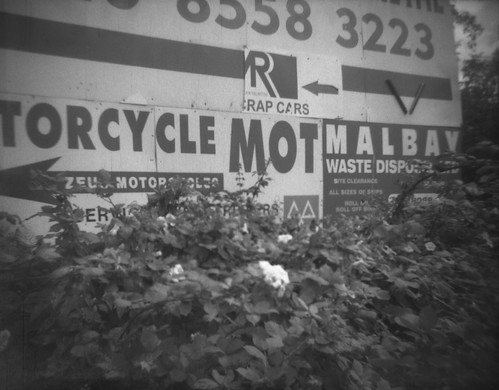 |
| V. P. Twin with Fomapan 200 |
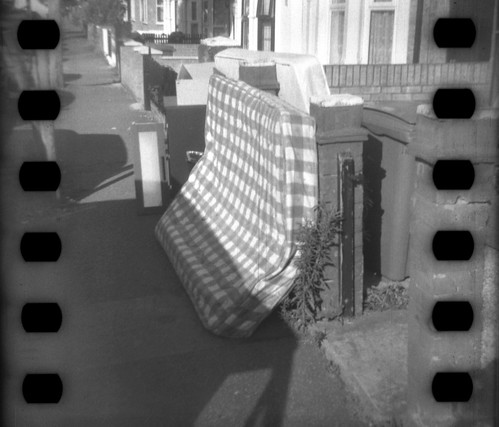 |
| V. P. Twin with Ilford Mk V |
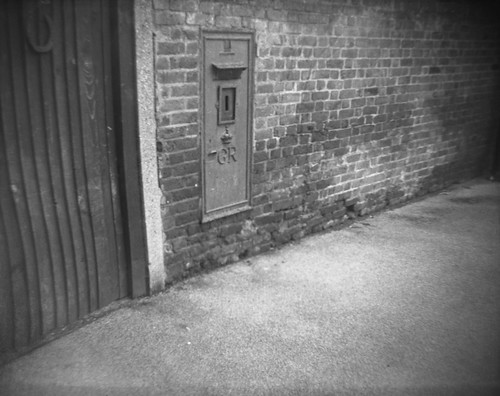 |
| V. P. Twin with Ilford HP5 Plus |
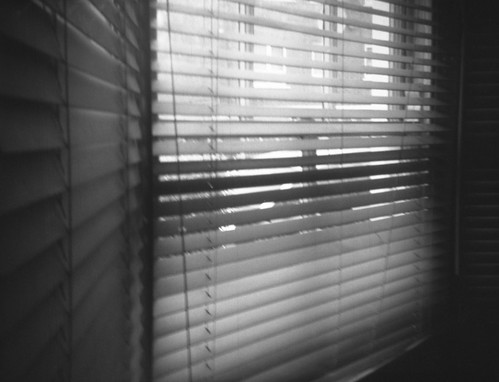 |
| V. P. Twin with Ilford HP5 Plus |
Sources/further reading:
V. P. Twin on Camera-Wiki
Great British Cameras: The V. P. Twin
My First Camera on Photographic Memorabilia
V. P. Twin on Collections Appareils in French
V. P. Twin on onetwoseven.org.uk