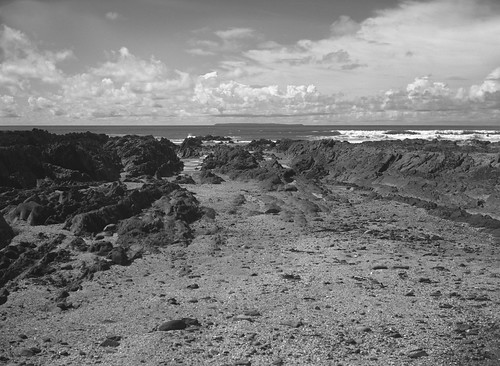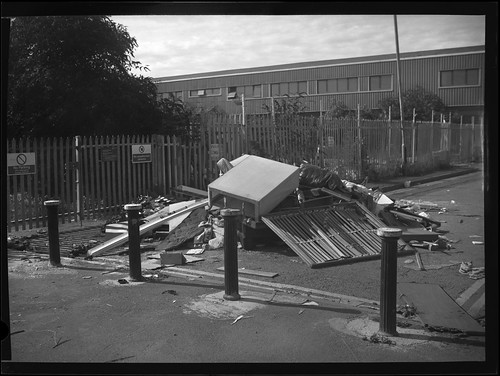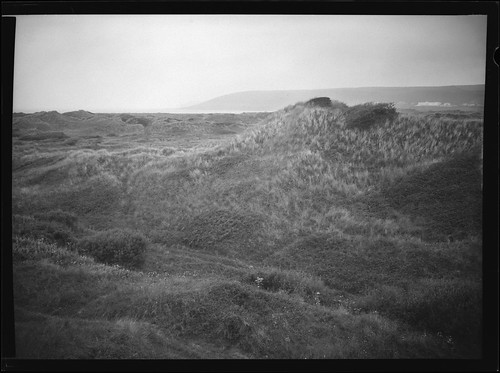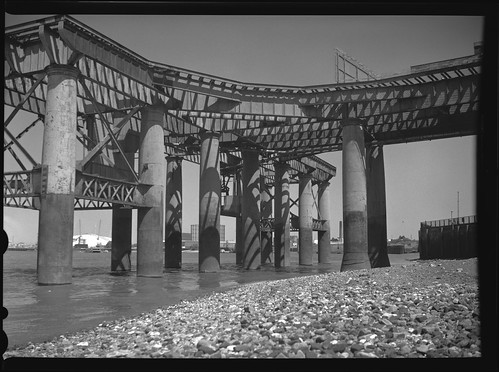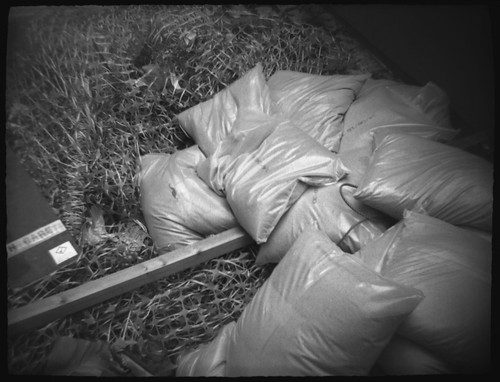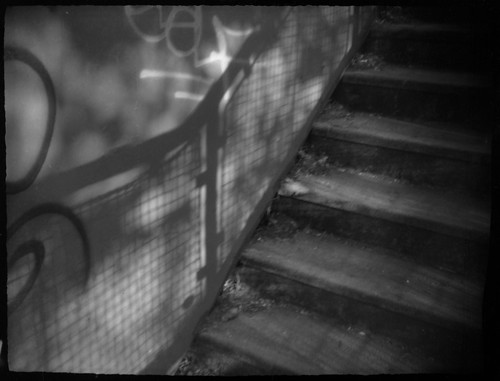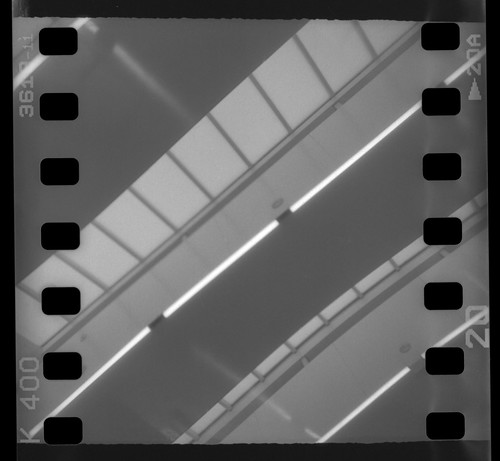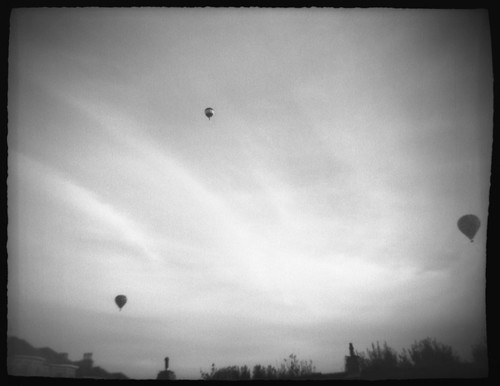
Showing posts with label HP5. Show all posts

Monday, 29 October 2018

October's #ShittyCameraChallenge

V. P. Twin with Ilford XP2 Super
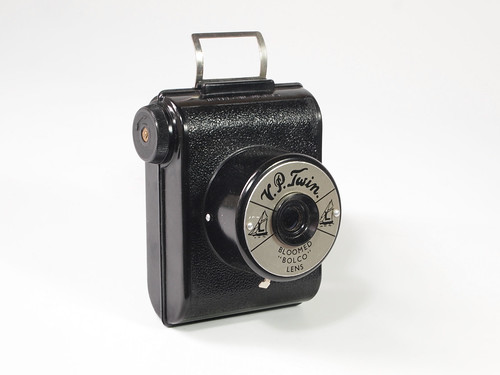
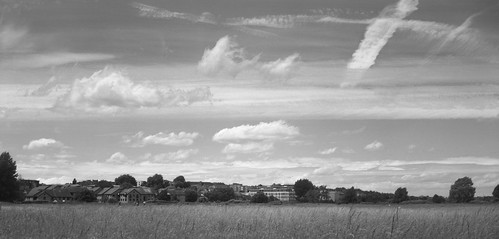
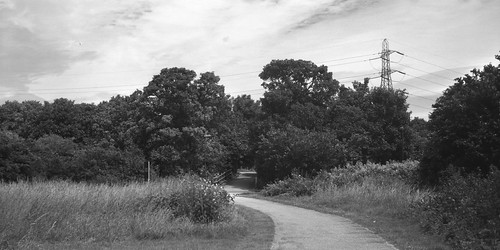
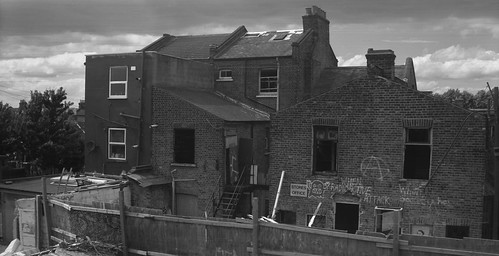
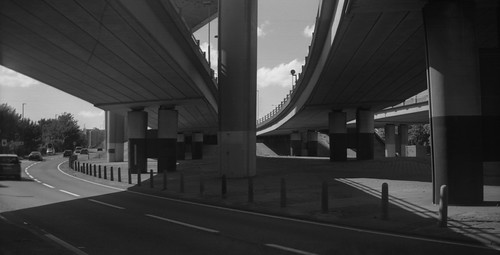
With October being announced as the second month this year for the #ShittyCameraChallenge, I wanted to use a different camera from June's contest, the Micro 110, and my first thought was to choose the Elliott V. P. Twin. The V. P. Twin seems perfect for the challenge - no user controls other than the shutter lever, a fixed-focus meniscus lens, a virtually obsolete format, a body made from Bakelite (or a Bakelite-type brittle plastic), and it was once sold in three parts for six old pence each. In my original post on the V. P. Twin, I calculated this to be £3.73 at 2016 prices - and the camera is probably worth hardly any more now; my model of the camera is the post-war version, which was once sold for 7/6, or 37.5 new pence, which would be £6.32 at 2016 prices. This was around the price I paid on a well-known auction site including postage. A handy definition of a 'shitty camera' is one where the camera is worth less than a roll of film: the V. P. Twin takes 127 format rollfilm, and certainly any new 127 film would cost more than the camera. There seems to be a small resurgence of interest in the 127 format, and a new Rerapan 400-speed black and white film is currently available, as well as Rera Chrome and Rollei Crossbird.

Elliott V. P. Twin
However, I didn't use any of these films over the week I was shooting with the V. P. Twin. Instead, I had some cut down medium format Ilford XP2 Super, HP5 and FP4 Plus, rolled with 127 backing paper, as well as some 35mm Kentmere 400. As the V. P. Twin is a snapshot camera and has no aperture or shutter speed controls, whatever film I was using - and these were mostly fast films - the films' latitude was important in order to provide results in a variety of lighting conditions (I did develop the XP2 Super in RO9; C41 process would have been better in terms of latitude for the film). Originally, the camera was recommended to be used for subjects in broad sunlight, of which there was some this October - obviously not as bright as summer sunlight - but I shot with whatever light was available, with mostly acceptable results.

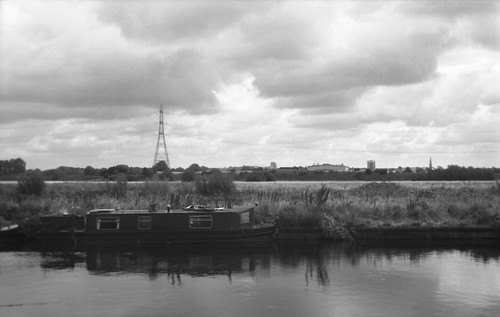
V. P. Twin with Ilford HP5 Plus
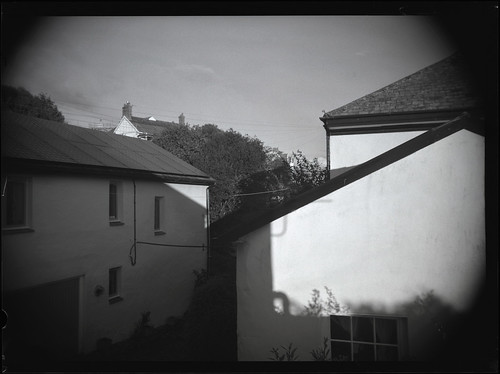
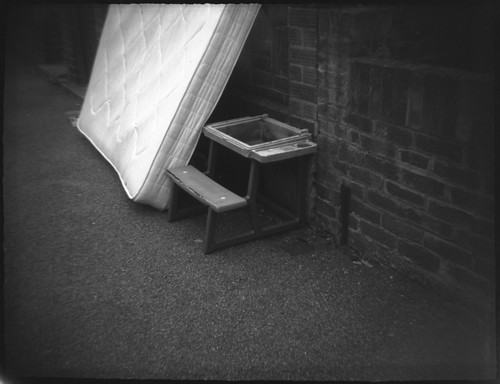
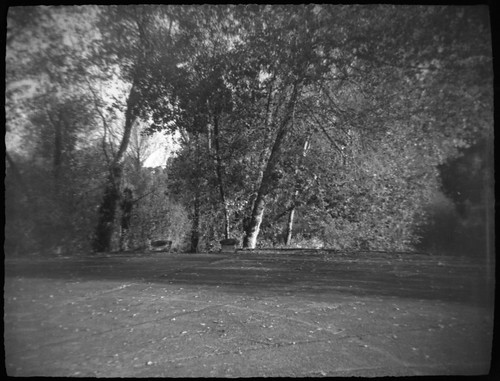
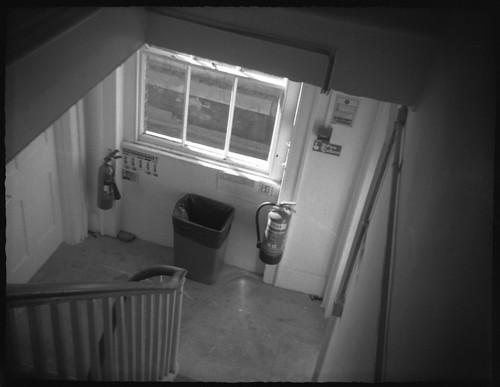
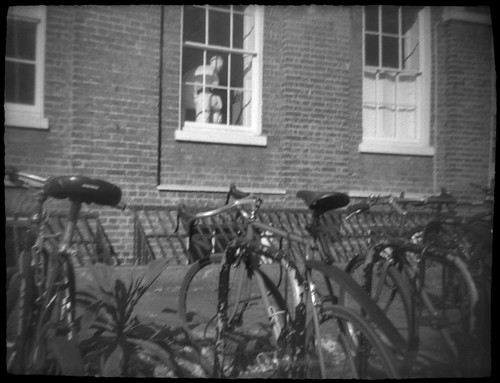
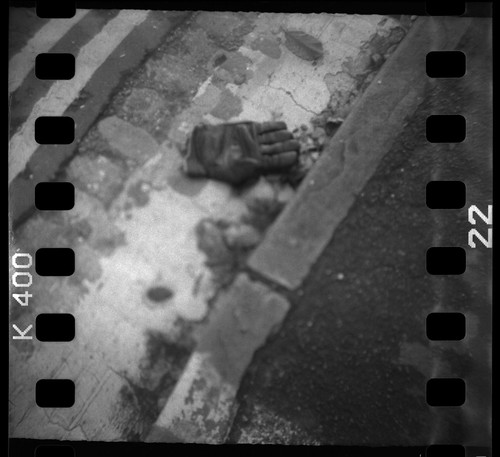
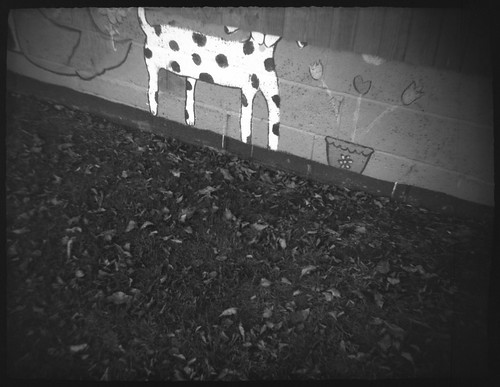
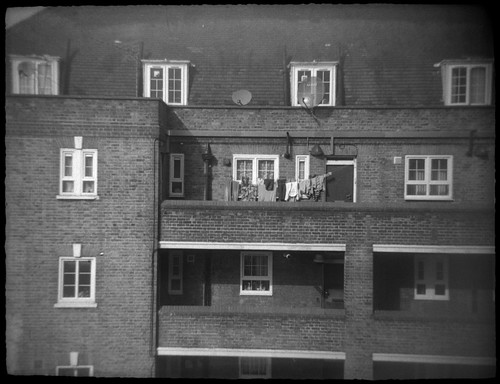
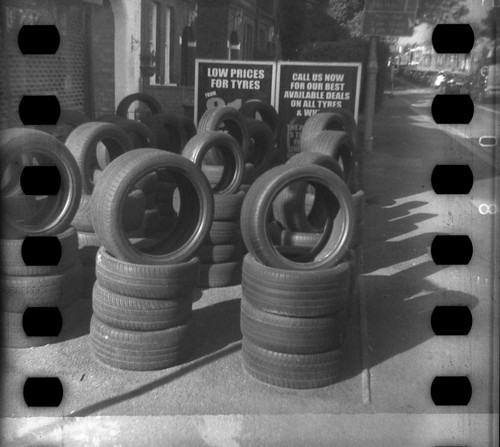
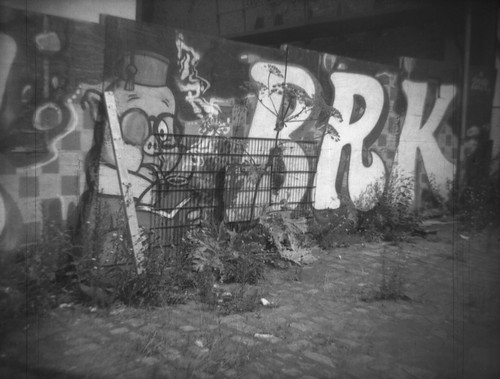
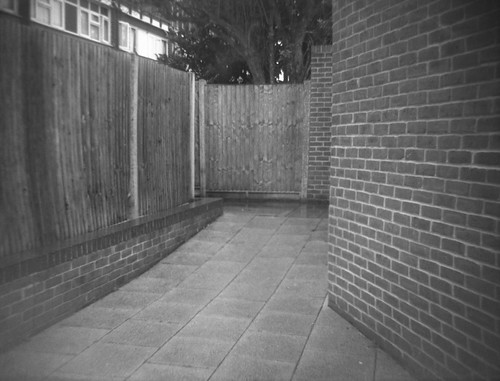
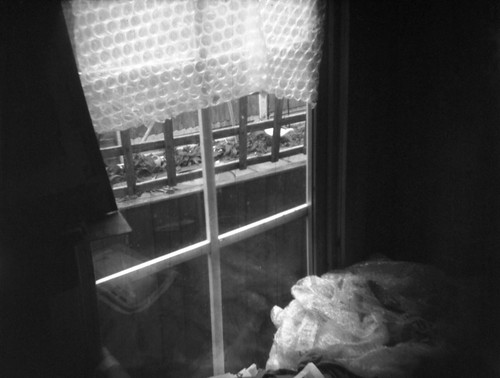
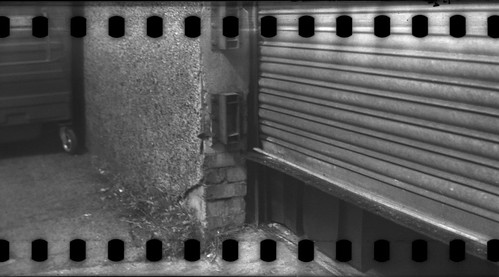
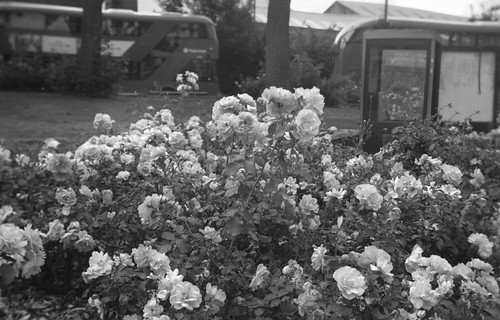
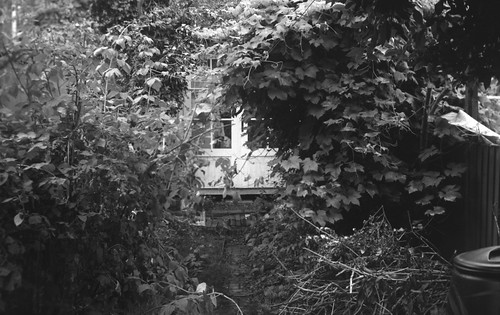
I did attempt a few shots of well-lit interiors, where HP5 gave good results. The photographs I took all demonstrated the shortcomings of the V. P. Twin: the meniscus lens has very visible vignetting and distortion in all images; there was also some camera shake in a few shots (using the camera this month, I noticed that the shutter appears to trip slower in one direction as opposed to the other); film flatness was an issue in some images (most notably with the 35mm film, as this wasn't supported at the sides of the frame); and the framing in a number of the photographs was clearly off - the curved metal viewinder frame of the V. P. Twin is rudimentary at best. All these factors help to qualify the V. P. Twin to be a 'shitty camera'.

V. P. Twin with HP5 Plus showing camera shake
V. P. Twin with Kentmere 400 - out of focus areas caused by lack of film flatness
V. P. Twin with Ilford XP2 Super - poorly framed subject
And yet these factors are part of the charm of using the V. P. Twin - other than the problems with accurate framing, which rarely provides a more interesting composition than the one I was trying to frame. Ideally, I would have probably shot everything on HP5 Plus, as this would have been the most sympathetic (or C41-processed XP2), but I was just shooting with what I had - what was already cut down and/or rolled with 127 format backing paper for use. Doing this - shooting with what I had - using a simple snapshot camera, over the course of a week, and the results that come out of those restrictions, are one of the chief attractions for taking part in such a thematic 'challenge', and, by doing so, engaging in part of a larger online community of film photographers.

V. P. Twin with Ilford HP5 Plus
V. P. Twin with Ilford XP2 Super
V. P. Twin with Ilford FP4 Plus
V. P. Twin with Kentmere 400
V. P. Twin with Ilford XP2 Super

Sunday, 12 November 2017

116 Day November 2017

Agfa Standard with HP5 Plus
Last Monday, the 6th November, I shot two rolls of film for a Winter '116 Day'. Working all day, I was only able to take photographs on the way to and from work, and a couple of shots during my lunch break. I used an Agfa Standard folding camera, rather than either the Cocarette or No.2A Brownie I've used perviously: the Agfa Standard was available in a range of plate and rollfilm sizes; the 116 format Standard was designated the Model 255 to distinguish it within the range. Using original 116 backing paper, I shot Ilford HP5 Plus, and pushed the film one stop when developing. The Standard's Gauthier shutter has five speeds, as well as B and T; all the 'instant' speeds appear to be the same now. The daylight shots were over exposed: I calculated that the shutter was firing at about 1/100th, but I think it's probably much slower than that. With the clocks going back it was dark leaving work; I had better results at night, with long exposures on the T setting, balancing the camera on any convenient flat surface. There appear to have been a few problems with film flatness, and again the long exposures perhaps show this less, as I used smaller apertures than the hand-held shots. The final shot on the second roll (the last image on this post) shows the end of the 120 film curling up inside the camera and casting a shadow upon itself during the exposure.

Agfa Standard with Ilford HP5 Plus

Sunday, 18 June 2017

116 Day Summer 2017

Kodak No.2A Brownie with Ilford HP5 Plus
For last weekend's '116 Day' I shot some 120 film in the 116 format Kodak No.2A Brownie (by coincidence, today, 18th June, is International Brownie Camera Day, as announced on the Brownie Camera Page). I shot some Ilford FP4 Plus and HP5 Plus both rolled with 116 backing paper, and also used the adaptors I'd made to fit 120 spools into the 116 spool chambers. As the weather was bright and sunny, I taped a yellow gelatine filter behind the lens on the inside of the camera body, meaning that, of course, all shots on a roll would have to use the filter; I could have taped the filter on the outside of the camera, but this would be likely to be scratched, as well as, given the construction on the camera's front, I was concerned that there might be some internal reflections between the filter and the lens. Using the filter reduced exposure by a stop, but, given the speed of both films (and the films' latitude), still meant that I used the smallest aperture stop for the open landscape shots, where the yellow filter provided good definition for the sky; some of the photographs with more shadow areas should have had more exposure, most of these being shot on the middle stop. Although not as obvious as when I first used the camera, the negatives still had some scratches from the rollers (probably due to a small amount of corrosion), the worst of which I mitigated in Photoshop; before using the No.2A Brownie again, the rollers would benefit from being removed and being polished.

Kodak No.2A Brownie with Ilford FP4 Plus
Kodak No.2A Brownie with Ilford HP5 Plus

Wednesday, 1 March 2017

Take Your Box Camera To Work Day 2017

Kodak No.2A Brownie with Ilford HP5 Plus
For yesterday's 'Take Your Box Camera To Work Day', I used my Kodak No.2 Brownie; having shot with it for last June's 116 Day, I was keen to use it again, but hadn't had the excuse. Keeping the 116 backing paper from the two Kodacolor 116 films that I had used last year, it was a simple matter to transfer 120 film to the slightly larger paper. The original 116 film is longer than 120, with the result of getting just six whole images from a roll, but I had no problems with frame spacing, as I did have when using 120 film with adaptors, as the numbers and markings do not quite evenly match up; although I did get six whole images, most of a seventh image was possible, but with the odd effect of the very end of the film curling up inside the camera and creating an odd oblique shadow on itself with distortion in one corner, as the narrow width of 120 film meant that it wasn't securely held each side of the frame (this did also show up as a slight curl at the top or bottom - or both - of most images).

Kodak No.2A Brownie with HP5 Plus - seventh frame
I shot two rolls of Ilford HP5 Plus with the 116 backing paper; most were long exposures with the 'time' setting, and at the camera's smallest aperture, finding level surfaces to place the camera for a few seconds, although I did attempt a few shots on the 'instant' setting, such as the one below, but with the Brownie's widest aperture being around f11, interior shots with a fixed shutter speed of around 1/40th would generally be underexposed; in addition, the weather for most of the day was overcast, providing less daylight to help illuminate rooms with windows.

Kodak No.2 A Brownie with Ilford HP5 Plus
Despite having attempted to clean the rollers on the camera, the photographs shot with the Brownie did have scratches through the emulsion, although not generally as bad as the film I'd used last year. These scratches tended to show more on the instantaneous shots, as the negatives were thinner; the patterns of the scratches also suggested that, by virtue of how the Brownie's film advance works, each turn of the wind on key has points where the tension is greatest, and the scratches were more prominent, as seen in the image below.

Kodak No.2A Brownie with Ilford FP4 Plus
As well as HP5 Plus, I also shot a roll of Ilford FP4, using the spool adaptors I'd previously made, which worked well enough, as did the spacing generally, using the 6x4.5 frame markings on the back of 120 paper (which I have written about more fully in my post about the Zeiss Ikon Cocarette). Probably the best shots from the day were two on FP4 Plus from my journey home, with the light failing, using relatively long exposures at f22, at the bottom of this post, which demonstrate how good the Brownie's lens can perform stopped down (the subjects of most of the other photographs are a little close for the fixed-focus lens). An additional synchronicity for using the No.2A Brownie on this year's 'Take Your Box Camera To Work Day' is that my particular model B version is one hundred years old this year: a couple of small details (specifically, the spool-end tension springs and the unmilled latches) are evidence that the camera was produced at some point between June and October 1917.

Kodak No.2A Brownie with Ilford HP5 Plus
Kodak No.2A Brownie with Ilford FP4 Plus

Wednesday, 13 July 2016

127 Day Summer 2016

Vest Pocket Autographic Kodak with Ilford FP4 Plus
For yesterday's 127 Day I shot two new (to me) 127 format cameras: a Vest Pocket Autographic Kodak and the V.P. Twin. I shot 120 film cut down to 127 size, and 35mm Ilford Mark V film taped to 127 backing paper, with both cameras. The Vest Pocket Kodak had problems with light leaks from holes in the bellows which I had been attempting to find and fix the day before; incidentally, both cameras had issues with film flatness, causing some distortions in the negatives, especially with the V.P. Twin, although less noticeable in the shots with the smaller frame size on the 35mm film.

V.P. Twin with Ilford Mark V
V.P. Twin with Fomapan 200
V.P. Twin with Ilford HP5 Plus
V.P. Twin with Fomapan 200
Vest Pocket Autographic Kodak with Ilford Mark V
Vest Pocket Autographic Kodak with Ilford HP5 Plus

Tuesday, 8 December 2015

Kodak Recomar 33

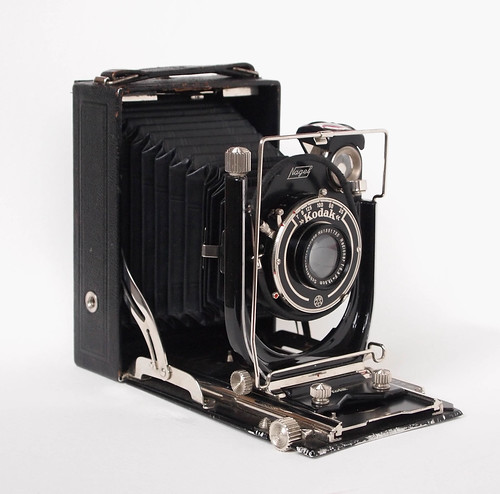
Kodak Recomar 33 with Schneider-Kreuznach Radionar f6.3 135mm lens
After writing about the Ica Trona 210 last year as a "small large format camera", towards the end of summer this year, I took a Kodak Recomar 33 on holiday. Most of the remarks about using the Ica Trona are equally applicable to the Recomar; with a small number of 9x12cm plateholders (oddly, the two Kodak-made holders I have don't fit the Recomar), and fewer film sheathes (just eight), a week away meant taking a dark bag to change the sheet film after exposure, and an empty box to store exposed film. I also took four plate holders without film sheathes, loaded with Ilford HP3 glass plates from the 1970s, which I wrote about last year in the post, 'Some large format glass plates'. I took a box of Fomapan 400 and some old Agfapan APX 100 with a develop before date of January 2004 (I didn't take my 9x12cm rollfilm back, and only shot sheet film while away). As the two different types of film had different notch codes, I used the same box to store them after exposure; I did also find a common development time with one particular dilution of Ilfotec LC29, meaning that I could develop both at the same time in the same tank, but could also distinguish which film was which if I wanted to use a different developer or dilution.
Kodak Recomar 33 with Schneider-Kreuznach Radionar f6.3 135mm lens
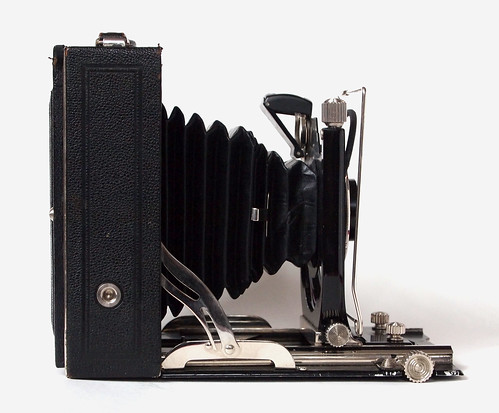
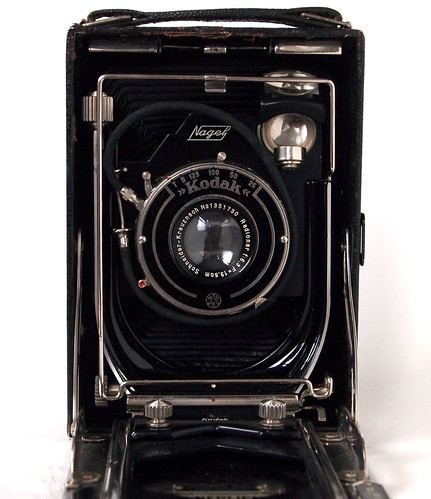
The Recomar camera was first produced by Nagel around 1928, shortly before the company was bought out by Kodak in 1931; production by Kodak A.G. in Germany was continued until 1940. The Recomar camera was available in two plate sizes: as the Recomar 33 in 9x12cm format and the Recomar 18 as 6.5x9cm. My camera is the larger 9x12cm format, and came with a Schneider-Kreuznach f6.3 Radionar lens (datable to 1938), in the standard 135mm focal length for the format, with a Gauthier Telma four-speed shutter (1/125th. 1/100th, 1/50th, 1/25th, as well as 'T' and 'B)'. The camera features all-metal construction, double extension bellows, wire frame sportsfinder, brilliant viewfinder with spirit level, ground-glass back, and both rise/fall and cross lens movements. It also came with a cloth covered cable release, possibly original. It's the most compact of my three 9x12cm folding cameras, just a few millimetres smaller than the Trona in its height and width at 15.8x10.8x5cm.
Kodak Recomar 33 with Schneider-Kreuznach Radionar lens
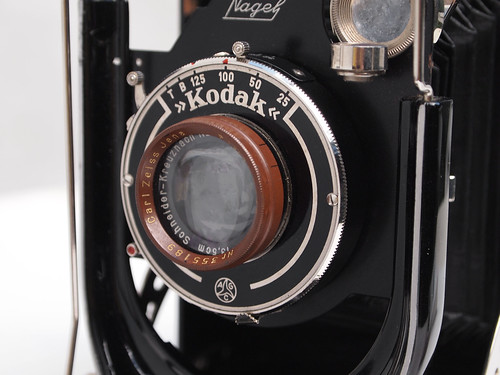
Looking at other images of Recomar cameras on Flickr, this has an unusual lens and shutter combination in the Radionar and Telma, and features Nagel on the front standard where other Recomars have the name Kodak. It does prominently state «Kodak» on the front plate of the shutter, and also on the bed alongside a dealer's decal (J. L. Nerlien, Oslo). The serial number inside the body is 14914Z; whether this is early or late in the production run I don't know, but it is tempting to speculate that the front standard could be old Nagel stock left over from the time of Kodak's takeover, although the late date of the lens' serial number raises more questions than answers. Kodak's manual lists the cameras having f4.5 Xenar lenses, in both the 18 and 33 sizes; the only example of a Recomar 33 with a slower f6.3 lens I've found online is a Nagel one from 1929 (incidentally, the Nagel-branded front standard on my camera cannot fit a wider aperture lens as the shutter/lens flange is much smaller than that for a f4.5 lens). The camera cost just £16 on a well-known auction site, perhaps partly due to its slow(er) triplet lens; given the size of the 9x12cm negative, the quality of lens as compared to the usual Xenar Anastigmat (a Tessar-design) may not be quite so obvious, although when open wide, there does appear to be a falling off in definition towards the corners. The main drawback with the slower lens is a less-bright image when using the ground glass screen to focus, making this more difficult in low-light situations.

Although generally in very good condition for being over seventy years old, I did initially have a slight problem with the underside of the bellows being a little crushed and creased. This meant that this side of the bellows curved up and slightly inwards, and would cast a shadow just interfering with the projected image; this can be seen in the last photograph at the end of this post, shot on HP5 Plus: on the right hand side, the curving, slightly out of focus border is caused by this. I had this show in a number of the first shots taken with the Recomar, before realising that it could be easily rectified by gently pushing out the bellows from the inside, simply done at the point of changing the ground glass screen for a plateholder before making an exposure. As provided with double-extension, there's plenty of 'give' in the bellows, and after gentle encouragement, they tend to stay in position; like some other folding cameras I have, especially with double-extension bellows, when first opened, the mass of the bellows has a tendency to gather at the back of the camera.
Kodak Recomar 33 with Proxar III
Following my experiences with the Ica Trona, I bought a 32mm Proxar III supplementary lens to use with the Recomar. The 32mm outside dimensions of the f6.3 lens appears to be a common size: I have medium format cameras with f4.5 105mm lenses which can take a 32mm push-fit filter, as well as the Kodak Retina with its f2 50mm lens and the c.180mm f8 Rapid Rectilinear (it's useful to have this standardisation as I already have yellow filters and lens hoods in 32mm). I discovered only later that the coverage of the Radionar lens with the Proxar attached isn't sufficient for 9x12cm when focussed at infinity: using the Proxar, infinity is at 11cm. The two images below shot from the same position demonstrate this, first without and then with the Proxar fitted.
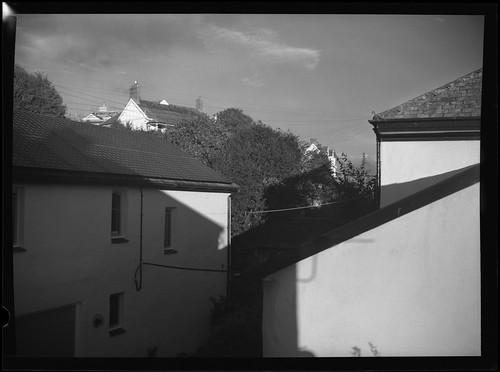
Kodak Recomar 33 with Fomapan 400
Kodak Recomar 33 and Proxar III with Fomapan 400
Depending on the subject, this vignetting caused by the edges of the image circle isn't always a distracting problem, such as in the photograph below. The shots taken with the Proxar attachment appear to show that the image circle was not perfectly centred on the film, although I'm certain that the lens was centred according to the white dots which match on the standard for returning the rise and cross movements: in both images here, the image circle appears shifted a small amount to the left, which would equate to a small amount of rise when the camera is held in portrait orientation. Although pure speculation on my part, perhaps this rise is built-in to the camera design to automatically make a slight correction to the perspective of verticals.
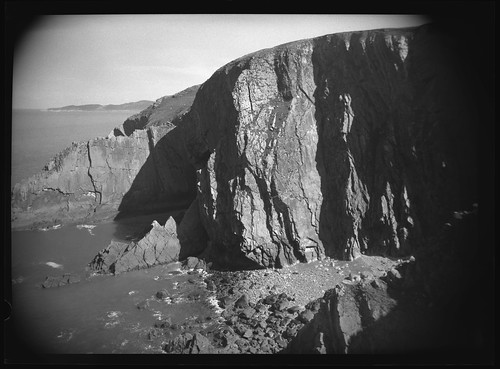
Kodak Recomar 33 and Proxar III with Fomapan 400
The other function of the Proxar supplementary lens, that of a close-up filter or adaptor, does not suffer from vignetting by the simple fact that the further away from the film plane that the lens is extended, the greater the size of the projected image circle. Although shot on a forty-year old glass plate, with the usual signs of the losses in quality of an old emulsion, the image below with the Proxar used for its close focus qualities shows no vignetting in the corners.
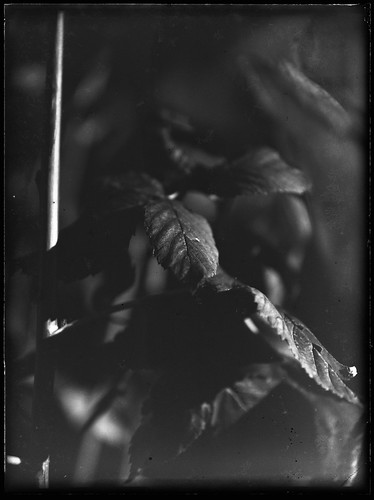
Kodak Recomar 33 and Proxar III with HP3 glass plate
One of the main reasons for wanting to use the Proxar attachment was when using the rollfilm back on a 9x12cm camera, the 6x9 frame size becomes near a normal angle of view, reducing the crop factor, as seen in the two photographs below: the second shot, although slightly turned, can be compared to this image on 9x12cm film from more or less the same position (the top image is shot with a yellow filter; the image below uses the Proxar on its own as I was wary of stacking the filters).
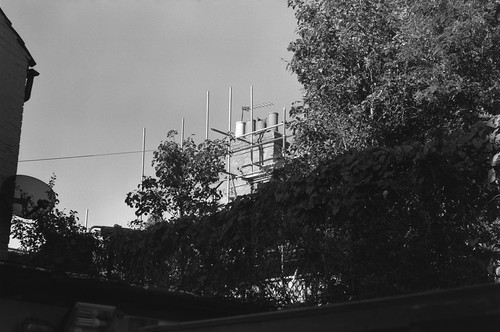
Kodak Recomar 33 with HP5 Plus in rollfilm back
Kodak Recomar 33 and Proxar III with HP5 Plus in rollfilm back
The image below also shot with the rollfilm back demonstrates the Proxar as used for close-up purposes. For the benefit of composing on the ground glass screen, especially for shots like this with a tripod, I found it useful to draw the outlines of the 6x9cm aperture from the rollfilm back with a sharp pencil directly onto the ground glass. (Apart from the two close-up shots in this post which used a tripod, all the other photographs were shot hand-held).
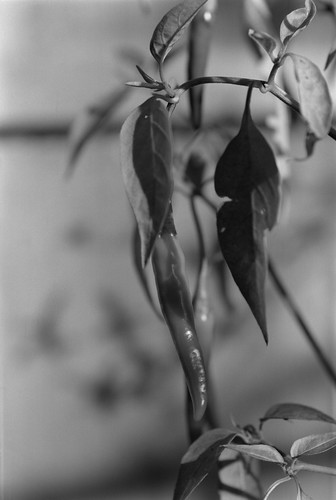
Kodak Recomar 33 and Proxar III with HP5 in rollfilm back
The Recomar 33 is the most robustly made of my 9x12cm cameras: the lens standard is reassuringly rigid once pulled out of the camera body, the rack and pinion focus is tight enough to remain in place even without locking the focus, and the general condition of the camera, despite the bellows, which are quite light-tight, suggests that it hasn't been that well used during its life. The leather on the side of the camera which has the folding sight of the wireframe finder is rather faded, indicative that it may have sat on a shelf, side-on to the light for many years. Ideally, I would perhaps choose a Recomar with a faster lens and a better shutter with a greater range of speeds, but as a 'small large format camera', the recent results demonstrate just how well it has performed for this purpose.
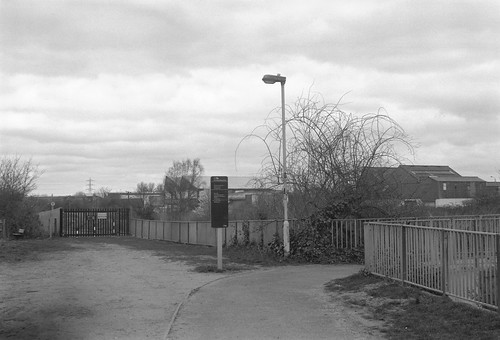
Kodak Recomar 33 with Fomapan 400 in rollfilm back
Kodak Recomar 33 with Rollei RPX 400 in rollfilm back
Kodak Recomar 33 with Ilford HP3 glass plate
Kodak Recomar 33 with Agfapan APX 100
Kodak Recomar 33 with Fomapan 100
Kodak Recomar 33 with Fomapan 400
Kodak Recomar 33 with HP5 Plus

Sources/further reading:
Kodak Recomar 33 on Camera-Wiki
Manual for the Recomar 18 and 33
Kodak's listings of historic cameras