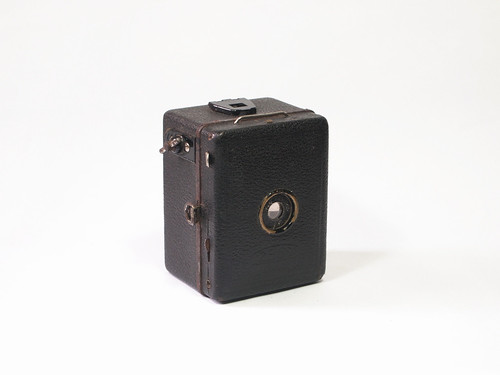
 |
| Zeiss Ikon Box Tengor 54/18 |
'Miniature' cameras became increasingly popular around 1930, the term either used to mean films smaller than 120 medium format
or sometimes applied to cameras with negative sizes less than 6x9cm. One imagines that there were a number of reasons for this, one of which being economy; hardly an economic camera, the original Leica began the popularity of 35mm film as a miniature format for still photography; another way of using film more economically was to simply get more negatives on an existing rollfilm format. Paper-backed
127 rollfilm was already well-used for 6x4cm negatives after being introduced for the Vest Pocket Kodak in 1912. The
Zeiss Ikon Kolibri was reputedly the first camera designed for its 'half-frame' size of 3x4cm, and both the Kolibri and Zeiss Ikon's
Baby Box Tengor were introduced to the market in the same year, 1930, suggesting that the Baby Box Tengor may already have been planned as a cheaper alternative to the Kolibri. As the original 127 rollfilm cameras shot 6x4cm negatives with 8 frames on a roll of film, to use the film for for 16 images, the same numbers on the paper backing had to be employed (only later did more expensive cameras with automatic frame counters make the red window no longer a necessity). As a result, the camera, and other 3x4cm 127 cameras, uses two red windows for the 3x4cm frame, with each frame number appearing twice, once in each window (unlike 120 film which now has three sets of numbers, although 127's backing paper
was redesigned with numbers for 4x4cm frames, it didn't gain numbers for the 3x4cm frame sizes).
The original Tengor cameras were made by
Goerz, and appear to be inspired by the Kodak Brownie series of box cameras. The Box Tengor was continued by Zeiss Ikon after its formation, and some models were provided with aperture selection and supplementary lenses for close focus, making these amongst the most fully-featured box cameras. As with the larger Box Tengors, there was a model of the Baby Box camera which had these features, with a focusing f6.3 Novar lens, stopping down to f11, and a shutter with I, B and T settings. However, this model was only produced for a couple of years, while the standard Baby Box Tengor, with a fixed-focus 50mm f11 Goerz Frontar lens, and a shutter speed of around 1/25th, was made until at least 1939. As an inexpensive camera, with an economic negative format, the Baby Box Tengor was marketed to children (in the
catalogue page here, it is subtitled
Die Schüler-Camera).
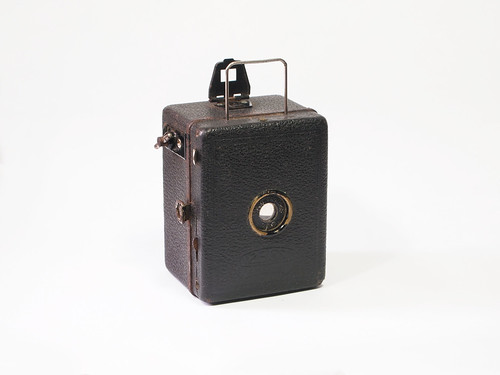 |
| Zeiss Ikon Box Tengor 54/18 with frame finders erected |
My example of the camera is a very early version of the camera: the most obvious sign is the lack of the hexagonal design around the lens, which was introduced in 1931 (this design also has the name BABY-BOX inscribed on the front panel, while my camera has just Box-Tengor impressed in the leatherette on the back); however, the wire frame finder has a straight top to it - later models have a upwards-curving section in the centre, no doubt to make it either top pull into position. This wire frame finder also functions as a lock on the shutter on later models, with the shutter not firing unless it is erected. With the film moving through the camera from top to bottom, thanks to the 'half-frame' negative size on 127, the Baby Box Tengor is designed to shoot in a horizontal format; rotating the camera through 90º for a portrait shot, the shutter release is then in a position on the top right hand side. Above the shutter lever, on the same side, is a tab that prevents the shutter from closing when pulled out, providing a time-exposure setting. Although a very simple box camera, it is also has a cable release socket just under the shutter lever. As a quirky design feature, the shutter lever is directly connected to an
internal cover behind the lens, in front of the aperture, which is mirrored; behind this is the actual shutter mechanism itself. This may be a clear visual sign to see whether the shutter is open when in time mode.
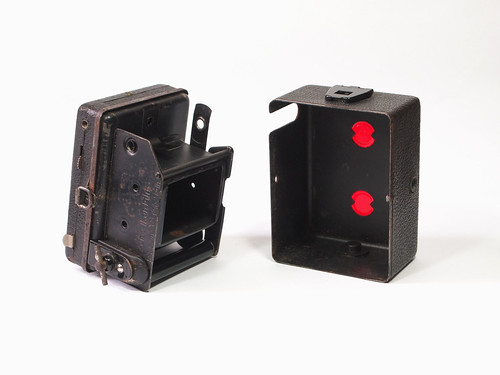 |
| Zeiss Ikon Box Tengor 54/18 - opened for loading |
The back of the body removes entirely for loading, with a catch that needs to be pulled out before opening. In the image above the two red windows on the back can clearly be seen, as well as the two tripod sockets for horizontal and vertical formats. Inside the camera is stamped with the Zeiss Ikon's own designation for 127, A8, and it also specifically gives the
original 127 frame format in metric and imperial.
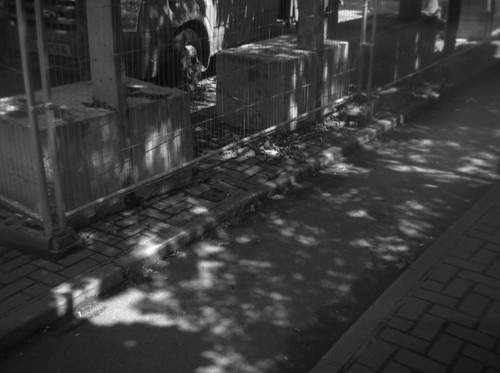
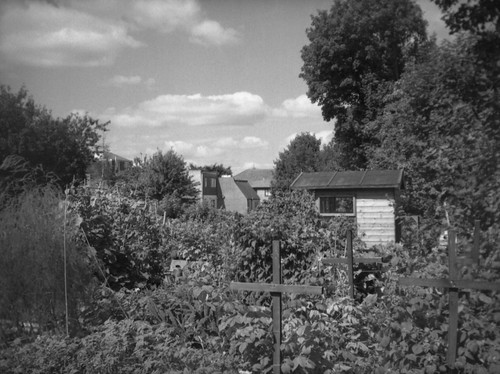
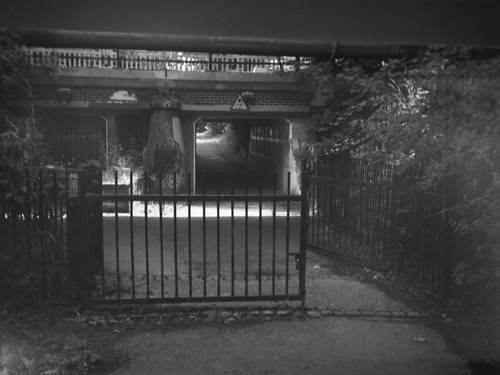
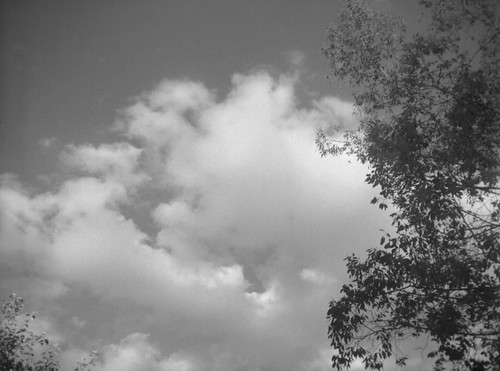
In use, the Frontar lens is tolerably sharp in the centre of the image, with definition falling off to the corners (which, in some cases,
almost gives the appearance of tilt shift to the image); with a fixed focus lens, single speed shutter and fixed aperture, it is very similar to the later
V. P. Twin (both cameras' dimensions are comparable, but the metal bodied Baby Box Tengor feels rather more solid). The dimensions of the camera (with the finder down) are compact: 8cm high by 7cm wide including the film advance, and 5.5cm deep. Where it does differ in performance from the V. P. Twin is that the film appears to be held much flatter inside the camera, and the Goerz Frontar lens, an achromatic doublet performs better too.
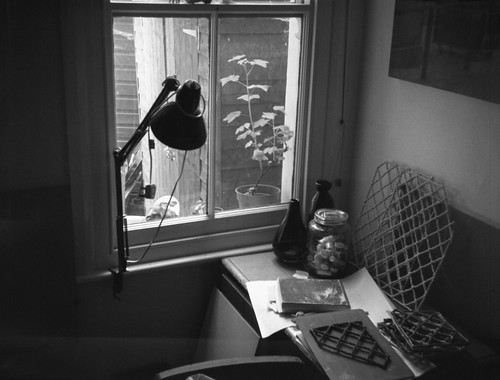 |
| Baby Box Tengor with Ilford HP5 Plus |
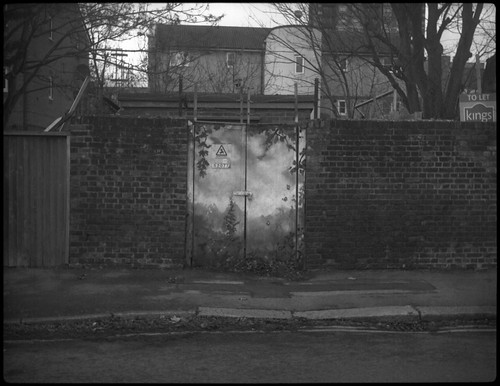
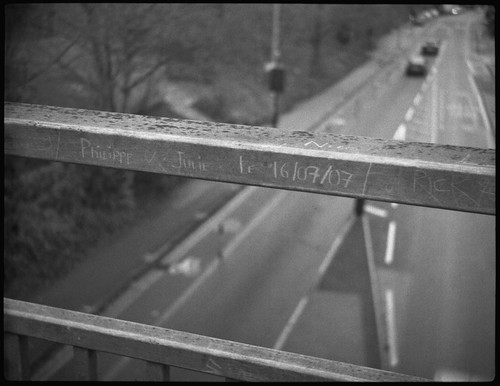
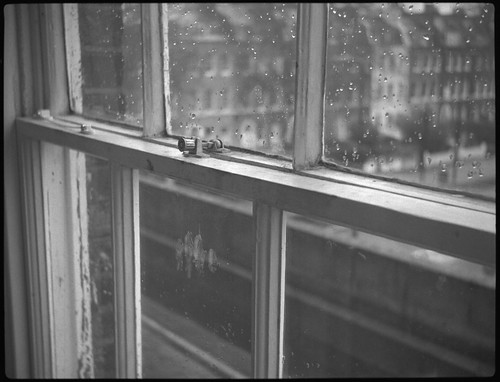
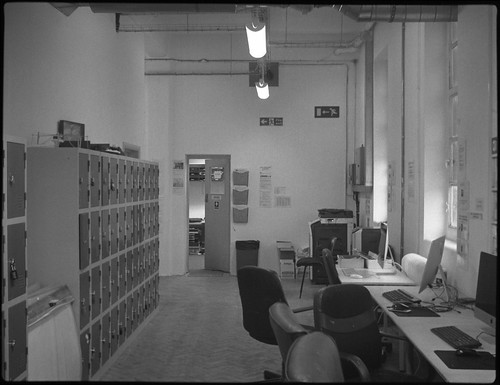
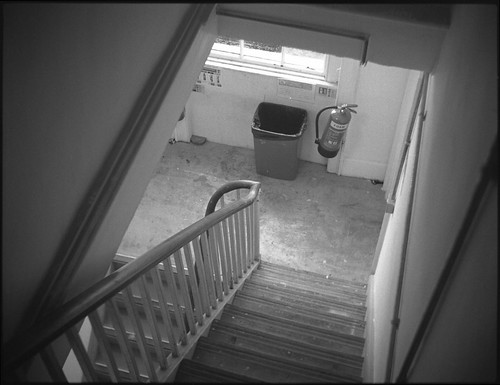
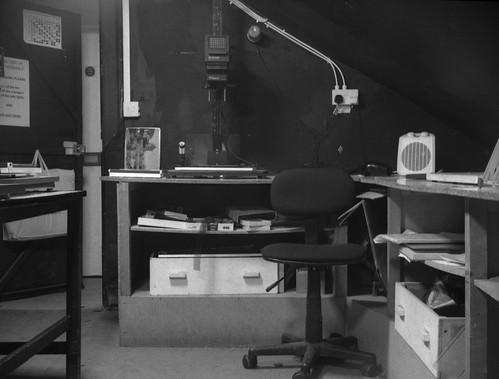
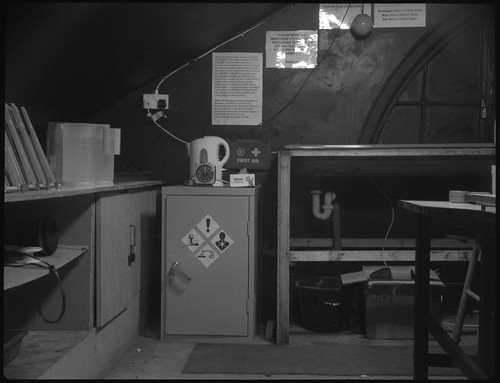
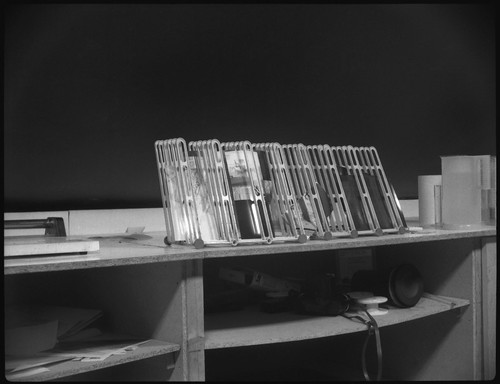
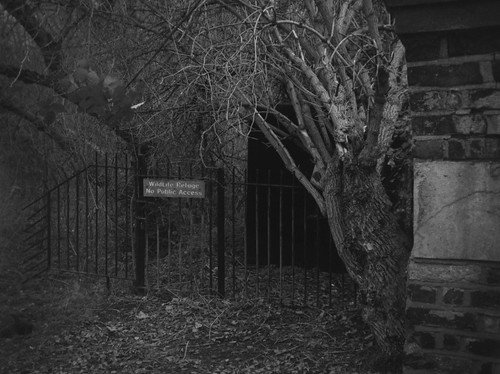
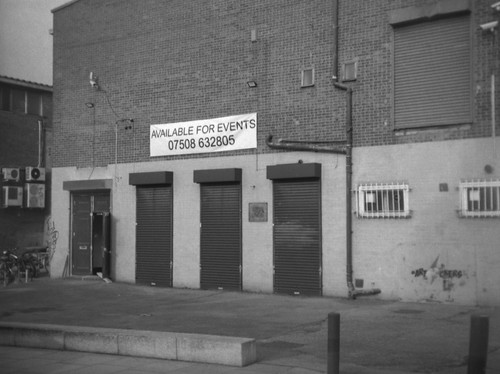
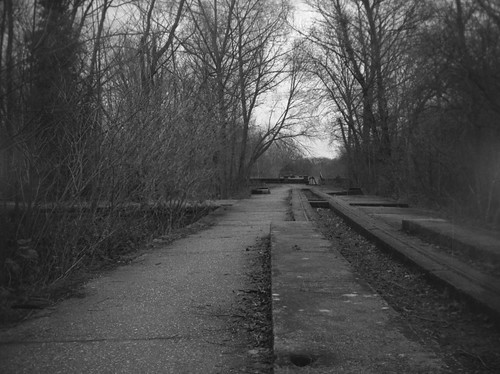
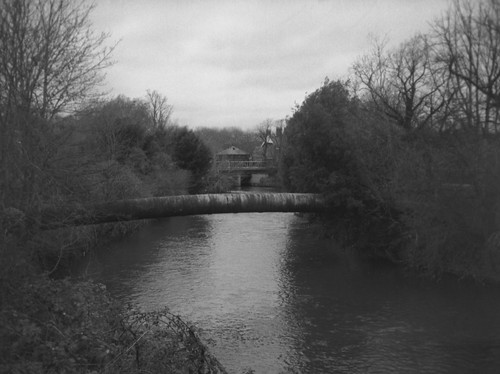
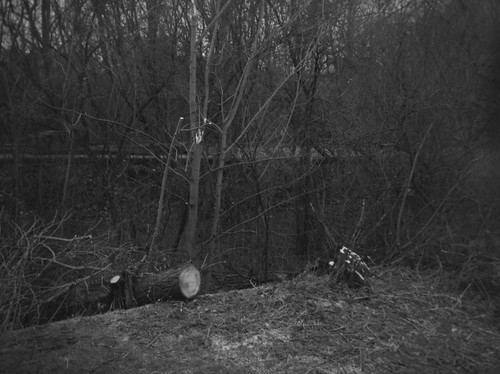
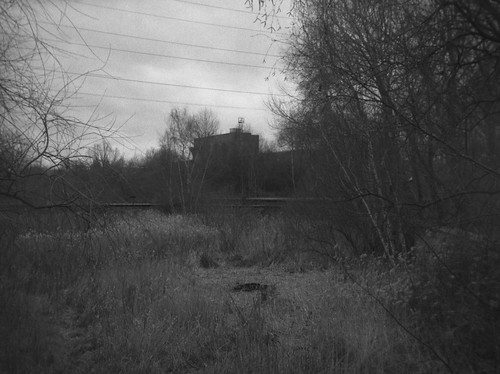
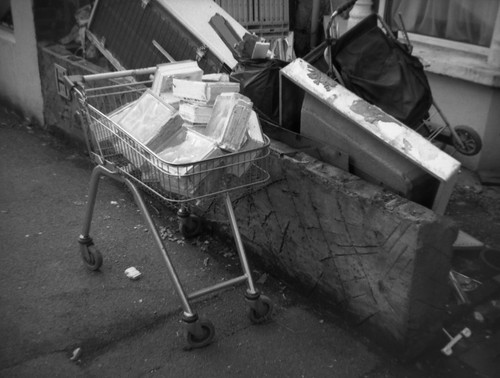
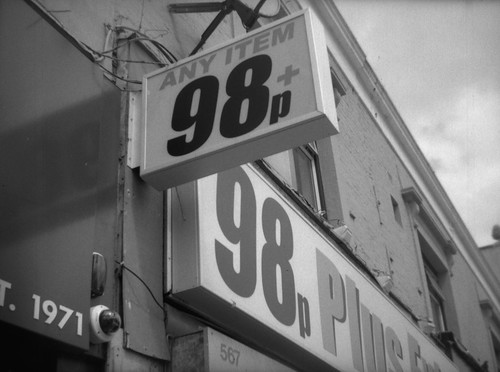
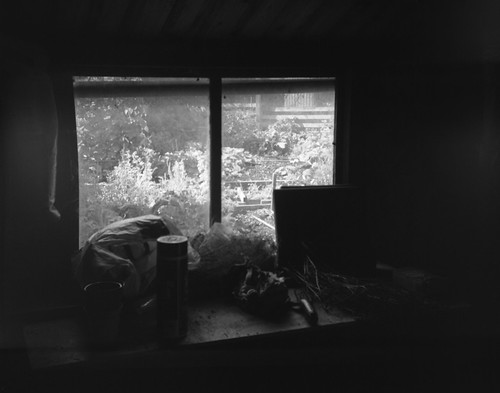
As I have written in regards to using other box cameras, using modern, faster emulsions than those that would have been available when the camera was first made, give greater flexibility in shooting conditions, such as in the interior above, admittedly with plenty of light from the window. I shot all the images in this post with 120 format film cut down and rolled with 127 backing paper. For a camera nearing 90 years old, some aspects of its operation are not working quite as new: the shutter does not always 'reset' itself, generally turning the camera upside down will do this on my camera; in addition, the time setting does not always keep the shutter open with the camera in landscape orientation (clearly gravity is acting on some components inside in a way that it shouldn't - in my tests with the camera, I only used a
long exposure with a couple of shots on Kodak High Resolution Aerial Duplicating Film). Neither of these problems is especially obstructive when using the camera. The focussing version of the Baby Box Tengor with the Novar lens may well be more sought after, if greater user control is desired, however, the standard model, as a very small, pocketable box camera does have its own charm.
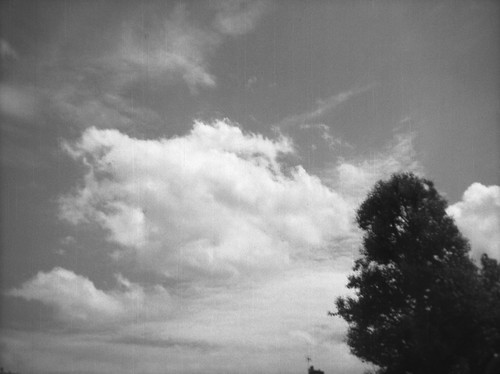 |
| Baby Box Tengor with Agfapan APX100 |
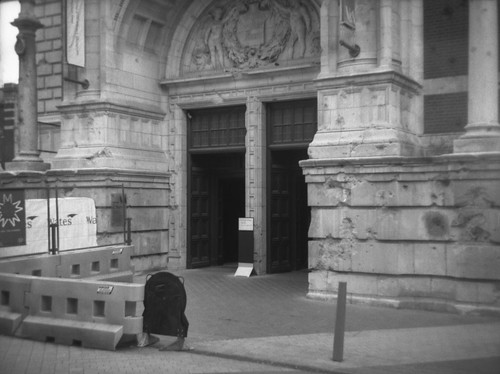 |
| Baby Box Tengor with Ilford FP4 Plus |
 |
| Baby Box Tengor with Fomapan 200 |
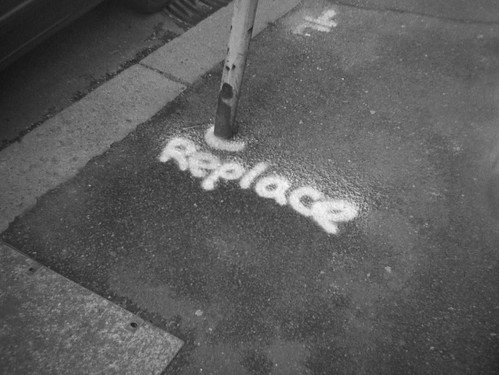 |
| Baby Box Tengor with Kodak Tri-X |
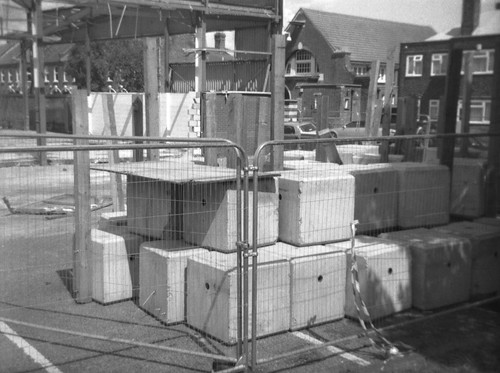 |
| Baby Box Tengor with Ilford HP5 Plus |
Sources/Further Reading: