Showing posts with label Kodacolor. Show all posts

Friday, 19 July 2019

127 Day Summer 2019

Rolleiflex 4x4 with Kodak High Resolution Aerial Duplicating Film
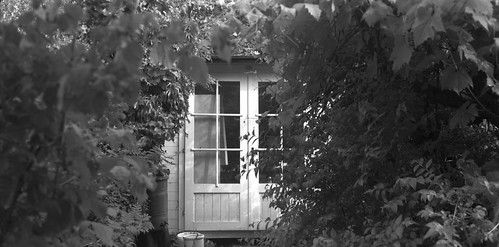
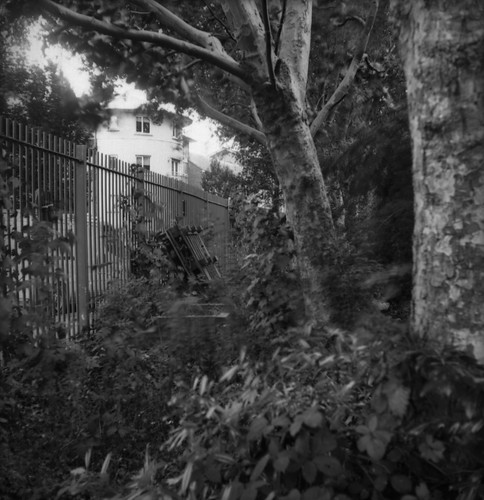
After my recent testing of the Rolleiflex 4x4, I naturally wanted to use it on last week's 127 Day; I didn't have any film in medium format to cut down to 127 to use on the day itself, as I might normally do. However, in cutting down 120 film to the width of 127, as the film is also longer, there's always an offcut of three or four frames, depending on the frame size of course; I did have one such short roll of Ilford FP4 Plus, which I simply shot the same scene over three frames with bracketing.

Rolleiflex 4x4 with Ilford FP4 Plus
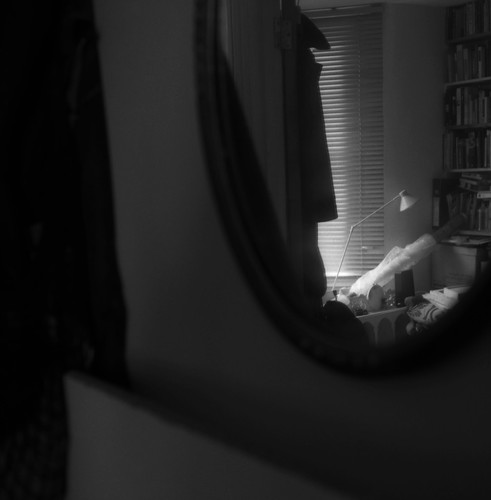
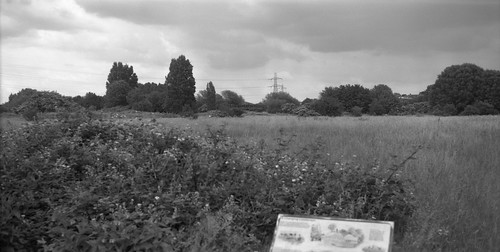
I also shot the roll of Kodacolor II which had originally come with a Kodak Brownie 127 and which I hadn't previously used: I had low expectations for this film considering its age and that the roll of Agfacolor Special which also came with the camera and that I had short for last year's Summer 127 Day had only yielded one poorly defined image (I might have used the Kodacolor II film then had I not broken the camera). Using the Rolleiflex 4x4 did mean that I could give the film much more exposure than that of the Kodak Brownie 127 which has a single shutter speed and aperture, and so I used a tripod and bracketed exposures, erring on the side of considerable overexposure - which did provide better results than I had achieved with the Agfacolor film twelve months ago.

Rolleiflex 4x4 with Kodacolor II
The metal spool that the film was on was rusty, and the backing paper was partially stuck to the film, although this seemed to be mostly on the reverse of the film, not the emulsion side, and could be gently rubbed off in the wash. I used stand development with the film to get a black and white negative image, successfully for a few frames, although in comparison with the image above, the one below is out focus in the central area, suggesting that film flatness was a problem, perhaps unsurprising given that the film itself had been tightly coiled around the 127 spool for forty years.

Rolleiflex 4x4 with Kodacolor II
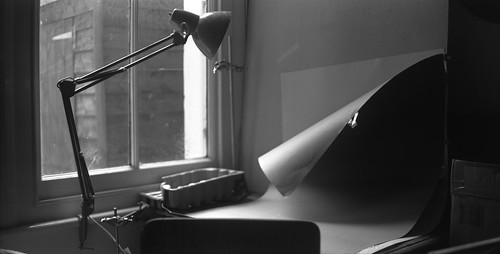
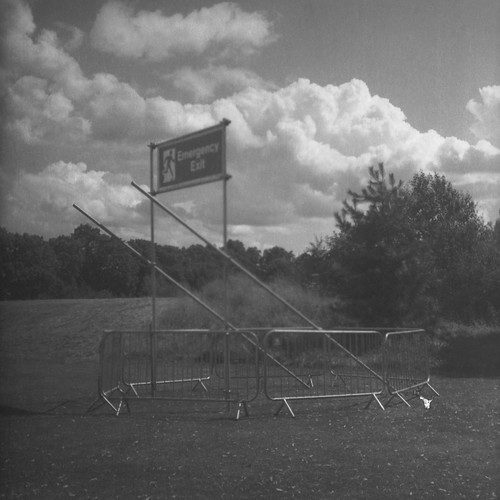
Most of the photographs that I took on the day were with Kodak High Resolution Aerial Duplicating film cut down by hand to 127 size. This was rated at an exposure index of 2, and, having a lot of the film to play with, I also bracketed most of the shots, partially for exposure, but also, shooting long exposures on the shutter's B setting (again with a tripod), I was aware of either the possibility of inadvertent shake from holding the shutter release down (which is one reason for liking older shutters with a T setting), or from the breeze causing elements of the subject to move. As well as being very slow in terms of exposure, the Kodak High Resolution Aerial Duplicating film is also high contrast and blue sensitive, making for an interesting comparison with the black and white version of the Kodacolor II film; the shot below just holds some information in the sky, but essentially bleaches it. Other colours render in very different ways on the film: in the image at the top of the blog, the apples, although far from ripe, are a russet colour, which appears notably dark in the photographs. The look is quite different from the usual panchromatic rendering of most black and white film, and has a distinct feel, even when used for subjects where this effect isn't quite so clear. One of the problems I had when using the Kodak High Resolution Aerial Duplicating film straight after the Kodacolor II film is that there was a fair amount of dust in the camera caused by the rust from the metal spool, which caused a fair bit of spotting on subsequent frames, particularly at the edges from the spool flanges. The grain of the Kodak High Resolution Aerial Duplicating film is so fine as to be virtually invisible, at least within the scope of using a flat bed scanner with the film and this shows how well the Xenar lens on the Rolleiflex 4x4 performs: apart from the spotting - some of which may be due to development - the film's grain is so fine that there is a danger of banding in areas of smooth tonal transition, a problem I've only really experienced before with Kodak Technical Pan.

Rolleiflex 4x4 with Kodak High Resolution Aerial Duplicating Film

Sunday, 19 June 2016

'116 Day'

Zeiss Ikon Cocarette with HP5 Plus
Last weekend, on the day before 126 Day, I shot film in my two 116 format cameras. I'd had a Zeiss Ikon Cocarette for some time with which I'd previously used some 120 film, and had intended to write about, but taking photographs on the date of 11/6 this year was prompted by acquiring a Kodak No.2A Brownie in the format a few weeks ago. 116 was a paper-backed rollfilm, very much like 120, but the film was 70mm wide (compared to 120's 62mm), and the typical frame size for the format is nominally 6.5x11cm. Kodak discontinued manufacture of 116 film in the mid-1980s, but there are many 116 cameras still around, and to use them can be done with essentially three strategies: using original, expired 116 film; using other 70mm film stock in the cameras; or adapting the cameras to use 120 film.
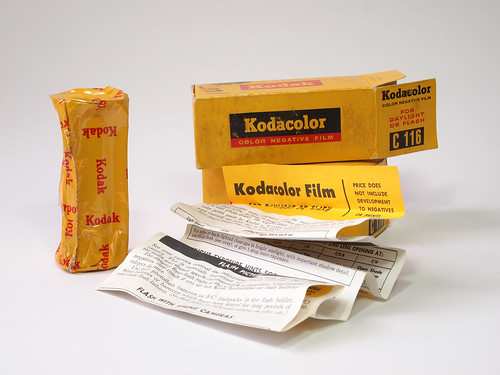
Kodacolor colour negative films
Fortunately, both 116 cameras had the original metal spools in left in the supply side chamber when I bought them, and, online, I found a couple of rolls of Kodacolor negative film to shoot on the day. These dated back to the late 1950s and early 1960s with 'process before' dates of July 1961 and November 1964. Originally 32 ASA, I rated the films using a rough approximation at around 6 to compensate for loss of sensitivity with age. I shot one roll in the Cocarette, handheld, as this had a much faster lens than the Brownie, and, although I mostly shot at f4.5 with 1/50th, these negatives were predictably underexposed.
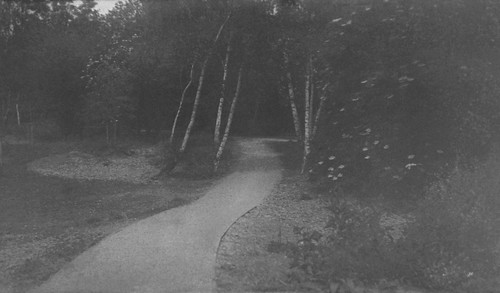
Zeiss Ikon Cocarette with expired Kodacolor film
With the No.2A Brownie, with a maximum aperture of around f11, and an 'instant' setting around 1/30th, I shot all the frames of the Kodacolor film on the T setting. As the camera does not have tripod mounts, I also had to find flat surfaces to place the camera for these exposures, stopping down the Brownie's meniscus lens to f16 or f22, and using times in seconds up to about a minute. The Kodacolor films were meant for C22 processing, a precursor to the current C41, but I used stand development in R09 One Shot to produce a monochrome negative. The orange mask on the negatives appears darker than current colour negative film, and as a result of the size of the images, I had to resort to photographing the negatives on a light box rather than scanning.
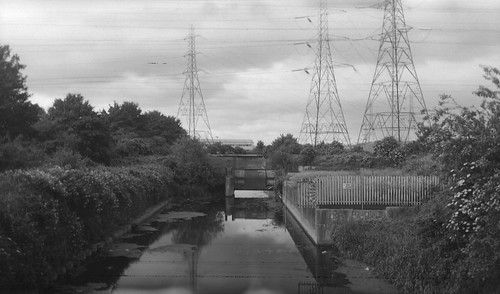
Kodak No.2A Brownie with expired Kodacolor film
The images from the Brownie camera were much clearer than those from the Cocarette, thanks to having received sufficient exposure to compensate for age; I also had problems with the focus of the Cocarette. As well as the Kodacolor film, I also shot a couple of 120 film with the camera, adapting it to take the smaller spools. With the lens positioned at infinity, the focus is notably soft. I suspect that this is just behind infinity, as the whole image has a softness, not just in the far distance, but this was something I had failed to check before shooting with the camera on the day, although earlier tests had suggested a problem. The image below demonstrates this, though it's only clear when zoomed in. It may also be due to a lack of film flatness, evident at the top and bottom of some of the images on 120 film with a further loss of focus and straight lines beginning to curl.
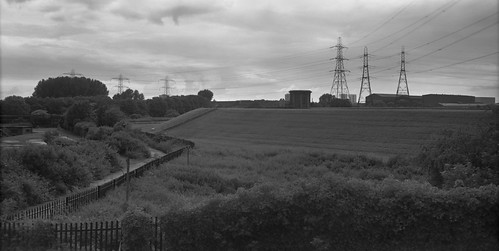
Zeiss Ikon Cocarette with Agfa Superpan
As the Kodacolor shots with the Cocarette were all at wider apertures, this would no doubt have been worse, however, on shots which were not focussed at infinity, the sharpness is much better, even in the underexposed image below of the daisies.
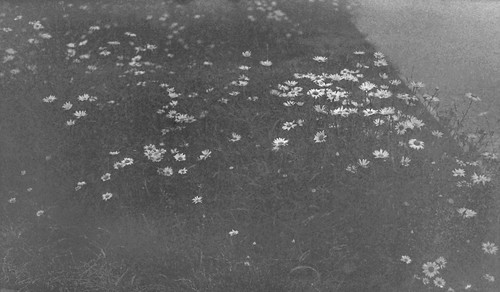
Zeiss Ikon Cocarette with expired Kodacolor
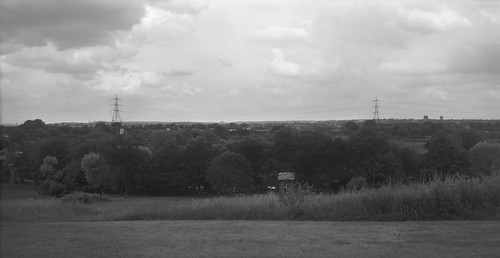
With the 120 film shot in the Cocarette, those images in better focus were those that were again not set at infinity: in the first image below, I estimated the focus to be around 30 feet to the detritus in the middle distance, and used a small enough aperture for depth of field to encompass most of the scene; the following two images were shot with much closer focus, but equally are better than those at infinity.
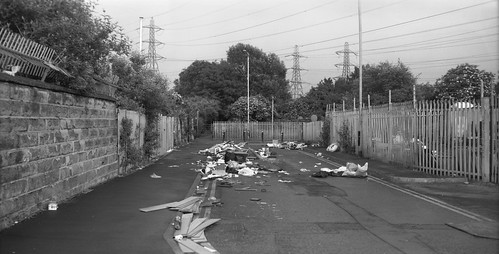
Zeiss Ikon Cocarette with HP5 Plus
Zeiss Ikon Cocarette with Agfa Superpan
Using 120 film in a 116 camera does make for an attractively proportioned image in landscape orientation; beyond the scope of this post, there's a fair amount on the net from others about how to do this but it's something that deserves a separate post in itself for a future date.
Zeiss Ikon Cocarette with Ilford HP5 Plus