Showing posts with label 116. Show all posts

Sunday, 12 July 2020

116 Day June 2020

Zeiss Ikon Cocarette with Kodak Verichrome Pan
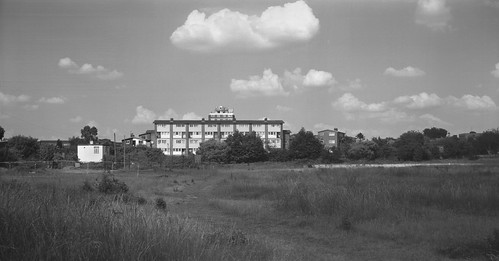
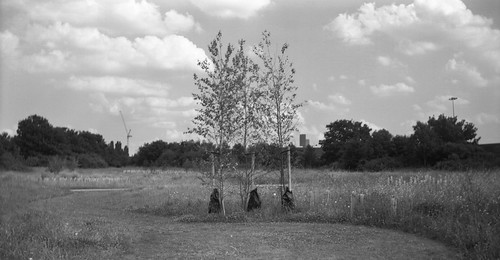
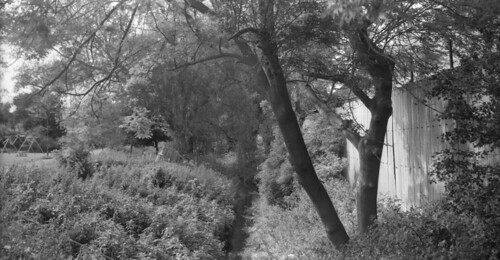
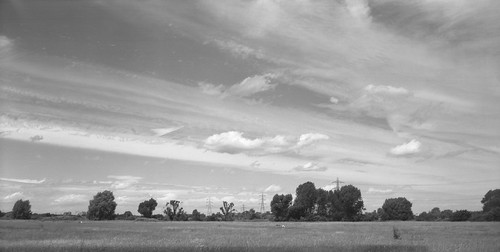
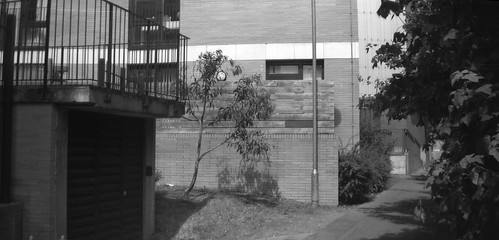
Last month, as well as shooting 126 film on the twelfth for 126 Day, I also shot several rolls of 116 format film the day before for a '116 Day'. I used a Zeiss Ikon Cocarette camera: in my post on the camera I wrote about how I had made some minor (and reversible) modifications to enable the camera to take 120 medium format rollfilm. On 116 Day in June, I undid these modifications in order to shoot 116 film, rather than 120. 116 film hasn't been made for over thirty years, and all the rolls of film I shot were much older than that. My expectations for the results were that I'd get something, but even if the film's emulsions had suffered from significant deterioration, I would at least have more 116 format backing paper for rolling with 120 film.

Ilford Selochrome Fast Ortho Film, September 1952
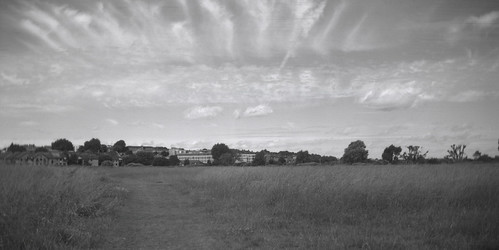
The first roll of film that I shot on the day was Ilford Selochrome 'Fast Ortho Film', was the oldest, with a date on the box of September 1952. Rating it at an exposure index of around 10, I also bracketed the shots, which I did with most of the shots on the day. I also used a tripod for most of the shots in this post, allowing for smaller apertures as a result of using longer exposure times than I would be comfortable hand-holding, although the weather was bright on 11th June in the UK when I took the photographs. As this Selochrome film was orthochromatic (there were also panchromatic versions of Selochrome), I tray developed it by inspection (using the 'see-saw' method) in Ilford Multigrade paper developer diluted 1+30. The negatives did need more exposure despite the bracketing; while developing the film, I could see that more development was just fogging the film however. After development, to get as much as I could from the film, I used a bath of selenium toner at a dilution of 1+9 to intensify the negatives.

Zeiss Ikon Cocarette with Ilford Selochrome Fast Ortho Film
The emulsion had reacted with the backing paper, unsurprising perhaps with a 68-year old roll of film. The number markings show up in a regular pattern of dots, visible at bottom right in the image above, and across the top. Incidentally, the roll of Selochrome had a full range of 116 format numbers on the backing paper, something I've not encountered before - the usual numbers for 8 exposures at 6.5x11cm, but also 12 exposures for 6.5x6.5cm square, and 16 exposures for 5.5x6.5cm 'half-frame format'. This did of course mean that there was more printing for the emulsion to react to than other 116 backing papers (this - the film reacting to the printing on backing paper - is an issue which still plagues the odd batch of new 120 film from time to time).

616 format Kodak Plus-X, develop before October 1955
The next roll of film that I shot on the day was 616 format, not 116: 616 is to 116 what 620 was to 120. Kodak used the same film size and backing paper arrangement but on a slimmer spool, with narrower flanges at the ends. Although the winding key for the film is also smaller, the central hole in the spool itself is the same size as with 116, which means that a roll of 616 film should fit into the supply-side chamber of a 116 camera without any problems. The 616 film I shot was a roll of Kodak Plus-X with a develop before date of October 1955. However, although the box was in good condition, this film had obviously been exposed to damp: the roll was wrapped in foil, and on unwrapping, one end of the metal spool had some visible corrosion. Advancing it through the camera, the film was very stiff, and needed a fair amount of force to get this onto the second frame; it also made a worrying noise when I advanced it. When it came to developing the film, I found that, for most of its length, it had stuck to the backing paper - although fortunately to the reverse of the film, not the emulsion side. Tearing it from the backing paper in a changing bag, once the tank was loaded, I found that the inside layer of the backing paper had mostly adhered to the film: a thin layer of backing paper remained surprisingly intact - the whole length of the roll, with the frame numberings (this film had two frame sizes on its backing paper - 8 exposures for 6.5x11cm, and 16 exposures for 5.5x6.5cm).

Although the second roll shot, this was the last that I developed, and seeing the results from the two rolls of Verichrome Pan,  I stand developed the Plus-X for three hours in Ilfotec LC29 diluted 1+100, agitating at the beginning and at the half-way mark. After development, and after thorough washing, but before fixing, I took the film of the developing reel and was able to remove the backing paper with some gentle rubbing.

Zeiss Ikon Cocarette with Kodak Plus-X
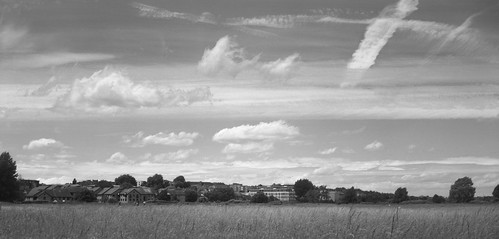
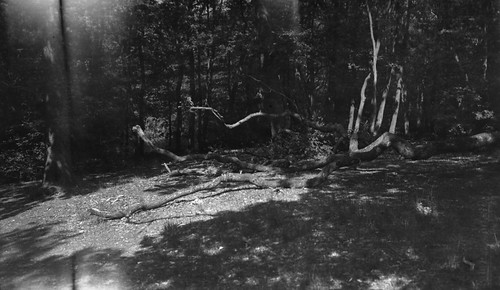
Having had very low expectations of this film, there were images on it. In just a few areas, the emulsion had lifted, possibly from sticking to the backing paper (as above), and this did also have frame markings imprinted on the negatives, more clearly on some frames than others. In addition, there are what looks like some kind of water marks - I'm not sure what caused these - possibly, this might be due to developing the film while stuck to the backing paper, and the chemicals being unevenly absorbed - or, despite a thorough washing, the backing paper still had film developer absorbed into it when I removed it to clean off the paper (I did this in order that the fix wouldn't end up full of black paper fibres as a result).
Zeiss Ikon Cocarette with Kodak Plus-X
The second frame also had creases across it - this was the point beyond which the backing paper had stuck to the film, and in forcing the film to advance, I had somehow gotten a fold running across the film - this is the frame above. One crease is clearly visible on the left of the frame: there is another just right of the centre, which is less visible. With all its problems, the 616 film also did not wind very tightly when advanced, resulting in some light leaks at the end of the film.

116 format Kodak Verichrome Pan, develop before August/September 1965
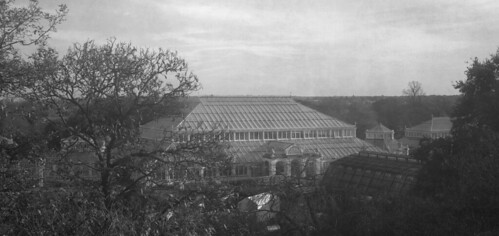
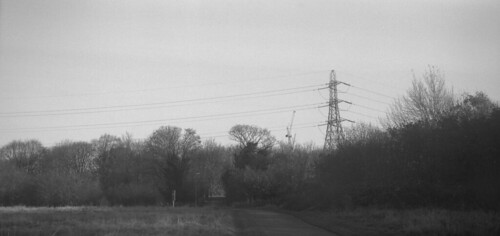
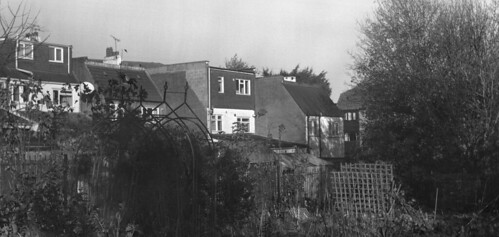
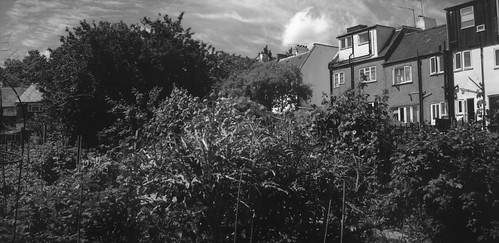
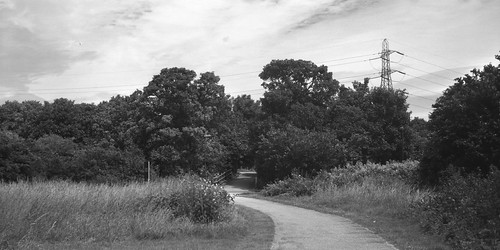
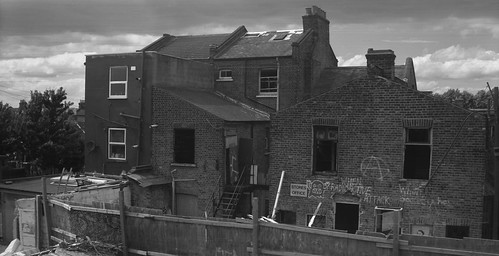
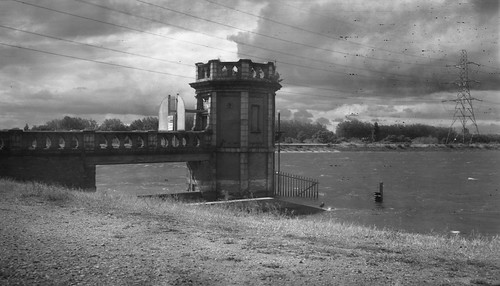
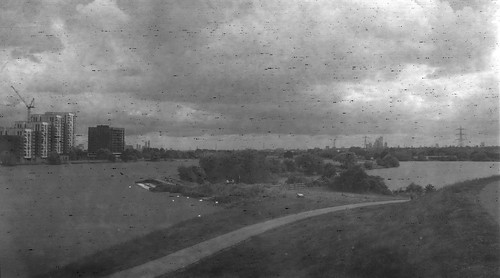
The last two rolls of 116 film that I shot on the day were both Kodak Verichrome Pan: one had a develop before date of August 1965, the other September 1965. These I'd bought as a single lot online, so possibly these two rolls of film had been bought at the same time in the early sixties, and had not been separated since. I have had some good results with Verichrome Pan of different ages, although not consistently so, and as these were a decade more recent than the other films, I had hopes that the emulsion might not have deteriorated as much. Incidentally, these have just one set of frame numberings on the backing paper, as I've found with other 116 film I've used - perhaps manufacturers abandoned printing numbers for the the less common formats as time when on. When I shot the films, I didn't note which was which, and the results were different - one roll had lots of tiny pinholes in the emulsion (showing as black specks); the other much less, but this one appears to have lots of small fibres (showing as irregular white flecks) stuck to the surface of the emulsion, although this patterning may be a reaction to the backing paper again. The first roll I stand developed for one hour in Ilfotec LC29 at a dilution of 1+100; the second I increased the time to 2 hours and 30 minutes. As the first roll had rather thin negatives, I again used selenium toner to intensify the negatives - the first image below is from this roll, as well as the image at the top of this post.
Zeiss Ikon Cocarette with Kodak Verichrome Pan, showing pinholing
Zeiss Ikon Cocarette with Kodak Verichrome Pan, showing white flecks
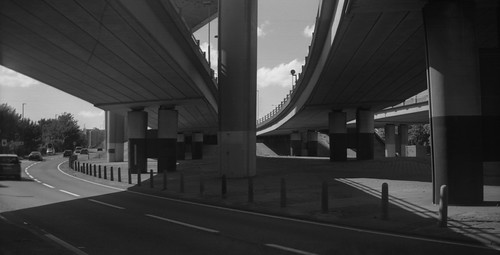
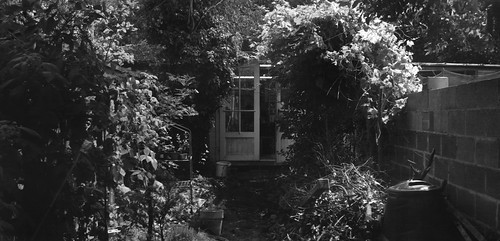
For landscape work, I find the proportions of the 6.5x11cm frame attractive: this might be the primary reason for continuing to use 116 format cameras. Short of investing in some 70mm-wide film to respool with the backing paper, using 120 film does work well enough, as I have done previously, although this crops some of the image from the top and bottom of the frame. When the 116 format was introduced at the very end of the 19th century, negatives would usually have been contact-printed, as with the other rollfilm formats of the time, driving the demand for the relatively large negative size; I frequently use 'expired' film, and, taking into account all the inherent problems of doing so, the results of the films shot on 116 Day go some way to demonstrating the possibilities of the large 6.5x11cm frame.

Zeiss Ikon Cocarette with Ilford Selochrome Fast Ortho Film
Zeiss Ikon Cocarette with Kodak Plus-X
Zeiss Ikon Cocarette with Kodak Verichrome Pan

Tuesday, 5 December 2017

Agfa Standard (Model 255)

Agfa Standard
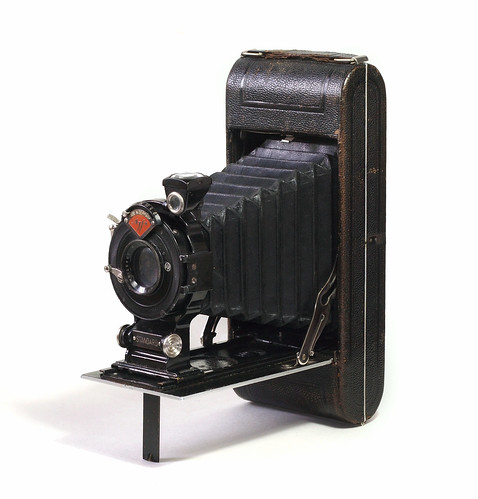
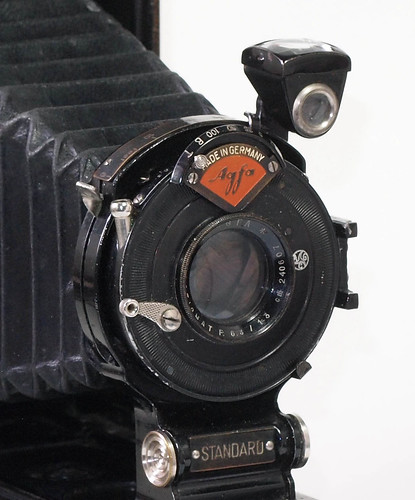
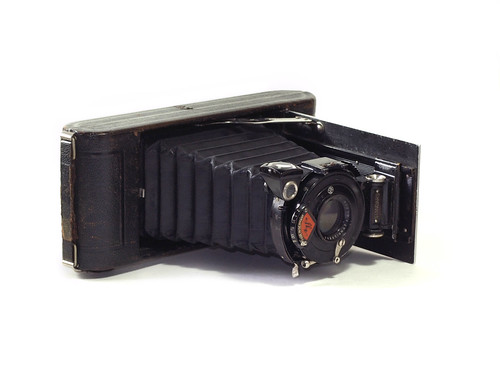
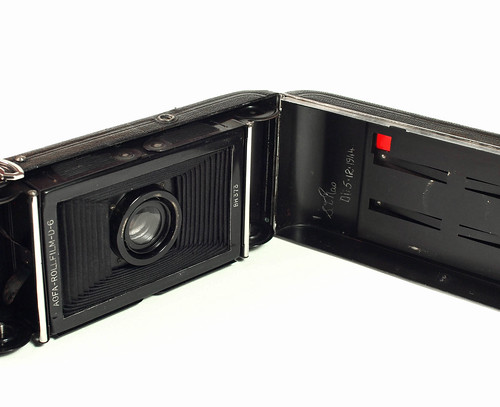
As a company, Agfa had a fairly long history in chemicals, then in photography supplies (notably the developer Rodinal), before it became one of the larger camera manufacturers in twentieth-century Germany. The Agfa Standard was the first new model of camera after Agfa had acquired the Munich-based lens and camera maker Rietzschel (via Bayer), and their existing lines and manufacturing capacity. The Standard was made in two plate and two rollfilm formats, 6.5x9 and 9x12cm plates, and 120 and 116 formats respectively, and were made from 1926 to 1933. My camera is the Model 255 Standard for 116 format (Agfa's own designation of the rollfilm was D-6, as written inside the camera body) for 6.5x11cm negatives. This is the camera I used for last month's 116 Day.

Agfa Standard
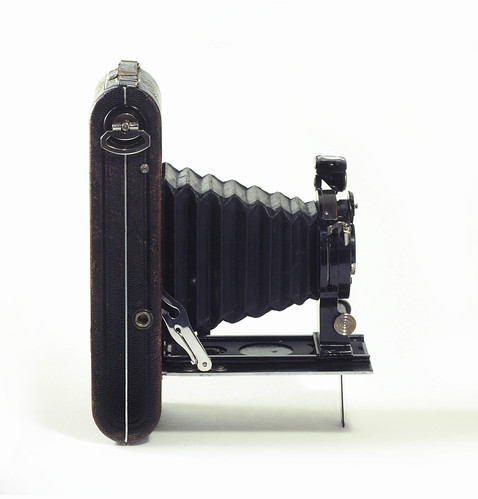
The Standard is a fairly typical non-self-erecting folding camera of its era, the body being solidly constructed from aluminium, well-finished in real leather, now rather scuffed. The lens is mounted on a fairly substantial cast metal block, although it has no rise, unlike many cameras of the period. The Standard was provided with different lenses, initially only Agfa Anastigmats, with faster lenses being naturally more expensive. My camera has the f6.3 13cm lens, the mid-priced option for the Model 255; a cheaper lens was the f7.7, while the f4.5 was most expensive. The lens stops down to f36, and has the old continental range of f-stops: 9, 12.5, 18, 25. The shutter is a Gauthier everset leaf shutter (some later models had Compur shutters). The shutter itself doesn't carry a name; the manual and other promotional material describe it as new, so it may have been designed expressly for the Standard. In the English manual it's named as the Agfa Automatic shutter; in a German brochure it's the Agfa Automat shutter. The orange Agfa rhombus becomes a wedge on the shutter speed selector dial. The shutter has five speeds (2, 5, 25, 50, 100) plus B and T and there is a cable release socket; the shutter on my camera only appear to fire at a single speed.

Agfa Standard lens 
As a non-self-erecting folder, when the camera is opened, the lens has to be manually drawn forward on its rails to an infinity stop. Focus itself is by a lever seen in the image above behind the cable release socket, with the lens and shutter moving forward as a unit, down to six feet. As seems common with old Agfa cameras, the focus on my Standard is stiff, a result of the particular lubricant that Agfa used. That the focus markings are in feet rather than metres indicates that the camera is an export model, as is the prominent 'Made in Germany' on the shutter selector (a number of examples of the Standard online do not have this). The focus scale and the aperture settings are designed to be seen from above the lens unlike many other folding cameras of this period, which frequently have these underneath the lens.

Agfa Standard in horizontal orientation
My camera originally had a wire frame finder. The remnant of the rear sight indicates that this was the older style: at some point during production, this rear sight was made larger. With cameras of this type, I typically use the wire frame finder for composing the image, so had to use the small rotating brilliant finder instead, which I find more difficult to use - and also does not have a spirit level. A number of my shots suffered, and had to be cropped level as a result. For ease of loading and unloading, the spool holders pivot, lifting out with hinged ends from the camera body. Frame advance is by a winding key on the side of the body in vertical orientation, or underneath when held horizontally (the camera also has standard tripod fittings for horizontal and vertical orientation). The red window is without a cover; this window is uniquely square, rather than round. When using medium format film with adaptors rather than 116 backing paper, some light does get from the red window around the edge of the narrower 120 backing paper, a problem I had with the Kodak No.2A Brownie.

Agfa Standard with Agfapan APX100
I have mostly used the Agfa Standard with 120 film taped to 116 backing paper, which is the easiest manner to shoot with the camera today, although not without problems. On some shots, the film appears not to have been held sufficiently flat, as demonstrated by out of focus areas in the image above, while the film not being wound tight enough has led to some light leaks (also seen above). This seems to have been solved in part at least by pushing the metal prongs inside the camera towards the take-up spool side to provide more pressure on the film when winding on. The lens mount also appears to protrude onto the film plane: in the image below, the brassing on this mount must surely be wear by film and backing paper being drawn over this (there's evidence that this has also been pressing on the inside of the rear door). Some of my negatives were marked from this, which seems like a design flaw. It may be advisable to only advance film with the camera open and lens erected.

Agfa Standard opening for loading
Inside the camera, on the rear door there's a name and date scratched into the black paint, "S. D. Rao Dt(?) 5.12.1944"; inside the camera's original case there's the name Lieut. P. J. Cummins and what certainly looks like S. D. Rao crossed out, with the same date written underneath. The camera itself would have been well over ten years old at this date, during the war (that the second name has a rank also suggests wartime). It's curious that the name also has a date; as a result I wanted to post this today, 5th December, seventy-three years later; it was also a Tuesday then. Also in the case was an information leaflet for Kodak Super-XX film, discontinued some time in the 1960s (possibly with a 1948 date), and the camera still had a wooden 116 spool inside.

Inscription inside case
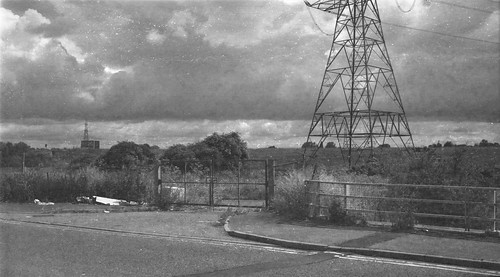
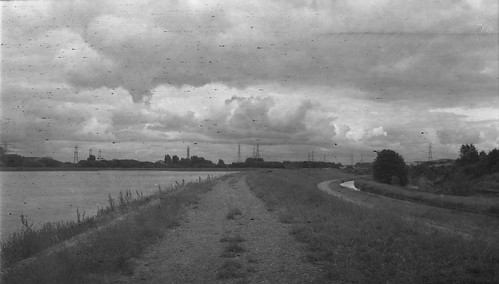
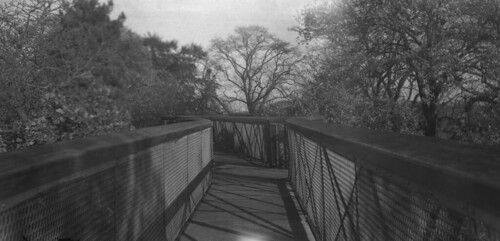
The Agfa Standard Model 255 was quite simple to use with 120 film re-rolled with 116 backing paper (easier to load than the Zeiss Ikon Cocarette), despite the problems with one film not rolling tightly enough. Using the brilliant finder alone made composing more difficult, and the problems with film flatness showed up in some exposures but not others; it might be possible to solve this by some form of additional pressure plate or framework to help centre the narrower 120 film. The lens is sharp enough if stopped down when lighting conditions allowed this hand-held and, like many other older rollfilm cameras, the large negative size can also be forgiving - the landscape shot with the electricity pylon below is probably the best example of what's possible with the camera, as indeed are a couple of the night shots from the 116 Day.

Agfa Standard with Agfapan APX100
Agfa Standard with Ilford FP4 Plus
Agfa Standard with Ilford HP5 Plus

Sources/further reading:
Agfa Standard on Camera-Wiki
Agfa Standard Model 255 on Collection-Appareils (in French)
Agfa Standard cameras catalogue page in French
Agfa Standard brochure pages (in German)

Sunday, 12 November 2017

116 Day November 2017

Agfa Standard with HP5 Plus
Last Monday, the 6th November, I shot two rolls of film for a Winter '116 Day'. Working all day, I was only able to take photographs on the way to and from work, and a couple of shots during my lunch break. I used an Agfa Standard folding camera, rather than either the Cocarette or No.2A Brownie I've used perviously: the Agfa Standard was available in a range of plate and rollfilm sizes; the 116 format Standard was designated the Model 255 to distinguish it within the range. Using original 116 backing paper, I shot Ilford HP5 Plus, and pushed the film one stop when developing. The Standard's Gauthier shutter has five speeds, as well as B and T; all the 'instant' speeds appear to be the same now. The daylight shots were over exposed: I calculated that the shutter was firing at about 1/100th, but I think it's probably much slower than that. With the clocks going back it was dark leaving work; I had better results at night, with long exposures on the T setting, balancing the camera on any convenient flat surface. There appear to have been a few problems with film flatness, and again the long exposures perhaps show this less, as I used smaller apertures than the hand-held shots. The final shot on the second roll (the last image on this post) shows the end of the 120 film curling up inside the camera and casting a shadow upon itself during the exposure.

Agfa Standard with Ilford HP5 Plus

Wednesday, 21 June 2017

International Brownie Camera Day 2017

Kodak No.2A Brownie with Ilford HP5 Plus
After posting about the 116 Day at the weekend, I hadn't intended to write another post with the Kodak No.2A Brownie so soon, but after scanning the negatives shot that day, the presence of scratches throughout the negatives (and the work needed to mitigate them once scanned) prompted me to attempt to rectify this. It seemed clear that these scratches were caused by the film passing over the rollers; the first test roll through the Brownie had be badly scratched, and I had given the rollers a clean then, thinking that the presence of a small amount of corrosion was causing this. Subsequently I also surmised that the scratches were also caused by the rollers not turning freely. I removed the two rollers from the camera entirely and I sanded them using the finest emery paper I had, followed by using metal polish on the rollers. Replacing the rollers, I tried to ensure that these turned freely, and wound some backing paper through the camera a couple of times. It so happened that I found myself doing this on 'International Brownie Camera Day', June 18th this year. I decided to put roll of film through the camera to see how effective this fix had been; the results were certainly better, without scratches the entire length of the film, but the scratches were still there. Generally the more dense the negative, the less obtrusive the scratches appear; in the final image below, shot for about a second and a half on the camera's 'T' setting, through both the denseness of the negative, and the profusion of detail, the scratches barely register.

Kodak No.2A Brownie with Ilford HP5 Plus
International Brownie Camera Day 2017 image gallery

Sunday, 18 June 2017

116 Day Summer 2017

Kodak No.2A Brownie with Ilford HP5 Plus
For last weekend's '116 Day' I shot some 120 film in the 116 format Kodak No.2A Brownie (by coincidence, today, 18th June, is International Brownie Camera Day, as announced on the Brownie Camera Page). I shot some Ilford FP4 Plus and HP5 Plus both rolled with 116 backing paper, and also used the adaptors I'd made to fit 120 spools into the 116 spool chambers. As the weather was bright and sunny, I taped a yellow gelatine filter behind the lens on the inside of the camera body, meaning that, of course, all shots on a roll would have to use the filter; I could have taped the filter on the outside of the camera, but this would be likely to be scratched, as well as, given the construction on the camera's front, I was concerned that there might be some internal reflections between the filter and the lens. Using the filter reduced exposure by a stop, but, given the speed of both films (and the films' latitude), still meant that I used the smallest aperture stop for the open landscape shots, where the yellow filter provided good definition for the sky; some of the photographs with more shadow areas should have had more exposure, most of these being shot on the middle stop. Although not as obvious as when I first used the camera, the negatives still had some scratches from the rollers (probably due to a small amount of corrosion), the worst of which I mitigated in Photoshop; before using the No.2A Brownie again, the rollers would benefit from being removed and being polished.

Kodak No.2A Brownie with Ilford FP4 Plus
Kodak No.2A Brownie with Ilford HP5 Plus