Showing posts with label Brownie. Show all posts

Thursday, 12 July 2018

Kodak Brownie 127

Kodak Brownie 127
The first Brownie camera was introduced by Eastman Kodak in 1900 and continued to be used by the company for inexpensive snapshot cameras right through most of the twentieth century, into the 1980s, almost as successful a brand name as Kodak itself, the name of George Eastman's first box camera model. The initial Brownie cameras were simple box-type constructions, and the No.2 Brownie introduced 120 medium format rollfilm still in use today; 127 format rollfilm accompanied the Vest Pocket Kodak just over a decade later, and a Brownie No.0 for 127 film followed a couple of years later. Several 127 format Brownies were produced during the following decades as cardboard gave way to metal and then plastic for the bodies of snapshot cameras, and although the use of plastics allowed for the shape of cameras to change, in essence the topography of the snapshot camera remained that of the simple box with a lens and just the two moving parts, the shutter and the film transport. The Kodak 'Brownie' 127 is one of these cameras, first made in 1952. It was made in the UK by Kodak Ltd and produced in millions of units (and as such is very easy to find today). My version here is the second model, first made in 1959, and produced for about four years (it is also the camera which came with a roll of exposed Kodacolor II film that I developed and posted under 'Found Film 4'). This second model is distinguished from the first version by having narrow vertical ribs on the body, whereas the first has broad and shallow horizontal steps; the second version also gives the lens the 'Dakon' name - in design terms, this appears to be a simple plastic meniscus lens. The second model was also produced in white in limited numbers for the Channel Islands, although this apparently discoloured easily; examples of the standard black model's shutter button and advance knob are often seen as a yellow-cream colour, which may be discolouring with age and, presumably, exposure to light, but on my example these are still a light grey. Two years after the second version was discontinued, a third camera with the same name was produced by Kodak Ltd, but the image format was changed to take twelve 4x4cm negatives on a 127 roll, rather than the eight 6x4cm frames of the previous two models. This last model was being made at the same time that Kodak's 126 cartridge was supplanting the 127 rollfilm for snapshot cameras; perhaps the change to the square format was not unrelated in the last Kodak Brownie 127.

Kodak Brownie 127
According to information available online, the Dakon lens has a focal length of 65mm and an aperture of f11 (provided by a stop behind the lens); the shutter speed given by the manual is "around" 1/50th (some sights give this as 1/40th). In comparison to the first model, the second has a slightly faster lens (f11 compared to f14), which may possibly be indicative of the growing popularity of colour film as the 1950s gave way to the 1960s. The lens is fixed focus and slightly wide angle for the 6x4cm format, designed to provide in-focus images from five feet to infinity, a "three-quarter length portrait" as described in the manual.

Kodak Brownie 127 opening for loading
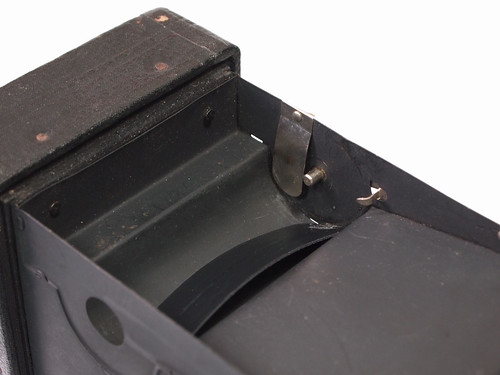
The camera loads by removing the top section, to which the chassis that holds the film is attached, with a metal lock on the bottom; looking at the way the camera is constructed, the body is made from three pieces of Bakelite, possibly four, with the underside of the viewfinder being a separate piece inserted underneath the film carrier section. There is closely-spaced ribbing inside the As with many a camera using a cheap meniscus lens, the film path is curved (as can be seen in the image above) to compensate for its limitations, although these are still clearly evident towards the corners of photographs taken with the camera. The shutter, as seen in the detail below, is very similar to the shutter on the original Brownie camera of nearly sixty years earlier, as seen on my post for the No.2. The round shutter button on the camera top depresses the semi-circular tab as seen below, which first tensions, then releases the shutter; the arm which connects both springs then caps the shutter as it returns once pressure is removed from the button.

Kodak Brownie 127 shutter
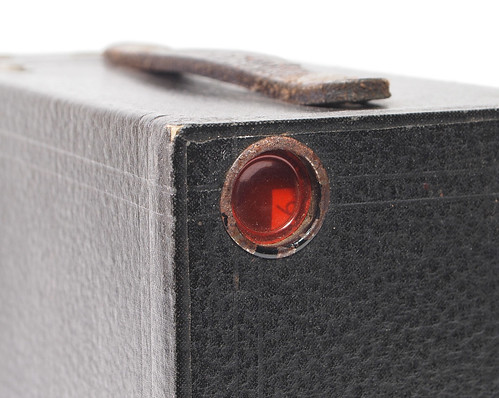
As standard for a 127 camera of the time, the camera has a red window on the back for the frame numbers on the back of the film, without a cover as became more common with rollfilm cameras post-war. The viewfinder is placed centrally over the lens, meaning that parallax should only be present in one axis; with subjects being in focus from five feet or more such issues should be relatively negligible, within the parameters one might expect from a snapshot camera. It is oddly deep however, running the depth of the camera from front to back, which means that the viewfinder image, although clear, looks far away when put to the eye.

The Kodak Brownie 127 was supplemented with a handful of accessories. The body has strap lugs, and it came with a cord as a matter of course. There was a soft case for it with a shoulder strap; being squared-off in comparison to the camera body, there's plenty of room in the corners of the case for rolls of film. There were also push-fit filters and a lens hood. There was a 'portrait' close-up filter and yellow 'cloud' filter. The filter size is 28.5mm.

The choice of Bakelite as a material for camera bodies was motivated by the fact that the plastic can be easily moulded - giving rise to the Art Deco-influenced bodies of the first generation plastic cameras - and the fact that it can be sawn, drilled, machined in a number of ways. One of its drawbacks however is its relative brittleness: the top part of my camera has two chips either side of the squared-off front section, and as the raised rim the functions as a light trap is farly short, in use I've taped over the gaps as a precaution against light leaks.

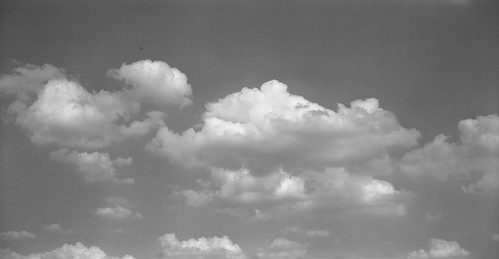
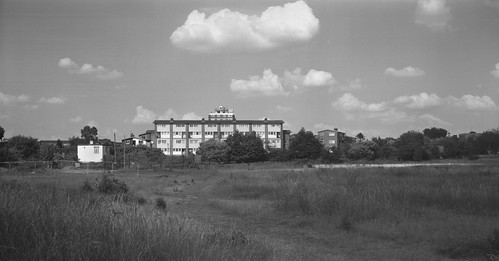
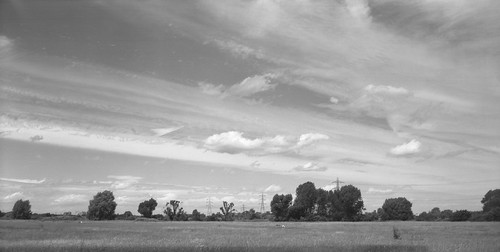
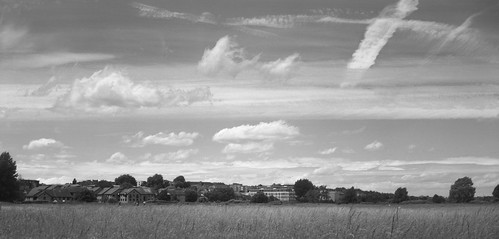
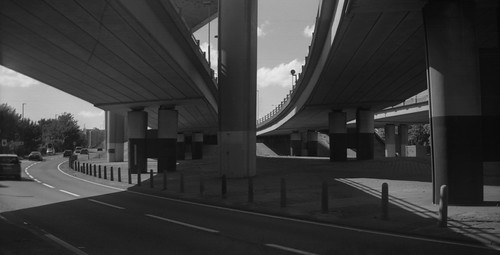
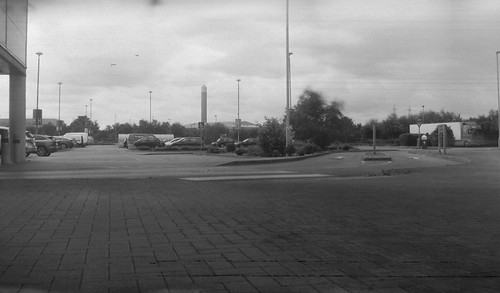
Wanting to use the Kodak Brownie 127 for July's 127 Day, I tested the camera with a few short rolls of cut-down film, using the film slitter that I'd made for the purpose. There's a certain amount of distortion which is most obvious in subjects with horizontals and verticals, as below, but the illumination across the picture plane is surprisingly good, although definition falls off towards the corners and the edges

Kodak Brownie 127 with Ilford HP5 Plus
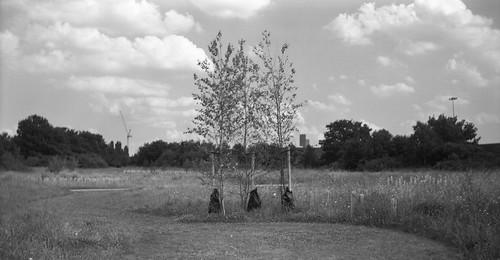
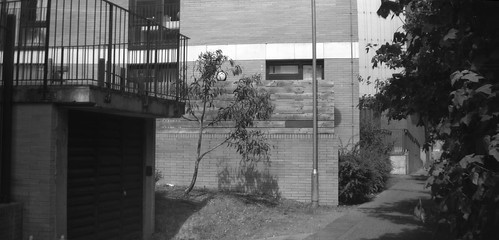
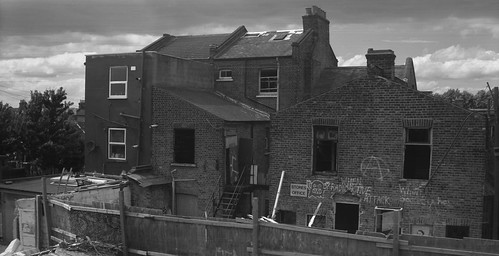
The lens is no doubt set at a hyperfocal distance, and although claims for focus and depth of field with snapshot cameras are often exaggerated, a focus distance of five feet appears to hold true, as in the shot below. Unlike the photograph above, framing the subject with the lines at diagonals hides most of the distortion.

Kodak Brownie 127 with Ilford HP5 Plus
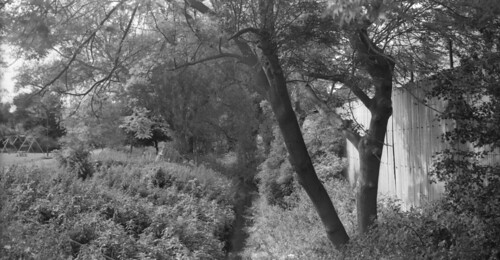
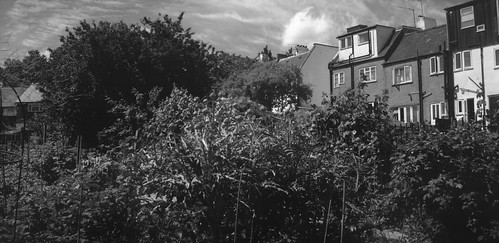
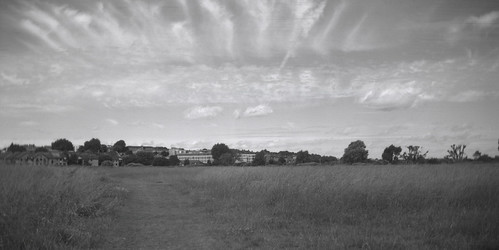
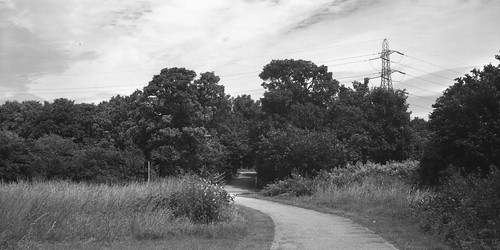
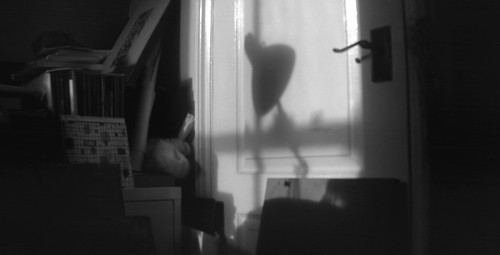
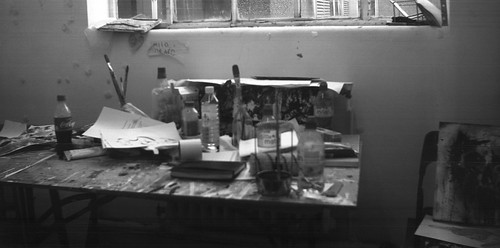
One often reads online in comments on box cameras that one should use slower films with them as these are the kind of emulsions that were around at the time, and were what the cameras were designed for. As I've written about before, this reasoning is simplistic at best. Using faster, modern emulsions expands the range of conditions that a simple snapshot camera such as the Kodak Brownie 127, but I was gratified to read the advice in the manual which states that the camera should be used with Verichrome Pan in the summer - and Tri-X for "dull winter days" - however, it warns to use colour film in "bright sunshine only", as would have been appropriate for the slow colour films at the time. In my tests, I used Ilford HP5 Plus in sunlight, without pull-processing, and the latitude of the film provided perfectly usable results. I also shot some FP4 Plus, and some 35mm Ilford Mark V, which I've been rating between 25-50; this film was too slow for shadow detail as in the first image below, but gave reasonable results in full sunlight. In researching the Kodak Brownie 127 for this post, I came across a webpage documenting an exhibition titled 'Only the Sunny Hours' from just last month curated by Cally Trench in which Kodak Brownie 127 cameras were given to a number of contemporary artists to get their responses. The test describes the camera being "so familiar to us, having been so ubiquitous" having been used by "a younger self or an older relative". This isn't my own personal experience (this would be the Kodak Instamatic, which followed on from the discontinuation of the second model Kodak Brownie 127); however, the first paragraph of the text below could well be applied to the found photographs that I developed from the camera - the "relatives lined up in the garden" and an apposite sentiment on which to close this post:
"The Kodak Brownie 127 camera, like a sundial, works best in bright sunlight. Sundials usually have mottoes; a typical one is ‘I tell only the sunny hours’, and this would be a good motto for a Brownie 127 too. According to my family photograph album, my childhood was a series of sunny days by the seaside or in the garden. We spent no time indoors, and there was no winter and no night. Many of these photographs show relatives lined up in the garden [...]. Everyone looks directly at the camera, warned and fully aware that they are to be photographed, their expressions composed, eyes fixed open, waiting for the button to click.
[...]
Does it matter that the photographs in this project were taken on a Brownie 127? Photography, more than any art form, often seems to need a context, a title, an explication. We want to know who, when and where. We are unwilling to accept a photograph as universal. It matters if the location is Glyndebourne or Strood, whether the sitter is Napoleon’s younger brother in 1856 (the photograph with which Barthes opens Camera Lucida), or myself as a child in 1962. So, yes, it is significant that these photographs were taken with simple vintage cameras using film, because these things affect not just the photographs that are made but also how they are received by viewers."
Cally Trench, Only the Sunny Hours 
Kodak Brownie 127 with 35mm Ilford Mark V
Kodak Brownie 127 with Ilford FP4 Plus
Kodak Brownie 127 with Ilford HP5 Plus

Sources/further reading:
Kodak_Brownie_127 on Camera Wiki
Brownie-Camera page on the Kodak Brownie 127 model II
Onetwosevenorg on the Kodak Brownie 127
Kodak Brownie 127 (model II) manual (PDF)
Fantastic plastic: Moments from a Kodak Brownie 127 Raymond Parker Photo
Kodak Brownie 127 on CameraShiz
Cally Trench, Only the Sunny Hours

Wednesday, 21 June 2017

International Brownie Camera Day 2017

Kodak No.2A Brownie with Ilford HP5 Plus
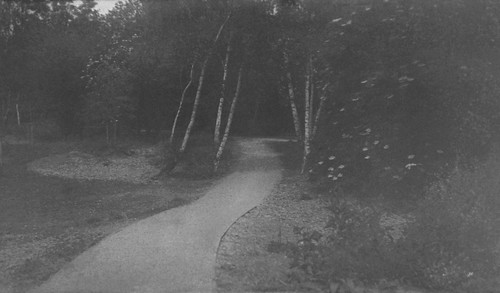
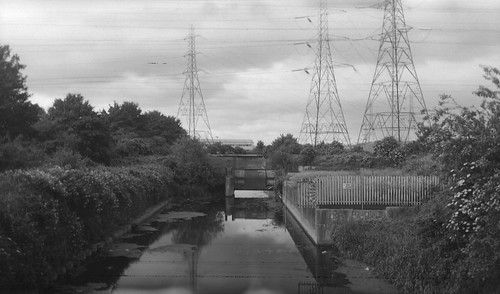
After posting about the 116 Day at the weekend, I hadn't intended to write another post with the Kodak No.2A Brownie so soon, but after scanning the negatives shot that day, the presence of scratches throughout the negatives (and the work needed to mitigate them once scanned) prompted me to attempt to rectify this. It seemed clear that these scratches were caused by the film passing over the rollers; the first test roll through the Brownie had be badly scratched, and I had given the rollers a clean then, thinking that the presence of a small amount of corrosion was causing this. Subsequently I also surmised that the scratches were also caused by the rollers not turning freely. I removed the two rollers from the camera entirely and I sanded them using the finest emery paper I had, followed by using metal polish on the rollers. Replacing the rollers, I tried to ensure that these turned freely, and wound some backing paper through the camera a couple of times. It so happened that I found myself doing this on 'International Brownie Camera Day', June 18th this year. I decided to put roll of film through the camera to see how effective this fix had been; the results were certainly better, without scratches the entire length of the film, but the scratches were still there. Generally the more dense the negative, the less obtrusive the scratches appear; in the final image below, shot for about a second and a half on the camera's 'T' setting, through both the denseness of the negative, and the profusion of detail, the scratches barely register.
Kodak No.2A Brownie with Ilford HP5 Plus
International Brownie Camera Day 2017 image gallery

Sunday, 18 June 2017

116 Day Summer 2017

Kodak No.2A Brownie with Ilford HP5 Plus
For last weekend's '116 Day' I shot some 120 film in the 116 format Kodak No.2A Brownie (by coincidence, today, 18th June, is International Brownie Camera Day, as announced on the Brownie Camera Page). I shot some Ilford FP4 Plus and HP5 Plus both rolled with 116 backing paper, and also used the adaptors I'd made to fit 120 spools into the 116 spool chambers. As the weather was bright and sunny, I taped a yellow gelatine filter behind the lens on the inside of the camera body, meaning that, of course, all shots on a roll would have to use the filter; I could have taped the filter on the outside of the camera, but this would be likely to be scratched, as well as, given the construction on the camera's front, I was concerned that there might be some internal reflections between the filter and the lens. Using the filter reduced exposure by a stop, but, given the speed of both films (and the films' latitude), still meant that I used the smallest aperture stop for the open landscape shots, where the yellow filter provided good definition for the sky; some of the photographs with more shadow areas should have had more exposure, most of these being shot on the middle stop. Although not as obvious as when I first used the camera, the negatives still had some scratches from the rollers (probably due to a small amount of corrosion), the worst of which I mitigated in Photoshop; before using the No.2A Brownie again, the rollers would benefit from being removed and being polished.

Kodak No.2A Brownie with Ilford FP4 Plus
Kodak No.2A Brownie with Ilford HP5 Plus

Sunday, 11 June 2017

Kodak No.2A Brownie

Kodak No.2A Brownie
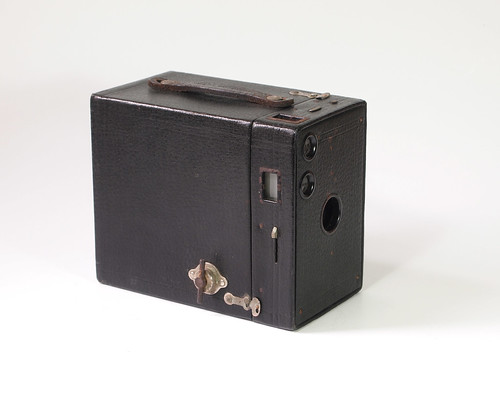
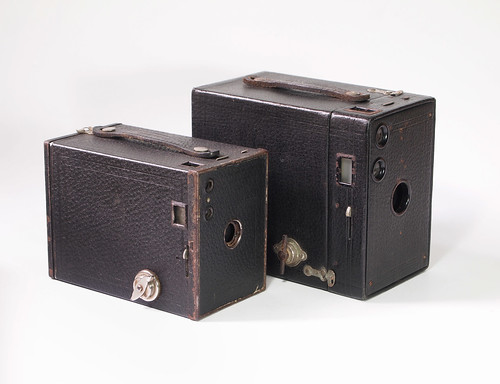
In the early years of photography, most negatives were printed by contact, which in turn, helped to define the size and design of cameras. This was essentially true with the burgeoning popularity of amateur photography at the end of the 19th century and the beginning of the 20th. Kodak definitively helped in this by producing extremely low-cost cameras, embodied by the Brownie range of box cameras. As the range expanded, cameras were made for larger image formats: the Kodak No.2A Brownie was introduced in 1907, and took 116 rollfilm, with a nominal negative size of 6.5x11cm (2½ x 4¼ inch). The original Brownie and the No.2 Brownie both had new rollfilm formats (117 and 120), with the same negative dimensions, 2¼ x 3¼ inch, but on different spools. For the larger negative size of the No.2A Brownie, the camera was designed to use the existing 116 film, which had been introduced a couple of years prior to the first Brownie camera, in 1899. As a result of the negative size, format and focal length, the No.2A Brownie is a moderately large box camera, measuring 13x8.5x15.5cm.

No.2 Brownie (front) with No.2A Brownie (rear)
Although it uses a different film format, the No.2A Brownie's specifications are very similar to the No.2 Brownie, which may be why it was named thus (and most of the detailed post I wrote about the No.2 Brownie could equally be applied to the No.2A); a No.3 Brownie followed in 1911 for 124 rollfilm, and a No.2C in 1917 for 130 film, both with larger negative sizes again (there wasn't a No.2B, a construction that Kodak appears not to have used for any of their cameras; the 'A' suffix is used for most 116 cameras, although not exclusively, while the 'C' was used for 130 film; following the success of the Vest Pocket Kodak, there was also a No.0 Brownie for the smaller format 127 film).

The original price for the No.2A Brownie was $3.00 (the No.2 was $2 when it was first marketed), and it seems that initially, at least, it shared a manual with the No.2 Brownie, although subsequently a manual for both the No.2A and the No.3, after the latter camera was produced. Thus, using the No.2A Brownie, apart from the film size, is the same as the No.2 Brownie: the rotary shutter has a single speed of around 1/30th and trips in both directions, while pulling a tab on the left above the lens provides a time setting for long exposures; there are three apertures punched in a metal strip that can be pulled into position using the central tab above the lens, approximately f11, f16, f22, but most likely non-standard, if the measurements I made for my No.2 Brownie's apertures were at all accurate; film advance is manual of course, using the bar winder with a red window for frame numbers; the vertical and horizontal reflecting viewfinders, although small and not very distinct, give a fair idea of composition. One difference between my No.2 Brownie, and the No. 2A is that the cardboard-bodied Brownie cameras do not have tripod fittings, unlike the later metal ones.

My version of the No.2A Brownie is the Model B, introduced in 1911, although, as I wrote in my post for this year's Take Your Box Camera To Work Day, details of the camera itself securely date its manufacture to some time between June and October 1917. On the Brownie Camera Page, the list of variations gives the following information- "June 1917: Film tension springs were moved from the center to the spool ends. Oct 1917: The case latches were improved with rounded ends and milled edges." My version of the No.2A Brownie does have what I would describe as the 'spool-end tension springs' (as can be seen in the images below), but the case latches have unmilled ends (this milling was a fine serration around the edge of the latch to improve grip).


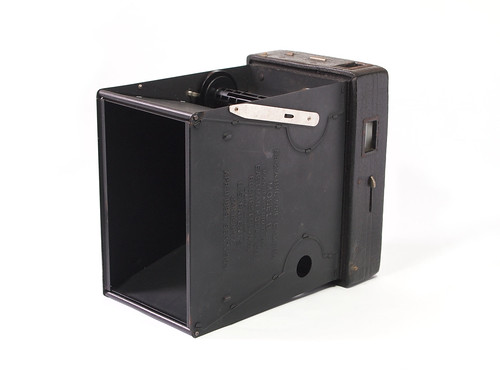
Kodak No.2A Brownie with back removed for loading
The cardboard body model loads by removing the entire back. In the image above, a 120 spool with adaptors to fit 116 can be just seen in the supply side film chamber; the round hole at the bottom is for the winding key to be inserted into the take up spool end. The interior film carrier is made of metal. My version has a set of patent dates embossed in the metal; the patent for April 11 1899 must be for 116 film itself; with the other two dates, it's less obvious what these might relate to. In the early years of camera manufacture, Kodak was very liberal with prominently placing its patent dates all over its products, but generally these can't be used to date the cameras too securely.

Spring tension
One minor modification I made to my No.2A Brownie was to insert a piece of thin plastic sheet slightly wider than the take-up spool chamber to act as an additional pressure plate to ensure that the take-up spool is tightly wound. I added this specifically for 120 film, which is smaller in diameter than the original 116 spool that would be used in the camera, but kept it in the camera when I did use an old roll of 116 without any detrimental effect. When researching the Kodak Brownie 2A, I noted that the price list in the back of the manual lists two films for the No.2A - for six exposures or twelve exposures; later, 116 film was only available with eight exposures (similarly, 120 film was originally provided in six exposure lengths rather than eight). It's notable that in eight exposure rolls, the metal 116 spool ends are clearly wider than the diameter of film and backing paper; twelve exposure rolls would no doubt have much less of a gap.

Kodak No.2A Brownie case with dates and locations
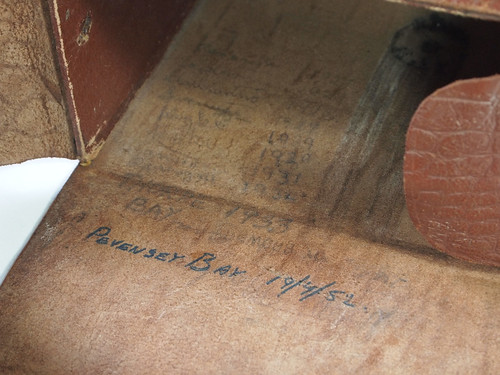
Inside the crocodile-skin-effect case, a previous owner has written a list of places with dates, covering a span of 25 years, from 1927 to 1952 (with a large gap from the penultimate date of 1933 and the last in 1952; this final name is also in pen while the rest are in pencil, but it does appear to be the same handwriting). The camera was already ten years old at the beginning of the this list, although the reasons for this may be many and various; the camera may have been secondhand and imported, as all the locations are in England and Wales, yet the camera was made in America according to the details on the Brownie Camera Page. Although the No.2A Brownie was produced in UK from 1930-36, this was the later Model C version, with an aluminium rather than cardboard body, with a number of other refinements.

For a first test of the No.2A, I shot some Fomapan 200 using the adaptors that I had previously made to fit 120 film into 116 format cameras. When I developed the film, there were two clear problems: numerous scratches all along the film, but also there were light leaks from the red window along one edge of the negatives. The scratches were clearly from the rollers inside the camera, which I gave a good clean, although this did not entirely eliminate this problem, as was evident in later shots. The image below also shows a slight overlap of negatives on the right hand side where I did not get the frame spacing quite right. However, the first test roll did show that the size of the negative provided fairly good results with the meniscus lens; there is a small amount of barrel distortion to the image, perhaps exaggerated by the film not being held entirely flat.

No.2A Brownie with Fomapan 200 showing light leaks and scratches
The light leak appeared to be due to the fact that there's a very small gap between the edge of the 120 film, and the sides of the internal frame (nothing to do with the film being panchromatic as is sometimes stated when using cameras with red windows: the film's backing paper itself should be perfectly light tight). This small gap caused some internal reflections, but mostly what appears to be technically irradiation, as the light hits the very edge of the film from behind, and travels sideways into the film base and emulsion. My solution was to make a baffle, a mask insert from thin black card that would sit over the sides of the film and cover this small gap at the edge.

Mask for 120 film
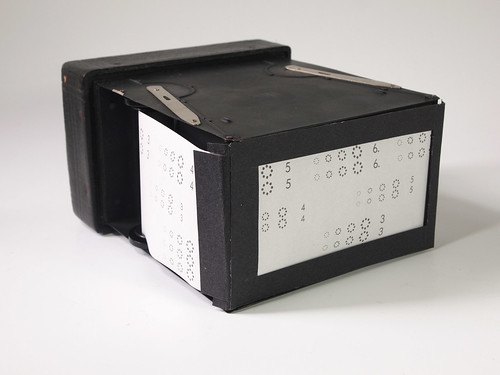
Given the positioning of the frame numbers on 116 film, rather close to the edge of the backing paper itself, this baffle did partly obscure the frame numbers, but these are just visible. As I've previously written about in my post on the Zeiss Ikon Cocarette, with 120 film in a 116 camera, the 6x4.5 format numbers appear in the standard 116 red window, and I have been using the same sequence of numbers and marks: advance the film to the first circular mark before the number 3 appears for the first exposure, then 5, the first mark before number 8, the third mark before 10, the first mark before 13, and finally 15. This sequence is not perfect, as there are some slight overlaps between some frames, but it's the closest practical set to achieve six exposures on a roll of 120; being more generous with the film, one could easily get five exposures with no overlaps by just using the numbers 3, 6, 9, 12, 15.
Red window with 120 film and card mask
I tested this card mask I had made to solve the light leaks when I used the No.2A Brownie for this year's Take Your Box Camera To Work Day. Although I wasn't testing it in the brightest, sunniest weather, it does appear that this has solved the problems of light leaking when using 120 film; I did also shoot a couple of rolls of film taped to 116 backing paper, where this wasn't an issue, and I was therefore able to use the 116 numbers for the frame spacing. As I've written in relation to other box cameras, I believe it's a fallacy to think that one has to use a slow film with a box camera simply because these would have been the films available at the time. As the manual states, the for instantaneous exposures or snapshots, the widest aperture must be used and the subject should be in broad open sunlight; the middle aperture stop is for snow, sea and clouds settings with no heavy shadows. All other lighting conditions would have been using the time exposure and counted in seconds; for portraits outside the manual recommends using the middle or smallest stop and giving an exposure of one or two seconds. To replicate this experience, one could use a slow, currently available film like Rollei RPX 25, but this does seem restrictive for using an old box camera for most situations. With modern, faster films, it's therefore possible to use the camera hand-held in different conditions, with smaller apertures, other than for sunny exterior shots as designed.

No.2A Brownie with Kodacolor 116 film (process before July 1961)
However, when I shot the expired Kodacolor 116 film last year, I did just that. The film was originally 32 ISO when new; more than five decades after its process before date, I rated it at around 6, which meant that I couldn't use it hand held with the No.2A Brownie (I did shoot another roll of a similar age in the Zeiss Ikon Cocarette hand held, but that was due to its much faster lens). As the cardboard body isn't provided with tripod sockets, for these long exposures, I simply found any flat level surface that was convenient, benches, parapets on bridges, bollards; given that the No.2A has one entirely flat side and base, it's very easy to do this with the camera, covering the lens at the moment of tripping the shutter to eliminate any shake, and then letting it sit for the duration of a couple of seconds to a minute or so. When using 120 film in the camera, the slight cropping of the 116 frame makes for an image of attractive proportions and the meniscus lens proves more than adequate, with the large negative size being very forgiving set against the limitations of the simple box camera itself.

No.2A Brownie with Ilford FP4 Plus
No.2A Brownie with Ilford HP5 Plus
Sources/further reading:
No.2A Brownie on Early Photography
No.2A Brownie on the Brownie Camera Page
No.2A Brownie on Brownie-Camera.com
Kodak No.2A and No.3 Brownie manual (pdf) - May 1912

Wednesday, 1 March 2017

Take Your Box Camera To Work Day 2017

Kodak No.2A Brownie with Ilford HP5 Plus
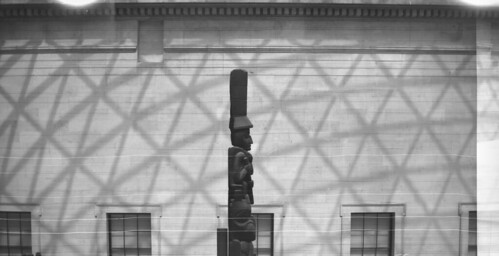
For yesterday's 'Take Your Box Camera To Work Day', I used my Kodak No.2 Brownie; having shot with it for last June's 116 Day, I was keen to use it again, but hadn't had the excuse. Keeping the 116 backing paper from the two Kodacolor 116 films that I had used last year, it was a simple matter to transfer 120 film to the slightly larger paper. The original 116 film is longer than 120, with the result of getting just six whole images from a roll, but I had no problems with frame spacing, as I did have when using 120 film with adaptors, as the numbers and markings do not quite evenly match up; although I did get six whole images, most of a seventh image was possible, but with the odd effect of the very end of the film curling up inside the camera and creating an odd oblique shadow on itself with distortion in one corner, as the narrow width of 120 film meant that it wasn't securely held each side of the frame (this did also show up as a slight curl at the top or bottom - or both - of most images).

Kodak No.2A Brownie with HP5 Plus - seventh frame
I shot two rolls of Ilford HP5 Plus with the 116 backing paper; most were long exposures with the 'time' setting, and at the camera's smallest aperture, finding level surfaces to place the camera for a few seconds, although I did attempt a few shots on the 'instant' setting, such as the one below, but with the Brownie's widest aperture being around f11, interior shots with a fixed shutter speed of around 1/40th would generally be underexposed; in addition, the weather for most of the day was overcast, providing less daylight to help illuminate rooms with windows.

Kodak No.2 A Brownie with Ilford HP5 Plus
Despite having attempted to clean the rollers on the camera, the photographs shot with the Brownie did have scratches through the emulsion, although not generally as bad as the film I'd used last year. These scratches tended to show more on the instantaneous shots, as the negatives were thinner; the patterns of the scratches also suggested that, by virtue of how the Brownie's film advance works, each turn of the wind on key has points where the tension is greatest, and the scratches were more prominent, as seen in the image below.

Kodak No.2A Brownie with Ilford FP4 Plus
As well as HP5 Plus, I also shot a roll of Ilford FP4, using the spool adaptors I'd previously made, which worked well enough, as did the spacing generally, using the 6x4.5 frame markings on the back of 120 paper (which I have written about more fully in my post about the Zeiss Ikon Cocarette). Probably the best shots from the day were two on FP4 Plus from my journey home, with the light failing, using relatively long exposures at f22, at the bottom of this post, which demonstrate how good the Brownie's lens can perform stopped down (the subjects of most of the other photographs are a little close for the fixed-focus lens). An additional synchronicity for using the No.2A Brownie on this year's 'Take Your Box Camera To Work Day' is that my particular model B version is one hundred years old this year: a couple of small details (specifically, the spool-end tension springs and the unmilled latches) are evidence that the camera was produced at some point between June and October 1917.

Kodak No.2A Brownie with Ilford HP5 Plus
Kodak No.2A Brownie with Ilford FP4 Plus

Sunday, 19 June 2016

'116 Day'

Zeiss Ikon Cocarette with HP5 Plus
Last weekend, on the day before 126 Day, I shot film in my two 116 format cameras. I'd had a Zeiss Ikon Cocarette for some time with which I'd previously used some 120 film, and had intended to write about, but taking photographs on the date of 11/6 this year was prompted by acquiring a Kodak No.2A Brownie in the format a few weeks ago. 116 was a paper-backed rollfilm, very much like 120, but the film was 70mm wide (compared to 120's 62mm), and the typical frame size for the format is nominally 6.5x11cm. Kodak discontinued manufacture of 116 film in the mid-1980s, but there are many 116 cameras still around, and to use them can be done with essentially three strategies: using original, expired 116 film; using other 70mm film stock in the cameras; or adapting the cameras to use 120 film.

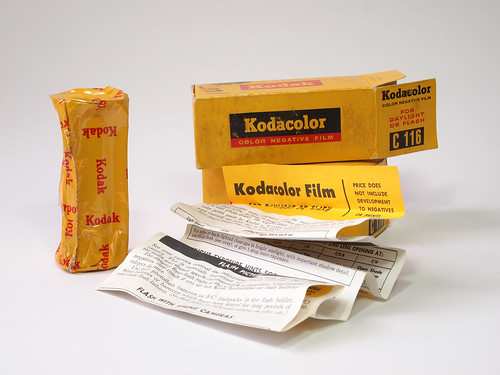
Kodacolor colour negative films
Fortunately, both 116 cameras had the original metal spools in left in the supply side chamber when I bought them, and, online, I found a couple of rolls of Kodacolor negative film to shoot on the day. These dated back to the late 1950s and early 1960s with 'process before' dates of July 1961 and November 1964. Originally 32 ASA, I rated the films using a rough approximation at around 6 to compensate for loss of sensitivity with age. I shot one roll in the Cocarette, handheld, as this had a much faster lens than the Brownie, and, although I mostly shot at f4.5 with 1/50th, these negatives were predictably underexposed.

Zeiss Ikon Cocarette with expired Kodacolor film
With the No.2A Brownie, with a maximum aperture of around f11, and an 'instant' setting around 1/30th, I shot all the frames of the Kodacolor film on the T setting. As the camera does not have tripod mounts, I also had to find flat surfaces to place the camera for these exposures, stopping down the Brownie's meniscus lens to f16 or f22, and using times in seconds up to about a minute. The Kodacolor films were meant for C22 processing, a precursor to the current C41, but I used stand development in R09 One Shot to produce a monochrome negative. The orange mask on the negatives appears darker than current colour negative film, and as a result of the size of the images, I had to resort to photographing the negatives on a light box rather than scanning.

Kodak No.2A Brownie with expired Kodacolor film
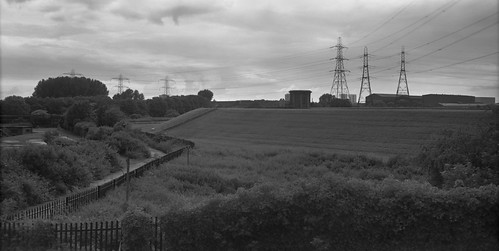
The images from the Brownie camera were much clearer than those from the Cocarette, thanks to having received sufficient exposure to compensate for age; I also had problems with the focus of the Cocarette. As well as the Kodacolor film, I also shot a couple of 120 film with the camera, adapting it to take the smaller spools. With the lens positioned at infinity, the focus is notably soft. I suspect that this is just behind infinity, as the whole image has a softness, not just in the far distance, but this was something I had failed to check before shooting with the camera on the day, although earlier tests had suggested a problem. The image below demonstrates this, though it's only clear when zoomed in. It may also be due to a lack of film flatness, evident at the top and bottom of some of the images on 120 film with a further loss of focus and straight lines beginning to curl.

Zeiss Ikon Cocarette with Agfa Superpan
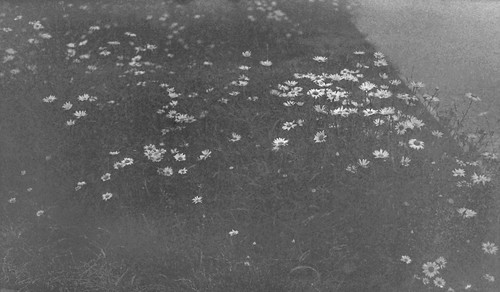
As the Kodacolor shots with the Cocarette were all at wider apertures, this would no doubt have been worse, however, on shots which were not focussed at infinity, the sharpness is much better, even in the underexposed image below of the daisies.

Zeiss Ikon Cocarette with expired Kodacolor
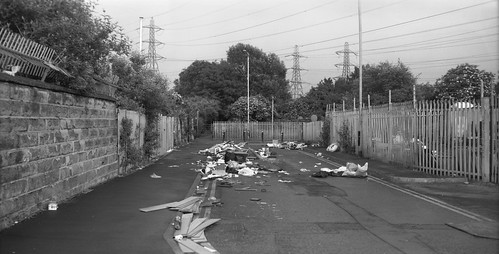
With the 120 film shot in the Cocarette, those images in better focus were those that were again not set at infinity: in the first image below, I estimated the focus to be around 30 feet to the detritus in the middle distance, and used a small enough aperture for depth of field to encompass most of the scene; the following two images were shot with much closer focus, but equally are better than those at infinity.

Zeiss Ikon Cocarette with HP5 Plus
Zeiss Ikon Cocarette with Agfa Superpan
Using 120 film in a 116 camera does make for an attractively proportioned image in landscape orientation; beyond the scope of this post, there's a fair amount on the net from others about how to do this but it's something that deserves a separate post in itself for a future date.

Zeiss Ikon Cocarette with Ilford HP5 Plus