Showing posts with label Canon. Show all posts

Saturday, 25 February 2017

Canon FTb-N

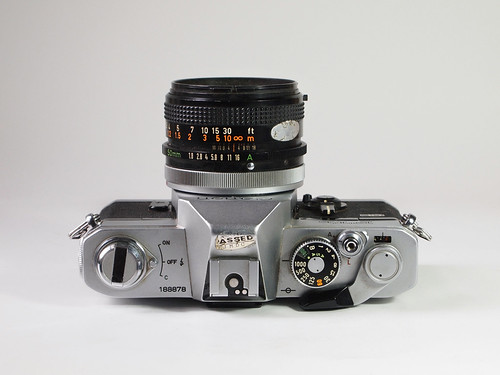
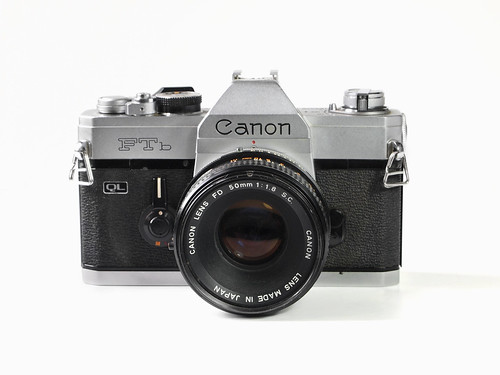
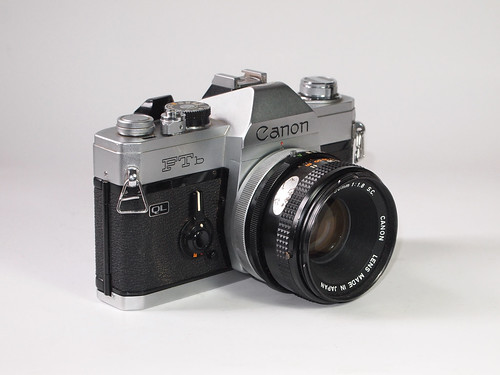
Canon FTb-N 35mm SLR camera
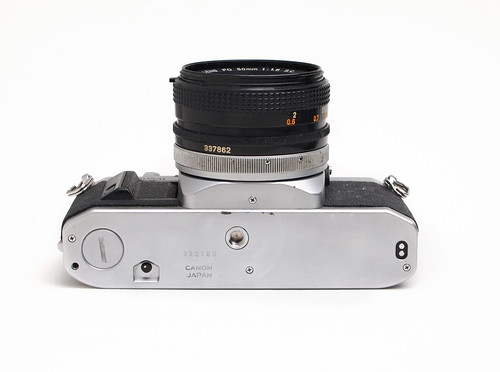
When one gets a reputation for an interest in 'old cameras' (old as being short hand for film), not entirely unfrequently, I find myself being given cameras. One recent gift was a well-used but well-cared for Canon FTb-N. On the camera itself, the model name FTb is engraved on the body, without the N-suffix, but the FTb-N is easy to distinguish from the earlier FTb by the redesigned stop-down lever: on the previous model this is larger and unpainted with a leatherette inset patch - and in addition the PC flash socket (on the other side of the lens) lacks a cover. The advance lever gained a plastic tip and, one further change, not visible externally, is that the shutter speed is now visible in the bottom left hand corner of the viewfinder. Although sometimes written FTbn or FTbN, the Canon Camera Museum uses the name Canon FTb-N, which should be the authoritative version.

The evolution of Canon's F-series SLR cameras began with the FX and FP models from 1964; the lens mount was redesigned with the Canon F-1 in 1970. The FTb of 1971 has this newer FD mount, but the name derives from the earlier Canon FT QL of 1966: the FTb (and FTb-N) was an upgrade of the FT QL with the new FD lens mount. The "improved" FTb-N model has sufficiently small revisions that would appear not to be distinct enough to have the N engraved on the camera body. Canon also produced a simplified version of the camera for overseas markets, released as the TX in 1975.

Canon FTb-N with 50mm f1.8 lens

The code printed inside this example confirms it was made in December 1974 in Canon's Fukushima plant. Having previously used Canon's A series SLR cameras, mostly the A-1, there are some similarities in design and feel to the FTb-N. It is bigger and boxier than the A series, and notably taller in the body, which hints at its design being older, bridging the gap between the first generation of Japanese SLR cameras, and the later 1970s iterations with more compact, refined designs. The FTb-N does share the same lens mount with the later A series, providing compatibility with all of Canon's FD lenses; in addition, the FTb-N can also use FL and R series lenses but without full aperture metering.

The FTb-N I was given came with the standard, older breech-lock f1.8 50mm FD lens; it also had a Vivitar 70-200mm zoom and a Canon 135mm lens which, unfortunately, was cloudy with fungus. Most of the functions on the FTb-N are very much familiar classic SLR territory: manual focus, single stroke film advance, cloth focal plane shutter with speeds of 1 second to 1/100th and 'B', threaded shutter release with a lock position (that can be used as a 'T' setting), manual rewind, hot shoe and PC flash connectors.

Canon FTb-N top plate
Other than the TTL meter, the FTb-N is entirely mechanical. The lever located around the rewind crank turns the light meter on and off as well as featuring a battery check function at 'C' (the meter is also set to 'off' for using flash as indicated). The battery was originally a mercury PX625, for which modern replacements are available; the battery compartment is on the side of the camera, below the rewind crank, rather than in the bottom plate. Metering itself is a fairly common match-needle arrangement inside the viewfinder: the shutter speed/film speed selection is reflected in the sensitivity of the needle's response; turning the aperture selection ring moves a second needle with an eye to match the first. Film speeds, in ASA, run from 25 to 2000 in a window within the shutter speed dial. There was also a low-light meter-booster accessory available, which fitted to the hot shoe.

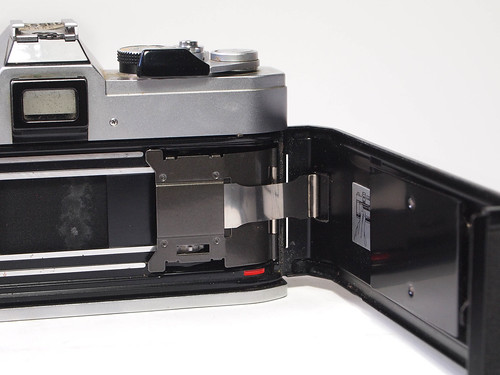
Although the 'new' model status of the FTb-N isn't marked on the camera body, the QL badge stands for Canon's Quick Load system: a hinged plate inside the camera assists accurate loading. The film leader has to be placed up to a red mark inside the camera, and then the plate folds flat on the the film, designed to make loading fool-proof. When advanced, a series of rotating sprung rubber feet use friction against this internal plate to pull the film into the take-up chamber. In practice, I always check 35mm film is correctly loaded by watching for the rewind crank turning when film is advanced; the QL system removes the necessity for slipping the end of the film into a slot as with most 35mm cameras, which can sometimes be fiddly. Canon used the QL system on a number of cameras, both SLRs and rangefinders, for a number of years, but I imagine the extra complexity in production balanced against the perceived ease of loading proved of insufficient benefit, and the feature wasn't used on the A-series SLRs.

Canon Quick-Load system

As well as the QL system, another interesting design feature of the FTb-N is its multi-function stop-down/self-timer lever: pushing the lever towards the lens stops down the selected aperture; rotating this 180ยบ away from the lens sets the self-timer; under the lever is a second, smaller lever, which selects 'L' to lock the stop-down lever, 'M' to lock up the instant return mirror, or a white dot for 'unlocked' functions.

Using the FTb-N was very much like experiencing a simpler antecedent to the far more sophisticated Canon A-1 which I used for most of my 35mm photography for many years: most of the user controls, although less advanced, are in much the same places. The largely metal, mechanical camera feels quite solidly made in use, and its relative simplicity ensures that there are few distractions when shooting with the FTb-N; one of the few aspects of the camera that wasn't entirely to my liking was its focus screen - having been used to shooting SLR cameras with split central image circles for focussing, the FTb-N just has a microprism patch in the centre with a slightly darker rectangle around it to indicate the meter area, this I found makes fine focussing take just a little more time and attention than the clarity of a split image.

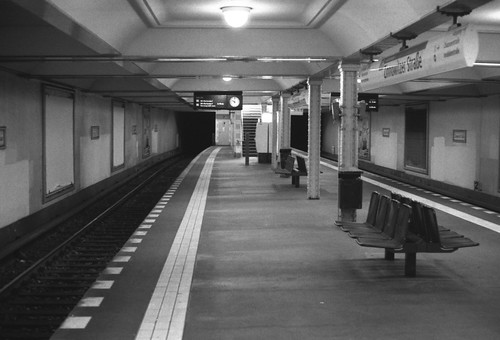
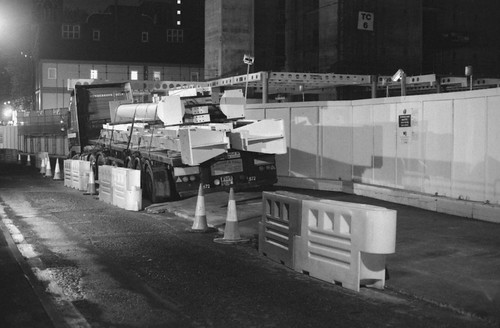
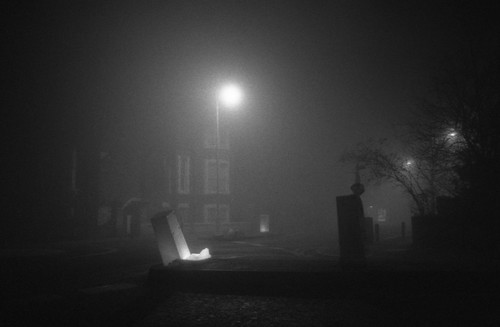
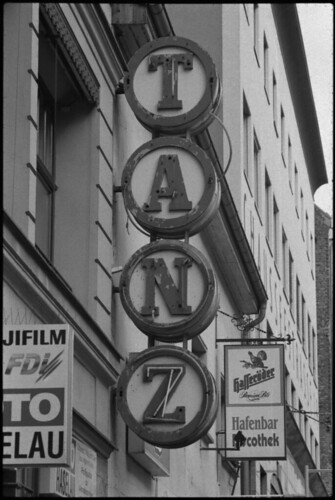
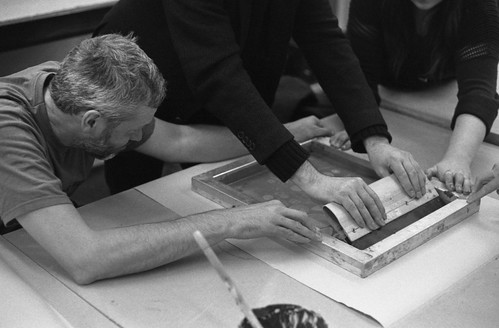
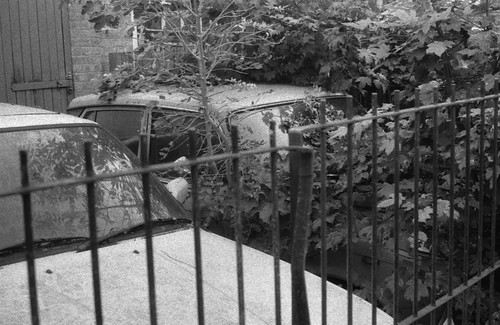
Canon FTb-N (50mm f1.8 lens) with Eastman Double-X film
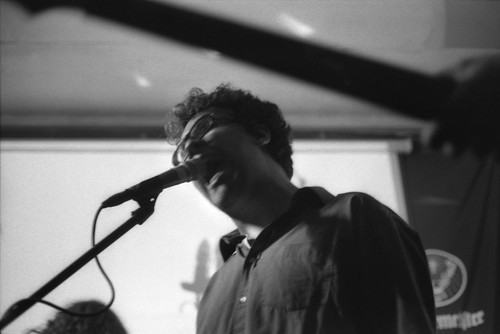
Canon FTb-N (50mm f1.8 lens) with Ilford HP5 Plus at 1600
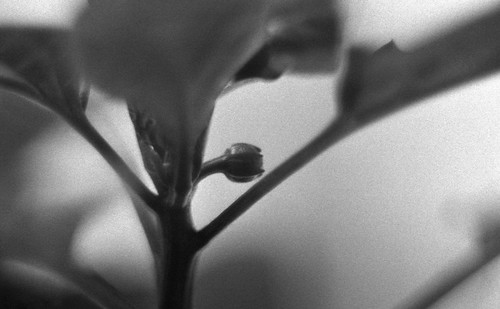
Canon FTb-N (50mm f1.8 lens) with Ilford Mark V Motion Picture film
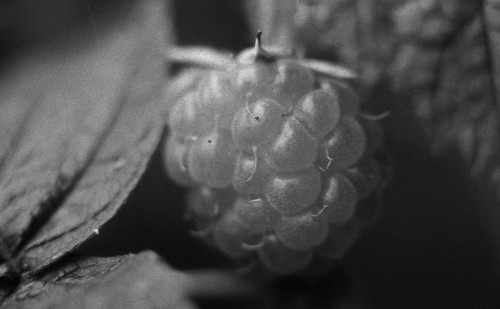
Canon FTb-N with Ilford Mark V Motion Picture film and Vivitar 70-200mm zoom lens
Sources/further reading:
Canon FTb-N page on the Canon Camera Museum
Classic Cameras - FTb-N
Photoethnography's Canon FTb page
Canon FTb page on Camera-Wiki

Friday, 16 October 2015

A minor fix for the Canon AV-1

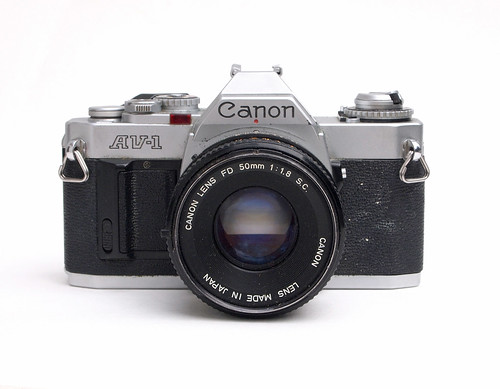
Canon AV-1 with 50mm f1.8 lens
Writing about the Canon A-1 SLR camera for my last post prompted my partner to find her old AV-1. This hadn't been used for well over ten years, and I had looked at the camera some time ago to find it apparently inoperable. The battery inside the camera was dead, but fortunately not corroded. Like the A-1, the AV-1 will not work without a battery, but on inserting a new battery, although the meter needle responded to light, the shutter would not fire, nor could the film advance lever be moved. At the time, it seemed like there was little else to do but put the camera away again as a 'non-shooter'.

The Canon AV-1 appeared in 1979, one year after the A-1, and three years after the AE-1, which it clearly draws upon, although there are a few similarities to the higher priced and fully-featured A-1. Canon's Camera Museum website describes the rationale behind the development of the AV-1:
Even though the camera would cost more, shutter speed-priority AE cameras were important to Canon since users could comprehend shutter speeds easier than aperture settings. However, in America and other overseas markets, aperture-priority AE 35mm cameras were in the majority.

Overseas distributors also clamored for an aperture-priority AE model. Canon responded with the AV-1.
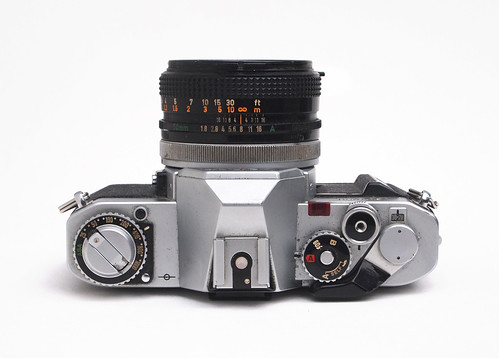
Named for Aperture Value, the Canon AV-1 shared much of the AE-1's design and construction, including the use of metalised plastics in its build, to make it both lighter and cheaper (it's around 200g lighter than the more robustly made A-1). However, the AV-1 isn't Canon's aperture-priority version of the AE-1: the design and functions of the camera have been further simplified. Although it has the same EV range (1 to 18 EV at 100 ISO), it lacks the top film speed setting of 3200, 1600 being the maximum (this is set on a dial around the rewind crank, more like the A-1's design). The exposure preview button on the side of the lens mount is missing, although the backlight correction button remains, giving an exposure adjustment of +1.5 stop. Exposure preview is by partially depressing the shutter release, which activates the meter and gives a preview of the shutter speed in the viewfinder, with a needle indicating a range from 2 seconds to 1/1000,  with under- and overexposure indicated at either end of the scale. 1/30th is marked with a black bar: with the needle at or below this speed is a warning of camera shake. The stopping down lever is also absent, as is the PC connection for flash. Flash sync is at 1/60th, a separate setting on the mode dial, which has a red-accented 'A' for automatic shutter speed, 'B' and both self-timer and self-timer-with-flash. The red LED on the AV-1's top plate is only used for the self-timer - like the A-1, but unlike the A-1 it's not used for the battery check function as well (pressing the battery check button raises the needle inside the viewfinder). According to prices given on the Canon Camera Museum, in 1979 the AV-1 cost 57,000 yen (with the 'New FD' 50mm f2 lens, designed to be a low-cost prime), as against the AE-1, which three years earlier was 81,000 yen (albeit with the more expensive 50mm f1.4 lens). As a point of comparison, the A-1 was 83,000 yen in 1978 for the body alone - and 114,000 yen with the 50mm f1.4 lens.

Canon AV-1 with 50mm f1.8 lens
What made me want to write this blog post, not as a full article or review on the Canon AV-1, was my experience in getting the shutter to fire again and the film advance to work. I searched online about how to free the shutter, and found much about the Canon AE-1, which came up in searches for the AV-1. From this information I had a general idea of what might be wrong, but pictures of the AE-1 with the bottom plate removed showed a slightly different layout. The following steps were what I did to release the shutter after being stuck and left for many years - this was very simple - but as I couldn't find the specific information relating to the AV-1, this may be of some use to others.

The first step is to ensure that the camera has a working battery: the shutter will not fire without one. The AV-1 requires a PX28 battery, like other A series SLRs. With the collar around the shutter release set to A, press the small black battery check button just in front of the film speed dial. If the camera's circuits respond, the needle inside the viewfinder will move, and, according to the manual, it should raise above the black bar next to the 1/30th speed (a weak current may move the needle but it may not be enough the trip the shutter). At this stage the shutter release would not trip the shutter, and neither could the film advance lever be moved. The following description of the steps I took to free the shutter mechanism are to be undertaken with caution and at one's (or one's camera's) own risk.

Canon AV-1 bottom plate
The bottom plate is removed by taking out the three small cross-head screws. The fourth screw below the lens mount is for a separate section of the casing and can remain in place. In reading around problems with the AE-1, it seemed the most common reason for the shutter to be jammed is the magnetic shutter release. In the AE-1, this is easier to access: on the AV-1 it is visible, but somewhat buried: in the image below it is located to the right of the tripod fitting underneath the red and black wires with a transparent plastic cover. The magnet itself has copper coiled around it. Perhaps it would have been best to give the camera a proper CLA and clean the magnet's contacts, but this requires more disassembly. I hoped that I could get the shutter to work again without going any further. At this stage it wasn't entirely clear to me whether the film advance or the shutter was stuck.

Canon AV-1 bottom plate removed
With the bottom plate removed it is possible to see whether the stutter is cocked or not. If it is cocked, the magnet circuit is closed: there is a metal release linkage just visible in the image above closing the circuit in contact with the magnet. Using a small screwdriver, I managed to get the shutter to release by forcing the lever on the left hand side (it pivots upwards to the right) which connects the film advance (the large toothed wheel on the left) to the shutter cocking mechanism. The shutter fired once, then stuck again. However by tripping the shutter a few times by forcing the lever with it intermittently sticking, after exercising it enough it stopped getting stuck and I felt confident that the shutter and film advance now worked freely - for the time being. I can't claim this to be an in-depth explanation of how to fix any shutter problems with the AV-1, but it may well be the first action to take to free a stuck shutter; beyond this step, the next would be to take out the tripod fitting and the black plastic next to it, and possibly the circuit board on the right hand side, in order to access the magnet and clean the surfaces that contact when this closes. The reason for the shutter being jammed may simply have been that it had been stored with the shutter cocked (i.e. wound on) for a number of years: when not in use for some time, it may be best practice to fire the shutter, then remove the battery.

Although the New FD mount lenses appeared at the same time as the Canon AV-1 (Canon Camera Museum: "When this camera appeared, a new type of FD lenses featuring instant mounting/demounting was also introduced"), this particular camera had an old breech-lock FD lens (although technically both new and old FD lenses are breech-lock, it appears to be common to refer to the new FD lenses as 'bayonet mounting'). With the shutter firing again, I re-attached the lens to find that it jammed the shutter - or more accurately, it prevented the mirror from fully returning somehow. The mirror did return when I partially loosened the breech-ring, and the lens had the same effect when mounted on my A-1. Looking at the old lens on the all-black A-1, I wonder whether the visual design of the New FD lenses were in part inspired by the look or the general design principles of the A-1, even if these lenses were released a year later, along with the AV-1. One oddity of FD lenses with an 'A' setting when used on the AV-1 is that this simply selects the smallest aperture - and meters for it.

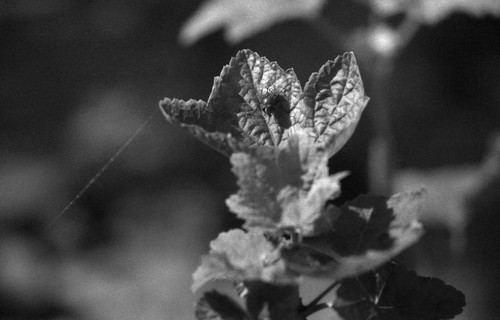
Researching the AV-1, I came across Bob Atkin's website which details Canon's date codes. According to the information listed, the AV-1's body dates to 1979, while my Canon A-1 is a year more recent in manufacture, to 1980. Having got the AV-1 working again, I ran a couple of short rolls of film through the camera, one of Retropan 320, and Ilford Mark V just to make sure everything was working as it should. The AV-1 had a 2x macro teleconverter with it, allowing for 1:1 image reproduction, such as in one of the close up images of plants below.

Sample image with f1.8 50mm lens and Foma Retropan 320
Sample image with f.18 50mm lens and 2x teleconverter on Retropan 320
Sample image with f.18 50mm lens and 2x teleconverter on Ilford Mark V
Sources/further reading:
Canon AV-1 manual (PDF)
Photography in Malaysia's Canon AV-1 pages 
Fix Old Cameras' AE-1 release magnet video 

Sunday, 11 October 2015

The Canon A-1

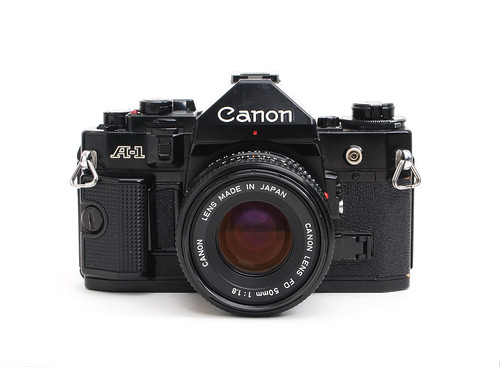
Canon A-1 with f1.8 50mm FD lens
One of my reasons for starting this blog four years ago was that I was becoming interested in cameras other than SLRs, and describing the experiences of using these cameras; in comparison, what I think of as classic film SLR cameras tend to be well-known and well-represented in blogs, articles and discussions on the internet, and that to add my own views might seem superfluous. However, for a couple of admittedly personal reasons, it seemed like perhaps time to add a post of my own on the Canon A-1.

My first 35mm SLR camera was a Praktica BC1, shortly to be replaced with a BCA body, which I used all through my student years and for some time afterwards; in 2001, with a small amount of money from a commission, I wanted to buy a more advanced 35mm SLR, but not the contemporary type of film cameras that were soon to give way to digital (in the 1990s, my Praktica was around a quarter of the price of a Canon SLR). Part of the reason for choosing the Canon A-1 was simply that I had been able to compare my Praktica against the A-1 of a fellow student at college, so a few years later it seemed an inevitable choice. My original Canon A-1 was stolen after a couple of years of use, but I replaced it with another some months later when I could afford to, and used it almost exclusively for about four or five years - mostly during the period when I didn't have access to a darkroom and shot colour or chromogenic black and white film. Part of the reason for writing a post about the camera now was a brief misconception that I had bought the camera a full fifteen years ago, before realising that it was fourteen years ago this month (the two shots below come from my first test roll); and it has been one of the cameras that I have been lending to students to use in an introduction to black and white film-based photography that I have been teaching - and being reminded of the quality of the results.
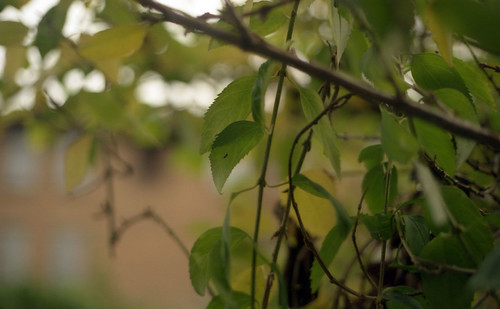
Canon A-1 with Kodak Portra 160NC - first test roll
The A-1 was already several years old when I first encountered it, older than my Prakticas. Canon introduced the camera in 1978, two years after the innovative Canon AE-1, and it was produced until c.1985. In the original manual, the A-1 is described as:
...the most exciting and advanced camera on the market. Canon has good reason to have unbounded confidence and pride in the A-1. Embodied in this camera are the qualities of the finest SLR cameras and into it went the most sophisticated electronics technology available in the world today.
This quote from the introduction to the 100-page manual may well have been more than just marketing hyperbole: Camera-wiki's page on the A-1 states that "Canon's competitors were considerably slower in introducing programmed SLRs: Minolta in 1982 with the X-700, Nikon with the FA and Pentax with the Super A in 1983 and Olympus with the OM-2S Program in 1984."
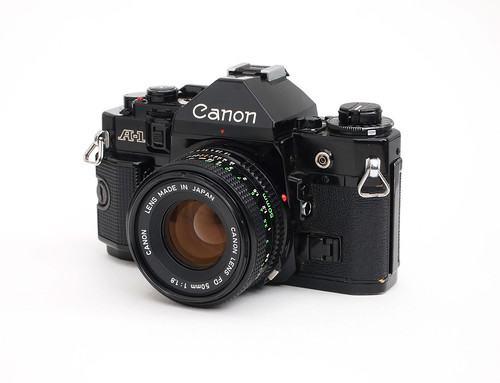
Canon A-1 with f1.8 50mm FD lens
The A-1's specifications were impressive for 1978: it has five automatic exposure modes plus full manual override: shutter speed priority AE; aperture priority AE; programmed AE (i.e. automatic selection of both shutter speed and aperture); AE flash photography with dedicated Canon flashes; and stopped-down aperture AE. The ASA dial has a very wide range from 6 ASA to 12800 ASA in third-stop increments, and provided with +/- two-stops exposure compensation, also with third-stop increments. The centre-emphasis TTL meter has an EV range from -2 to 18 at 100ASA. The viewfinder has an LED read-out for aperture and shutter speeds which automatically compensates for subject/viewfinder brightness. It also displays M for manual, buLb for 'B', and F or bu F for AE flash, with EEEE EE as an error message. In manual mode, the meter display shows the shutter speed selected on the Tv dial and shows the aperture (including intermediate half-stops) that will give correct exposure: the user then has to ensure that the aperture ring is set to this value - which does require taking the eye from the viewfinder. The LED read-out can be turned off using the collar switch around the battery check button on the left of the camera's top plate.
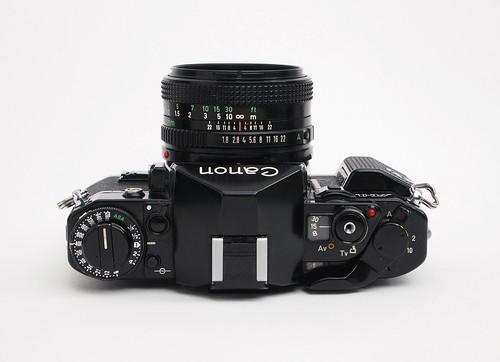
Canon A-1 with f1.8 50mm FD lens
Additional features include: a stopping-down lever with a lock position (this lock position activates the stopped-down AE mode, which meters from the currently selected aperture, rather than at full aperture as in other AE modes); exposure preview (in addition to lightly depressing the shutter release) and exposure lock buttons on the left of the lens mount; a hot shoe with contacts for dedicated Speedlite flashes, and PC socket; and a built-in eyepiece shutter to prevent light entering via the viewfinder in long exposures. It also has a film reminder slot on the rear of the camera and a film plane indicator on the left hand side of the top plate.

Canon A-1 main user controls
The main user controls are all located on the right-hand side top plate. The main switch around the film advance is used to turn the camera on - at A - off - at L (for Lock) - and two self-timer positions for 2 and 10 seconds. There is also a multiple exposure switch next to the 10 second self timer position. Around the shutter release (with cable release socket) is the AE mode selector, the AT dial: Av selects aperture priority (when FD lenses are set to A on the aperture ring) with aperture values appearing in the window; Tv for shutter speed priority, with the window showing shutter speeds. These dial settings are colour coded: black numbers on yellow for apertures, with a range from f1.4 to f22; white numbers on black for fractions of a second, orange for whole seconds, from 1/1000 to 30 seconds, plus 'B' and P for programmed automatic exposure. These values are changed using the dial on the front of the camera, which also has a guard which can be raised to prevent accidental movement of the dial. All these functions can be operated by finger and thumb, which, together with the 'action grip' makes for an intelligent, functional ergonomic design: the lens mount is slightly offset to the left of the camera's axis, which balances it rather nicely in the hand. Aesthetically, the camera was only available in black, unlike a number of Canon's other SLRs around the same period, with numerals and lettering picked out mostly in white, with a few limited uses of colour. These choices appear to have made the design date less obviously than later Canon SLRs through the 1980s, notably the T series.
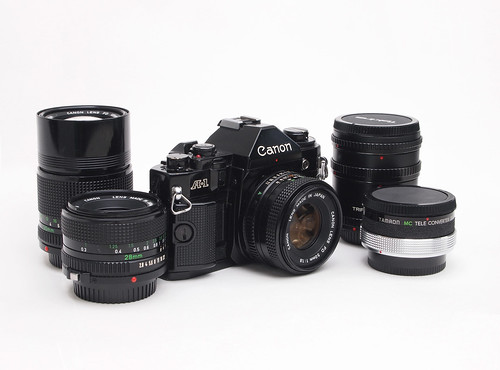

The Canon A-1 was designed to fit with all Canon's many FD, FL and R series lenses (with a few minor exceptions), and I acquired the common FD lenses, the f2.8 28mm and the f3.5 135mm; I did have a zoom for a time, but never took to using it. The f1.4 50mm lens and the faster f1.2 50mm lens are amongst the most sought after Canon FD fit prime lenses, and command high prices as a result; the standard f1.8 50mm lens that usually comes with the A-1 performs perfectly well. I also bought a (rarely used) extension tube set, and a 2x teleconverter. I was given a photocopy of the original comprehensive manual shortly after I bought the first A-1, useful to work out all the additional functions never or almost never used (I've never shot a double exposure with the camera, for example, and don't think I've ever really used the aperture priority mode). The manual provides illustrations of the many accessories provided for the A-1 and other Canon SLRs at the time, notably a data back, motor wind, magnifying eyepieces and so on. The only drawback to the Canon A-1 is that the electronic shutter is entirely dependent on battery power, a PX28 (although for others its fastest shutter speed of 'only' 1/1000th is also a cause for complaint). The electronic shutter can be a problem when a battery fails: many other SLR cameras of similar dates have at least one default mechanical shutter speed. On my current body, the battery door is cracked in two places - a common problem, looking at other descriptions online - but this is kept secure behind the action grip.

The Canon A-1 did (and continues to) live up to my expectations when I finally bought one, making the Praktica BCA look and feel very basic and primitive in comparison, although, for a first 35mm SLR camera, it had been both adequate and cheap (the secondhand price difference being much greater twenty years ago). In the course of writing this post, I've put a few more rolls of film through my A-1, and it's helped to remind me just how good the Canon A-1 is as a classic, manual-focus 35mm SLR camera.
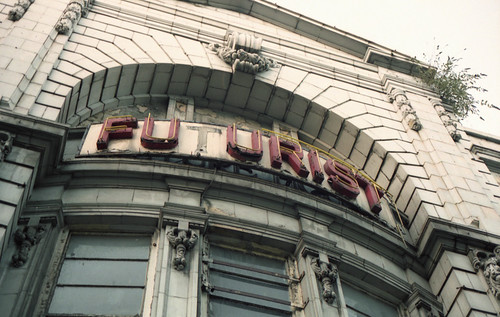
Canon A-1 (50mm f1.8 lens) with Fuji Superia 200
Canon A-1 (50mm f1.8 lens) with Ilford XP2
Canon A-1 (50mm f1.8 lens) with Ilford HP5 Plus
Canon A-1 (50mm f1.8 lens with 20mm extension tube) with Fomapan 400
Canon A-1 (50mm f1.8 lens) with Ilford HP5 Plus, pushed processed to 800
Canon A-1 (50mm f1.8 lens) with Ilford HP5 Plus, push processed to 1600
Canon A-1 (50mm f1.8 lens) with Ilford Delta 3200
Canon A-1 (28mm f2.8 lens) with Ilford HP5 Plus
Canon A-1 (135mm f3.5 lens) with Ilford HP5 Plus
Sources/further reading:
Canon A-1 on Camera Wiki
Canon's Camera Museum
The Canon A-1 manual
The Casual Photophile review of the Canon A-1
Photography in Malaysia's excellent Canon A-1 pages
Canon A-1 on Photoethnography
Sunday, 27 February 2011

Paris Flea Market Finds


From the Porte de Vanves flea market:

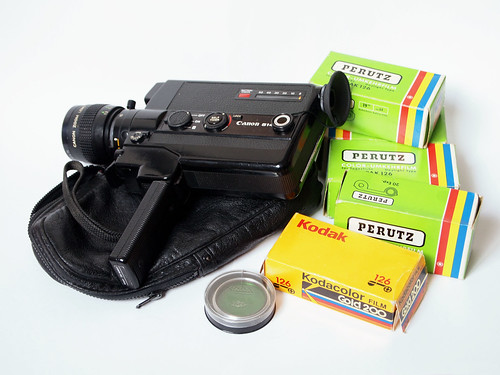
Canon 514XL Super-8 cine camera: €20
Kinax green filter: €1
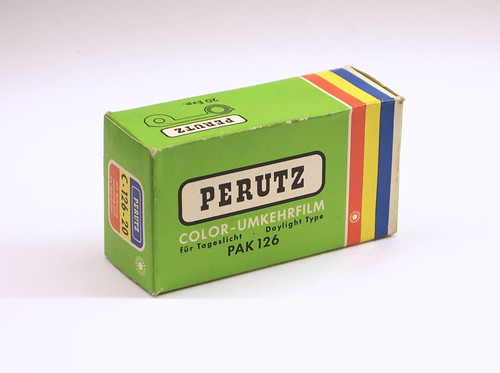
Five expired 126 film cartridges: €1 each

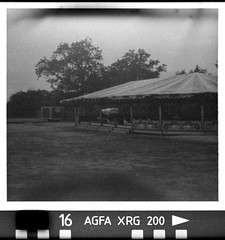
The 126 films are all still sealed; the Kodacolor film has a 'develop before' date of March 1991, the Perutz films have a date of May 1974. Quite possibly a waste of €5, but with 126 film no longer manufactured, I was intrigued to see whether the films might produce images from a Kodak Instamatic camera I have. While event-crewing last summer, I didn't want to take a 'proper' camera on jobs with me, but finding the Instamatic 50 in a drawer with a film in it, I took this. The film was Agfa XRG 200, and trying the fail-safe method of stand developing in Rodinal, a black & white film developer, produced some images.


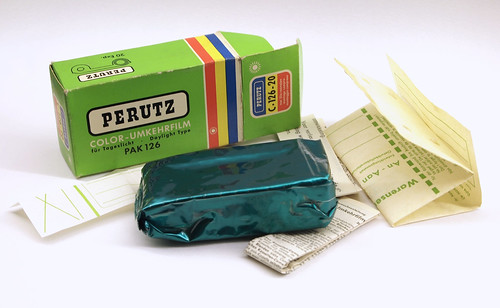
The Perutz film is more interesting than the Kodacolor: it's a transparency film, although it doesn't use the E6 system of development, the only colour transparency system still available. It was originally process-paid, so inside the box is an envelope for the film and a number of different addresses around the world for Perutz labs which would develop the film, and return the mounted slides.


Perutz 126 Color Transparency film 64 ASA/19 DIN- expiration date May 1974.

What you get in the box:-

Foil wrapped cartridge of 64 ISO colour transparency film, 20 exposures
Process-paid return envelope in 7 different languages
Address label
Instruction leaflet in 7 languages
Leaflet listing Perutz Color Service processors in nine countries