Showing posts with label Baby Ikonta. Show all posts

Tuesday, 10 February 2026

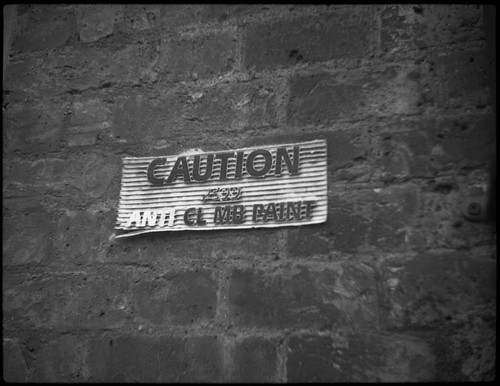
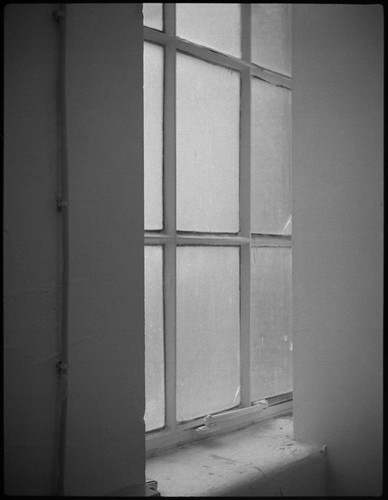
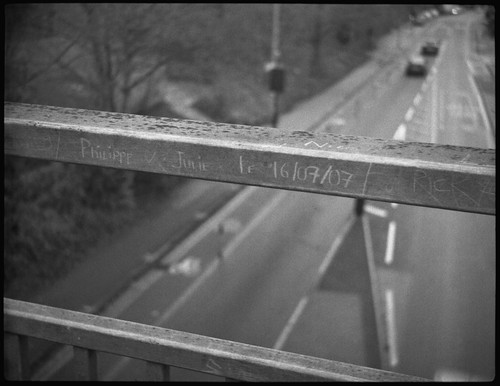
127 Day January 2026

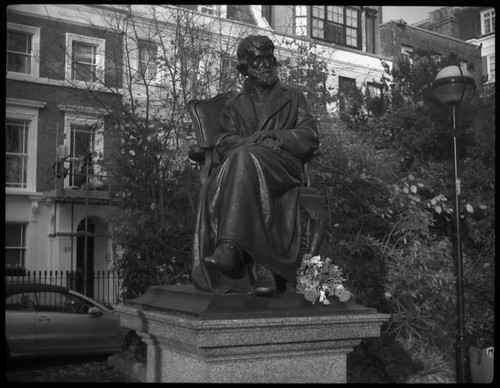
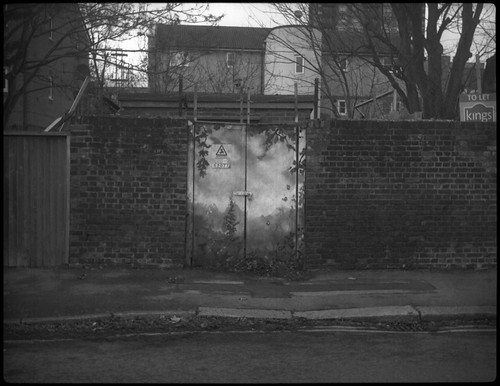
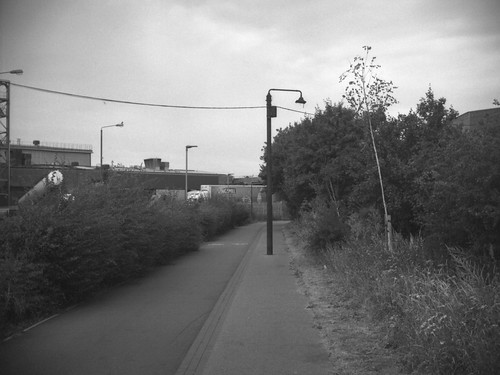
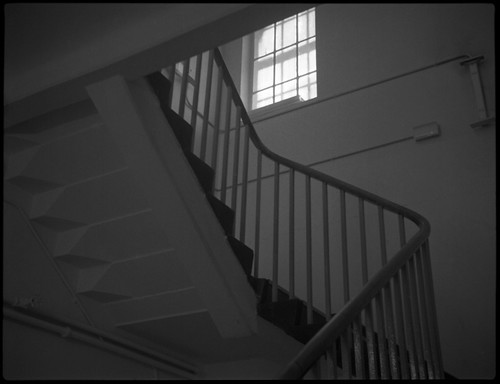
Ikonta 520/18 with Kentmere Pan 400

For a many years on this blog, I've followed the 127 Days faithfully, until January 2024, which was the last time I observed one of these calendrical oddities. There are a number of reasons as to why I'd not taken photos on any of the three 127 Days since then, with perhaps a little regret, which applies in general to the Photo-Analogue blog itself. I resolved to shoot at least one roll on Janauary 27th this year, two weeks ago today. This turned out to be a working day, and in addition heavily overcast: I had anticipated needing a fast film for the day, and cut-down a couple of rolls of Kentmere Pan 400 to cover the possibility of less-than-ideal lighting conditions. I also chose the Baby Ikonta camera, with a full range of shutter speeds and a relatively fast lens in comparison to some of my other 127 cameras, more limited in that respect. With the cloud cover at the time of day I left the house in the morning, it wasn't fully light; at the other end of the working day it was after dark. The lens and shutter were sufficient to accommodate the former conditions; for the latter, on my way home, I found a few places to prop the camera and use the shutter's T setting for a few long exposures to use the roll of film. In between, I managed a handful of frames around the working day; if nothing else, it served as a reminder of the appeal of using the Baby Ikonta.


Sunday, 29 January 2023

127 Day January 2023

Baby Ikonta with Kentmere Pan 400
Last Friday was the first of the year's calendrical 127 Days, and I had time during the early afternoon to expose a roll of cut-down Kentmere Pan 400 in the Zeiss Ikon Ikonta 520/18–the 'Baby Ikonta'–a favourite for its small size, relatively good Novar lens and Compur shutter. I used cut-down medium format Kentmere Pan 400. The weather was mostly overcast, and having a 400 ISO film certainly fitted the lighting conditions typical this time of year in the Northern hemisphere. Even then, in a few situations, such as under the dense branches of bare trees, the light levels were pretty low, and I didn't accurately guess-focus as accurately as I might in a few frames, with the aperture wider than I might have liked to provide little assistance in careless focussing. Developing the film in Kodak HC-110 (at dilution E, 1+47 from concentrate) provided low contrast negatives, no doubt compounded by the uncoated Novar lens of the Baby Ikonta, some flare in a few frames (such as in the second image below), on top of the lighting conditions. In retrospect, a one-stop push might have benefitted both the contrast, as well as being able to use a smaller aperture in some situations. However, regardless of the results of this one roll, having an inexpensive 400-speed film newly available in medium format is ideal for the purposes of being cut down to 127 size–a rather cheaper alternative to the few films currently available in the niche 127 rollfilm format, which, somehow, still survives in 2023.


Monday, 12 December 2022

127 Day December 2022

Baby Ikonta with cut-down Rollei Superpan

Despite neglecting this blog for a few months now, I couldn't not observe last week's 127 Day. I used the Baby Ikonta again, but had just a couple of rolls of Kodak High Resolution Aerial Duplicating film cut to 127 size, and a short off-cut from a previously-cut-down roll of Rollei Superpan 200 (when cutting down 120 film to 127, the length of the 120 roll is longer than that needed for 127, meaning that with every cut down roll of 120, there's a remainder of film long enough for 5-6 'half'-frames on the '16-on' format); the image above is from the beginning of the short roll which shows that I hadn't accurately lined up the cut end of the film with the start of the numbers on the backing paper. The frames on the Superpan film were hand-held; the Kodak High Resolution Aerial Duplicating film when used as a negative film has a workable ISO of 2. I took most of these photographs in the Victoria & Albert Museum, without a tripod, placing the camera on any level and stable surface I could find that might provide an interesting viewpoint, mostly parapets and benches. I did take one frame, handheld outside, at (I think) 1/10th at f3.5 (the image of Second World War bomb damage to the museum's exterior; another photograph taken outside with this film was made placing the camera on a brick wall).

Baby Ikonta with Kodak High Resolution Aerial Duplicating film

On a winter's day, the light levels in the museum are often quite low: exposure times were between 8 seconds and approximately 1 minute. When I developed the film using PQ Universal, it was clear that I could have bracketed more, and, possibly at longer times, the film does exhibit some reciprocity law failure. Scanning the negatives, there was a lot of digital 'spotting' to do: the extremely clear shadow areas show up any specks of dust or dirt incredibly well. The blue-sensitive high-contrast nature of the film also shows how the daylight entering the galleries from skylights caused the floor appearing in some of the frames to appear very bright in comparison to almost everything else in the image, with the exception of some of the plaster casts (such as Michelangelo's David). 

Baby Ikonta with Kodak High Resolution Aerial Duplicating film

There was also a denser band along one side of one roll of this film, which I haven't found the cause of, but this may be fogging due to cutting the film down by hand under safelights in an insufficiently-dark darkroom, with something partially shading the film. I did think that this could be due to not using enough chemistry when developing, but usually this would show up as a pattern with the image of bubbles from the surface of the developer. This line can be seen to the left of the cast of the architectural façade in the image below.

Baby Ikonta with Kodak High Resolution Aerial Duplicating film

The Kodak High Resolution Aerial Duplicating film may also have benefitted from flashing before exposure to raise the shadow values, perhaps something to remember for January's 127 Day. The Rollei Superpan film was less problematic (despite not being taped at quite the right place to the backing paper), but I did use Kodak HC-110 to develop the film, having previously tested this with Rodinal, and worked out a time/temperature/dilution regime to get the best results for my own approach, which I haven't done with HC-110, merely taking the Massive Dev Chart's single recommendation: 6 minutes at dilution B, 1+31 from concentrate.
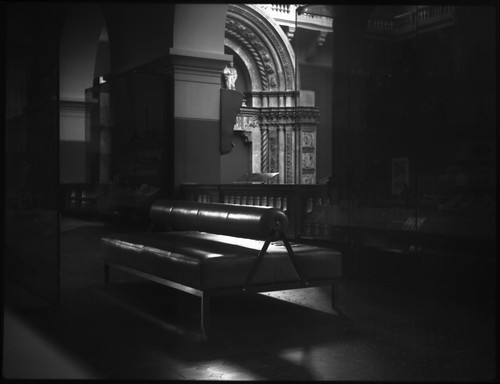
Baby Ikonta with Kodak High Resolution Aerial Duplicating film

Baby Ikonta with Kodak High Resolution Aerial Duplicating film

Baby Ikonta with Kodak High Resolution Aerial Duplicating film

Baby Ikonta with Kodak High Resolution Aerial Duplicating film

Baby Ikonta with Rollei Superpan 200

Baby Ikonta with Rollei Superpan 200

Baby Ikonta with Kodak High Resolution Aerial Duplicating film

Friday, 15 July 2022

127 Day July 2022

Zeiss Ikon Ikonta 520/18 with Rollei Superpan

Although I've not devoted much time to this blog of late, I didn't want to miss 127 Day earlier this week. This occurred towards the end of a spell of hot humid weather, with a dip to slightly more comfortable temperatures and humidity, a lull before the forecasted extreme heat in a few days' time. Taking some photographs on a walk in the early evening, it was still very warm, and the lighting had a peculiar heavy overcast quality (I was also recovering from a second Covid-19 infection, which, with the weather, gave a slightly soporific feel to the evening, and possibly as a result I wasn't really giving that much sufficient attention to subject matter and composition). I used the reliable Baby Ikonta, and a roll of cut-down Rollei Superpan 200, a film I've used a few times before, and had tested a fair bit in Rodinal to get a workable time/dilution; however, the roll of film I shot on 127 Day I developed with Kodak HC-110, a new developer for me, and so I went with the Massive Dev Chart's recommended time/dilution. Somehow, to me at least (and it may just be my own associated memory), the resulting negatives convey the airless quality of the day, with glimpses of the grass looking bleached by the sun, the foliage of the trees beginning to get the dusty dark tonality of high summer, possibly in part thanks to the extended red sensitivity of Rollei Superpan. Possibly most of the images might also have benefited from a yellow filter too, although I don't have any filters which fit the Baby Ikonta's lens: the constraints and conditions of exposing just a single roll on the day didn't really allow for any of these considerations.


Sunday, 30 January 2022

127 Day January 2022

Zeiss Ikon Ikonta 520/18 with Ilford HP5 Plus
As I wrote in my entry for December's 127 Day, I rarely miss the opportunity of shooting 127 format cameras on the calendrical 127 days, and last Thursday's January iteration was no exception. It was however a working day, and in addition, the day began very dull and overcast, with very low light levels on the way to work shortly after sunrise–not dissimilar to the weather in December. I used the Baby Ikonta again, which has a moderately wide aperture lens at f3.5, compared to other 127 format cameras which I might have chosen had the weather been better. Partly as a result of the low light levels I took very few pictures on the way to work; then, with a busy day at work, I took fewer photographs than I might have done, just one roll of cut-down Ilford HP5 Plus, but the light did improve later in the day as the clouds cleared, and I made use of this, taking a few frames around windows before the light went. Had the day remained overcast, I might have been tempted to develop the film to compensate by adding a stop to increase contrast (I'd estimated exposure with reference to the 'Sunny 16' rule) but I went with box speed after the light improved, using Adox Adonal diluted 1+25 for 6 minutes at 20ºC.


Wednesday, 8 December 2021

127 Day December 2021

Zeiss Ikon Ikonta 520/18 with Ilford HP5 Plus
I haven't posted very much on this blog for the last few months, for various reasons, but I didn't want to miss observing 127 Day yesterday, and I did also have the time to develop and scan the negatives, not wanting to add to a backlog of half-written blog posts or unresolved tests of films and cameras. I shot one whole roll of cut-down Ilford HP5 Plus, and a couple of short rolls of off-cuts from having previously cut down medium format HP5 to 127. I chose the Baby Ikonta in order to get as many shots from the film as possible, with the nominal 3x4.5cm negative format (and, with a little care, on a whole roll of 127 film with the Baby Ikonta one can get 17 pictures rather than the 16 numbered frames). I revisited a number of the shots that I'd taken in this summer's 127 Day in July (although not using the Vest Pocket Kodak due to its light leaks); the weather condition were less conducive than the overcast July day then, with very flat and dull light and increasing rain. I did consider pushing the film one stop in development to increase contrast, but went with the standard time for box speed as I'd taken quite a few shots with the sky featuring rather prominently, and I thought that this might make any definition in the sky even more difficult to pull out. The results were very much as I would have expected given the lighting conditions, and even with a 400-speed film I did shoot with wider apertures than I might have liked for the Baby Ikonta's Novar lens, but for a ninety-year-old triplet lens, it performs well enough.