|
| Kodak Instamatic 25 |
The
126 'Kodapak' format introduced by Kodak in 1963 was in essence a reinvention of the point-and-shoot box camera. The easy-load, drop-in cartridge was marketed as an answer to common problems of loading roll film. The cartridge was designed to make this fool proof: it is asymmetric, so will only load the correct way around, winding is in one direction only, and it is also protects exposed film, except for the current frame, if the camera is opened. This two-chambered design does have the drawback of making the 126 cartridge bulky: its main competitors in terms of format when it was introduced would have been
127 rollfilm (Kodak was making many 127 cameras in the early 1960s) and 35mm, the films themselves being both much smaller. The
Kodak Instamatic 25 was the second model in Kodak's Instamatic 126 range, manufactured in the UK. It is a basic snapshot camera, almost entirely plastic in construction: it features a fixed-focus 43mm lens, single aperture (f11), with two shutter speeds, represented by either a full sun symbol (1/90th), or half-sun/flash (1/40th). The camera, like earlier box cameras, was made for shooting outside in daylight, with film latitude to take care of variations in lighting, or flash for any other situation.
This was the first camera I ever took photographs with, at the age of eight, on holiday in the south of France thirty years ago. I used it again as a teenager until being given a Halina 35mm camera which was almost as basic (probably a
Halina 260, possibly as a Christmas present in 1989), which I used until my first SLR camera as a student. After many years I found the Instamatic 25 camera again at the same time as
the Pentax Auto 110. 126 film is no longer made, and it is hard to imagine sufficient demand for the cartridges to resurrect the format unlike
110 film. However, it is possible to reload and reuse 126 cartridges: the film used in 126 cameras is 35mm wide, but with just one perforation per frame, utilising a square image size of 28x28mm, although, like 110 film, 126 format also had smaller, pre-printed frames on the film, as seen on my photographs from
last year's 126 Day.
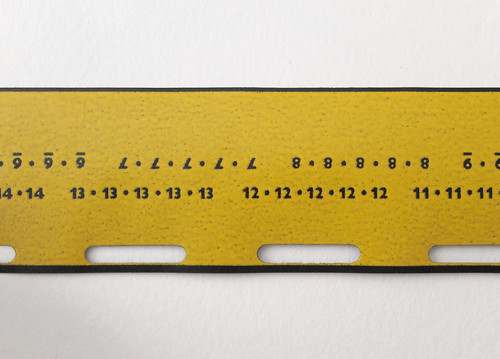 |
| 126 backing paper |
Although not made to be reused, I found the 126 cartridge is easy to force apart. The film has numbered backing paper with a generously long hole to register with the single perforation per frame on the film itself. There are two sets of numbers on the backing paper running both ways. The only explanation I can imagine for this is that some cameras might use the cartridge loaded the other way around, i.e. rotated through 180º,
and the numbers count down the exposures rather than up, which would also require a different window to line up with the numbers. How much film can be loaded into the cartridge is limited by the length of backing paper: of the two cartridges that I had, the Perutz transparency film was 20 exposures long, while the Agfa film was 24. I have seen examples of 126 cartridge reloads online where the backing paper isn't used (the cartridge window then needs covering over) and 35mm film simply taped directly to the spool, but as the camera itself does not have a frame counter, and the backing paper may also help film flatness and prevent light leaks, it seems there's no good reason
not to use it.
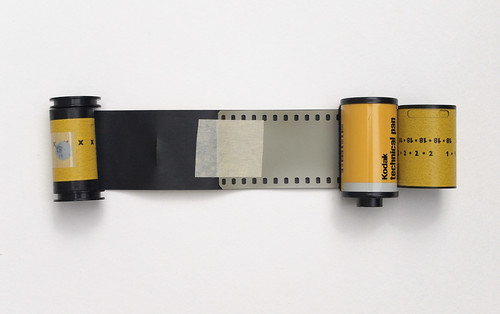 |
| Reloading 126 cartridges with 35mm film |
As the original film was 35mm wide, normal perforated 35mm will easily fit the cartridges. To reload the cartridges, I removed the internal spool with the backing paper, and taped the end of the 35mm film near to the end of the paper (as in the photograph above). Then, in a dark bag, I rolled the film together with the paper in all the way onto the spool to find the length and cut the film when the end of the paper is reached (the length of film which fits either 20 or 24 exposures will be shorter than the film in a 24 exposure 35mm cassette). Once cut to the correct length, I rolled the film and paper in the
other direction to insert it into the supply chamber of the cartridge before closing the cartridge and taping it together at each end.
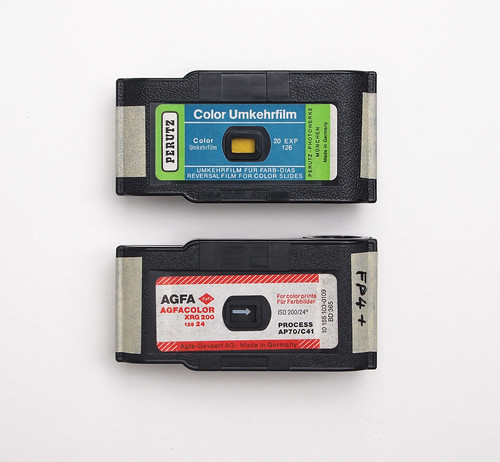 |
| Reloaded 126 cartridges |
I shot both
Ilford FP4 Plus and
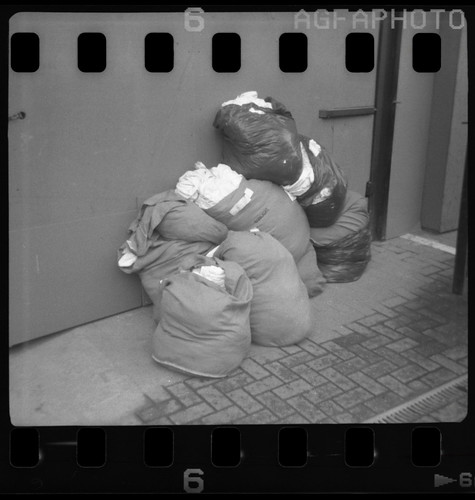
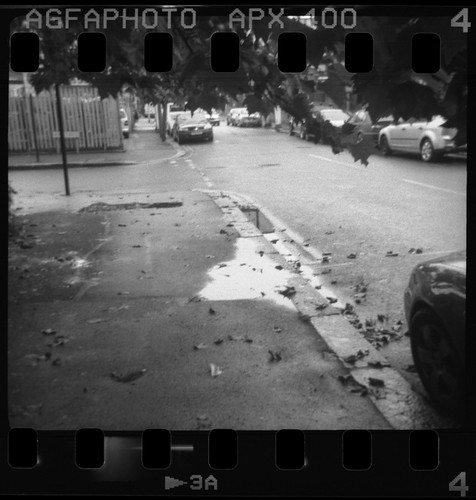
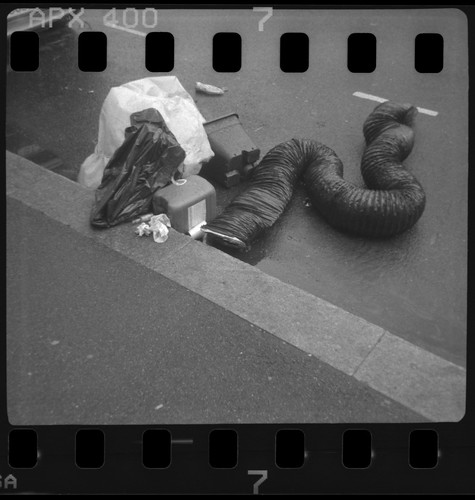
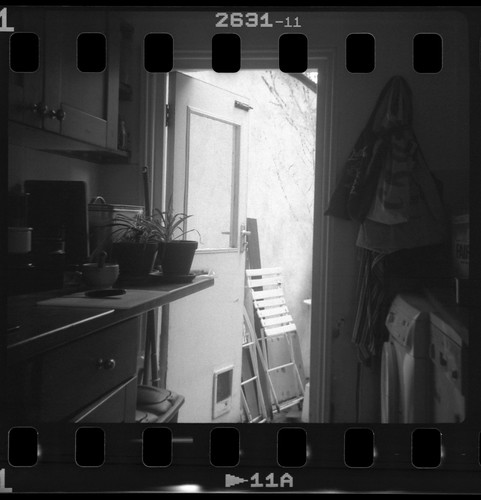
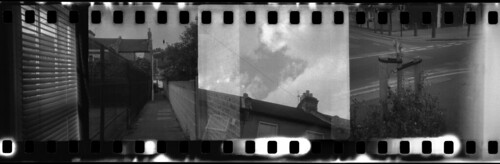
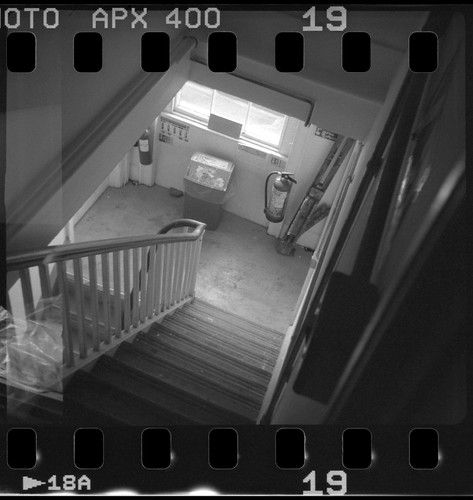
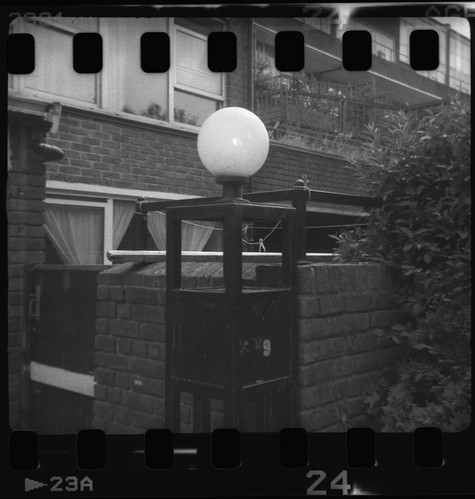
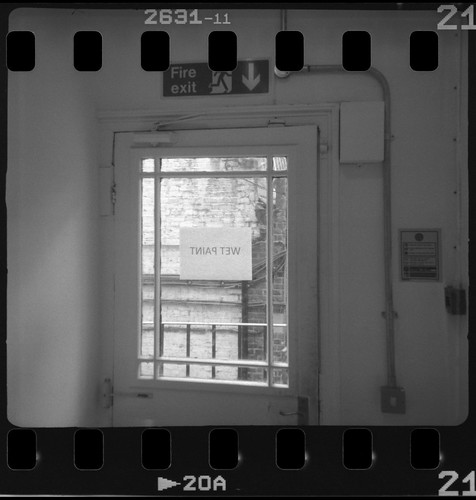
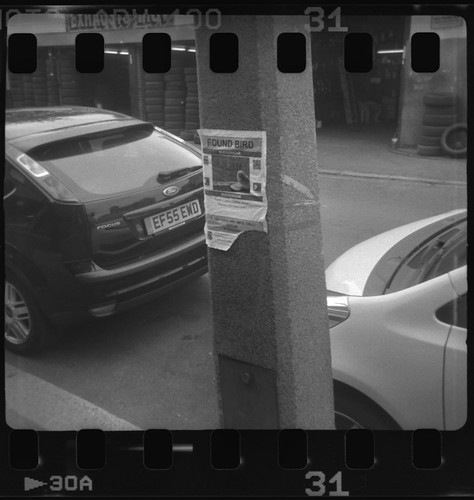
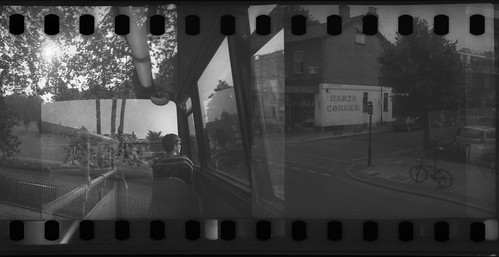
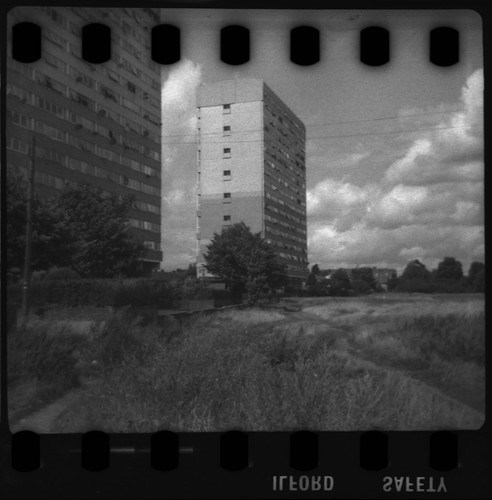
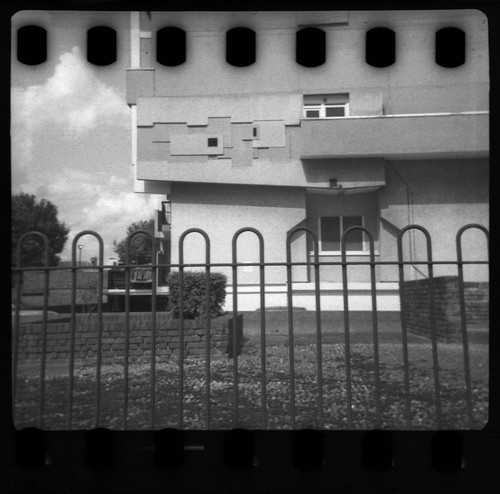
Mark V Motion Picture film in the reloaded cartridges. Although perforated 35mm film does fit the cartridges, it is not without considerations. Clearly, the perforations will appear across the top of the frame which has a very narrow rebate (the lower edge has a much deeper rebate), but I also found problems with overlapping and missed frames due to the camera's internal pin either failing to find a perforation to locate a frame, or locating a perforation too soon after the preceding frame. After shooting the first film, it became clear that, as long as the camera has wound on far enough to cock the shutter, it is probably better to use the numbers on the backing paper rather than rely on the advance wheel stopping at a frame with the pin located in a perforation. I attempted this approach on the second film and had less gaps between frames, although this won't necessarily prevent overlapping exposures.
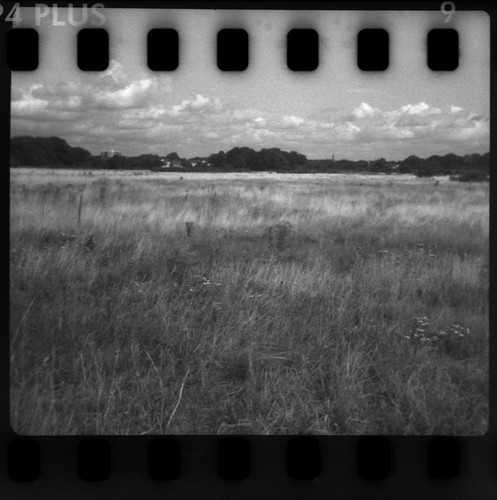 |
| Ilford FP4 Plus 126 cartridge reload |
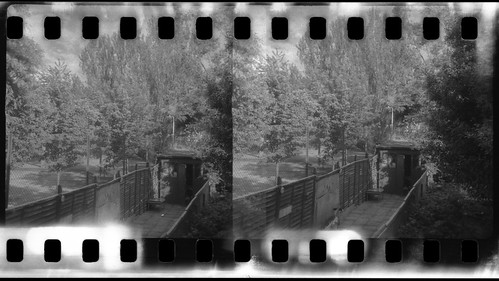
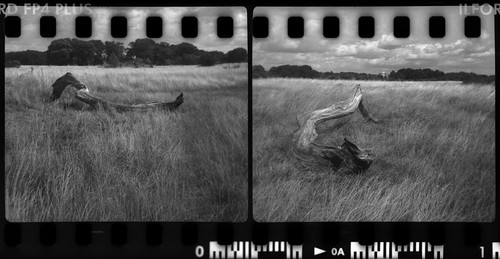
Once I had developed the two films, I scanned the first frame of FP4 and realised that the lens is not fixed at infinity, the horizon being just out of focus. The functions of the Instamatic camera are circumscribed by what it's designed for: taking photographs of people, family groups, but not strictly portraits, on a sunny day. The diptych of the two successive frames below demonstrates this: the fallen branch is relatively sharp, while the horizon behind just drops out of focus (a rough estimate of the camera's focus set around 3.5m would make everything from 2 to 10 metres in focus at an aperture of f11). Scanning the film and being able to enlarge it on a monitor emphasises this however; when made, most users of the Instamatic cameras probably would not see an image any bigger than a 4-inch square print, and the limitations of focus would be quite acceptable.
 |
| Ilford FP4 Plus 126 cartridge reload |
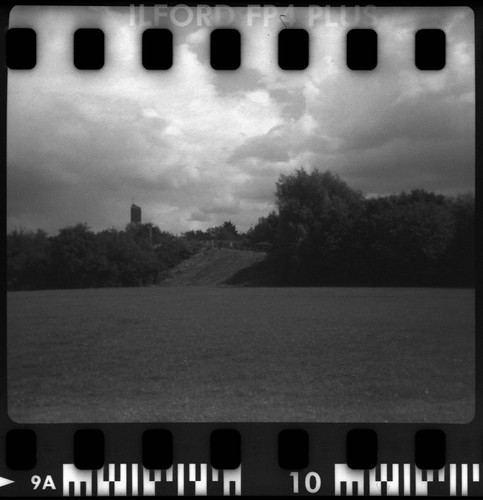
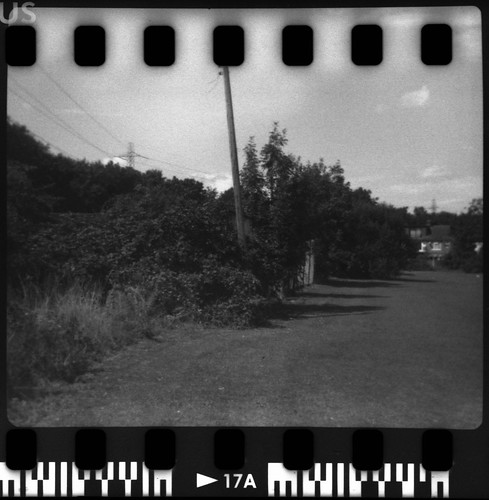
The cartridge of Ilford FP4 Plus film I shot entirely on the 1/90th shutter speed setting as the lighting condtions were mostly full sun to being occasionally overcast and was developed at box speed in Ilfotec LC29 at a dilution of 1:19. I scanned the full width of the 35mm film to balance the perforations inside the frame with the rebate at the bottom, otherwise the composition appeared top heavy.
 |
| Ilford FP4 Plus 126 cartridge reload |
 |
| Ilford FP4 Plus 126 cartridge reload |
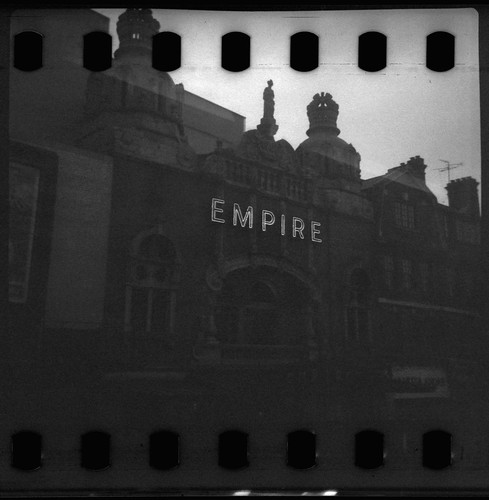
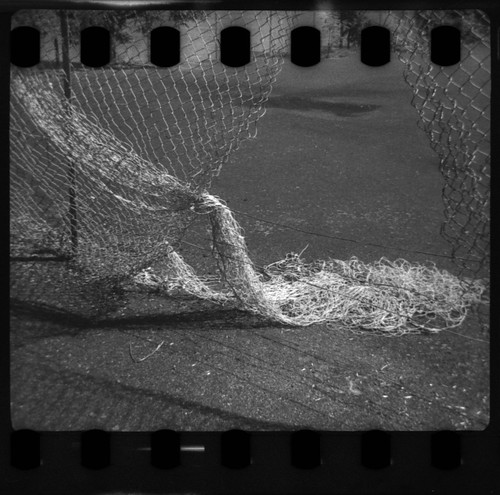
The forty-year old Ilford Mark V motion picture film came out surprisingly well. I had used the 'half-sun' 1/40th shutter speed for some shots to bracket them and compensate for the film's age, although for most of the photographs this seemed unnecessary, perhaps due to the Mark V film's excellent latitude. I don't imagine that I will be using the Kodak Instamatic 25 with any frequency, as the camera and its format have too many drawbacks to be set against any of the advantages of the 126 cartridge, but it was an enjoyable exercise to shoot the camera once again after 25 years.
 |
| Ilford Mark V 126 cartridge reload |
 |
| Ilford Mark V 126 cartridge reload |
 |
| Ilford Mark V 126 cartridge reload |
Sources/further reading:
126 Format on Camera-Wiki
Kodak Instamatics on Camera-Wiki
Instamatic 25 on Mischa Koning's Kodak Classics