Showing posts with label 126 reloads. Show all posts

Sunday, 14 June 2020

126 Day June 2020

Kodak Instamatic 277X with Kodak Verichrome Pan
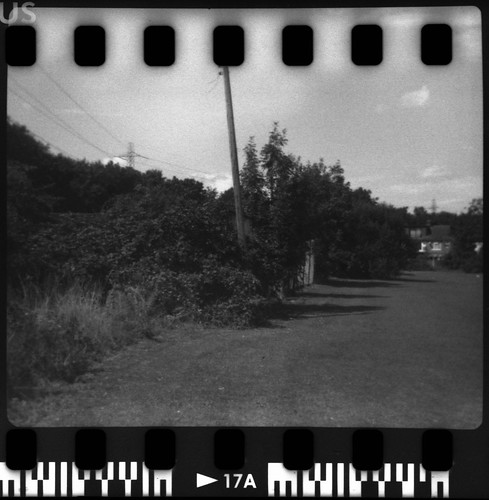
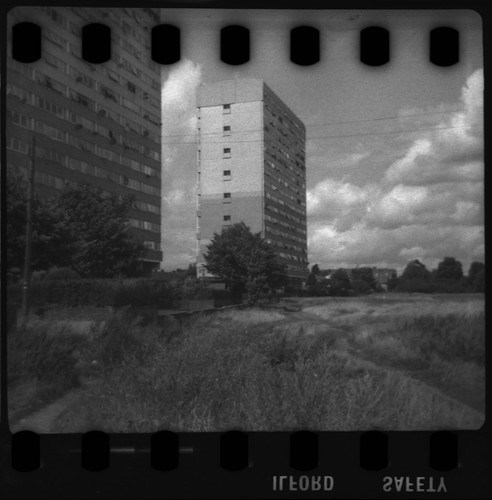
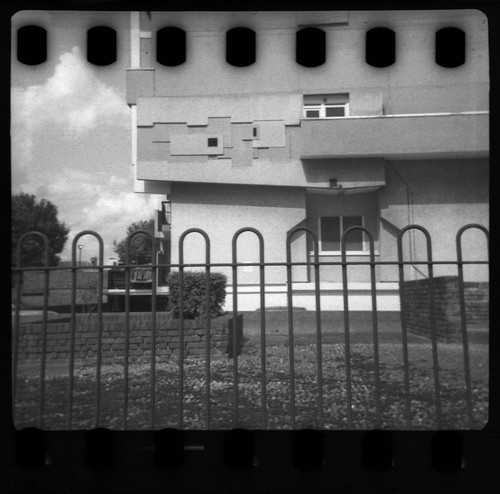
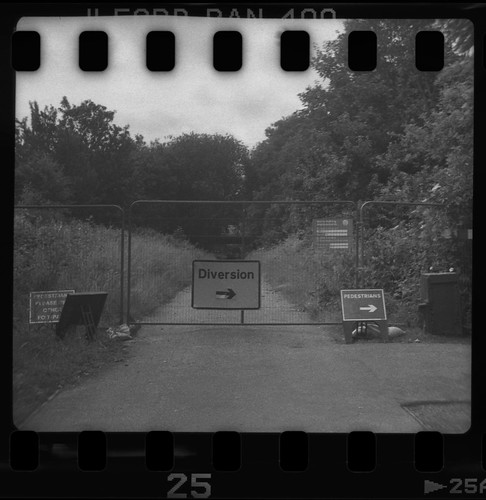
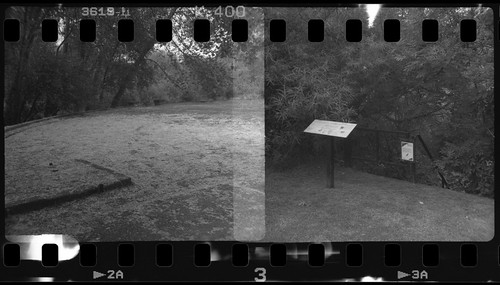
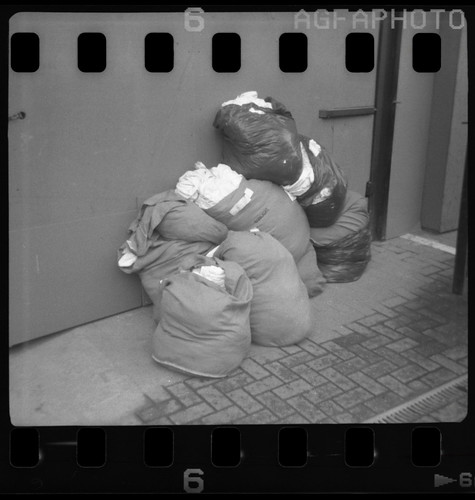
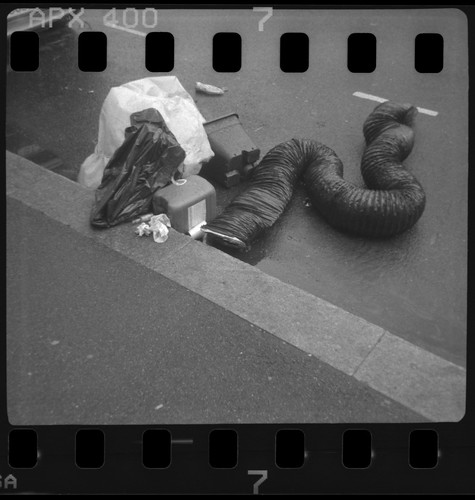
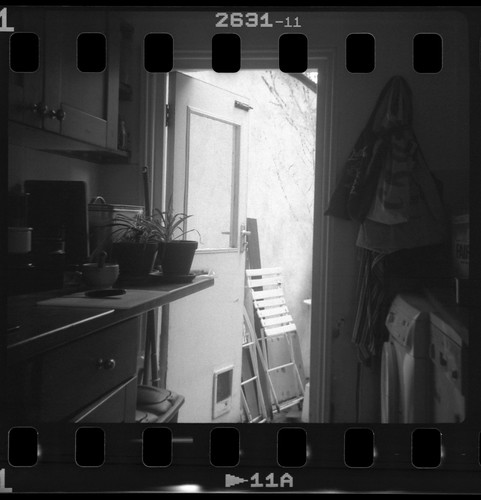
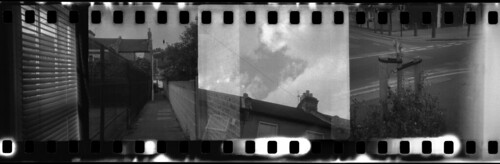
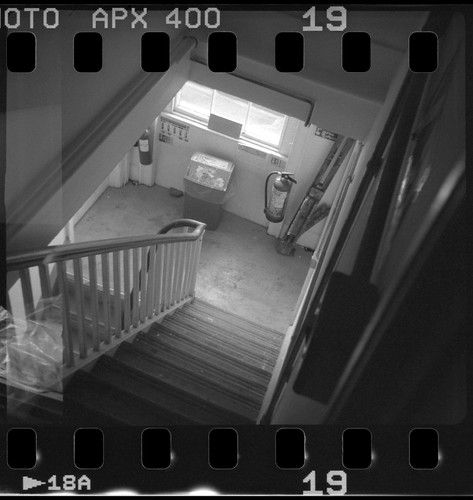
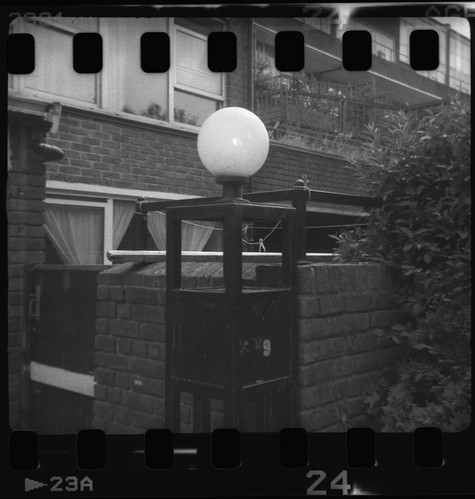
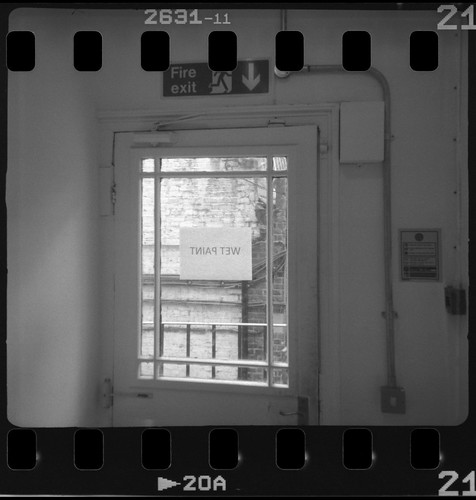
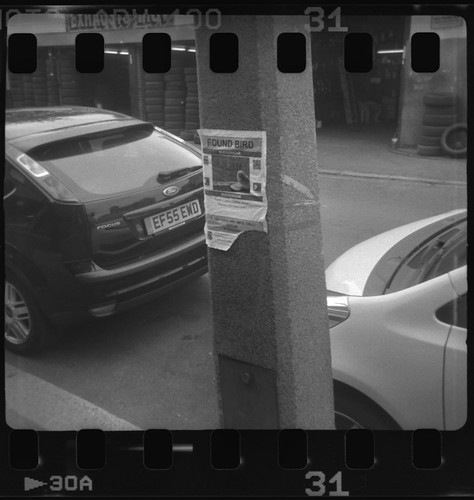
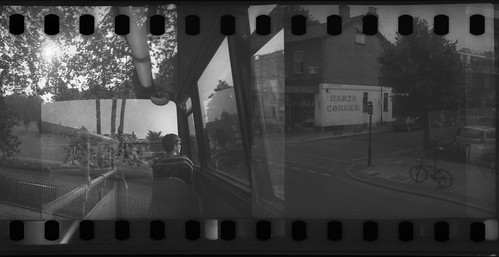
Two days ago, on the 12th, I shot some film with a Kodak Instamatic 277X to mark June's '126 Day'. Unlike 127 Day, or some of the other calendrical photography days, I'm not aware that anyone really observes a 126 Day. Reasons for this doubtless include the fact that no new 126 format film has been produced for years, although rumours of its resurrection do occasionally surface. I would not have predicted that the 110 format would reappear after the major manufacturers stopped production, so 126 film's re-emergence is not an impossibility; new 127 format rollfilm did disappear for a time, but is now more available, and the demand must in part be due to the fact that there were a number of well-designed cameras produced for the format, particularly during the popularity of the 4x4 twin lens reflex in 1950s. There were a small handful of relatively higher-specification 126 cameras, but most were simple point-and-shoot models, plastic equivalents of the box cameras of a generation before. I shot with the Instamatic 277X on 126 Day, as, although basic, it does have a relatively wide range of aperture settings and it is also better at handling perforated 35mm film loaded into original 126 cartridges than other 126 cameras I've used. I shot a couple of cartridges loaded with Ilford FP4 on the day, and wasn't quite as careful as I might have been in advancing the film, with the result of several overlapping exposures.

Kodak Instamatic 277X with Ilford FP4 Plus
In developing the film, conversely, I was too cautious. Using Ilfotec LC29 which had been mixed from stock at a dilution of 1+9 three months earlier, I extended developing time by another minute on top of the extra time, factored for pushing it one stop, as I wasn't sure how well the developer was going to work, as the developer was looking quite discoloured. The resulting negatives were quite dense as a result, and should clearly have been developed as if rated at box speed for the correct time. As a result the midtones to highlights were compressed, and meant careful scanning was needed to recover as much range as possible, as well as some digital dodging and burning to help separate tones.

Kodak Instamatic 277X with Ilford FP4 Plus
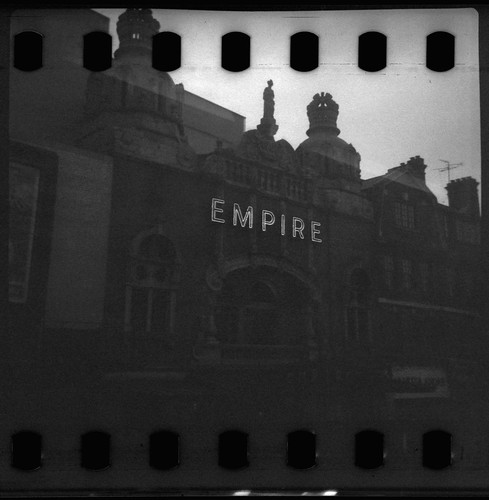
In addition to the cartridges loaded with 35mm FP4 Plus, I also shot a cartridge of Kodak Verichrome Pan. I (nominally) rated this at box speed, originally 125 ISO: with the Kodak Instamatic 277X, this meant simply following the pictograms for the lighting conditions. The cartridge had a develop before date of 06/1986; often with film this old, I would increase exposure to compensate for the loss of sensitivity due to age, but my previous experiences with Verichrome Pan suggested that I could risk not doing this with thirty-odd year old film. It might have been wise to bracket the exposures, but with only 12 frames in the cartridge, I didn't do this. I also shot the film with a yellow filter (as I had done with the FP4 Plus), which I might not have adequately accounted for in exposure; however, I stand developed the Verichrome Pan, which is generally very forgiving in terms of variations in exposure, and, although the resulting negatives had a moderate level of base fog due to age, the results were pretty good for a 34-year-old black and white film.

Kodak Instamatic 277X with Kodak Verichrome Pan

Wednesday, 19 June 2019

116 & 126 Days June 2019

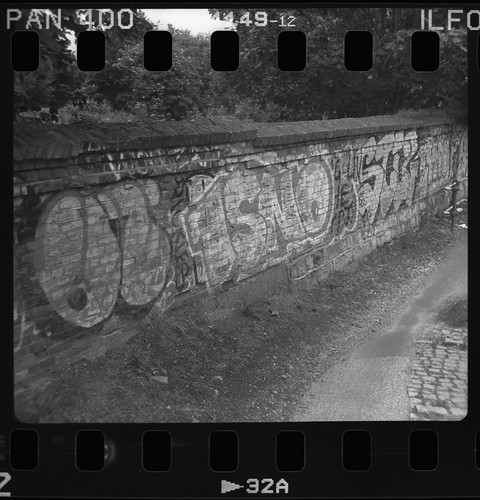
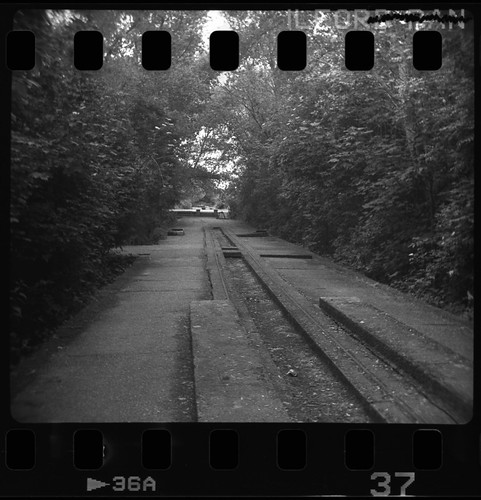
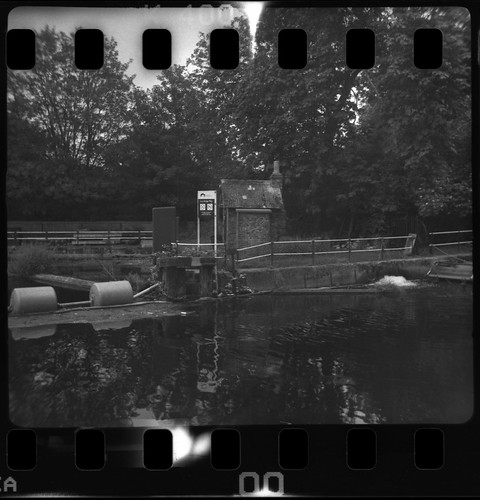
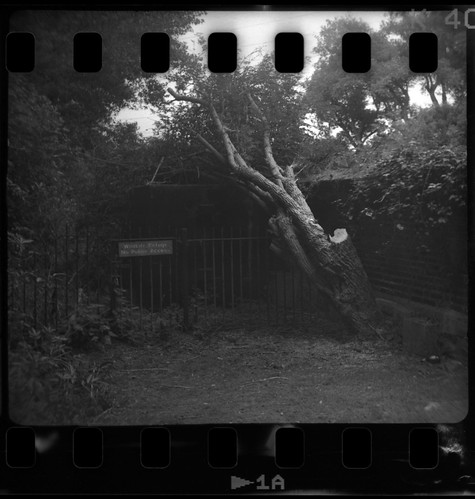
Kodak Instamatic 277X with Ilford Pan 400
Using the little-endian calendar in the UK provides two successive obsolete film format days in June: the 11th and 12th for 116 and 126 formats respectively. The regular 127 Days in summer and winter are relatively well established, in part due to 127 film still being available (if only just), whereas shooting film for both 116 and 126 formats does mean either sourcing long discontinued film or taking different strategies for using new film in the cameras.

For Tuesday's 116 Day, I shot a single roll of medium format Ilford XP2 Super, rolled with 116 backing paper, with the Agfa Standard Model 255. I developed this with RO9 rather than C41, and had problems with overexposure (and perhaps overdevelopment), partly due to shooting into the light, late in the afternoon, despite the presence of cloud cover; scanning the negatives and attempting to retain any detail from the sky had the tendency to compress the mid-tones and shadows rather too much. The first image revisited one photograph from 2017's 116 Day, documenting the progression of demolition. Three of the six shots from the roll I felt worth salvaging.

Agfa Standard with Ilford XP2 Super
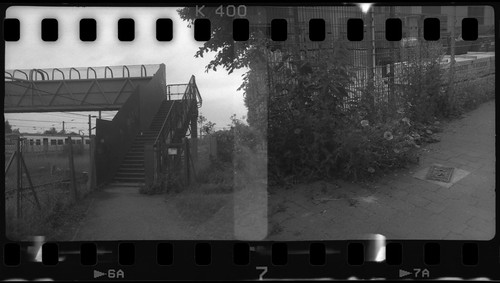
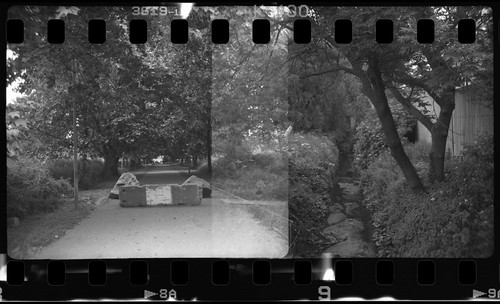
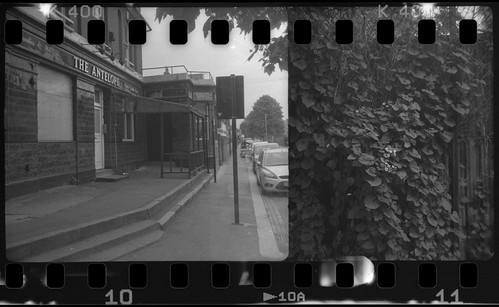
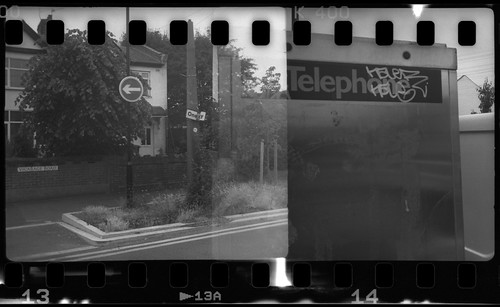
The following day I loaded a single 126 cartridge with Ilford Pan 400, and shot it with the same Kodak Instamatic 277X I'd used last year - and the main reason for using it was for its adjustable aperture: with a 400 speed film, this meant using a relatively small aperture for most shots (the camera's shutter speed is fixed at 1/80th), ensuring that the photographs were relatively sharp. After using the camera last year and having had many frames overlapping, I made sure that the film was fully wound on to the next frame, judging from the numbers on the backing paper, even if this meant taking fewer shots on the roll of film.

Kodak Instamatic 277X with Ilford Pan 400
Kodak Instamatic 277X with Ilford Pan 400
Kodak Instamatic 277X

Wednesday, 13 June 2018

126 Day June 2018


For yesterday's 126 Day, I shot a roll of film with the same camera I had used five years ago for the first '126 Day' I marked then - and one reason for choosing the Instamatic 277X was its adjustable apertures. Five years ago, this was due to using very old transparency film, and wanting to give it as much exposure as possible; for yesterday's film I had essentially the opposite problem. I'd earmarked a cartridge of thirty-year old Kodak Verichrome Pan that I wanted to shoot on the day, and the weather recently has been bright and sunny. However, I was overcast in the morning, so used a 126 cartridge I had reloaded with 35mm Kentmere 400; with a relatively slow shutter speed of 1/80th, having an adjustable aperture guarded against overexposure with a fast film (as did the weather conditions).


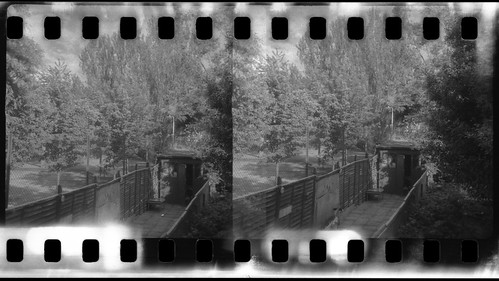
I wasn't able to subsequently shoot the Verichrome Pan on the day; using 35mm film in a 126 cartridge is not without its considerations, which I didn't attend to fully. The camera appeared to be generally advancing the film correctly, going by the numbers on the backing paper, but on development, most, but not all, of the frames had overlapped in pairs with gaps between. I scanned the juxtaposed pairs of overlapping images rather than cropping to each frame. In future, with reloaded 35mm, it would be safer to shoot one blank frame after each photograph to ensure that each frame doesn't overlap with the next.


Monday, 13 June 2016

126 Day 2016

126 cartridge reloaded with Agfaphoto APX 400
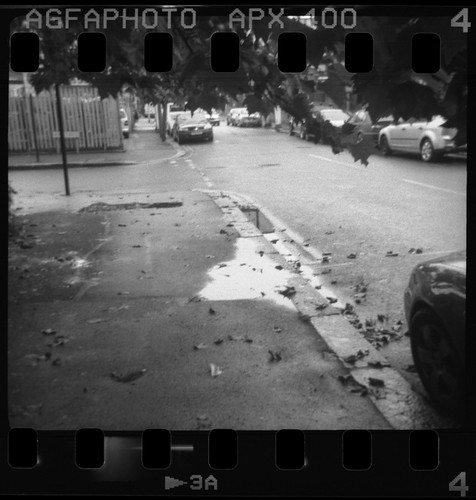
Observing 126 Day yesterday, the opportunities for shooting between showers and rain were limited. I used the Kodak Instamatic 25 camera which was still loaded with a cartridge containing APX 400 from last year. Given that the light was generally poor, the 400 speed film was ideal for the conditions at the time.

126 cartridge reloaded with Agfaphoto APX 400
126 cartridge reloaded with APX 400
A second cartridge loaded with Foma Retropan 320 was less successful. The Instamatic 25 has generally proved to be quite good at handling 35mm film reloaded into 126 cartridges - I had greater difficulty with the 300 model last year in Stockholm - but after reusing the backing paper in some of the cartridges a number of times, some of the rolls are beginning to deteriorate. The thin strip of paper along the outside edge of the long perforation holes has torn in places, and it may be this, in part, that caused extra resistance when attempting to advance the film. As can be seen from the results below, the overlapping frames are indicative of these problems, and the light leaks are due to taking the cartridge out of the camera mid-roll in order to advance a few frames by hand when it became too stiff to do so in the camera itself. Nevertheless, the design of the cartridge does ensure some protection for the exposed part of the film in this event.

126 cartridge reloaded with Retropan 320

Tuesday, 16 June 2015

126 Day 2015

Agfaphoto APX 400 126 cartridge reload
Having recently shot a reloaded 126 cartridge with the Kodak Instamatic 300 that I had found in the Hötorget flea market in Stockholm, I had found the 300 to be fairly unsympathetic to being used with 35mm film; results last year with a different model camera, an Instamatic 25, were much better, which I wrote about my post 'My first camera'. It was difficult to advance the reloaded film in the 300 model, resulting in overlapping frames and torn sprocket holes from the pin designed to locate the single perforation on 126 film. The Instamatic 25 is kinder on 35mm film: the negatives show stress on some of the perforations, and some scratching, but none of the tearing that the Instamatic 300 had, and film advancement was easier.

Last Friday, 12th June, the Kodak Instamatic 25 was the camera I chose to shoot for a '126 Day', not a camera or film format related day I usually observe, though I did shoot a roll of expired Perutz transparency film with an Instamatic camera two years ago. In the post 'My First Camera', I detailed how I reloaded the plastic 126 cartridge with 35mm film; last Friday I shot a cartridge reloaded with Agfaphoto APX 400 and one with Ilford Mark V. The Instamatic 25 has a single aperture, f11 and two shutter speeds, full sun at 1/90th, or half-sun/flash, 1/40th. Although a 400 ISO film might be too fast not to be overexposed for sunny conditions in the camera, the latitude of the film meant that the exposures, both interiors and exteriors came out well.

Agfaphoto APX 400 126 cartridge reload
As well as a cartridge with Agfaphoto APX 400, I also used some Ilford Mark V Motion Picture film, as I had done last year. Originally 250-500 ISO, after forty years this film has lost quite a bit of sensitivity and I shot this during the evening while the light was going, so the results were not as good. It also seemed to have a greater tendency for overlapping frames, possibly due to having different perforations to standard 35mm still camera film. Occasionally, the overlapping multiple exposures were worth scanning as a whole composition.

Ilford Mark V 126 cartridge reload

Thursday, 30 April 2015

Flea Markets in Stockholm

Front left:Agfa Isolette III; right: Vito CL; behind: Instamatic 300
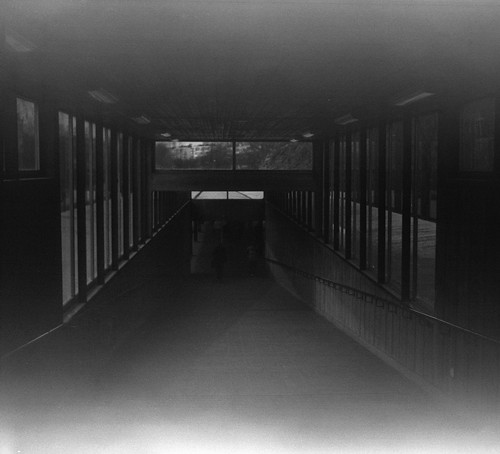
In Stockholm recently, I visited two of the local flea markets there during my stay: the Sunday market at Hötorget, and the all-week around covered market, Loppmarknaden at VÃ¥rberg. The overall quality of the stalls at Hötorget was better, while Loppmarknaden, which is an underground hall in the shopping complex attached to VÃ¥rberg Tunnelbana station, some of the stalls appeared to be little more than just piles of household rubbish. This market charges an entry fee at weekends, but I went on a weekday. There were many digital cameras from about a decade ago, a number of older SLRs, but the only camera that caught my eye was an Agfa Isolette III. This looked in good condition, although a bit dusty, and everything worked except for the uncoupled rangefinder, which was stuck on the 10m mark. This may be easy to repair, but as it is uncoupled, this does not affect the camera's operation, simply meaning that guess-focussing has to be used. What piqued my interest sufficiently to buy the Isolette was the half-used roll of film inside. The seller wanted (and got) 200 SEK, just over £15. I finished the roll of film in the Isolette at VÃ¥rberg, in the market and at the station adjoining it. Stand developing the film, Kodacolor II, in RO9 One Shot for an hour at 1:100 resulted in a few faint images, no negatives came out from before the few that I shot with it, and the best, if rather fogged, image was of the ramp to the platforms of the station.

Agfa Isolette III with Kodacolor II film
I returned to the Hötorget market a week on from my first visit, which had been on Easter Sunday. It was busier, with more stalls, some of which were the same as the previous week, I found a Voigtländer Vito CL, which, although dirty, looked in relatively good condition, and its shutter fired and the lightmeter was responding. I asked how much and was told 100 SEK; the same stall had a Kodak Instamatic 300 which had a part-used film cartridge inside. As with the Isolette, the part-used film was intriguing, and the seller gave me both cameras for 100 SEK and put them into a hessian bag. I shot the rest of the film at the flea market while there, then later I cut open the 126 cartridge, removed the 126 film for safekeeping until development, and loaded the cartridge with a length of Agfaphoto APX 400 taped to the backing paper. I shot this film a couple of days later. Using 35mm film in the camera provided problems that I have experienced before with the film's perforations not always coinciding with the holes in the backing paper, leading to gaps and overlaps in the exposures, and tears in the film where the advance had to be forced. The original colour film from the cartridge was stand developed in RO9 One Shot 1:100 for one hour, and the APX 400 developed as normal. The Kodak Instamatic 300 does have a selenium meter to control exposure, and, although the shutter fired, it was hard to tell whether this or the aperture changed with the light conditions. The 400 ISO film was mostly shot with a deep yellow filter taped over the lens and the negatives do not appear overexposed; the Kodacolor VR film from the cartridge (dating from 1982-86) was too dense to scan once developed, although images are visible.

Kodak Instamatic 300 with Agfaphoto APX 400

Sunday, 7 September 2014

My first camera

Kodak Instamatic 25
The 126 'Kodapak' format introduced by Kodak in 1963 was in essence a reinvention of the point-and-shoot box camera. The easy-load, drop-in cartridge was marketed as an answer to common problems of loading roll film. The cartridge was designed to make this fool proof: it is asymmetric, so will only load the correct way around, winding is in one direction only, and it is also protects exposed film, except for the current frame, if the camera is opened. This two-chambered design does have the drawback of making the 126 cartridge bulky: its main competitors in terms of format when it was introduced would have been 127 rollfilm (Kodak was making many 127 cameras in the early 1960s) and 35mm, the films themselves being both much smaller. The Kodak Instamatic 25 was the second model in Kodak's Instamatic 126 range, manufactured in the UK. It is a basic snapshot camera, almost entirely plastic in construction: it features a fixed-focus 43mm lens, single aperture (f11), with two shutter speeds, represented by either a full sun symbol (1/90th), or half-sun/flash (1/40th). The camera, like earlier box cameras, was made for shooting outside in daylight, with film latitude to take care of variations in lighting, or flash for any other situation.

This was the first camera I ever took photographs with, at the age of eight, on holiday in the south of France thirty years ago. I used it again as a teenager until being given a Halina 35mm camera which was almost as basic (probably a Halina 260, possibly as a Christmas present in 1989), which I used until my first SLR camera as a student. After many years I found the Instamatic 25 camera again at the same time as the Pentax Auto 110. 126 film is no longer made, and it is hard to imagine sufficient demand for the cartridges to resurrect the format unlike 110 film. However, it is possible to reload and reuse 126 cartridges: the film used in 126 cameras is 35mm wide, but with just one perforation per frame, utilising a square image size of 28x28mm, although, like 110 film, 126 format also had smaller, pre-printed frames on the film, as seen on my photographs from last year's 126 Day.
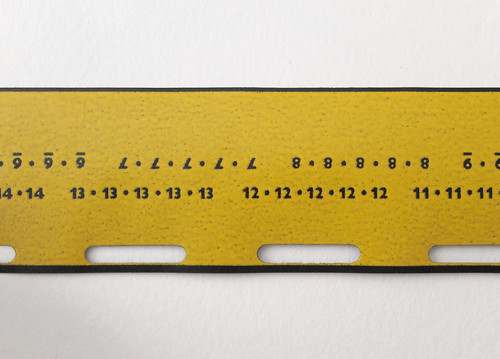
126 backing paper
Although not made to be reused, I found the 126 cartridge is easy to force apart. The film has numbered backing paper with a generously long hole to register with the single perforation per frame on the film itself. There are two sets of numbers on the backing paper running both ways. The only explanation I can imagine for this is that some cameras might use the cartridge loaded the other way around, i.e. rotated through 180º, and the numbers count down the exposures rather than up, which would also require a different window to line up with the numbers. How much film can be loaded into the cartridge is limited by the length of backing paper: of the two cartridges that I had, the Perutz transparency film was 20 exposures long, while the Agfa film was 24. I have seen examples of 126 cartridge reloads online where the backing paper isn't used (the cartridge window then needs covering over) and 35mm film simply taped directly to the spool, but as the camera itself does not have a frame counter, and the backing paper may also help film flatness and prevent light leaks, it seems there's no good reason not to use it.
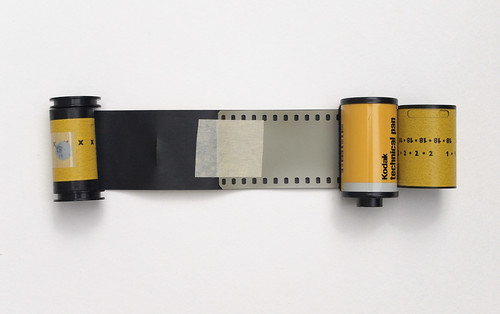
Reloading 126 cartridges with 35mm film
As the original film was 35mm wide, normal perforated 35mm will easily fit the cartridges. To reload the cartridges, I removed the internal spool with the backing paper, and taped the end of the 35mm film near to the end of the paper (as in the photograph above). Then, in a dark bag, I rolled the film together with the paper in all the way onto the spool to find the length and cut the film when the end of the paper is reached (the length of film which fits either 20 or 24 exposures will be shorter than the film in a 24 exposure 35mm cassette). Once cut to the correct length, I rolled the film and paper in the other direction to insert it into the supply chamber of the cartridge before closing the cartridge and taping it together at each end.
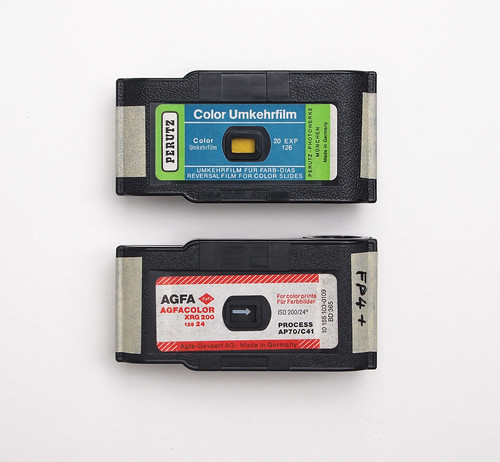
Reloaded 126 cartridges
I shot both Ilford FP4 Plus and Mark V Motion Picture film in the reloaded cartridges. Although perforated 35mm film does fit the cartridges, it is not without considerations. Clearly, the perforations will appear across the top of the frame which has a very narrow rebate (the lower edge has a much deeper rebate), but I also found problems with overlapping and missed frames due to the camera's internal pin either failing to find a perforation to locate a frame, or locating a perforation too soon after the preceding frame. After shooting the first film, it became clear that, as long as the camera has wound on far enough to cock the shutter, it is probably better to use the numbers on the backing paper rather than rely on the advance wheel stopping at a frame with the pin located in a perforation. I attempted this approach on the second film and had less gaps between frames, although this won't necessarily prevent overlapping exposures.
Ilford FP4 Plus 126 cartridge reload
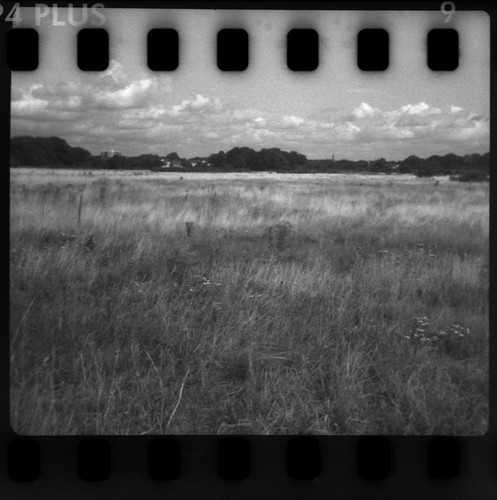
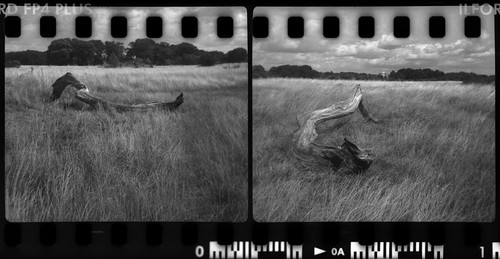
Once I had developed the two films, I scanned the first frame of FP4 and realised that the lens is not fixed at infinity, the horizon being just out of focus. The functions of the Instamatic camera are circumscribed by what it's designed for: taking photographs of people, family groups, but not strictly portraits, on a sunny day. The diptych of the two successive frames below demonstrates this: the fallen branch is relatively sharp, while the horizon behind just drops out of focus (a rough estimate of the camera's focus set around 3.5m would make everything from 2 to 10 metres in focus at an aperture of f11). Scanning the film and being able to enlarge it on a monitor emphasises this however; when made, most users of the Instamatic cameras probably would not see an image any bigger than a 4-inch square print, and the limitations of focus would be quite acceptable.
Ilford FP4 Plus 126 cartridge reload
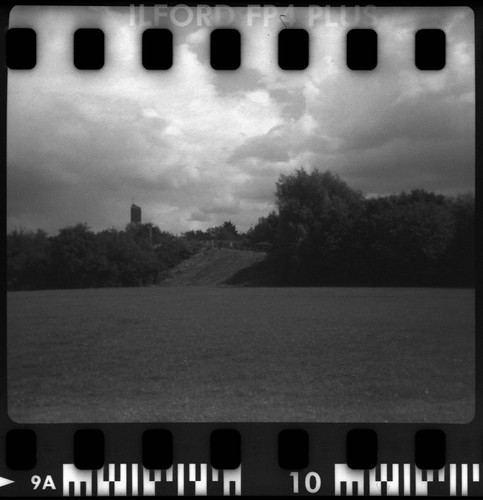
The cartridge of Ilford FP4 Plus film I shot entirely on the 1/90th shutter speed setting as the lighting condtions were mostly full sun to being occasionally overcast and was developed at box speed in Ilfotec LC29 at a dilution of 1:19. I scanned the full width of the 35mm film to balance the perforations inside the frame with the rebate at the bottom, otherwise the composition appeared top heavy.
Ilford FP4 Plus 126 cartridge reload
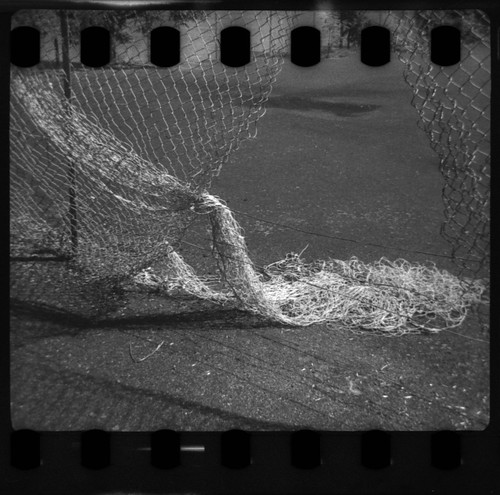
The forty-year old Ilford Mark V motion picture film came out surprisingly well. I had used the 'half-sun' 1/40th shutter speed for some shots to bracket them and compensate for the film's age, although for most of the photographs this seemed unnecessary, perhaps due to the Mark V film's excellent latitude. I don't imagine that I will be using the Kodak Instamatic 25 with any frequency, as the camera and its format have too many drawbacks to be set against any of the advantages of the 126 cartridge, but it was an enjoyable exercise to shoot the camera once again after 25 years.
Ilford Mark V 126 cartridge reload
Sources/further reading:
126 Format on Camera-Wiki
Kodak Instamatics on Camera-Wiki
Instamatic 25 on Mischa Koning's Kodak Classics