Friday, 22 March 2019

Undertow at Sluice HQ - opening tonight

Heatwave, installation at Sluice HQ
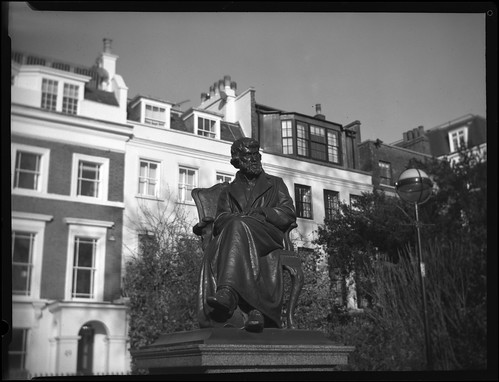
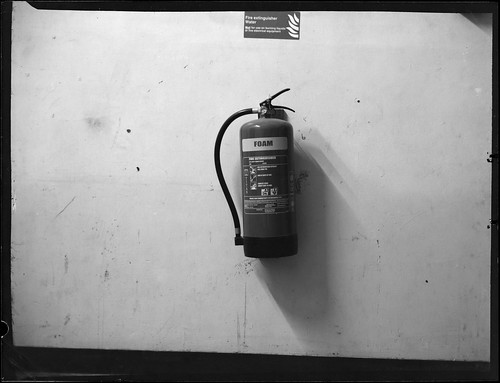
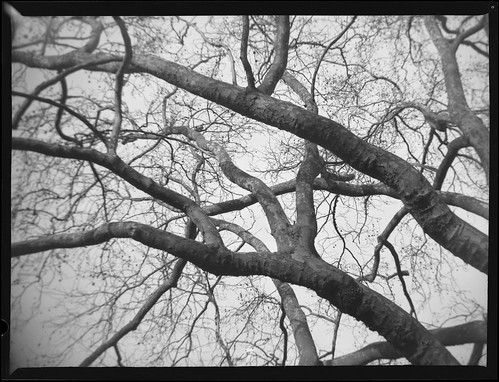
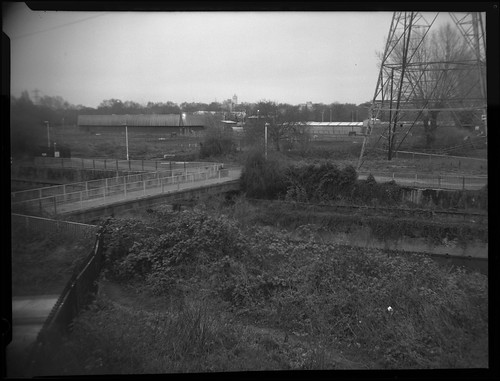
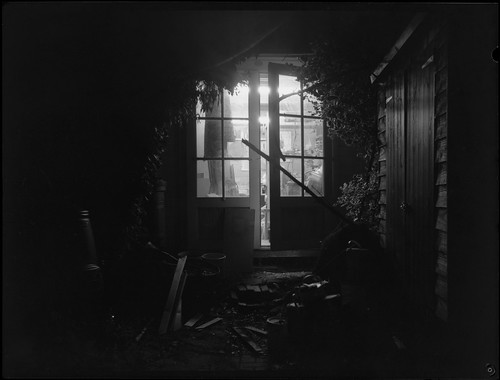
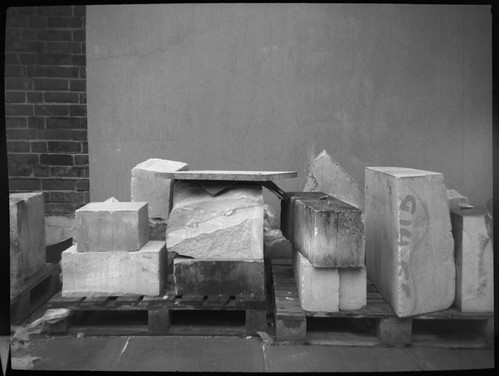
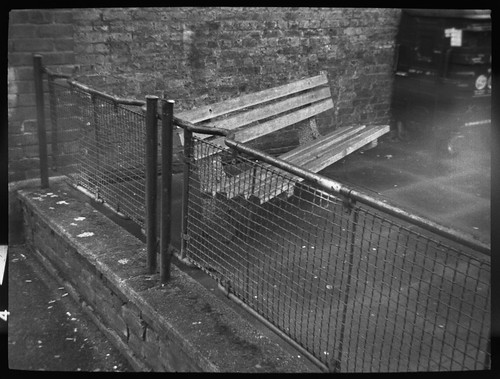
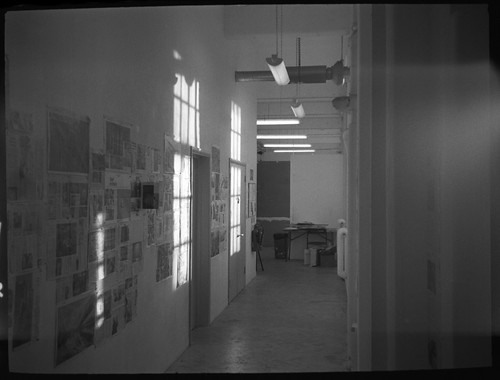
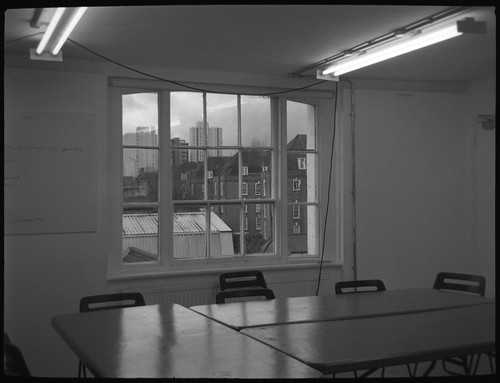
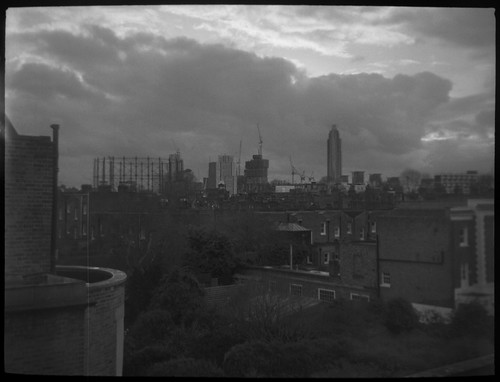
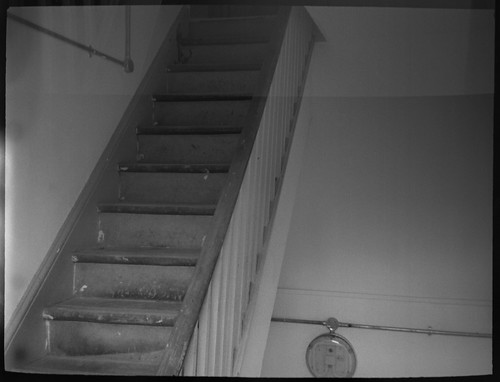
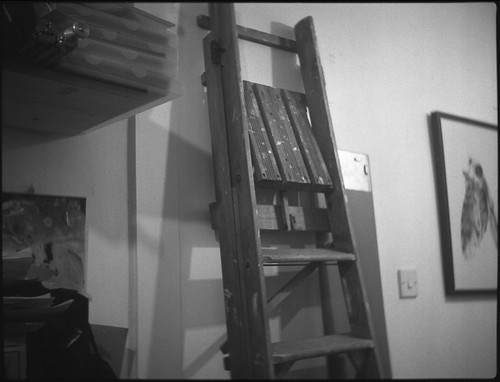
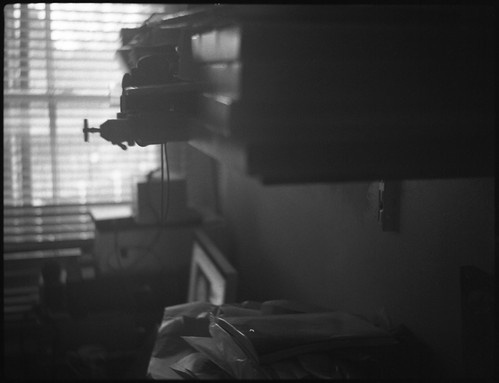
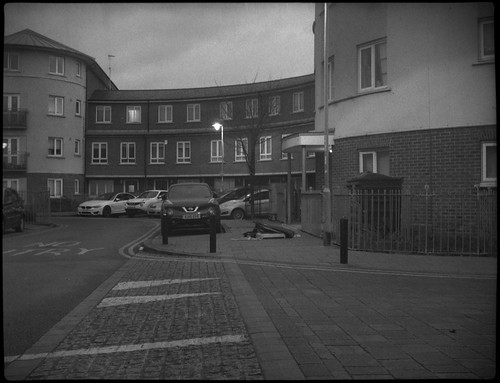
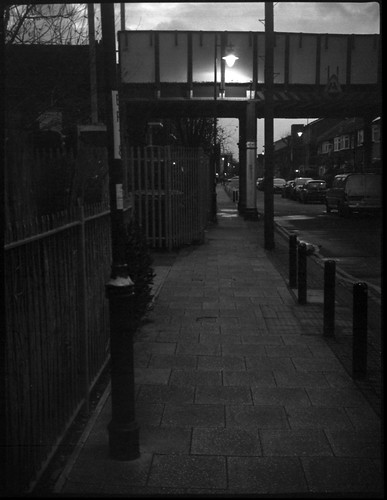
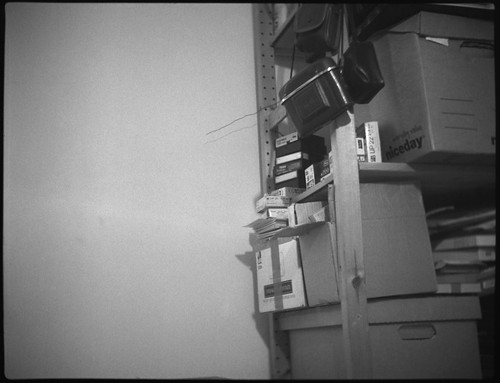
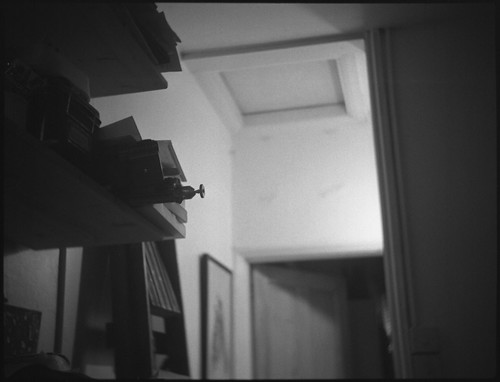
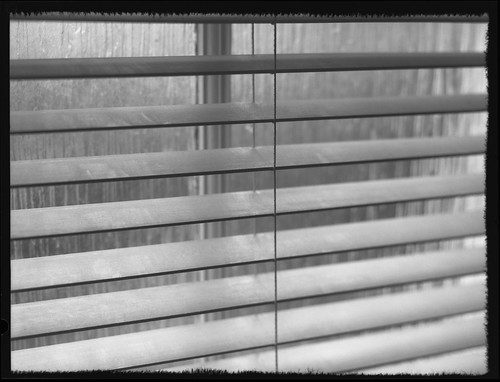
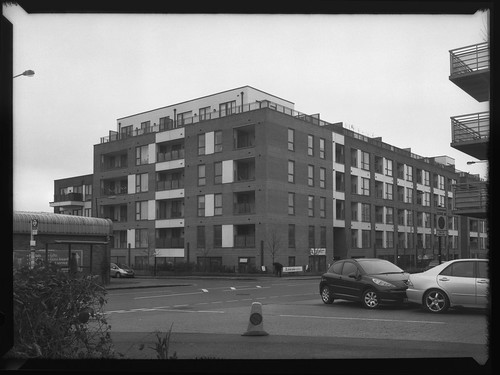
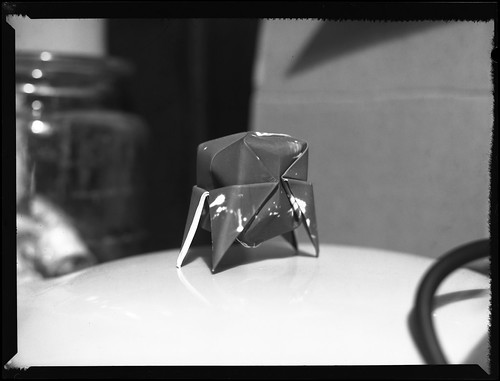
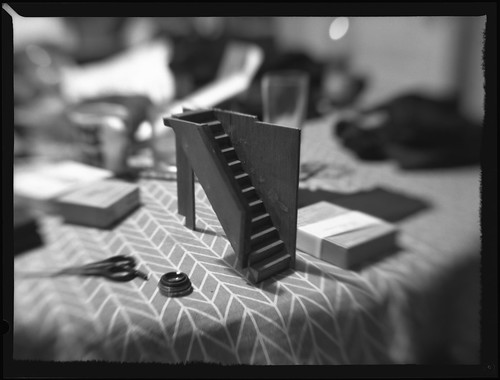
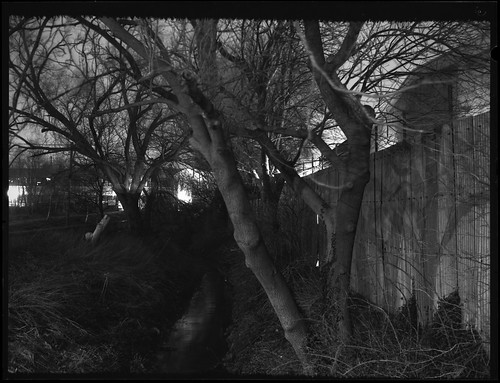
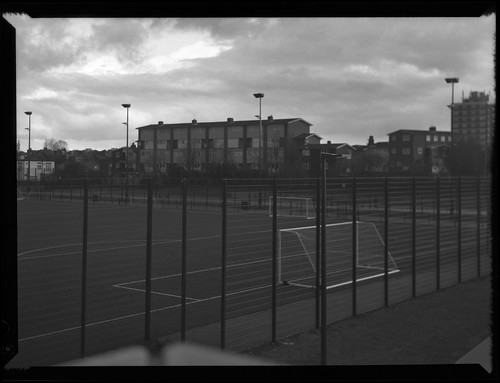
In the exhibition Undertow, at Sluice HQ, London, opening tonight, 6-9pm, I am showing a piece titled Heatwave, comprising a series of twelve photographs, printed on 8x10 Ilford Multigrade RC paper and Kentmere VC Select. The photographs were shot using a Mamiya-16 Automatic, a Canon Cine Zoom 512 on Orwo UP15 double-8 film and a Canon A-1 on 35mm Rollei ATO 2.1 Supergraphic for the texts.

The exhibtion runs until 13th April 2019.

Undertow
Sluice HQ
171 Morning Lane, London E9 6JY

23 March - 13 April 2019
Opening times: Thursday - Sunday 12-5pm

See also previous post Undertow at Sluice HQ

Thursday, 7 March 2019

'Take Your Box Camera To Work Day' 2019


The 28th of February, this year's Take Your Box Camera To Work Day, although warmer than usual, was more typical of the season than the previous couple of days, with record high temperatures for a February in the UK. There was some fleeting sunshine during the afternoon on the day, but it was mostly overcast; I had chosen to use my Baby Box Tengor (both for its compactness and number of shots on a roll) and, appropriate to the lighting conditions, a single roll of cut-down medium format Ilford HP5 Plus, subsequently developed in RO9 One Shot. I had removed the taped-in yellow filter from behind the lens: the film was fast enough for most of the photographs to be shot on the 'instant' setting, including well-lit interiors (just a couple of frames used the 'B' setting for longer exposures). The results demonstrate some problems with light leaks - the back of the camera does not always sit flush, working itself loose on the opposite side of the body from the catch which is supposed to ensure that the camera back is secure. A couple of frames showed up some issues with film flatness too, which may be related to the back not being secure, but the Baby Box Tengor was a good choice, providing generally good results given all its limitations, with the latitude of HP5 Plus making up for the variability in lighting conditions throughout the day.


Friday, 1 March 2019

Undertow at Sluice HQ


When prevailing discourses tip towards hyperbole, generalisations or simplification, there is a need to swim against the current, to carve out a space that allows for ambiguity, correspondence and a quieter voice. In the employment of few words, a scale of action or use of minimal materials, understatement can be both a way of confronting moments of crisis, or of evading them.

Undertow brings together a group of artists working in dialogue around these concerns. The exhibition at Sluice represents a momentary iteration of the research group’s findings, the public-facing part of an ongoing series of interconnected activities. The group as a structure has developed to create a support network for the artists involved, to initiate conversation, to share knowledge, and to provide context. During the exhibition, the gallery space will be used by the artists as both a forum and as a residency, a means to test ideas and outcomes.

The Undertow research group's remit is open, as is the shape it takes, and the work is rooted in the sensibilities of material and material understanding. What emerges in the work coalesces around language, data, codes, a collapsing of scale, of how a still surface half-reveals, half-conceals subterranean undercurrents.


Alex Simpson
Alison Rees
Lauren Ilsley
Nicholas Middleton
Sarah Wishart
Tana West

Undertow
Sluice HQ
171 Morning Lane, London E9 6JY

23 March - 13 April 2019
Opening times: Thursday - Sunday 12-5pm

Wednesday, 27 February 2019

127 Day January 2019

Zeiss Ikon Ikonta 520/18 with Ilford HP5 Plus
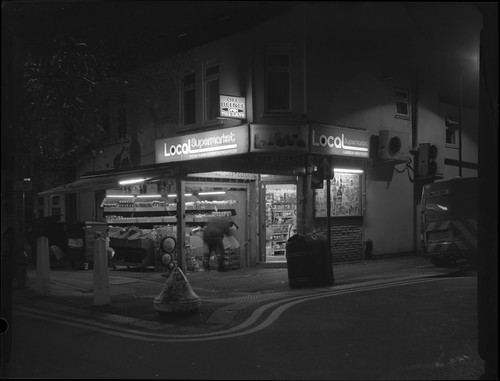
Last month's 127 Day was necessarily curtailed by the fact that I spent it working on a funding application all day. Nevertheless, I did take a number of photographs with the Baby Ikonta, on Ilford HP5 Plus, mostly at home (these circumstances meant a delay in developing, as I wasn't as keen as I might be to see the results). A brief excursion to the corner shop happened just as it was getting dark, still relatively early in the afternoon towards the end of January: one photograph taken outside was made balancing the camera on a bollard for a long exposure; the vertical image below this was handheld and a little underexposed as a result, wanting to avoid camera shake.

Zeiss Ikon Ikonta 520/18 with Ilford HP5 Plus

Sunday, 24 February 2019

#FP4Party February 2019

With February being announced as 2019's second #FP4Party, after shooting with the Cameo in January, it felt logical that I should use my other quarterplate-sized folding camera - the Ensign Folding Klito de Luxe No.9. Last month, I had set myself the task of simply photographing with two sheets of forty-year old Ilford FP4 each day during the 'shoot week', and so I did the same for February. The Ensign Folding Klito is a superior camera when compared to the Cameo; the most immediate difference in use is the rack and pinion focus on the Klito, rather easier to finely adjust against the Cameo's spring clamp. The Klito has its original ground glass focus screen with a hood; using the Klito with faster lenses than the Cameo also made accurate focus easier to achieve. Like the Cameo, it has front rise and cross movements, the rise controlled by beautiful circular gearing around the lens and shutter assembly.  Finally, the Ensign Folding Klito also has double extension bellows, allowing for close focus, without the need for a close-up lens attachment, as I used with the Cameo.

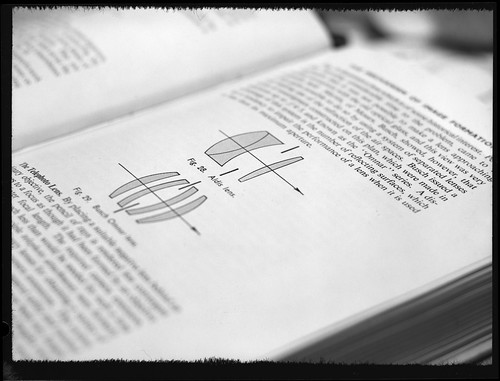
Over the first three days of the shoot week, I used the Klito with a 12cm Ica Dominar lens; the original lens is a No.2 Aldis Plano Anastigmat; I had replaced this with the Dominar lens while using the Klito to take night photographs on glass plates, being f4.5 against the f6.8 Plano: having a faster lens makes for a brighter image on the ground glass when composing and focussing, especially advantageous when working at night. However, wanting to use the Klito with this original lens, I reinstated the Aldis Plano, and shot with this for the remainder of the week. The Aldis Plano is a classic triplet design; while cleaning the thread on its retaining ring, I removed the rear element - and realised that it, a positive meniscus, formed an image on its own. The results (Thursday's image, with a diagram of the Plano shot for Friday) are very much as one would expect from a meniscus lens - it would appear that the front elements, a doublet, correct all the classic distortions present in the meniscus; the rear element on its own provides a wider angle - which I hadn't expected.

All the shots on this post were taken with a tripod. As in January, low light was a factor, but as much as the weather, being otherwise busy meant that a number of the shots were taken at home in the evening. Tuesday's photograph was taken on Fulbourne Road in Walthamstow, North London - the site of Houghton's factory - where the Ensign Folding Klito de Luxe No.9 was almost certainly made, a little over a century ago.

Monday
Tuesday
Wednesday
Thursday
Friday
Saturday
Sunday

Thursday, 14 February 2019

28th of February is 'Take Your Box Camera To Work Day'


A camera-related day that I've often taken part in in the past, Thursday 28th February is 'Take Your Box Camera To Work Day 2019'. Like the related 'Take Your Box Camera To Play Day', this is simply an excuse to get people using box cameras - and in an environment that one might not necessarily take such a camera. Many box cameras are still eminently usable, taking 120 medium format film, or with a little consideration, 620 film, and modern, faster emulsions make the situations one might use a box camera in more diverse than once was the case - although, in the past, I've often used long exposures on such days, for interiors, rather than instantaneous 'snapshots', easier to do in daylight, outside - obviously this very much depends on the working environment. I did miss it last year, but I'm keen to shoot on the day and promote it once again in 2019.
Box cameras above, from left to right: Baby Box Tengor; Lumiere Scout Box; Kodak No.2 Brownie; Kodak No.2A Brownie; The Midg Falling Plate Camera 

Sunday, 27 January 2019

#FP4Party January 2019/Revisiting the Butcher's "Cameo"

Ilford FP4 shot on Ilford FP4 with Butcher's Cameo and close up lens attachment
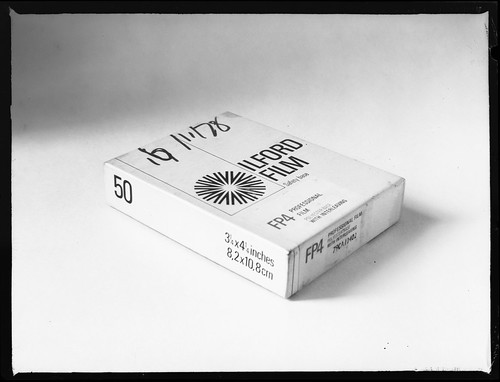
When choosing a camera for January's #FP4Party, a clear deciding factor for me was already having a fair stock of quarter-plate (8.2x10.8cm) FP4 sheet film. With one part or mostly used box of 50 and one unopened box, I decided not to buy any new rolls of FP4 and use this instead. Both boxes have a handwritten date of 16/11/78 (one box looks like it starts with 17/- which was then changed to 16); the film dates to well before the 'Plus' iteration was introduced in 1990 but I've previously used it with just one stop of extra exposure to compensate for age (I have also shot it at an exposure index of 100, and pushed the development by one stop instead). Possessing three cameras for the format: the Klito, Midg, and Cameo, all plate cameras, all of a similar age, over a hundred years old, I picked the Cameo, having used it for the first #FP4Party in September 2016, being the smallest and lightest of the three, and it seemed time to revisit it for this month's #FP4Party.
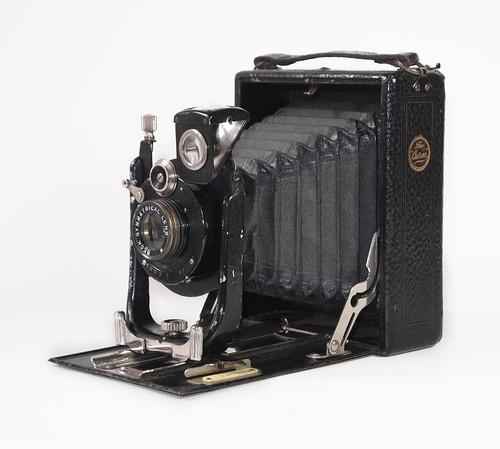
Butcher's and Sons "Cameo"
I restricted myself to expose just two sheets a day over the 'shoot week' (although on the first day I actually shot three sheets; I also didn't count the shot of the FP4 box in the total, but it made sense to photograph this on the film itself, using the lens attachment, during shoot week). Low light and short daylight hours in the northern hemisphere in January do not make for using a film rated at an exposure index of 50 necessarily sympathetic. In addition, using the Cameo handheld is not without a number of difficulties. Not entirely trusting the focus scale on the drop bed, to focus the camera using the ground glass screen requires one to use the spring clamps to position the front standard at the correct distance on the rails of the drop bed: it needs a certain amount of dexterity to put one's hand in such a way to move the front standard without obscuring the image on the ground glass with it: I miss rack-and-pinion focussing with the Cameo, particularly when using it hand-held.
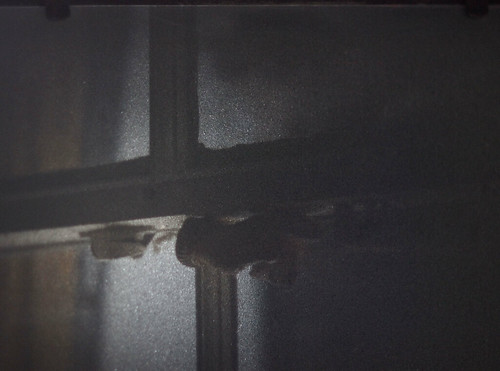
Home-made ground glass screen; lens wide open
Even in relatively bright light, the Cameo's Beck Symmetrical lens produces a dim image: its widest aperture is nominally f8 (although it's most likely f7.7 when fully open beyond the f8 mark), slow by modern standards, and the screen is missing its hood to shade the ground glass, making this image difficult to assess. The ground glass was missing from my camera when I acquired it; I replaced this with some glass that I ground myself, but used too coarse a grade of grit, which adds to the difficulty in focussing. Once the image is in focus (as close as one can tell) on the ground glass, one then has to remove the focus screen and replace it with a plate holder, adjust both aperture and shutter speed to the desired settings, remove the darkslide from the plate holder, then frame the subject using the brilliant finder - and then gently press the shutter release lever. The Lukos II shutter has three 'instantaneous' speeds of 1/100th, 1/50th and 1/25th, and, while it would have been possible to get usable exposures at 1/25th, wide open on f8, for overcast, dull days, I only used the Cameo hand-held on a couple of days (Tuesday and Friday) when there was some winter sun, partly to use smaller apertures in the hope that a greater depth of field might compensate for any errors in focus.
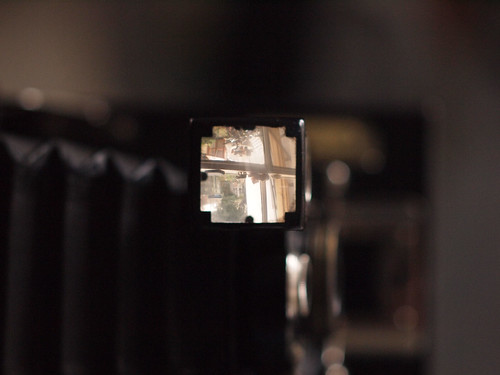
Brilliant finder on the Cameo
For most of the shots during the week, I used a tripod or simply balanced the Cameo on a flat surface for long exposures, low-light shots, interiors and those at night. I also used the wide angle/close up lens attachment for some shots (Friday and Saturday) and the image of the box itself. I did my first batch of development during the shoot week rather than the 'development week' that followed. This acted as a check on my exposure and development regime: the first batch of film I developed with a one-top push - on top of the one and a third stop extra exposure - but developing the first few sheets appeared to show that extra development was unnecessary and the rest of the week's shots were developed in RO9 One Shot for the recommended time, 9 minutes, at a dilution of 1+25 at 20ºC.

Revisiting the Cameo, the quality of the results from the shoot week varied. Some of this was down to user error of course; other aspects were to do with the camera's limitations. When using the wide angle/close up lens attachment, there is clear vignetting, with a falling off of both illumination and definition towards the edges of the frame. This is less obvious when used as a close up attachment, as the lens' image circle would be wider the more the bellows are extended; when used as a wide angle attachment, the bellows are extended less than normal, making the image circle smaller. As well as the difficulties of focus set out above, there were also problems with film flatness (notably visible in the middle of the shot from Saturday); this might be due to the motley group of film sheathes I've been using, with some clearly home made, and others professional: some fit the sheet film better than others. The film itself stands up remarkably well: over four decades old, with only a little loss in sensitivity, the quarterplate-sized FP4 is still very usable.
Monday
Tuesday
Wednesday
Thursday
Friday
Saturday
Sunday