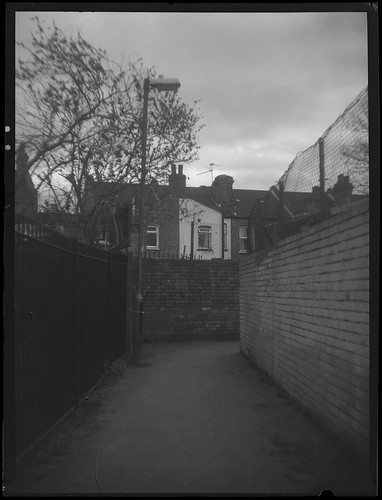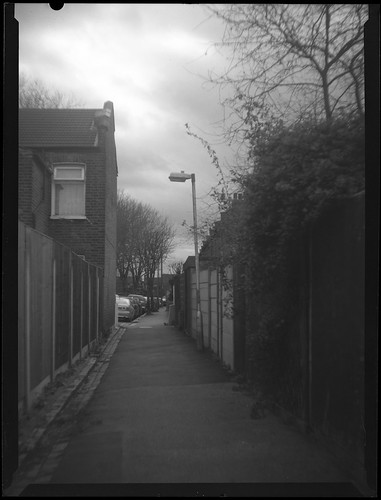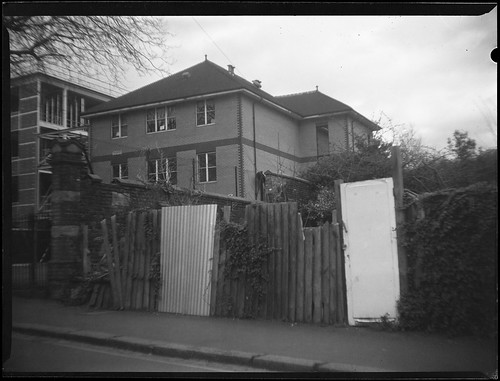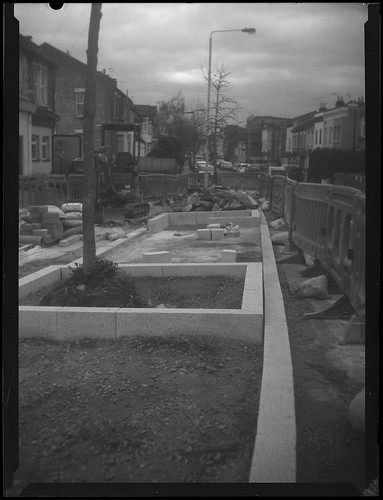
Showing posts with label glass plates. Show all posts

Monday, 5 March 2018

Glunz Model 0

Glunz Model 0
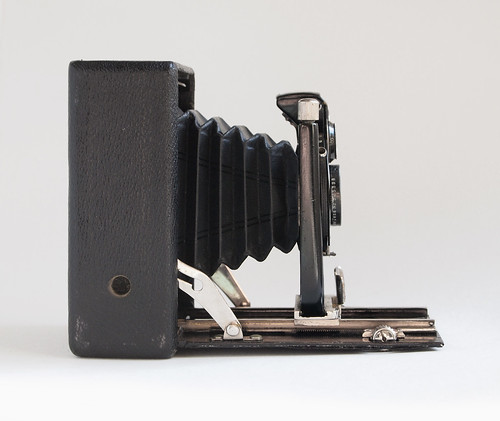
When this small wooden-bodied folding camera arrived in the post, a speculative purchase, there was almost nothing on the camera to identify it, save a small badge inside the body. This has a monogram reading G&S Kamerawerk Hannover-List. This was enough information to turn up some references to Glunz & Sohn Kamerawerk, but there is very little online about the company - the Glunz page on Camera-Wiki is very sparse for example (and I created the Glunz Mod. 0 page on Camera-Wiki myself, and it has only had three minor edits in the five years since). On Collection-Appareils I found a Glunz & Sohn Model 0 camera which looked very much like my version, although not identical - but also more recent, from the 1930s. The serial numbers on the lens and shutter belonging to my camera date them to c.1919. The Model 0 name appears to be a back formation from Glunz's 9x12cm Model 1, presumably produced first, and possibly not named Model 1 when first produced - or it could indicate Glunz's most basic model camera.

Glunz Model 0
The camera is very simply constructed with very few extraneous features. There's no handle on the body, as most folding plate cameras of this type would ordinarily possess. The bellows are single extension only, and there's only a rotating brilliant finder for framing - many other cameras would also have a frame finder; the brilliant finder doesn't have a spirit level attached either. It does however have rise and cross front movements: these seem pretty standard on these pre-war cameras, the movements seen as essential - perhaps converging verticals were distressing to the photographers of the day. The front cross movement is just by friction, while the rise has a standard worm screw. Focus is by ground glass screen, using rack and pinion, with a lock by pushing in the focus knob. The camera also has a scale on the folding bed, which also has an infinity lock, a small lever which pushes in to release the lens standard to advance it further on its rails. There are tripod sockets for vertical and horizontal images.

Glunz Model 0
The Mod. 0's body is made from wood with the drop bed (and lens standard) in aluminium. The oddity of the camera is that despite being made very simply, cheaply, and with very few features, it has what would have been a top of the range lens and shutter combination: a 10.5cm f4.5 Tessar lens (fast for its time) in a dial-set Compur shutter. These were of course bought-in stock items, but for a camera this simple, one might expect a cheaper triplet lens in a Gauthier or other shutter - such as seen on the catalogue pages reproduced on Collection-Appareils. That the shutter function dial has ZDM (Zeit, Dauer, Moment) strongly suggests that this particular model of the camera was destined for the German home market, rather than using TBI (Time, Bulb, Instant) for export. The presence of the Tessar lens in the Compur shutter may mean that the camera's model number may in fact not be the Model 0; it's possible that with the same body, the Glunz's model numbers may actually indicate the lens/shutter options. However, there isn't enough information online to be sure that this may in fact be the case.

6.5x9cm plateholders from A.P. Paris
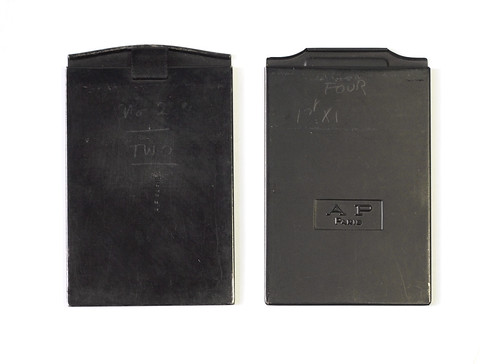
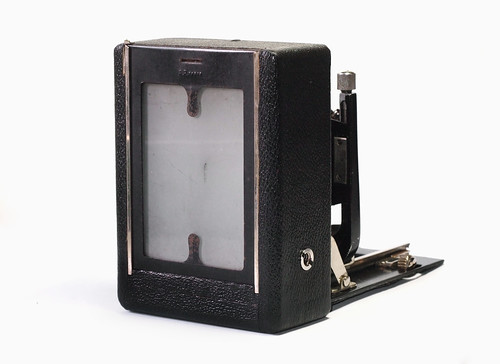
The Model 0 takes very different plateholders from other 6.5x9cm plate cameras I've used. The camera came with six plateholders, all stamped with A.P. Paris, but of two different designs - three have fabric tabs which appear to be there to make removing the plateholders from the camera easier (other plateholders sometimes have a small indent at the bottom for this). The plate holders are of a block-edge type, without the single or double lip around the holders that seems to be far more common. This means that none of the many other plateholders I have can be used with the camera, nor can I use the Rada rollfilm back with the Model 0. The ground glass screen itself is made from a plateholder; whether this was original is open to question, but the conversion was done very skillfully, unlike some I have seen. This is of the same design as the holders with the fabric tabs, although the tab here is cut off level with the metal (the stamp A.P. Paris is in a different place, compared to the proper plateholders though). The body has a small locking lever to secure the plateholder once inserted for removing the darkslide.

Glunz Model 0 ground glass screen
The ground glass screen does not have a hood attached (and doesn't look like it ever had one); I generally don't use a dark cloth when shooting old plate cameras hand-held, and the lack of a hood does make it difficult to see an image of any clarity on the screen. Apart from a few longer exposures, I shot most of the plates shown on this post hand-held. I shot a few plates when I first acquired the camera, but then didn't really use the camera until more recently - partly due to the lack of plateholders.

Glunz Mod. 0 with Ilford HP3 plate - test exposure
Having just six of these has been limiting in terms of taking the camera out to shoot - unless one is prepared to take a dark bag and spare plates. I've also used paper and sheet film with the camera, but in an equally limiting fashion, having just one 6.5x9cm film sheath.

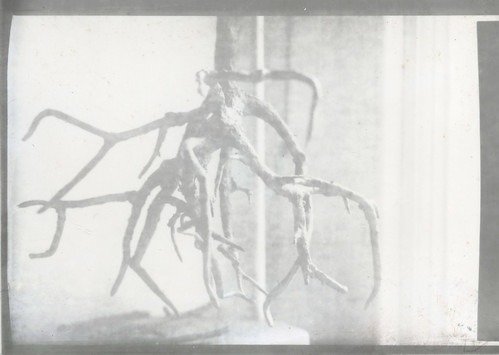
Glunz Mod. 0 with Harman Direct Positive Paper
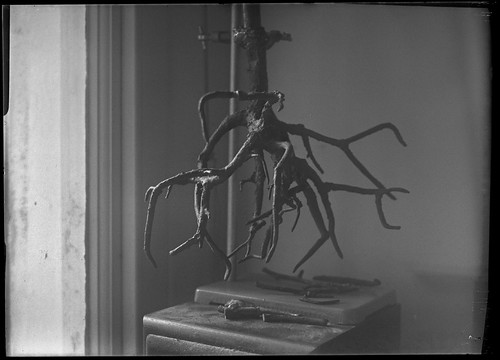
Glunz Mod. 0 with Ilford HPS glass plate 
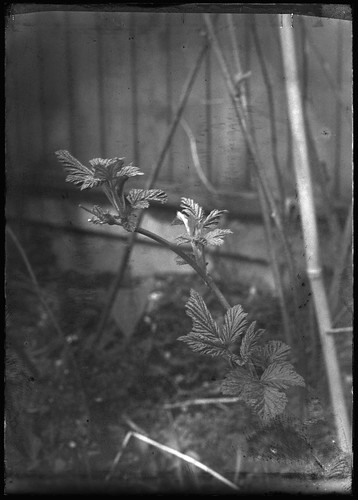
In practice, the Glunz Model 0's construction makes for a light plate camera, partly thanks to its lack of features, which would all add weight, and only having six holders to carry around with it does not add much. The camera doesn't look like it was used very much during its earlier life. The dial-set Compur shutter is in excellent condition, and fires pretty accurately at all speeds, even the slower ones. The Tessar lens is what one would expect, as a pre-war lens, it's not coated but the results are perfectly acceptable. One problem with the camera is that the two arms holding the folding bed do not securely lock out once the camera is opened- these aren't sprung like they are on other cameras I have, and it's very easy to knock the folding bed back, putting the lens standard out of true with the film plane. Although the camera has single extension bellows, in practice its possible to rack the lens standard out to the very edge of the lens board, enabling close focus to around 40cm - as with the HP3 plate shot of the raspberry canes below.

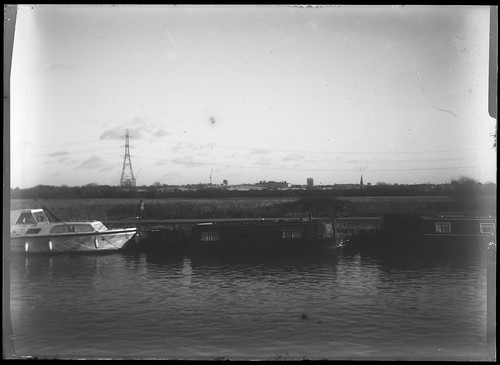
Apart from the shot on Agfapan APX 100 and that on Harman Direct Positive Paper, the rest of the photographs on this post shot with the Glunz Model 0 are on glass plates from the 1950s and 1960s. Most of the Ilford plates have aged fairly well (some of the Kodak plates less so); the Special Lantern plates would have been very slow originally, but weren't intended for 'pictorial contrast', instead these were designed for making lantern slides by contact - or just conceivably via and enlarger - so have a very slow blue-sensitive emulsion (generally, the slower the emulsion speed, the less it is affected by age). However, I also shot some Ilford HPS plates, which came from a box with a leaflet dated to 1952; HPS was the fastest emulsion available at the time - 400 ASA (pre-1960, so 800 by today's standards) and these plates came out well, rating them well below box speed to compensate for age.

Glunz Model 0 with Ilford Special Lantern Plate
Glunz Model 0 with Kodak P1600 Panchro-Royal glass plate
Glunz Model 0 with Ilford Special Lantern Plate
Glunz Model 0 with Ilford HP3 glass plate
Glunz Model 0 with Ilford HPS glass plate
Glunz Model 0 with Agfapan APX100 sheet film
Sources/further reading:
Glunz & Sohn on Camera-Wiki
Glunz Model 0 on Camera-Wiki
On Collection Appareils (French)

Friday, 24 March 2017

Take Your Box Camera To Play Day 2017

Midg Falling Plate Camera with Ilford Selochrome glass plate
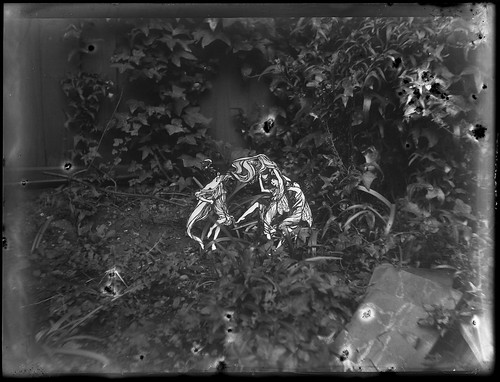
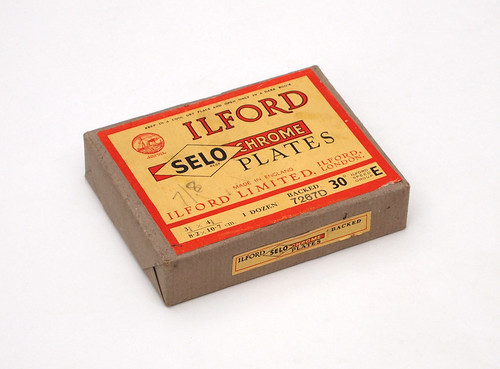
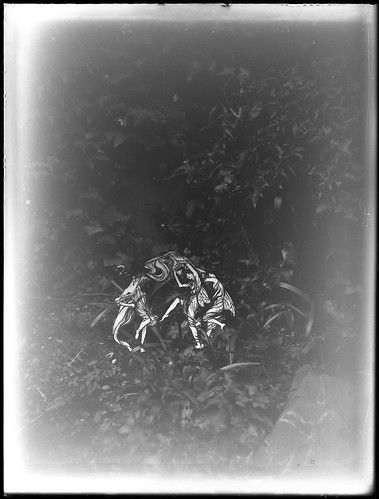
To mark one hundred years since the first photographs that became known as the Cottingley Fairies were taken, I decided to use last weekend's 'Take Your Box Camera To Play Day' to make a homage to the young photographers of this hoax. A counterpart to 'Take Your Box Camera To Work Day', I had been thinking of using the Midg falling plate camera for this event; as Elsie Wright and Frances Griffiths used a Midg camera for their first set of photographs, this appeared to be a fitting subject to shoot on the day. For the fairies, I went back to the source material that the girls had used for their first published photograph, known as 'Frances and the Fairies', figures taken from an illustration in Princess Mary's Gift Book, as pointed out by the debunker James Randi. I shot the scene at the bottom of the garden on glass plates, as would have originally been used in the Midg. I didn't have any glass plates from 1917; I used some Ilford Selochrome plates from a box which had a label inside dated to February 1945 (as a footnote to this date, the paper that the box was wrapped in had a cheaper, coarser feel than the more usual brown paper that Ilford used for wrapping plate boxes until the end of the 1950s, which might reflect on wartime paper shortages).

Ilford Selochrome plates
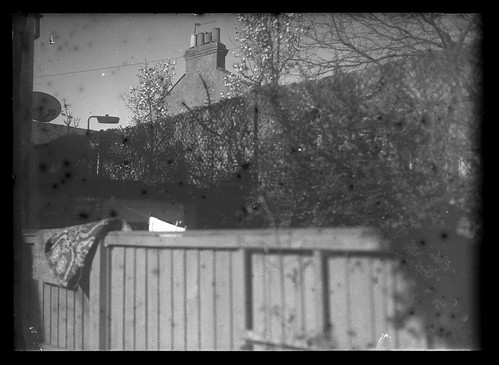
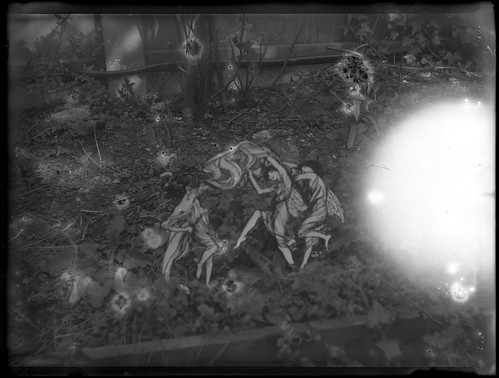
I had problems with the first set of glass plates that I shot not falling down cleanly inside the camera when released; some of these, such as the image below, fell flat against the inside of the front of the camera, and the large white circle on the right hand side is from the plate being exposed directly behind the lens. Other plates then had the shadow of the plates stuck at the front of the camera partially obscuring the projected image during exposure. It was also clear that the focus distance wasn't very accurate; when I had used the camera before I had discovered that the 3 feet setting was actually more like 4 feet: the image at the top of the post was much closer to this distance (as was the last shot on FP4 film at the bottom of this post). After developing the first set of glass plates, I then shot another set, with more success, but I did still have problems with the plates not falling down inside the camera as they should, anticipating that, I was able to open the camera in a black bag and manually place the exposed plates flat at the bottom of the camera. When writing about the Midg, I had used a quote describing how the mechanism would jam at critical moments; this seemed to be one such moment.

Midg Falling Plate Camera with Ilford Selochrome glass plate
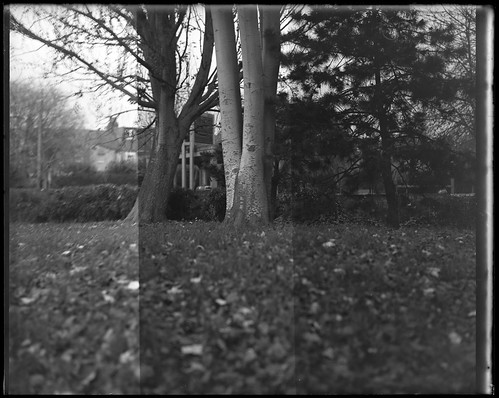
As well as the Selochrome plates, I also shot some Ilford G.30 Chromatic plates from the mid-1960s. I'd used a number of these plates over the past few years, mostly with a fair amount of success. The plates from this current box suffer from a large amount of fogging around the edges, something I've experienced with some glass plates. I rated these at 10 as well, but with the light fading in the late afternoon to early evening when I took a second set of photographs, the photographs probably needed more exposure then I gave them to mitigate the fogging; the lighting had been better earlier in the day: in the image above, softer light integrates the cut out into its surroundings better. Had I taken more time over the photographs, I would have also painted in the cut out figures to provide a better tonal range.

Midg Falling Plate Camera with Ilford G.30 Chromatic glass plate
I also shot a magazine's worth of Ilford FP4 film, from a box with a handwritten date of 16/11/78 (a leaflet inside the box dates to December 1977). None of these photographs suffered from the mechanism failing, which might reflect using the camera in the hand, rather than the fairy photographs, for which I used a tripod, and had to tip up the camera while still on the tripod to tilt it forward to get the plates to fall. When I'd used the Midg previously, I had shot some FP3 film, dating back to around 1950, and rated it with an exposure index of around 12; with the more recent FP4, I wanted to use the Midg hand-held. One of the problems with the Midg is that its shutter only fires at one speed, as the adjustment mechanism does not appear to change the 'instant' setting at all. The shutter fires around 1/50th, so I shot all the film with the lens wide open at f8; lighting conditions were fairly overcast, so I gave the film a one-and-a-half stop push in development (although a couple of sheets were stand developed with the plates). Some of the negatives were very thin, but the results from most of the shots were surprisingly good, and an instructive comparison to many of the photographs taken two years ago when I first wrote about the Midg.

Midg Falling Plate Camera with Ilford FP4 film

Friday, 23 September 2016

Butcher's "Cameo"

The "Cameo"
Sometimes I acquire cameras almost by accident. After using the Ensign Folding Klito earlier in the year, I bought another quarter-plate format folding camera as it came with a full complement of a dozen plate holders, and probably would have paid around the same amount for the plate holders on their own. However, these metal holders were not compatible with the Klito: the Klito holders have a single 'lip' on the left and right edges and none at the bottom. These particular holders in comparison have a double lip at both sides with a single lip at the bottom edge which meant that they were not interchangeable. It's an issue not uncommon for early plate cameras, as many manufacturers had their own propriety designs, especially it seems around the turn of the century; only later was there a degree of standardisation amongst different camera makers.
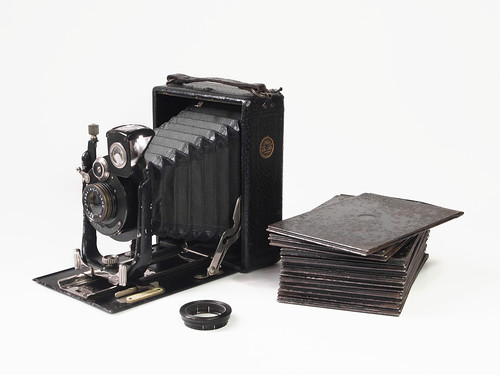
Cameo with plate holders and supplementary lens
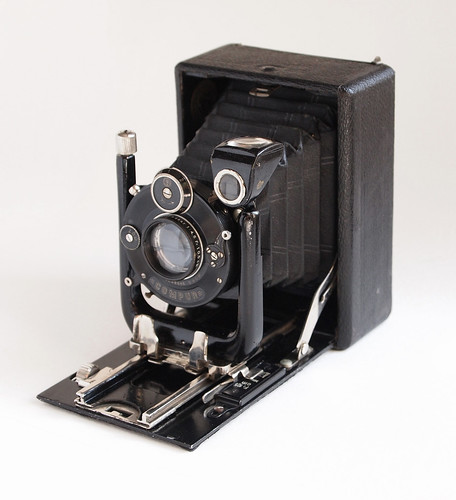
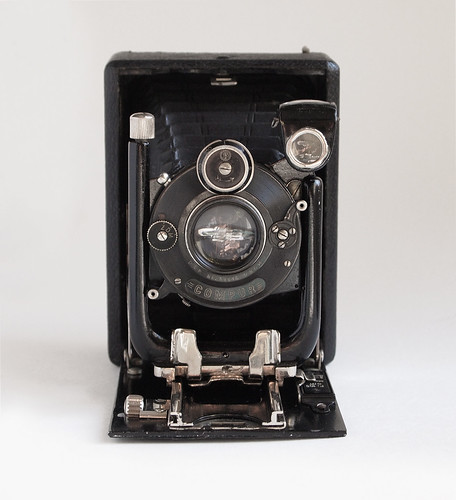
The camera that these holders came with was a Butcher and Sons Cameo (on the camera itself is a small brass name badge with The "Cameo").  I've already written about Butcher and Sons in discussing the Midg: their cameras were made in Germany and then badged and sold by Butchers - with most likely some other elements of finishing by Butchers, notably that the Cameo has a British-made lens in a German shutter. The camera itself was almost certainly made by Hüttig, or Ica - of which Hüttig was a constituent when Ica was formed in 1909: the 'Cameo' is listed as a plate camera under the Hüttig page on Camera-Wiki, but does not appear as a 'continued model' on the Ica page, although this may just be an omission (however, the Cameo also does not appear under the comprehensive Ica cameras list on From the Focal Plane to Infinity).

Research online turned up scans of a Butcher and Sons catalogue from 1914, which was invaluable for precisely identifying the model. There are four versions of the Cameo listed: my camera corresponds to the Model O, surely a back-formed name: the others are named with Roman numerals I, II and III (the 'Uno-Cameo'); the O is a simpler, cheaper version. It does appear to be named with a capital 'O' rather than a zero, although whether anyone referred to it as a "Model-Oh" seems unlikely. To add a small amount of confusion, the Model O is divided into five variants based on lens and shutter combinations: my example is the middle of the range Model 03 (the other Cameos, although having a wider variety of sizes, lenses and shutters are not burdened with a further model name in the catalogue). The catalogue states that "The Model O "Cameo" has for fourteen years held the lead as the most serviceable, most practical, and most valuable Guinea Folding Pocket Camera on the market, and for this reason has become famous the wide world over. The 1914 pattern has been entirely remodelled, and is now as perfect as is possible to make it." As an importer of cameras from Germany, the outbreak of war that year was significant: it resulted in Butchers forming a partnership, and then an eventual merger, with Houghtons in order to stay in business.
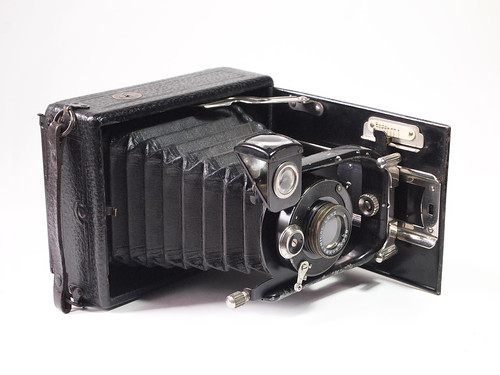
Cameo in landscape orientation
The Cameo itself is a fairly well-constructed example of a typical plate camera of its time: leather-covered wooden body, with a metal drop bed, removable wooden back for the ground glass screen, originally with a hood, missing on my version. It has a large brilliant finder, without a spirit level. It also lacks a wire frame finder, which I prefer for shooting handheld. The bellows are single extension only, and focus eschews a rack and pinion device for the simpler expedient of using the spring clamps, as the catalogue names them, to advance the front standard along the runners. There is a focus scale with an infinity lock, but for precise focusing, this is rather more difficult as I found my hand partly occluding lens as I attempted to move the standard into place. As well as a hood, my camera was also missing the ground glass screen itself, so I made a replacement, although I used too coarse a grade of grit to see the projected images very clearly (incidentally, to make the replacement screen I had to cut down a glass plate for this, as the screen is smaller than quarter plate size). Camera movements are limited to front rise/fall and cross, like most folding plate cameras of this age. The body also has standard tripod sockets for vertical and horizontal orientation.
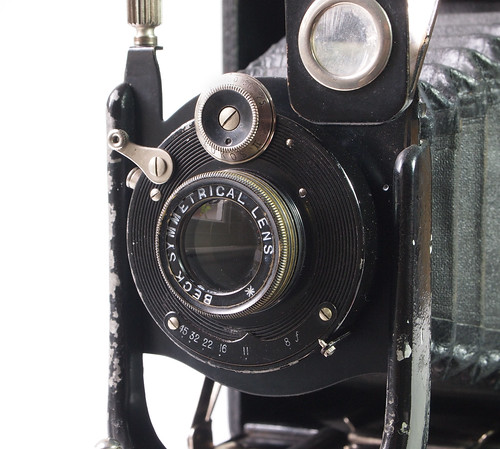
Beck Symmetrical lens in Lukos II shutter
The Beck Symmetrical lens has a mark for f8 as its widest opening on the scale, but the aperture opens a little wider, as shown by the pointer's position in the image above, possibly just to f7.7. It does have a chip or crack at the very edge of the front element, but this probably has a marginal effect on image quality. The lens is set in a Lukos II three-speed shutter, with 1/25, 1/50, 1/100, with T and B. The Lukos is an 'Everset' shutter, meaning that it doesn't need a separate lever to cock the shutter before firing, but the tensioning of the mechanism can be felt in initially pressing down on the release lever before it reaches the firing position. According to the 1914 catalogue, Lukos shutters were specially made for Butchers - although not specified, no doubt by Ica.

Having made a new ground glass screen and submitted the camera to some general cleaning and renovation, an excuse for shooting with the Cameo came with the announcement on Emulsive of the first #FP4Party. In one of my job lots of old film and plates, I'd acquired two boxes of 8.2x10.8cm FP4 from the 1970s: with 50 sheets to a box I was happy to sacrifice a few sheets to test the camera, and having used some 4x5 inch FP4 from the same source successfully, without testing the film itself. I shot half a dozen sheets at half box speed and used developing times for modern FP4 Plus - the sheet film being the previous iteration of Ilford's FP emulsion before the 'Plus' version.
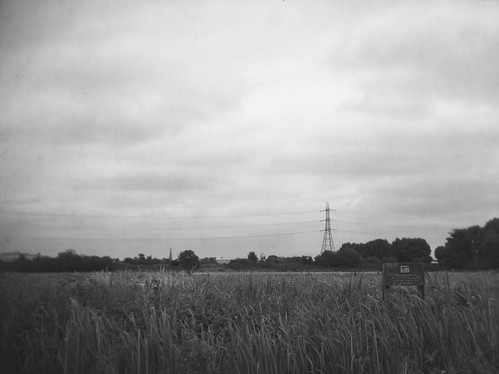
Cameo with expired Ilford FP4
As well as the FP4 film, I also shot some glass plates at the same time. Thirty years older than the FP4, I shot some Ilford Soft Gradation Panchromatic plates, dated to 1946, hand held, with the result that most were underexposed given the Cameo's slow lens. The plates would have been better for an extra stop or two, but the results are still good for a seventy-year old emulsion.
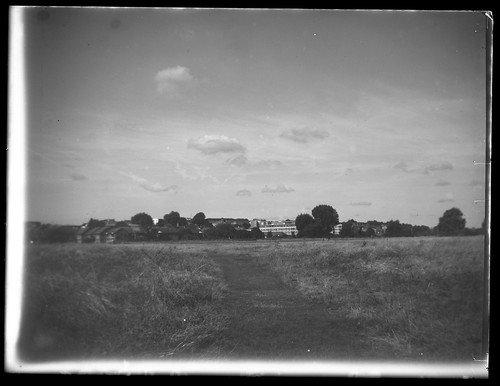
Cameo with Ilford Soft Gradation Panchromatic glass plate
Without a spirit level or a wire frame finder, I had trouble keeping the camera level when shooting, and as a result, I have cropped some of the FP4 images, although with the glass plates the qualities of their distinctive edges would be lost, so I kept the scan of the whole plate, as above, despite the slanting horizons.
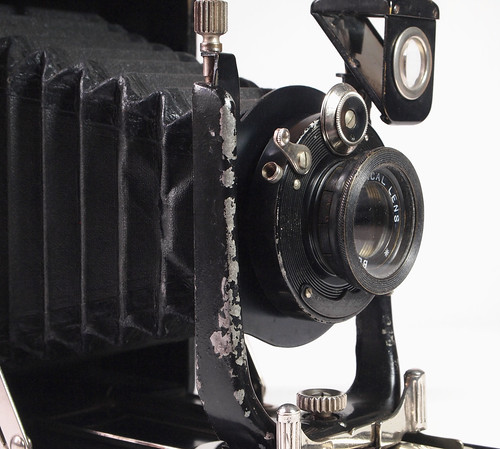
Cameo with No.6 supplementary lens fitted
Included with the Cameo camera was a push-on supplementary lens, with little information to identify it, marked simply 'No.6'. Fitting it to the camera showed it to be for close up and wide angle use, the former mitigating the camera's limited, single bellows extension to get closer to a subject, the latter simply facilitated by placing the front standard a little closer to the camera body. With the supplementary lens it's critical to use the ground glass screen to focus, as the focus scale on the body no longer applies; for wide-angle work, the brilliant finder shows a slightly smaller angle of view, but using the finder itself isn't especially exact, so this matters little. The two images below show the difference with and without the supplementary lens, which isn't especially dramatic.
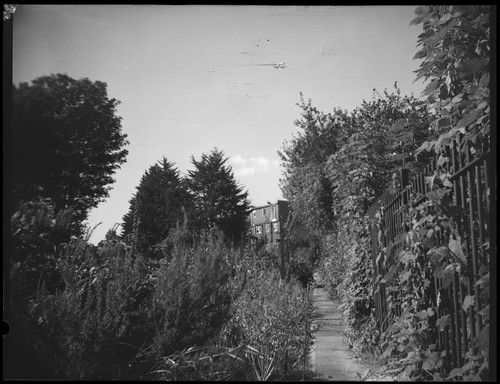
Cameo with No.6 supplementary lens and expired Ilford FP4
Cameo with Soft Gradation Panchromatic glass plate
The difference when used for close up photographs appears more marked, with the two examples below both shot on Ilford G.30 Chromatic glass plates. In each case, the front standard of the camera was advanced as far as possible on the runners, right at the very edge of the folding bed.
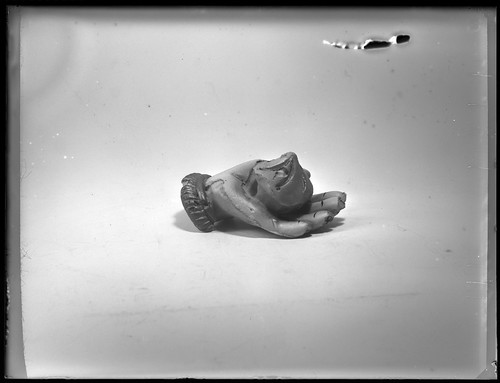
Cameo with Ilford G.30 Chromatic glass plate and No.6 supplementary lens
Cameo with Ilford G.30 Chromatic glass plate
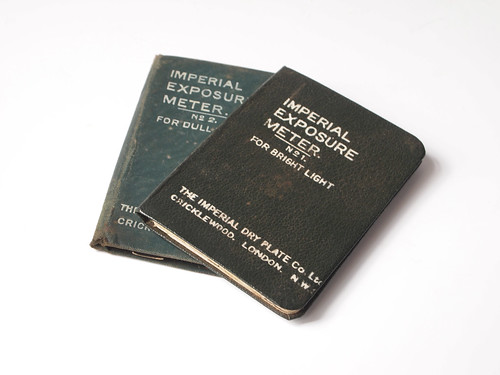
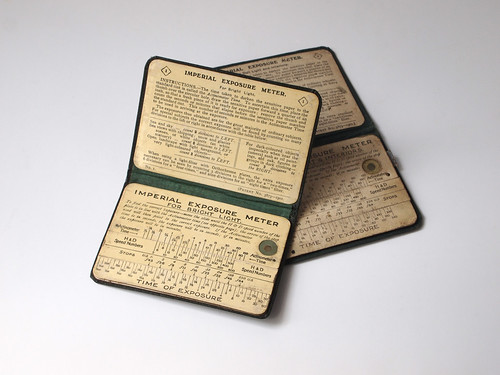
Although not used for any of the photographs in this post, the Cameo also came with two exposure meters of a very specific kind. The two wallet-like items are actinometers and work by timing how long a piece of sensitised paper takes to darken to a specific tint; that time is then applied to the calculator, which is calibrated to emulsion speed in Hurter and Driffield numbers. Possibly around a hundred years old, I found that the sensitised paper still darkened when exposed to light; some of my old glass plates are rated in H&D numbers, but most of the photographs in this post were shot with the 'sunny 16' rule rather than metered (I used an SLR to meter the close up shots and overexposed most of them).
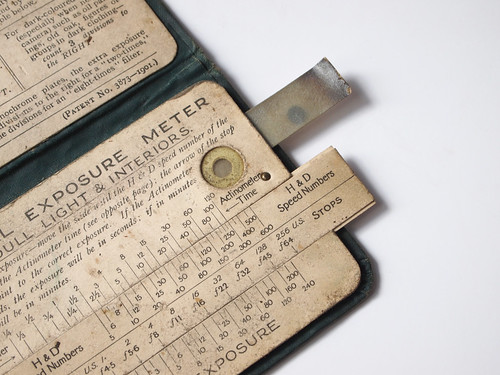


Imperial Exposure Meter showing sensitised paper strip and sliding calculator
A century ago, the Cameo would have given quite adequate results on glass negatives for photographs that would have mostly been printed by contact. The Beck Symmetrical lens is sharp in the middle, but definition falls off towards the edges at wider apertures, and for some of the reasons I've mentioned, the Cameo isn't the easiest plate camera I've used: contemporary to my camera, more expensive models in the range with better, faster lenses, double extension bellows and rack and pinion focussing would be more desirable - if one were to make an informed purchase.
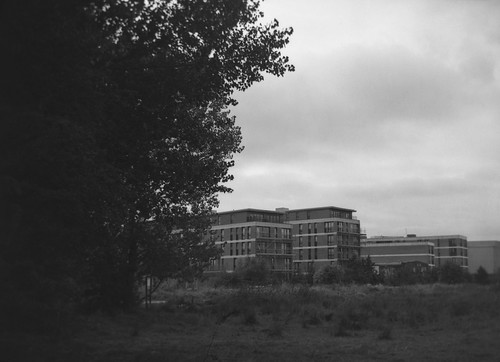
Butcher's Cameo sample image with Ilford FP4
Butcher's Cameo sample image with Soft Gradation Panchromatic glass plate
Butcher's Cameo sample image with supplementary lens and Soft Gradation Panchromatic glass plate

Sources/further reading:
There's perhaps surprisingly little in depth information about the Cameo online, although presumably sold in tens or hundreds of thousands, this may be simply that it's not considered sufficiently interesting in any way.
1914 Butcher Catalogue
'Pocket' Cameos on Historic Camera
Early Cameo model on The Living Image
Tuesday, 26 April 2016

Other glass plates

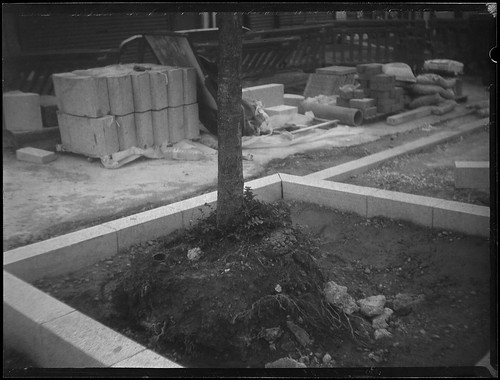
Ilford R.40 Rapid Process Panchromatic glass plate
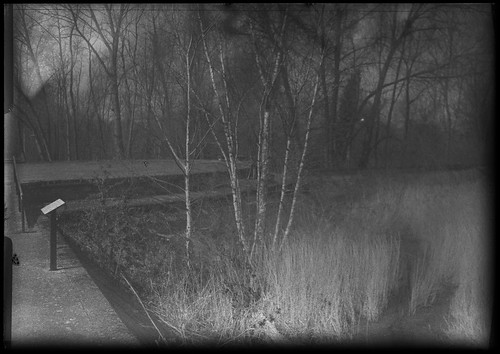
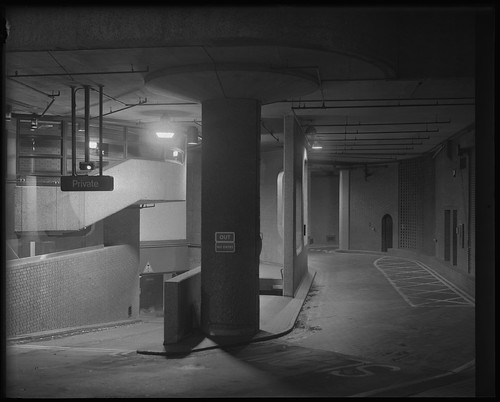
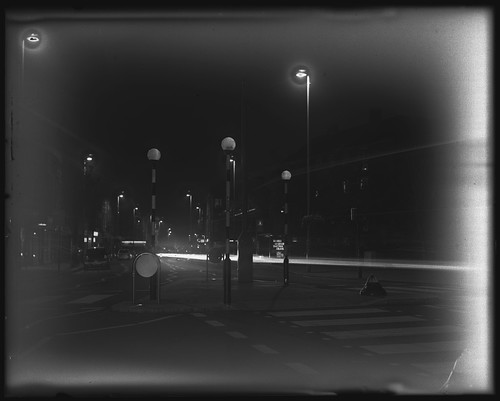
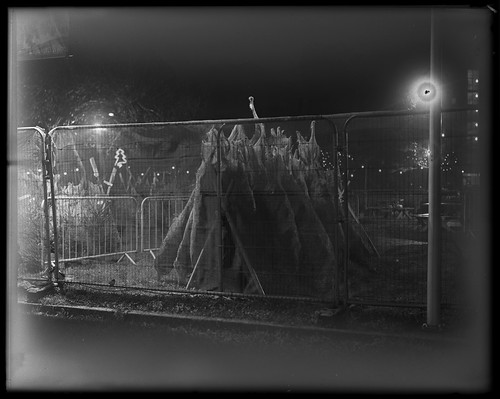
As well as the Selochrome stereo plates written about in my last post, I have also shot a number of different plates for night photography in recent months. I've used the last of the large format Selochrome plates written about in 2014 with some good results. Also mentioned in that blogpost were the Wratten & Wainwright Metallographic plates which were heavily fogged around the edges, so much so that I had all but written off using the plates. However, as I'd had a couple sitting in a plateholder for months, I decided to expose one on the same night as exposing this image on one of the Selochrome plates, and giving a moderately long exposure provided an image far less obscured by the fogging around the edges than I'd previously experienced.
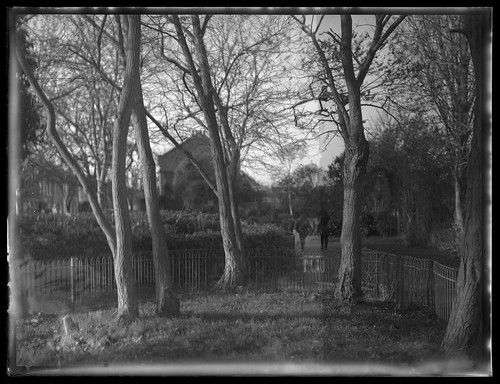
Kodak Wratten & Wainwright Metallographic plate
As the Wratten & Wainwright box was sealed when I got it, I don't have a good theory as to why the plates shot recently should be less fogged than the others, except perhaps the fact that these plates would be from the central portion of the box, with a number of plates stacked on top (and below) the two illustrated here - although the edges of the plates themselves remain in the same relation to the edges of the box as those at the top or bottom of the stack.

Wratten & Wainwright glass plate
Incidentally both plates shown here exhibit true solarisation - the brightest highlights in the streetlamps have turned black. The term solarisation (when not describing a digital filter) is usually applied to what is more properly known as the Sabatier effect: the exposure in these highlight areas is such that the negative begins to lose density beyond the shoulder section of the characteristic curve (this phenomenon gets a brief mention in Ansel Adams' The Negative when describing his photograph The "Black Sun", Owens Valley, California). There's still a fair amount of fogging, and exposing for longer to combat this has resulted in what appears to be grain seen in the highlight areas, but this is scanner noise caused by the high density.

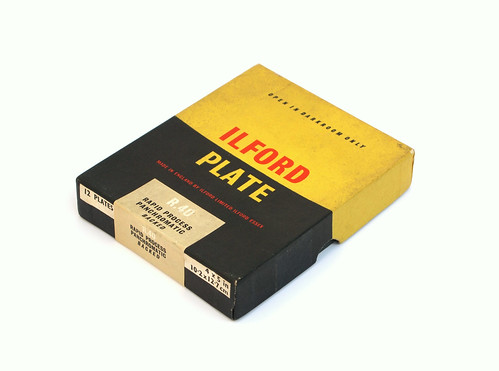
Late last year, I found two boxes of 4x5 inch plates, both Ilford R.40 Rapid Process Panchromatic - one box had been previously opened, but then resealed with black tape, and no plates had been used from it. I opened the other box for the information leaflet inside, which provided a date - August 1959.

Ilford R.40 Rapid Process Panchromatic glass plates
As described in the Ilford Manual of Photography (1946), Rapid Process Panchromatic plates were "For copying coloured originals. A plate of high contrast. The standard plate for colour separation screen negatives for photo-lithography." These were fifth highest in the list of plates by contrast in the Manual, and, as a process plate, it isn't given a speed: these plates were not intended for pictorial photography. The word Rapid in the name refers I think more to the speed of development rather than sensitivity - the information leaflet with the plates gives a development time of 2 1/2 minutes in ID13. The plates were introduced in 1918, and, according to Silver By The Ton, were rated 8 ASA in the post-1960 standard: other plates with the term Rapid in the name around the same time were rated 20 ASA.

Ilford R.40 Rapid Process Panchromatic test plate
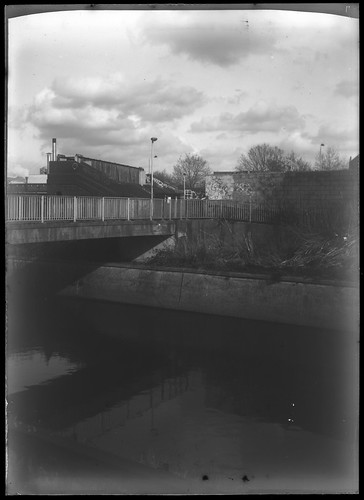
For a test exposure, I rated one plate with an exposure index of 10 as a reasonable starting point, and with three successive exposures by progressively withdrawing the dark slide, gave the plate effective exposure indices of 10, 5, and 2.5 from right to left in the shot above. This was stand developed in RO9 One Shot, diluted 1+150 (to reduce contrast) for one hour. The results were very encouraging. The central section, with an effective rating of 5, looked best from the test plate. However, when shooting them at night, the first set of plates did appear to be overexposed, not helped by using a developer dilution of 1+100, rather than 1+150. The highlights in these negatives are very dense, and this again added noise when scanning in these areas, much like the Wratten & Wainwright plates: the image at the top of this post is one of the plates shot and developed in this fashion. I reduced my exposure times for the next shots by around one stop, and developed these plates at 1+150, as below.
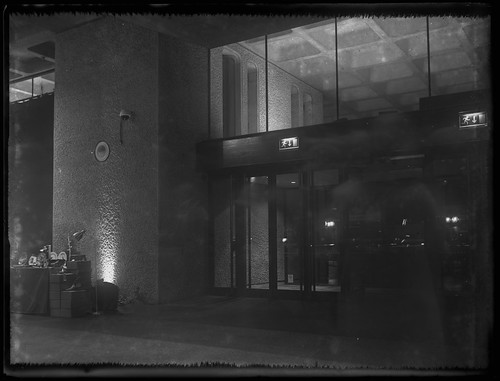
Ilford R.40 Rapid Process Panchromatic plate
The Rapid Process Panchromatic plates are amongst the best I've used, in terms of the emulsion showing very little age-related deterioration; when coupled with getting the exposure right and developing to reduce the inherent contrast, the plates produce excellent results.

Ilford R.40 Rapid Process Panchromatic plate
Special Rapid Panchromatic plates
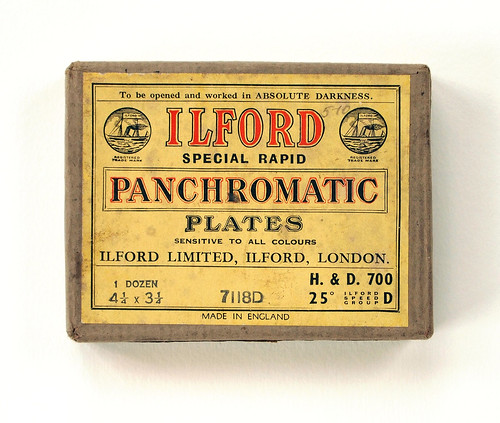
I've also recently used some quarter-plate size Special Rapid Panchromatic plates. First produced in 1919 at 32 ASA, these are "Fine grain. Fairly high contrast. General purpose plate. Widely used in scientific; and in the photo-mechanical trade for block making, offset work and photogravure." These are just above the middle of the contrast range of Ilford plates at the time. A leaflet inside the box was dated to 1946.

Special Rapid Panchromatic plate test
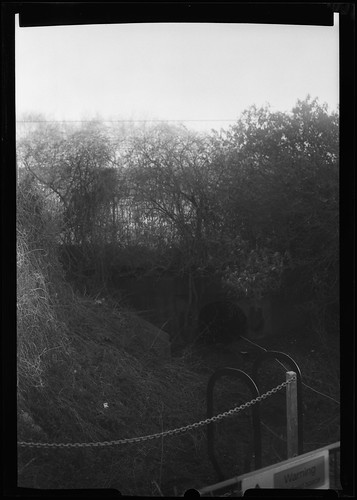
Rather than shooting these plates for the ongoing night photography project, I used most of the plates from the box on the LAPC photo walk last month; these were just fast enough to use handheld, rated around 10. The test plate above was also rated 10: with three successive exposures, the middle section at an exposure index of 5 provides a fuller negative. The plate below was one that I did shoot at night with a twenty-minute exposure which captured people queuing at a bar better than expected, if still very faint.

Special Rapid Panchromatic plate
Some time around 1950 Ilford's plate names gained prefixes with a letter and numerals: the Special Rapid Panchromatic above were later given the prefix R.20 as seen on this leaflet. I've wondered for some time about how these were constructed, what was the logic to them. The Hypersensitive Panchromatic and Fine Grain Panchromatic emulsions, being new just before the second world war, were not abbreviated in same way as other emulsions later: these were already abbreviated to HP and FP while the films went through their numerical iterations. Most other plates were given the alphabetical prefixes R, G and N (although not all - Selochrome didn't gain a prefix, but this was more of a brand name than a descriptor). Looking at the spectral sensitivity of the plates, as all panchromatic plates are given an R, it would appear that the letter are R denotes red sensitive; G plates are 'highly orthochromatic' with sensitivity extended into the yellow part of the spectrum that perhaps G is for green sensitive; and N for 'ordinary' plates would possibly mean not colour sensitive. I haven't found a logic to the numbers. One wonders if photographers stopped calling Soft Gradation Panchromatic plates that, and started referring to them simply as R.10 plates?

References
The Negative, Ansel Adams, 1981
Silver By The Ton, RJ Hercock and GA Jones,1979
The Ilford Manual of Photography, James Mitchell (ed.), 1946