Showing posts with label quarter plate format. Show all posts

Sunday, 25 April 2021

#FP4Party April 2021

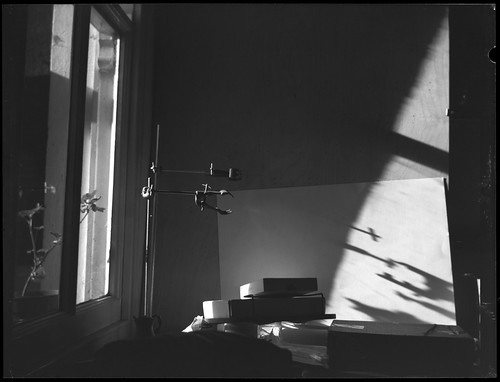
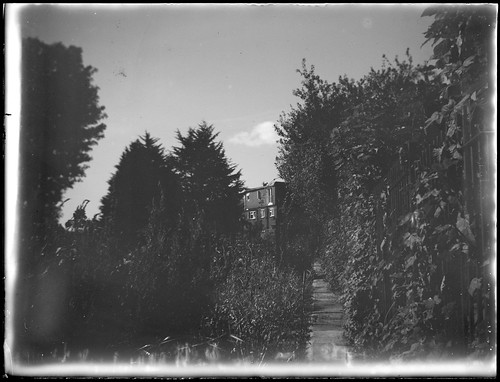
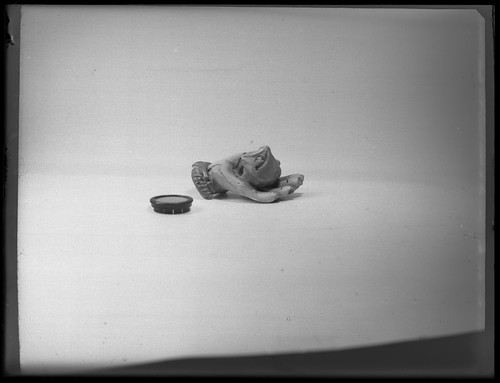
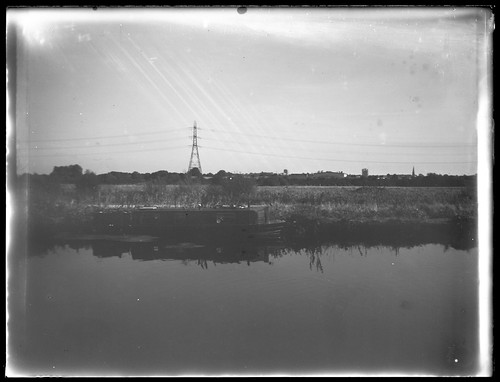
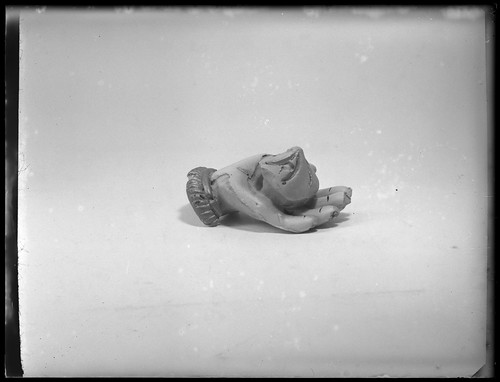
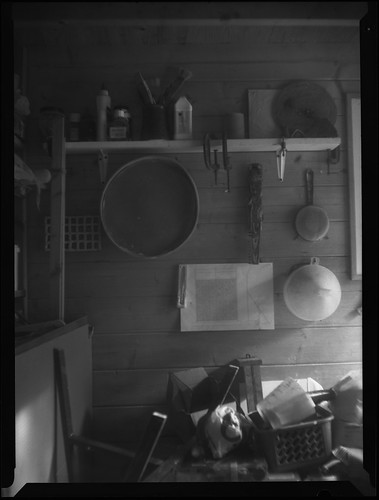
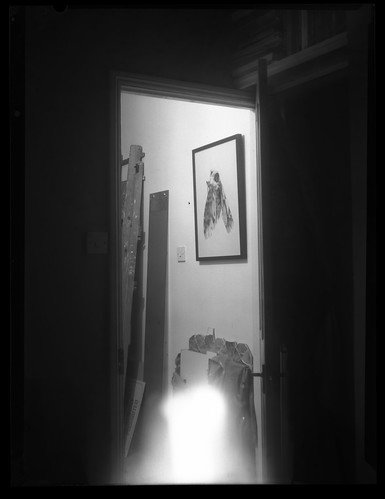
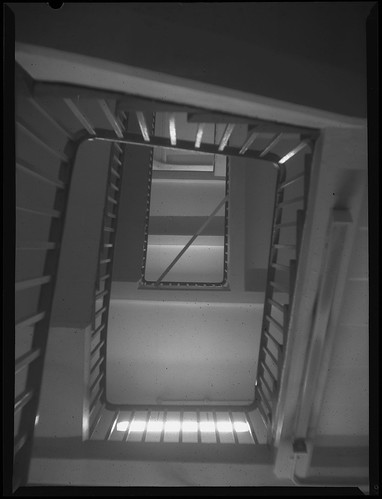
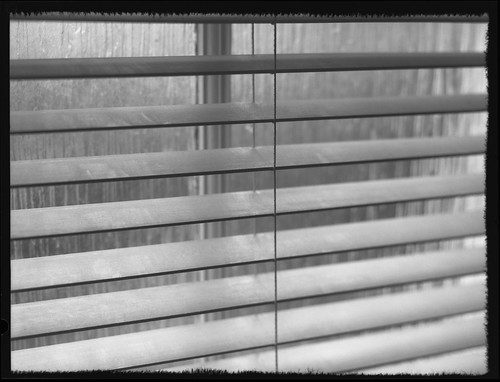
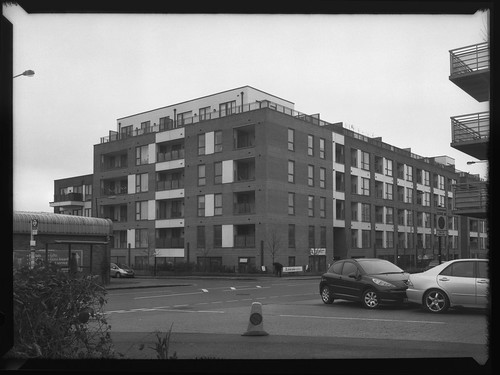
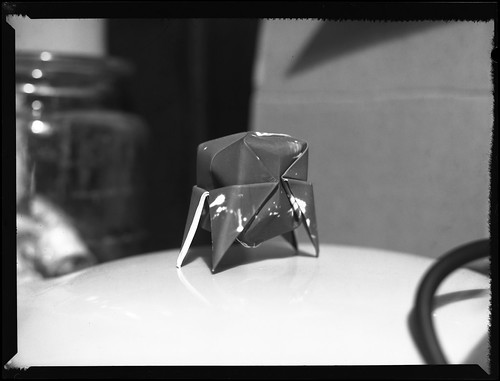
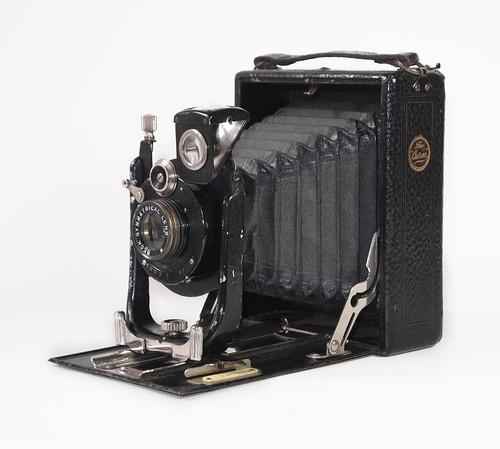
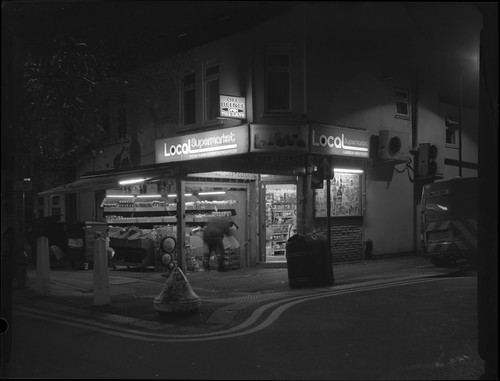
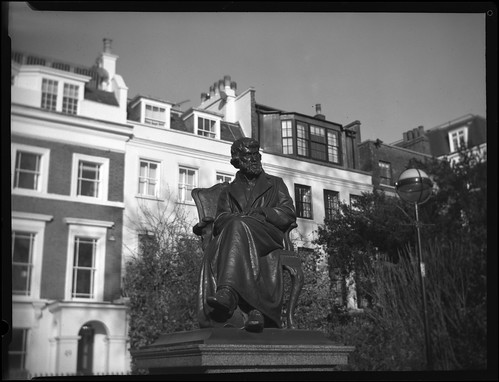
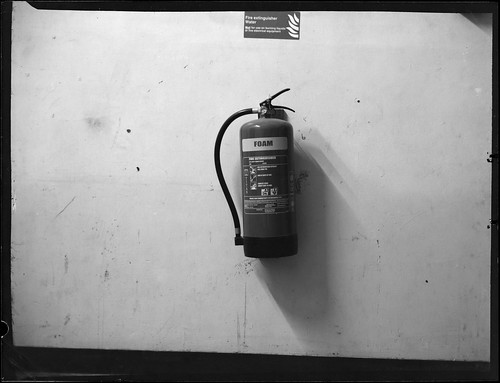
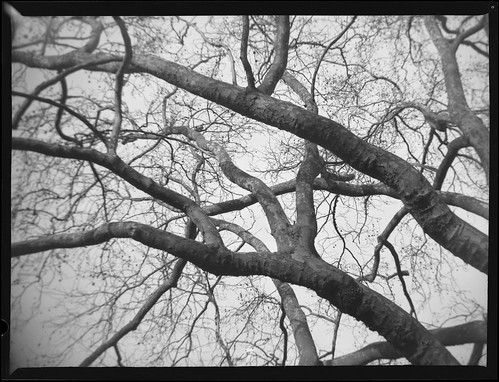
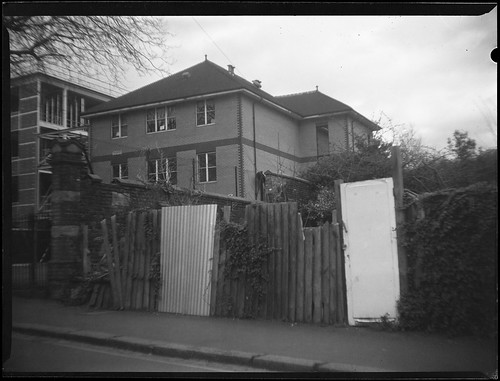
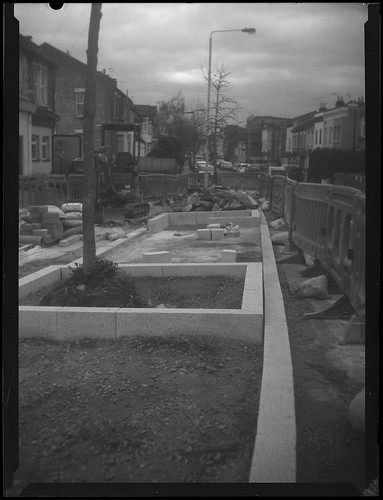
Two years ago, less a couple of months, for the #FP4Party in February 2019, I used my Ensign Folding Klito de Luxe No.9 with some old Ilford FP4 sheet film in quarterplate size; two boxes of this had come as part of a larger job lo: both were unopened boxes of 50 sheets each, both with the handwritten date of 16/11/78. I'd used film from this stock for the January and March #FP4Parties in 2019 too, in different cameras; for April 2021's #FP4Party, when considering what format to use, I saw that I had seven sheets of the last box of this film left, assuming I'd tallied my usage correctly. Thus, I decided to simply shoot one sheet a day for each day of shoot week, and the choice of camera had to be the Ensign Folding Klito de Luxe No.9 as it's the best of the three quarterplate-sized cameras I have. In 2019, in the three successive months, I'd shot two sheets a day, hopefully providing a 'good' and a 'spare'; with only seven sheets left this was not a luxury I could allow myself. In the event, I did accidentally use two sheets on one day, a result of unclear labelling of my plateholders. 

Although I was exposing just one sheet of FP4 each day, I also photographed each subject on other film stocks, some Ilford F.P.3 from the 1940s, and Ilford Fine Grain Ordinary N5.31 film (this box has a handwritten date of 11/3/70): without thinking, I picked up a second plateholder when photographing on the Friday, thinking it was the latter film when instead it was a second sheet of the FP4. In order to shoot FP4 film each day of the shoot week with two days to go and only one sheet of quarterplate-size FP4, I then cut down some larger FP4 Plus film to fit the format. Having made a jig that I taped to a cutting mat to cut the film to size inside a changing bag, I found this more difficult than expected. I tried to cut some 9x12cm film to quarterplate size–8.2x10.8cm–but found it was far too easy for the film to move around while changing from a cut in one orientation to the second cut in the other. After spoiling one sheet of 9x12cm FP4 Plus, and badly cutting another, I then cut down a sheet of 5x4-inch FP4 Plus. For this I only made one cut, going from 5 inches to 3¼ inches; quarterplate film measures 4¼ by 3¼ inches, but for ease of cutting down film to use in the Klito, 4 inches by 3¼ would have to do.

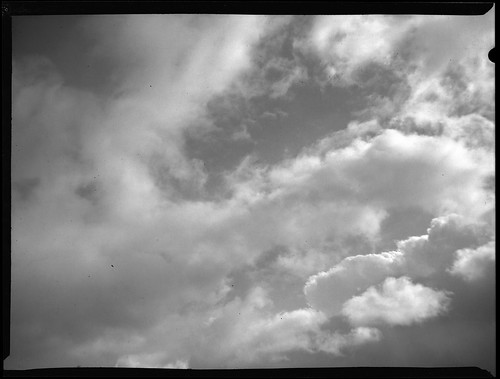
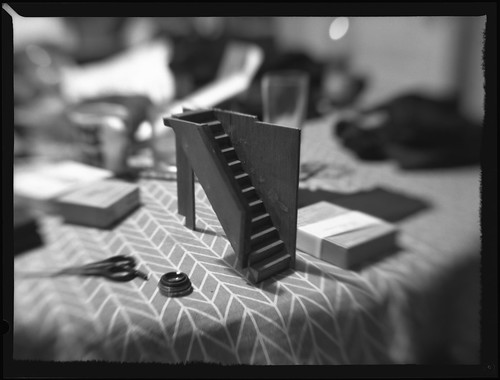
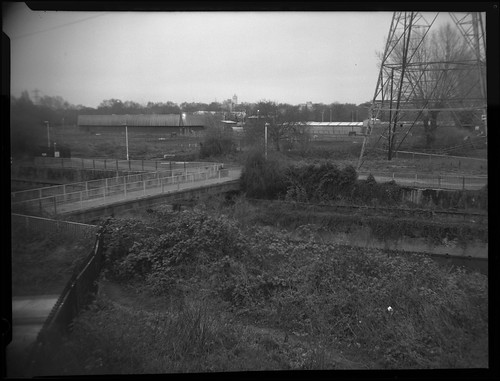
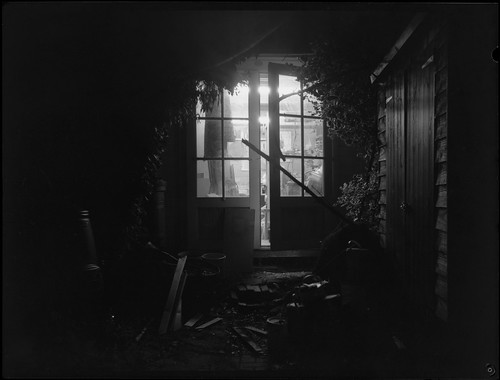
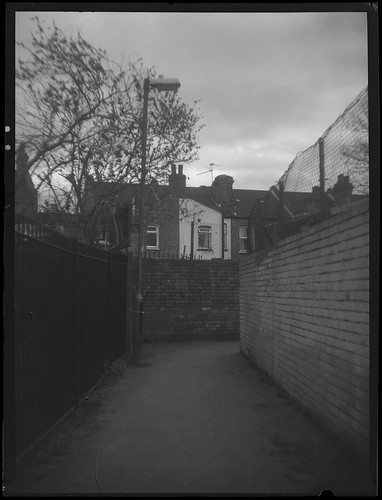
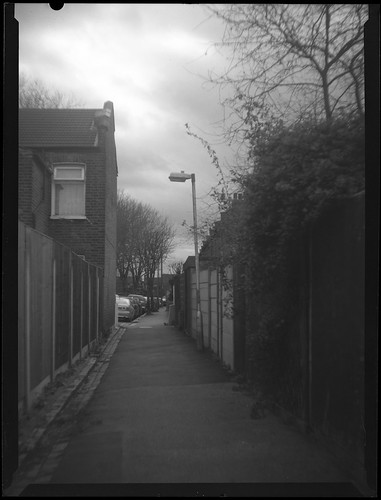
Part way through shoot week, I developed the first four sheets, partly as I didn't have enough spare film sheathes to load seven plateholders at the start of the week. This was also instructive: I had overestimated the bellows factor on the sheets already exposed, resulting in dense negatives, especially Thursday's; as a result, on Friday and Saturday I didn't compensate in exposure for bellows factor, and the negatives developed fine (Saturday's shot was taken on the cut-down 5x4, rated the same as the FP4 from the 1970s, although its process before date was only April 2010). As a consequence of simply being at home throughout the week, almost all the photographs were of close-focus subjects around the house and garden (such subjects needing to compensate for bellows factor–or not as the case seemed to be). The weather was almost uniformly sunny, with the brief exception of showers on the Saturday afternoon, which I tried to record somewhat obliquely.

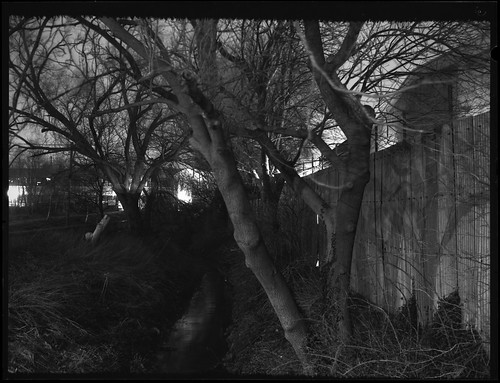
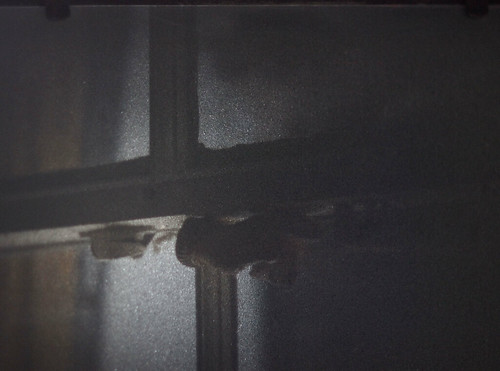
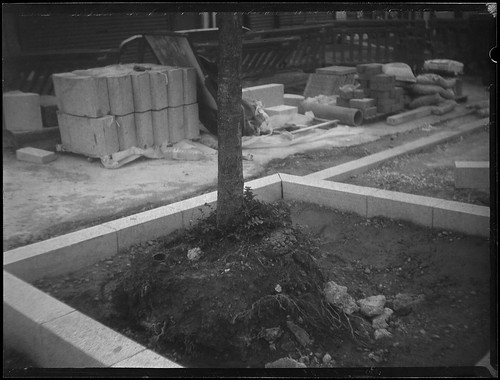
The first shot of the week I'd hoped to have been better, but there was too much of a breeze to use an exposure time of 1/5th and expect the subject to be sharp; Sunday's subject, the last sheet of the 100, I chose the tree outside my window which I had been photographing for an entire year, and had indeed only recently finished that project, but wanted to record its new growth after being heavily pruned in the autumn. This shot suffered from a light leak which I think may have been due to mixing up darkslides and plateholders: some of the plateholders which fit the Klito camera are branded Klito; some are AP Paris; and others are unbranded, and, although very close in all respects, it's easy to mix up the darkslides and then find some are a better fit than others. 
 
Monday
Tuesday
Wednesday
Thursday
Friday
Saturday
Sunday

Sunday, 24 March 2019

#FP4Party March 2019

After using the Butcher's Cameo for January's #FP4Party, the Ensign Folding Klito for February, with March being the third and final #FP4Party of 2019, the logical choice had to be the Midg falling plate camera, the last of my three quarterplate-format (8.2x10.8cm) cameras, in order to use the same stock of Ilford FP4 film, of which I had two boxes of 50 sheets with a handwritten date of 16/11/78. I used the same rationale in shooting just two sheets of film each day for the shoot week. As with the previous two months, I rated the film at an exposure index of 50 to compensate for the loss of sensitivity with age, and, again like the last two months, a some of the shots were long exposures on a tripod (or, in one case, simply the floor), and some hand-held. The Midg has a relatively slow f8 Primus Rapid Symmetrical lens, and although its shutter should be adjustable, my camera only appears to fire at one speed on the instant setting, at possibly around 1/100th, making it only suitable to use hand-held in bright weather.


Of all the cameras I've used in the past three months, the Midg has been most troublesome. In my post about the camera itself, I quoted a letter from Miniature Camera Magazine referencing that falling plate cameras would 'jamb' at the critical moment, and I did experience this more than once during the week. On the first day of the shoot week, I did attempt to expose three sheets of film, but the second plateholder jammed, giving a double exposure. One of Tuesday's shots was out of focus due to forgetting to correctly select one of the close-up filters before exposure. Wednesday's two shots were affected by the first not falling cleanly into the bottom of the camera, hence the ghostly shape at the bottom of the frame, which is from the second exposure; the second shot had a shadow of the first plateholder partly obscuring it. Thursday was the only day of the week that I managed to take two shots without any problems, both sheets exposed hand-held with relatively bright sunlight. Friday's shot was made by placing the camera on its back, which meant a lot of dust falling onto the film inside the camera body; a second shot on Friday did not materialise as the sheet of film somehow slipped from its film sheath and I found it loose, unexposed, inside the camera when unloading. Saturday's second shot was very underexposed due to attempting an interior shot with a window handheld on the 'instant' setting. Sunday provided another double exposure, but ignoring my stricture to shoot just two photographs each day, I used up all four sheets of film still inside the Midg at the end of the week, and got the one good shot posted here.

Monday
Tuesday
Wednesday
Thursday
Friday
Saturday
Sunday

Sunday, 24 February 2019

#FP4Party February 2019

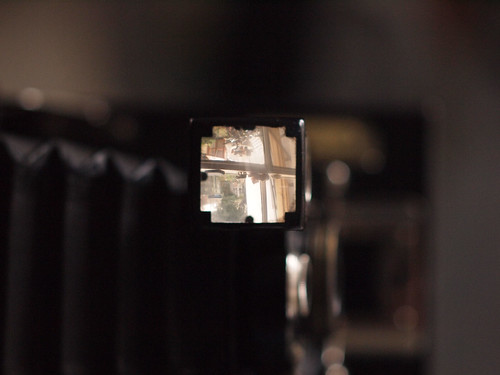
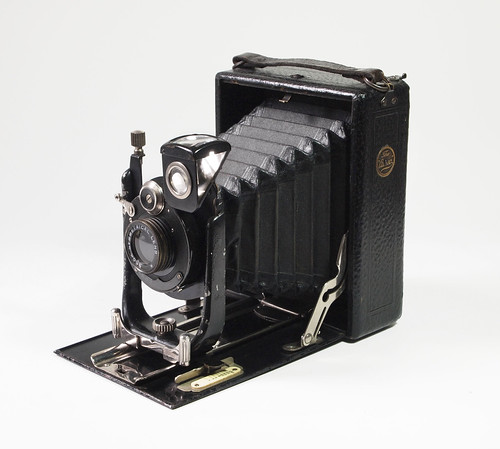
With February being announced as 2019's second #FP4Party, after shooting with the Cameo in January, it felt logical that I should use my other quarterplate-sized folding camera - the Ensign Folding Klito de Luxe No.9. Last month, I had set myself the task of simply photographing with two sheets of forty-year old Ilford FP4 each day during the 'shoot week', and so I did the same for February. The Ensign Folding Klito is a superior camera when compared to the Cameo; the most immediate difference in use is the rack and pinion focus on the Klito, rather easier to finely adjust against the Cameo's spring clamp. The Klito has its original ground glass focus screen with a hood; using the Klito with faster lenses than the Cameo also made accurate focus easier to achieve. Like the Cameo, it has front rise and cross movements, the rise controlled by beautiful circular gearing around the lens and shutter assembly.  Finally, the Ensign Folding Klito also has double extension bellows, allowing for close focus, without the need for a close-up lens attachment, as I used with the Cameo.

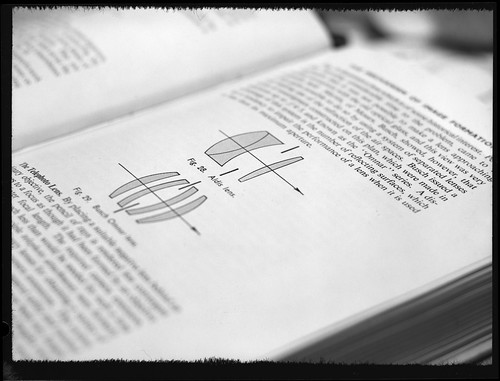
Over the first three days of the shoot week, I used the Klito with a 12cm Ica Dominar lens; the original lens is a No.2 Aldis Plano Anastigmat; I had replaced this with the Dominar lens while using the Klito to take night photographs on glass plates, being f4.5 against the f6.8 Plano: having a faster lens makes for a brighter image on the ground glass when composing and focussing, especially advantageous when working at night. However, wanting to use the Klito with this original lens, I reinstated the Aldis Plano, and shot with this for the remainder of the week. The Aldis Plano is a classic triplet design; while cleaning the thread on its retaining ring, I removed the rear element - and realised that it, a positive meniscus, formed an image on its own. The results (Thursday's image, with a diagram of the Plano shot for Friday) are very much as one would expect from a meniscus lens - it would appear that the front elements, a doublet, correct all the classic distortions present in the meniscus; the rear element on its own provides a wider angle - which I hadn't expected.

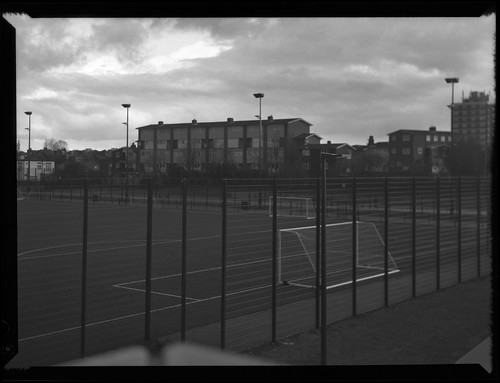
All the shots on this post were taken with a tripod. As in January, low light was a factor, but as much as the weather, being otherwise busy meant that a number of the shots were taken at home in the evening. Tuesday's photograph was taken on Fulbourne Road in Walthamstow, North London - the site of Houghton's factory - where the Ensign Folding Klito de Luxe No.9 was almost certainly made, a little over a century ago.

Monday
Tuesday
Wednesday
Thursday
Friday
Saturday
Sunday

Sunday, 27 January 2019

#FP4Party January 2019/Revisiting the Butcher's "Cameo"

Ilford FP4 shot on Ilford FP4 with Butcher's Cameo and close up lens attachment
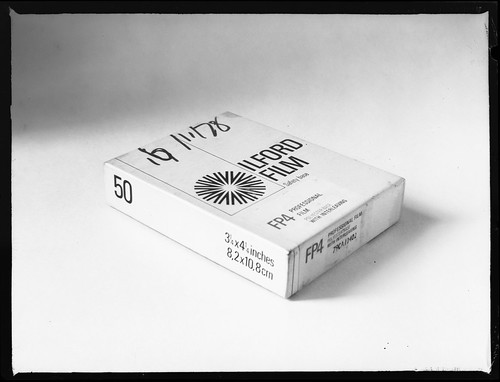
When choosing a camera for January's #FP4Party, a clear deciding factor for me was already having a fair stock of quarter-plate (8.2x10.8cm) FP4 sheet film. With one part or mostly used box of 50 and one unopened box, I decided not to buy any new rolls of FP4 and use this instead. Both boxes have a handwritten date of 16/11/78 (one box looks like it starts with 17/- which was then changed to 16); the film dates to well before the 'Plus' iteration was introduced in 1990 but I've previously used it with just one stop of extra exposure to compensate for age (I have also shot it at an exposure index of 100, and pushed the development by one stop instead). Possessing three cameras for the format: the Klito, Midg, and Cameo, all plate cameras, all of a similar age, over a hundred years old, I picked the Cameo, having used it for the first #FP4Party in September 2016, being the smallest and lightest of the three, and it seemed time to revisit it for this month's #FP4Party.

Butcher's and Sons "Cameo"
I restricted myself to expose just two sheets a day over the 'shoot week' (although on the first day I actually shot three sheets; I also didn't count the shot of the FP4 box in the total, but it made sense to photograph this on the film itself, using the lens attachment, during shoot week). Low light and short daylight hours in the northern hemisphere in January do not make for using a film rated at an exposure index of 50 necessarily sympathetic. In addition, using the Cameo handheld is not without a number of difficulties. Not entirely trusting the focus scale on the drop bed, to focus the camera using the ground glass screen requires one to use the spring clamps to position the front standard at the correct distance on the rails of the drop bed: it needs a certain amount of dexterity to put one's hand in such a way to move the front standard without obscuring the image on the ground glass with it: I miss rack-and-pinion focussing with the Cameo, particularly when using it hand-held.

Home-made ground glass screen; lens wide open
Even in relatively bright light, the Cameo's Beck Symmetrical lens produces a dim image: its widest aperture is nominally f8 (although it's most likely f7.7 when fully open beyond the f8 mark), slow by modern standards, and the screen is missing its hood to shade the ground glass, making this image difficult to assess. The ground glass was missing from my camera when I acquired it; I replaced this with some glass that I ground myself, but used too coarse a grade of grit, which adds to the difficulty in focussing. Once the image is in focus (as close as one can tell) on the ground glass, one then has to remove the focus screen and replace it with a plate holder, adjust both aperture and shutter speed to the desired settings, remove the darkslide from the plate holder, then frame the subject using the brilliant finder - and then gently press the shutter release lever. The Lukos II shutter has three 'instantaneous' speeds of 1/100th, 1/50th and 1/25th, and, while it would have been possible to get usable exposures at 1/25th, wide open on f8, for overcast, dull days, I only used the Cameo hand-held on a couple of days (Tuesday and Friday) when there was some winter sun, partly to use smaller apertures in the hope that a greater depth of field might compensate for any errors in focus.

Brilliant finder on the Cameo
For most of the shots during the week, I used a tripod or simply balanced the Cameo on a flat surface for long exposures, low-light shots, interiors and those at night. I also used the wide angle/close up lens attachment for some shots (Friday and Saturday) and the image of the box itself. I did my first batch of development during the shoot week rather than the 'development week' that followed. This acted as a check on my exposure and development regime: the first batch of film I developed with a one-top push - on top of the one and a third stop extra exposure - but developing the first few sheets appeared to show that extra development was unnecessary and the rest of the week's shots were developed in RO9 One Shot for the recommended time, 9 minutes, at a dilution of 1+25 at 20ºC.

Revisiting the Cameo, the quality of the results from the shoot week varied. Some of this was down to user error of course; other aspects were to do with the camera's limitations. When using the wide angle/close up lens attachment, there is clear vignetting, with a falling off of both illumination and definition towards the edges of the frame. This is less obvious when used as a close up attachment, as the lens' image circle would be wider the more the bellows are extended; when used as a wide angle attachment, the bellows are extended less than normal, making the image circle smaller. As well as the difficulties of focus set out above, there were also problems with film flatness (notably visible in the middle of the shot from Saturday); this might be due to the motley group of film sheathes I've been using, with some clearly home made, and others professional: some fit the sheet film better than others. The film itself stands up remarkably well: over four decades old, with only a little loss in sensitivity, the quarterplate-sized FP4 is still very usable.

Monday
Tuesday
Wednesday
Thursday
Friday
Saturday
Sunday

Friday, 24 March 2017

Take Your Box Camera To Play Day 2017

Midg Falling Plate Camera with Ilford Selochrome glass plate
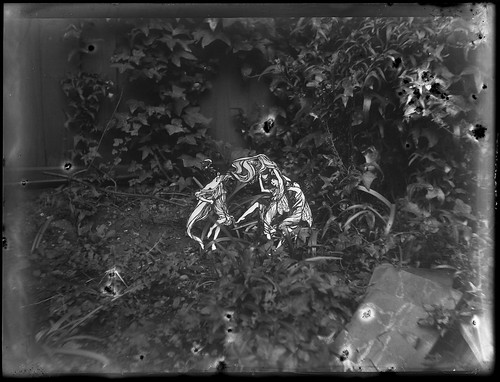
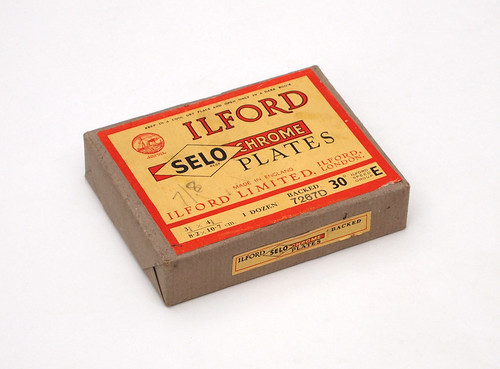
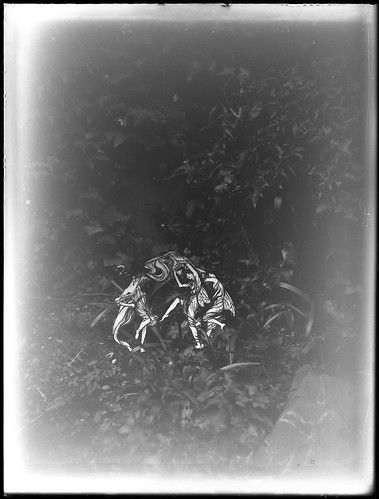
To mark one hundred years since the first photographs that became known as the Cottingley Fairies were taken, I decided to use last weekend's 'Take Your Box Camera To Play Day' to make a homage to the young photographers of this hoax. A counterpart to 'Take Your Box Camera To Work Day', I had been thinking of using the Midg falling plate camera for this event; as Elsie Wright and Frances Griffiths used a Midg camera for their first set of photographs, this appeared to be a fitting subject to shoot on the day. For the fairies, I went back to the source material that the girls had used for their first published photograph, known as 'Frances and the Fairies', figures taken from an illustration in Princess Mary's Gift Book, as pointed out by the debunker James Randi. I shot the scene at the bottom of the garden on glass plates, as would have originally been used in the Midg. I didn't have any glass plates from 1917; I used some Ilford Selochrome plates from a box which had a label inside dated to February 1945 (as a footnote to this date, the paper that the box was wrapped in had a cheaper, coarser feel than the more usual brown paper that Ilford used for wrapping plate boxes until the end of the 1950s, which might reflect on wartime paper shortages).

Ilford Selochrome plates
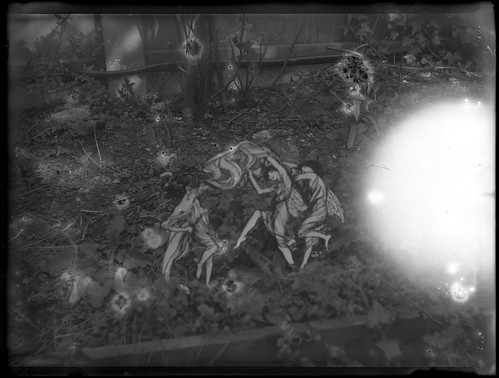
I had problems with the first set of glass plates that I shot not falling down cleanly inside the camera when released; some of these, such as the image below, fell flat against the inside of the front of the camera, and the large white circle on the right hand side is from the plate being exposed directly behind the lens. Other plates then had the shadow of the plates stuck at the front of the camera partially obscuring the projected image during exposure. It was also clear that the focus distance wasn't very accurate; when I had used the camera before I had discovered that the 3 feet setting was actually more like 4 feet: the image at the top of the post was much closer to this distance (as was the last shot on FP4 film at the bottom of this post). After developing the first set of glass plates, I then shot another set, with more success, but I did still have problems with the plates not falling down inside the camera as they should, anticipating that, I was able to open the camera in a black bag and manually place the exposed plates flat at the bottom of the camera. When writing about the Midg, I had used a quote describing how the mechanism would jam at critical moments; this seemed to be one such moment.

Midg Falling Plate Camera with Ilford Selochrome glass plate
As well as the Selochrome plates, I also shot some Ilford G.30 Chromatic plates from the mid-1960s. I'd used a number of these plates over the past few years, mostly with a fair amount of success. The plates from this current box suffer from a large amount of fogging around the edges, something I've experienced with some glass plates. I rated these at 10 as well, but with the light fading in the late afternoon to early evening when I took a second set of photographs, the photographs probably needed more exposure then I gave them to mitigate the fogging; the lighting had been better earlier in the day: in the image above, softer light integrates the cut out into its surroundings better. Had I taken more time over the photographs, I would have also painted in the cut out figures to provide a better tonal range.

Midg Falling Plate Camera with Ilford G.30 Chromatic glass plate
I also shot a magazine's worth of Ilford FP4 film, from a box with a handwritten date of 16/11/78 (a leaflet inside the box dates to December 1977). None of these photographs suffered from the mechanism failing, which might reflect using the camera in the hand, rather than the fairy photographs, for which I used a tripod, and had to tip up the camera while still on the tripod to tilt it forward to get the plates to fall. When I'd used the Midg previously, I had shot some FP3 film, dating back to around 1950, and rated it with an exposure index of around 12; with the more recent FP4, I wanted to use the Midg hand-held. One of the problems with the Midg is that its shutter only fires at one speed, as the adjustment mechanism does not appear to change the 'instant' setting at all. The shutter fires around 1/50th, so I shot all the film with the lens wide open at f8; lighting conditions were fairly overcast, so I gave the film a one-and-a-half stop push in development (although a couple of sheets were stand developed with the plates). Some of the negatives were very thin, but the results from most of the shots were surprisingly good, and an instructive comparison to many of the photographs taken two years ago when I first wrote about the Midg.

Midg Falling Plate Camera with Ilford FP4 film

Friday, 23 September 2016

Butcher's "Cameo"

The "Cameo"
Sometimes I acquire cameras almost by accident. After using the Ensign Folding Klito earlier in the year, I bought another quarter-plate format folding camera as it came with a full complement of a dozen plate holders, and probably would have paid around the same amount for the plate holders on their own. However, these metal holders were not compatible with the Klito: the Klito holders have a single 'lip' on the left and right edges and none at the bottom. These particular holders in comparison have a double lip at both sides with a single lip at the bottom edge which meant that they were not interchangeable. It's an issue not uncommon for early plate cameras, as many manufacturers had their own propriety designs, especially it seems around the turn of the century; only later was there a degree of standardisation amongst different camera makers.
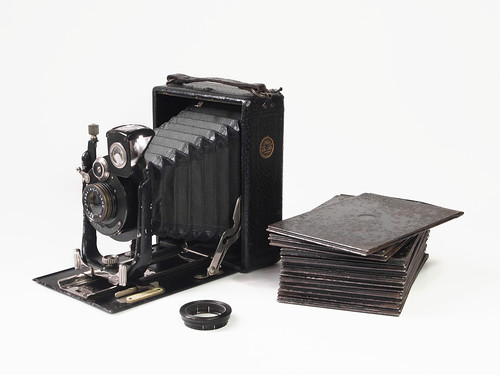
Cameo with plate holders and supplementary lens
The camera that these holders came with was a Butcher and Sons Cameo (on the camera itself is a small brass name badge with The "Cameo").  I've already written about Butcher and Sons in discussing the Midg: their cameras were made in Germany and then badged and sold by Butchers - with most likely some other elements of finishing by Butchers, notably that the Cameo has a British-made lens in a German shutter. The camera itself was almost certainly made by Hüttig, or Ica - of which Hüttig was a constituent when Ica was formed in 1909: the 'Cameo' is listed as a plate camera under the Hüttig page on Camera-Wiki, but does not appear as a 'continued model' on the Ica page, although this may just be an omission (however, the Cameo also does not appear under the comprehensive Ica cameras list on From the Focal Plane to Infinity).

Research online turned up scans of a Butcher and Sons catalogue from 1914, which was invaluable for precisely identifying the model. There are four versions of the Cameo listed: my camera corresponds to the Model O, surely a back-formed name: the others are named with Roman numerals I, II and III (the 'Uno-Cameo'); the O is a simpler, cheaper version. It does appear to be named with a capital 'O' rather than a zero, although whether anyone referred to it as a "Model-Oh" seems unlikely. To add a small amount of confusion, the Model O is divided into five variants based on lens and shutter combinations: my example is the middle of the range Model 03 (the other Cameos, although having a wider variety of sizes, lenses and shutters are not burdened with a further model name in the catalogue). The catalogue states that "The Model O "Cameo" has for fourteen years held the lead as the most serviceable, most practical, and most valuable Guinea Folding Pocket Camera on the market, and for this reason has become famous the wide world over. The 1914 pattern has been entirely remodelled, and is now as perfect as is possible to make it." As an importer of cameras from Germany, the outbreak of war that year was significant: it resulted in Butchers forming a partnership, and then an eventual merger, with Houghtons in order to stay in business.
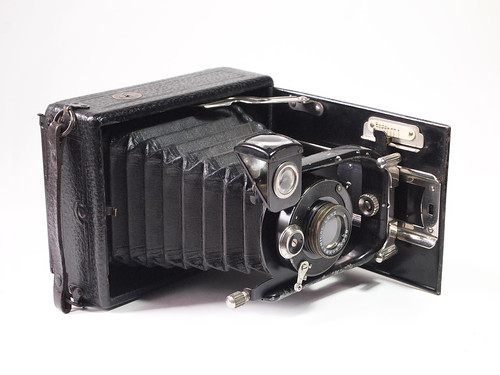
Cameo in landscape orientation
The Cameo itself is a fairly well-constructed example of a typical plate camera of its time: leather-covered wooden body, with a metal drop bed, removable wooden back for the ground glass screen, originally with a hood, missing on my version. It has a large brilliant finder, without a spirit level. It also lacks a wire frame finder, which I prefer for shooting handheld. The bellows are single extension only, and focus eschews a rack and pinion device for the simpler expedient of using the spring clamps, as the catalogue names them, to advance the front standard along the runners. There is a focus scale with an infinity lock, but for precise focusing, this is rather more difficult as I found my hand partly occluding lens as I attempted to move the standard into place. As well as a hood, my camera was also missing the ground glass screen itself, so I made a replacement, although I used too coarse a grade of grit to see the projected images very clearly (incidentally, to make the replacement screen I had to cut down a glass plate for this, as the screen is smaller than quarter plate size). Camera movements are limited to front rise/fall and cross, like most folding plate cameras of this age. The body also has standard tripod sockets for vertical and horizontal orientation.
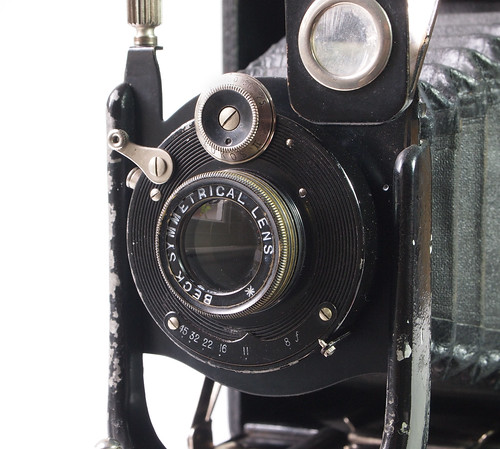
Beck Symmetrical lens in Lukos II shutter
The Beck Symmetrical lens has a mark for f8 as its widest opening on the scale, but the aperture opens a little wider, as shown by the pointer's position in the image above, possibly just to f7.7. It does have a chip or crack at the very edge of the front element, but this probably has a marginal effect on image quality. The lens is set in a Lukos II three-speed shutter, with 1/25, 1/50, 1/100, with T and B. The Lukos is an 'Everset' shutter, meaning that it doesn't need a separate lever to cock the shutter before firing, but the tensioning of the mechanism can be felt in initially pressing down on the release lever before it reaches the firing position. According to the 1914 catalogue, Lukos shutters were specially made for Butchers - although not specified, no doubt by Ica.

Having made a new ground glass screen and submitted the camera to some general cleaning and renovation, an excuse for shooting with the Cameo came with the announcement on Emulsive of the first #FP4Party. In one of my job lots of old film and plates, I'd acquired two boxes of 8.2x10.8cm FP4 from the 1970s: with 50 sheets to a box I was happy to sacrifice a few sheets to test the camera, and having used some 4x5 inch FP4 from the same source successfully, without testing the film itself. I shot half a dozen sheets at half box speed and used developing times for modern FP4 Plus - the sheet film being the previous iteration of Ilford's FP emulsion before the 'Plus' version.
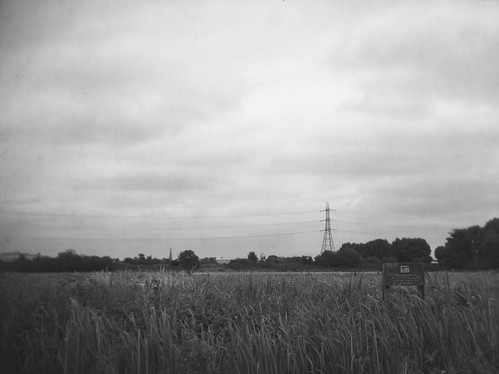
Cameo with expired Ilford FP4
As well as the FP4 film, I also shot some glass plates at the same time. Thirty years older than the FP4, I shot some Ilford Soft Gradation Panchromatic plates, dated to 1946, hand held, with the result that most were underexposed given the Cameo's slow lens. The plates would have been better for an extra stop or two, but the results are still good for a seventy-year old emulsion.
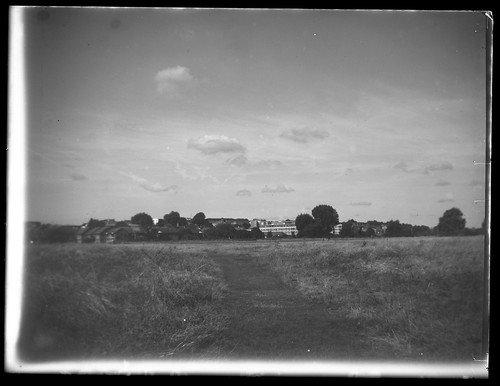
Cameo with Ilford Soft Gradation Panchromatic glass plate
Without a spirit level or a wire frame finder, I had trouble keeping the camera level when shooting, and as a result, I have cropped some of the FP4 images, although with the glass plates the qualities of their distinctive edges would be lost, so I kept the scan of the whole plate, as above, despite the slanting horizons.
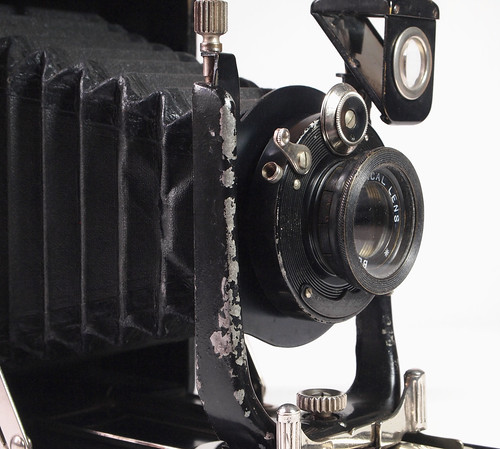
Cameo with No.6 supplementary lens fitted
Included with the Cameo camera was a push-on supplementary lens, with little information to identify it, marked simply 'No.6'. Fitting it to the camera showed it to be for close up and wide angle use, the former mitigating the camera's limited, single bellows extension to get closer to a subject, the latter simply facilitated by placing the front standard a little closer to the camera body. With the supplementary lens it's critical to use the ground glass screen to focus, as the focus scale on the body no longer applies; for wide-angle work, the brilliant finder shows a slightly smaller angle of view, but using the finder itself isn't especially exact, so this matters little. The two images below show the difference with and without the supplementary lens, which isn't especially dramatic.
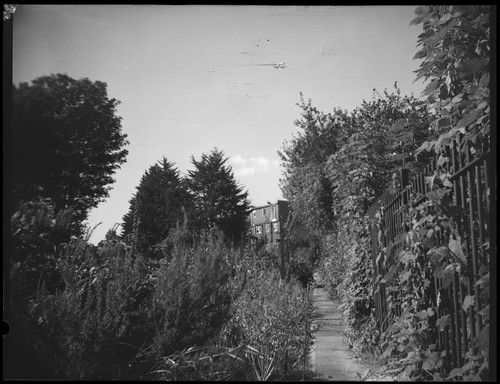
Cameo with No.6 supplementary lens and expired Ilford FP4
Cameo with Soft Gradation Panchromatic glass plate
The difference when used for close up photographs appears more marked, with the two examples below both shot on Ilford G.30 Chromatic glass plates. In each case, the front standard of the camera was advanced as far as possible on the runners, right at the very edge of the folding bed.
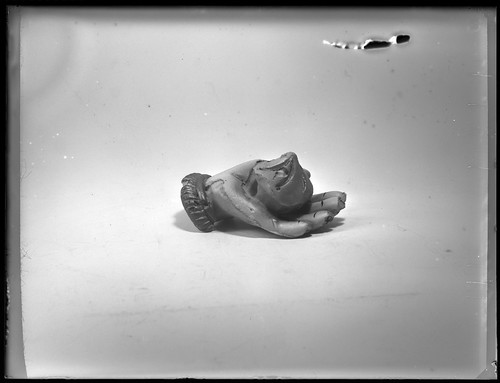
Cameo with Ilford G.30 Chromatic glass plate and No.6 supplementary lens
Cameo with Ilford G.30 Chromatic glass plate
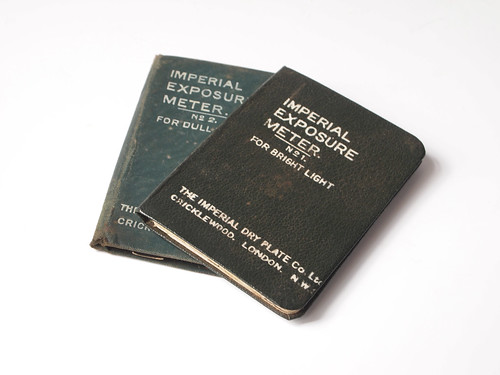
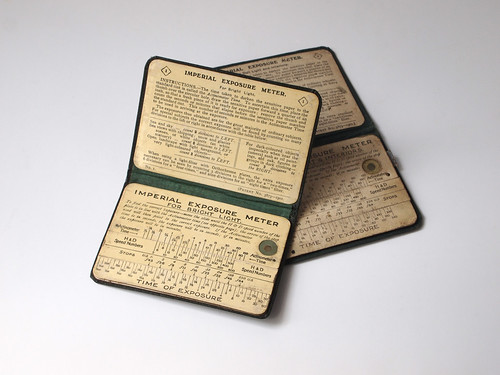
Although not used for any of the photographs in this post, the Cameo also came with two exposure meters of a very specific kind. The two wallet-like items are actinometers and work by timing how long a piece of sensitised paper takes to darken to a specific tint; that time is then applied to the calculator, which is calibrated to emulsion speed in Hurter and Driffield numbers. Possibly around a hundred years old, I found that the sensitised paper still darkened when exposed to light; some of my old glass plates are rated in H&D numbers, but most of the photographs in this post were shot with the 'sunny 16' rule rather than metered (I used an SLR to meter the close up shots and overexposed most of them).
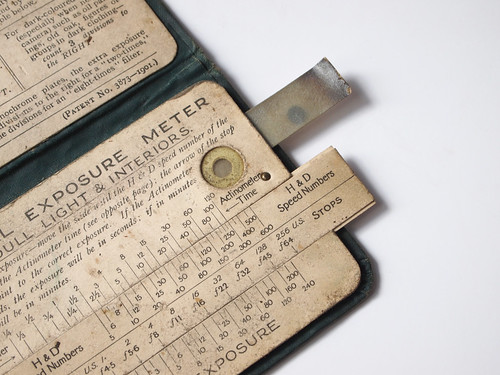


Imperial Exposure Meter showing sensitised paper strip and sliding calculator
A century ago, the Cameo would have given quite adequate results on glass negatives for photographs that would have mostly been printed by contact. The Beck Symmetrical lens is sharp in the middle, but definition falls off towards the edges at wider apertures, and for some of the reasons I've mentioned, the Cameo isn't the easiest plate camera I've used: contemporary to my camera, more expensive models in the range with better, faster lenses, double extension bellows and rack and pinion focussing would be more desirable - if one were to make an informed purchase.
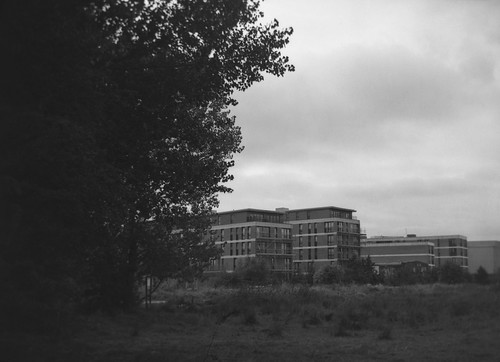
Butcher's Cameo sample image with Ilford FP4
Butcher's Cameo sample image with Soft Gradation Panchromatic glass plate
Butcher's Cameo sample image with supplementary lens and Soft Gradation Panchromatic glass plate
Sources/further reading:
There's perhaps surprisingly little in depth information about the Cameo online, although presumably sold in tens or hundreds of thousands, this may be simply that it's not considered sufficiently interesting in any way.
1914 Butcher Catalogue
'Pocket' Cameos on Historic Camera
Early Cameo model on The Living Image