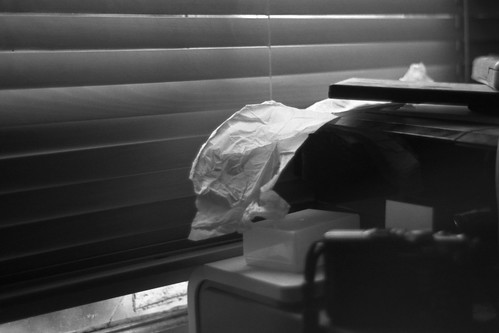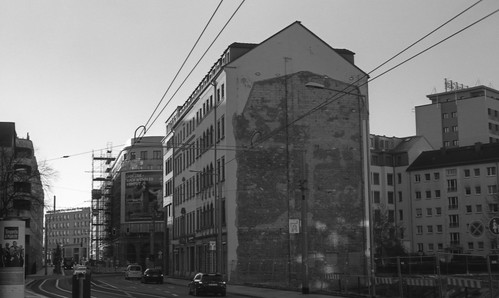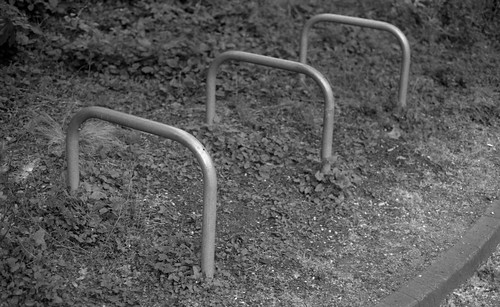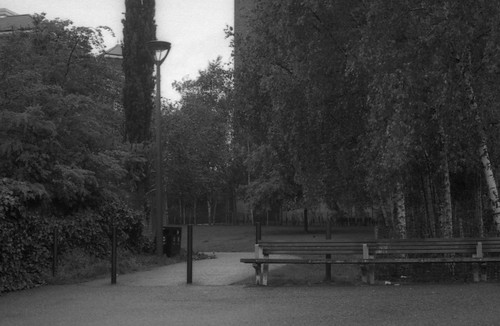
Showing posts with label Kiev-4. Show all posts

Saturday, 6 August 2022

Silberra S25 Limited Edition - single roll review

Silberra S25 Limited Edition
Silberra S25 is limited edition black & white photographic film. Extra fine grain, moderate contrast and high resolution of the image are the main typical qualities of S25 film. Initial batch of S25 consists of 400 rolls and, possibly, the overall quantity of the batch will be extended up to 800 rolls.

Silberra S25 perfectly suits architectural and landscape photography; due to its great photographic latitude S25 film shall perform nicely at bright scenes also preserving impressive level of detalisation through shadows without significant loss in highlights.

Silberra S25 has high sensibilization level which makes it possible to use S25 for IR-photography with corresponding IR-filter (we recommend to use filters at wavelength shorter than 725nm for optimal result).

I have previously posted a couple of 'single roll' reviews of film stocks, which came from being gifted some films I might not ordinarily have used, or might not use again, and although I prefer to work with an emulsion for a few rolls at least, to get a feel for how it might respond in different exposure situations and approaches to development, this single roll review came about through realising I might not use another roll of Silberra S25 black and white film. As the description above (from Silberra's website) states, at the lower limit, there may have only been 400 rolls of film made, or 800 in total if production was 'extended'. I wasn't aware of this at the time, if so I might have picked up more than one roll. I believe I picked it up from the Photographer's Gallery shop, before the current pandemic, with the intention of using it to photograph some text, thinking that its 25 ISO speed would mean that the grain would be fine enough for the purpose I had in mind; I didn't use it for that, but took it with me to Dresden in the Spring, and shot it with the Kiev-4 over a couple of days.

Understandably, there's not much on line about Silberra S25, and with just the one roll, I simply rated it at 25 ISO, and didn't really think that much about how I was to use the film. The film cassette is a plastic reusable one, but it is DX coded, and also has check-boxes for exposure at 12, 25, and 50 ISO, indicating that it does have sufficient latitude for this to be worth the manufacturers including on the label. Silberra's webpage has a small development chart, presumably all times listed are for box speed, although this isn't stated. I used Adox Rodinal, and the time/dilution given (at 20ºC) is for 6 minutes at 1+100. This seems a high dilution for 'standard' development, but, again thanks to having just a single roll, I used the published time and dilution. (There is also R09 listed for 30 seconds less than Rodinal, where one might have expected this to be the same: I have used both Foma's version of R09 and Compard's R09, and treated these both as any named version of Rodinal).

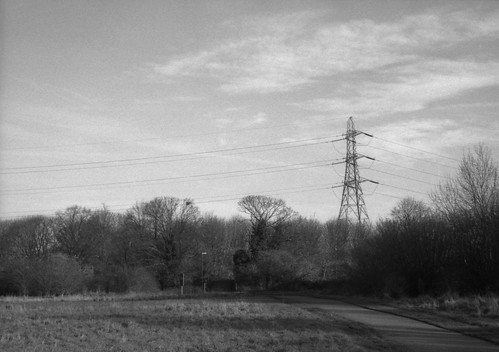
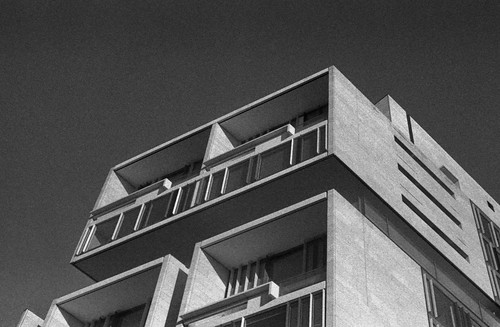
Kiev-4 (Helios 103 lens) and Silberra S25 film
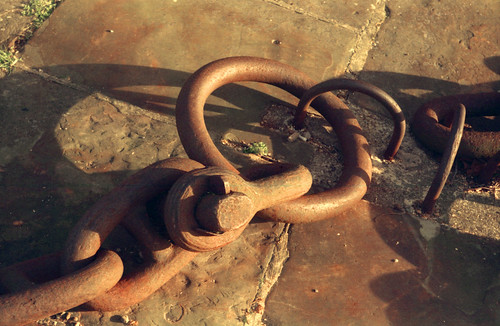
When developed, the negatives looked relatively high in contrast, with a clear base and no edge markings whatsoever. The film dried very flat and appeared to show a small amount of 'light-piping': the film base appears to be polyester and not tri-acetate (it doesn't tear and needs cutting). Ideally, I would have made prints in the darkroom from the negatives, but the results on this post are all from scans from a desktop scanner. The scans have almost no discernible grain, and no doubt show up the limitations of the desktop scanner rather than the ultimate resolution of the film itself. I'd shot the film outside, half in bright sunny weather one afternoon, ideal for it relatively slow speed of 25, with the other half shot early on a sunny morning, which was more challenging in terms of exposure, thanks to the low angle of the sunlight creating a very wide range of contrast between brightly lit surfaces and deep shadow with little in-fill from reflected light. Some of these latter frames (as below) struggled to record shadow detail without losing detail in the highlights, which didn't quite match the assertion that "due to its great photographic latitude S25 film shall perform nicely at bright scenes also preserving impressive level of detalisation[sic] through shadows without significant loss in highlights".

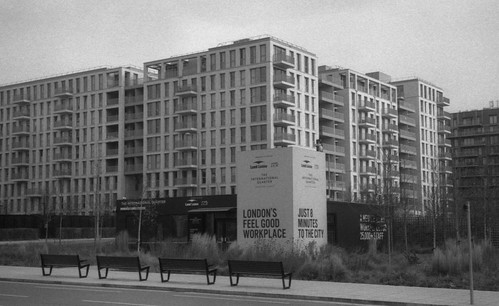
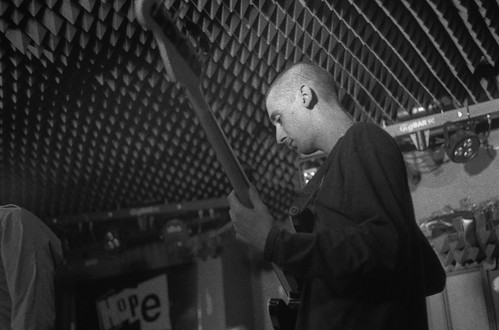
Kiev-4 (Helios 103 lens) and Silberra S25 film
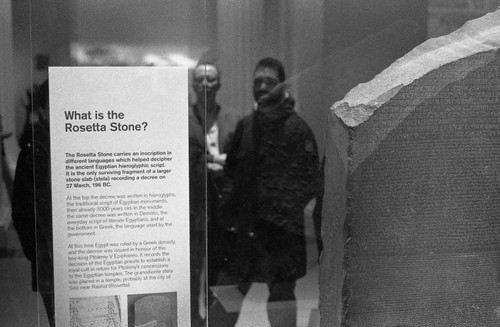
It would have been instructive to see how scenes lit with well-diffused light, such as on an overcast day, might have been recorded, but almost every single frame I shot with the film was sunlight and shadows. The nearest equivalent was one photograph of a sign in a gallery window, below, illuminated by light reflecting off the pavement and surrounding buildings, almost certainly the one negative with the narrowest exposure range (this, incidentally, showed that my original intention for the film–photographing text–would have been an entirely appropriate use).

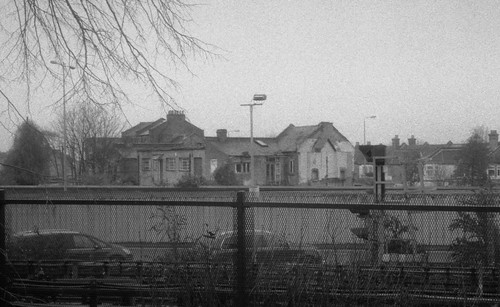
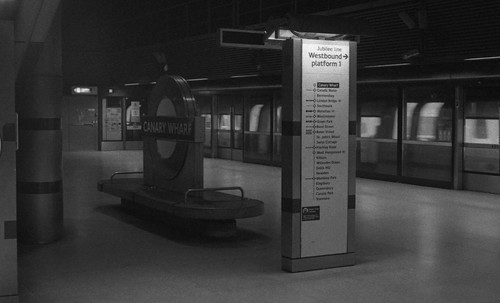
Kiev-4 (Helios 103 lens) and Silberra S25 film
Not having an IR filter I was unable to verify the film's 'high sensibilization level': given the suggestion for the use of an infra-red filter, this must mean extended red sensitivity. For some frames I might have used a light yellow filter, regardless, the tonality of the sky in some frames possibly indicates a more balanced spectral sensitivity than standard panchromatic film. My general impressions are that Silberra S25 has the feel of some kind of technical film–for me, how it handled and how it responded to exposure was very reminiscent Kodak Technical Pan–with both the positives and drawbacks of that discontinued emulsion. Given the very limited production run, it would be interesting, if it was possible to quantify, how many rolls of Silberra S25 are still out there, yet to be exposed: it's still listed on the Photographer's Gallery shop online, but sold out.


Further information:

Saturday, 21 September 2019

Ilford Pan 400

Ilford Pan 400
Having used Ilford Pan 100 last year, and from the research online for my post on the film, I wrote then that "Pan 400 appears to be a bit more popular, or at least seems to come up more often than Pan 100"; as a companion piece to my tests of Ilford Pan 100, it was natural to want to do the same for the 400-speed film. I bought my Ilford Pan 400 at Process Supplies Ltd where I'd also got the Pan 100 film previously; when buying the film, I was told that the Ilford Pan films are to be discontinued in favour of the two Kentmere films, Kentmere 100 and 400. The implication from this is that the Pan films and Kentmere films are not the same emulsion, although it's not exactly clear how different they may be: the two brands do have different development times. To support the idea that the Kentmere films are replacing the Ilford Pan films, the Kentmere films have recently had their packaging redesigned - and the words 'PAN 100' and 'PAN 400' are as prominent as the Kentmere brand: on Ilford's website, there's a post from last year about the redesign that states "Kentmere 100 and 400 are now officially known as Kentmere PAN 100 and PAN 400..." (Edit 8/11/19: see the post on Kentmere Pan 400 here).

As I wrote in my post on Pan 100, the Ilford Pan films have not been generally available in the UK; the data sheet states that:

The ILFORD range of PAN 100 and PAN 400 black and white camera films are not generally distributed and sold worldwide, they are only made available in selected markets.

Like Pan 100, Ilford Pan 400 is a traditional, cubic-type emulsion black and white film from Harman under the Ilford brand, 'Pan', an abbreviation of panchromatic, is indicative of the basic nature of these films. A thread on the Amateur Photographer forum quotes an unattributed 'Ilford employee' on the Ilford Pan films that: "They are based on FP4+ and HP5+ technology, but are produced to lower specifications and tolorances [sic]. There are also a few posts online that suggest the Ilford Pan films were discontinued some years ago and I speculated in my post on Pan 100 that production might have ceased for a period - a data sheet from 2002 mentions both 35mm and 120 - the films are only available in 35mm, for the time being of course. By contrast to the Ilford Pan 100 films that I used last year, the Pan 400 that I used this year had no printing inside the box - an indication of imminent discontinuation perhaps, or just their budget status.

As is my usual approach when testing a new film, I made a latitude test, rating the film successively from an exposure index of 100 through to 3200, in effect going from two stops over-exposed to three stops underexposed. Developing times for Ilford Pan 400 (and Pan 100) are not listed on Ilford's standard development chart listing their other Ilford-branded films (except Ortho Copy Plus); for this post I used times from the Massive Dev Chart (the data sheet from 2002 does give times - the same as on the Massive Dev Chart - for Ilford Pan 400 at meter settings from 200 to 3200). The film for the latitude test was developed in R09 One Shot at a dilution of 1+25 for 6 minutes at 20ºC.

Ilford Pan 400 latitude test
The test showed the film to have reasonably good latitude: two stops overexposed and the compression of tones towards the highlights begins to become unattractive; underexposed, shadow detail starts to be lost, although in scanning the negatives it was possible to pull out more detail. Inevitably, with a lower contrast subject, over- and underexposure have less effect than higher contrast subjects - the top row on the contact sheet above is higher in contrast, with brighter highlights and deeper shadows; the subject in the second row is more even across the frame.

Ilford Pan 400, two stops overexposed
Ilford Pan 400, three stops underexposed
Following the latitude test, I wanted to try both push- and pull-processing. Pull-processing tends to be less demanded by shooting conditions, though with a 400-speed film there may be occasions when it might be advisable. I shot one roll of Ilford Pan 400, rated 200 and developed in R09 One Shot at a dilution of 1+25 for 5 minutes and 30 seconds at a temperature of 19ºC. Pull-processing does reduce contrast, but faster films are inherently lower in contrast than slow films, so this may be less necessary as a result. Some of the shots on this roll were on subjects with differing degrees of contre-jour illumination; the pull-processing may have helped a little here, though the second shot below, with a brightly lit late afternoon sky towards a low sun would always be problematic in terms of retaining detail across the frame: a simple scan of the negative (as is the case here) might not be as good as a darkroom print, albeit no doubt needing plenty of burning-in for the sky, and possibly spilt-grade contrast printing too.

Ilford Pan 400, exposed at EI 200 and pull-processed
For push-processing, a test for a one stop push to 800 did not seem necessary: frames rated at 800 on the latitude test showed a reasonably full range of tones without extra development. I did push the film to 1600 and 3200 respectively, using Ilfotec LC29 as a developer for these tests rather than R09. The two-stop push to 1600 emphasised the grain but not unattractively so; the increased contrast made for negatives which were easy to scan. I shot most of these in the British Museum, with some galleries being illuminated with low-light levels, making the two-stop push an ideal compromise.

Ilford Pan 400, rated 1600, developed in Ilfotec LC29 1+19, 14m at 20ºC
I then shot a roll at 3200, some at dusk on an overcast day, some on the London Underground. With a three-stop push, the contrast of some subjects meant an inevitable lack of shadow detail, but, again, the push-processing here was an acceptable compromise.

Ilford Pan 400, rated 3200, developed in Ilfotec LC29 1+9, 11m at 20ºC
Ideally, this post would then test the Kentmere Pan 400 film to compare it with Ilford Pan 400 (edit 8/11/19: I have now tested Kentmere Pan 400, posted here); I suspect that for most uses, the differences would not be significant: both films are fast, traditional black and white panchromatic emulsions at a lower price than Ilford HP5 Plus or Kodak Tri-X. Generally, the results with Ilford Pan 400 were perfectly acceptable, if lacking anything to distinguish it from other lower-priced black and white films that seem to have proliferated in recent years. In my post on its slower companion, Pan 100, I wrote how that film reminded me of the Foma films in terms of grain; by comparison, Ilford Pan 400 doesn't seem to me as alike to Fomapan 400: Pan 400's grain is perhaps a little more regular, a little less gritty. Perversely, perhaps, I found the results when either pull- or push processing more to my liking: down rated, the grain feels a little tighter, smoother, while pushing the film a couple of stops gives the negatives enough of a contrast boost to make the images feel tonally more dynamic as well as providing better results from a straight scan (of course, mush also depends on the subject contrast of the original scene photographed). Again, ideally I would also test these assertions with printing in the darkroom too; however all the images on this post (except the contact sheet) are scanned from the negative.

Ilford Pan 400 shot with Agat 18K (half frame)
Kiev-4 with Ilford Pan 400 rated 200
Canon A-1 with Ilford Pan 400 at box speed
Canon A-1 with Ilford Pan 400 rated 1600
Canon A-1 with Ilford Pan 400 rated 3200
Ilford Pan 100 and Pan 400 data sheet (PDF)

Friday, 14 December 2018

Kodak T-Max P3200 - back from the discontinued list

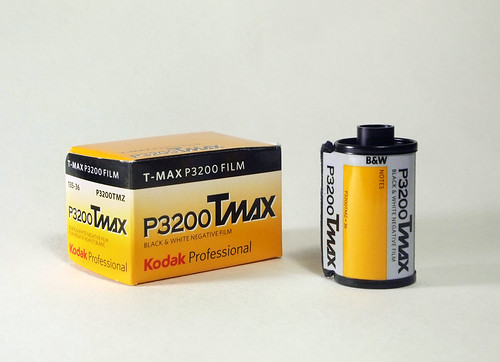
Kodak T-Max P3200
KODAK PROFESSIONAL T-MAX P3200 Black & White Negative Film ⁄ 3200TMZ is a multi-speed continuous-tone panchromatic black-and-white negative film that combines high to ultra-high film speeds with finer grain than that of other fast black-and-white films. It is especially useful for very fast action; for dimly lighted scenes where you can’t use flash; for subjects that require good depth of field combined with fast shutter speeds; and for handholding telephoto lenses for fast action or in dim light. It is an excellent choice for nighttime photography.
T-Max P3200 data sheet
When I wrote my previous post on Kodak T-Max P3200 it had been discontinued for two years; with Kodak's rationalisation of their product lines at the time, I would not have predicted that the film would be reintroduced just fours years later. Many online commentators are more excited by the reappearance of Ektachrome, and perhaps understandably so; some photographers - myself included - would like to see Plus-X return, but it could be argued that as Kodak do already have a medium speed black and white emulsion in T-Max 100, that being able to compete with Ilford's Delta 3200 at the upper end of the speed table makes sense in terms of a market strategy. T-Max P3200 was first introduced in 1988, a whole ten years before Delta 3200; like Ilford's film it is essentially a fast film designed to be push-processed. The data sheet states that T-Max P3200's nominal speed is EI 1000 in T-Max developers, or EI 800 in other developers - some commentators make much of this fact in online pieces about the film, but Kodak are open about what the film is: the P before 3200 in the name denotes that the film is designed for push processing. Of course, the film cartridge is actually DX-coded to 3200, so, in cameras with DX-coding it will be exposed at EI 3200 unless manually set. No doubt, without instructions to the contrary, labs would also develop it as if shot at 3200. Like Delta 3200, Kodak T-Max P3200 is essentially a versatile high speed film, with excellent latitude and manageable contrast - two factors that important to the ability to successfully push a film.

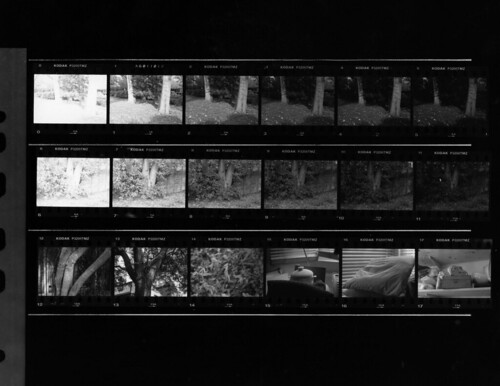
When I last wrote about T-Max P3200, I hadn't made any evaluative tests with it: I had used a couple of rolls of out-of-date film for that post, as well as reflecting of first using the film in the mid-1990s, before Ilford also entered the market for ultra-fast films with Delta 3200. With a new batch of the film, I thought it was worth revisiting T-Max P3200 and I began, as with testing most new films, by making a latitude test.

Kodak T-Max P3200 latitude test contact sheet
The results from this first test appeared to demonstrate that T-Max P3200 has excellent latitude: although developed at the recommended time for being exposed at EI 3200, almost all frames yielded a usable image. Shadow detail was thin at 6400 and clearly lacking at 12800, but this is dependent on the subject contrast: this was less of a problem in images with a narrower brightness range (when choosing the two different shots for comparison at different exposure indexes, I deliberately to framed one shot with a sunlit foreground in the frame and deep shadows; for the other set of six frames, the subject was all in open shade, and therefore less extremes of light and dark). Those shots at lower exposure indexes performed very well indeed, perhaps unsurprising given T-Max P3200's true speed, but even when rated at 400, there was no real evidence of highlights blocking out. For a film with great latitude, contrast was not as flat as one might expect (compare, for example, Ilford XP2 Super, while a very different film - for all the reasons described on my post - it has very low contrast which must in part contribute to its wide latitude). The two images below, which were scanned fairly 'straight', without much in the way of any adjustments, demonstrate a difference of 5-stops exposure, developed together.

Kodak T-Max P3200, rated 400
Kodak T-Max P3200, rated 12,800
Kodak's data sheet for the film list a number of Kodak's own proprietary developers - none of which I habitually use. For the latitude test, I used Fomadon R09 diluted 1+25, for 8 minutes at 20ºC, derived from the Massive Dev Chart; most listings are annotated that the data is taken from a previous version of the film, but there is no reason to suspect the new iteration of T-Max P3200 is any different. With R09, the appearance of the film's grain is quite pronounced, as one would expect; initially I suspected that I might not like the combination of T-Max P3200 and R09, but, despite it appearing obtrusive in some images, generally the combination did not seem too objectionable. Of course, a fuller review of the film would include testing some of Kodak's recommended proprietary developers; previously I had used T-Max P3200 with ID11, Ilford's equivalent of Kodak's D76: the grain here does appear smoother than with R09. The data sheet also warns that T-Max P3200 will exhaust fixer more rapidly than other films, this is presumably due to the emulsion density of the film, and is worth bearing in mind when processing.

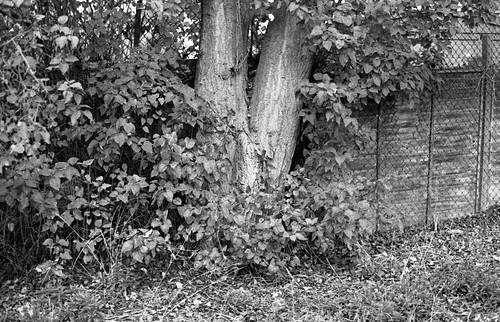
Kiev-4 with Kodak T-Max P3200, developed in Fomadon R09
Praktica BCA with Kodak T-Max P3200, developed in ID11
One note on Kodak's data sheet in the section on spectral sensitivity caught my eye:
The blue sensitivity of KODAK PROFESSIONAL T-MAX Films is slightly less than that of other KODAK panchromatic black-and-white films. This enables the response of this film to be closer to the response of the human eye. Therefore, blues may be recorded as slightly darker tones with these films—a more natural rendition.
Having hardly ever used Kodak's T-Max films before, this was new to me. Some shots with Kodak T-Max P3200 in daylight with blue skies do look as though these were made with a yellow filter, as one might expect for most black and white films, however, Kodak T-Max P3200 is possibly the one film that might not feel like a natural choice to use for daylight photography in sunny conditions. The image below was shot on a bright autumn morning, and although the contrast between the brightness of the concrete and the sky enhances the effect, I was still impressed by the darkness of the blue sky without use of a filter.

Kiev-4 with Kodak T-Max P3200 at EI 3200, developed in Fomadon RO9
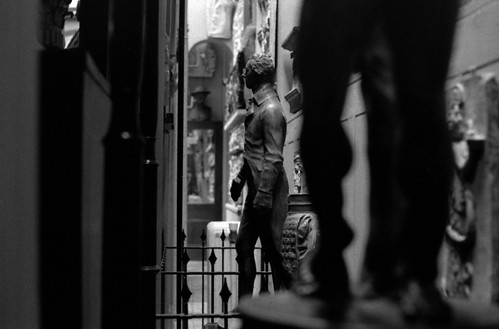
Instead of bright sunny days, Kodak T-Max P3200 is really a film designed for more difficult lighting conditions. At a rating of EI 3200, the film is usually sensitive enough for hand-held night photographs under street lights - with relatively fast lenses - or dimly-lit interiors (it's always seemed to be a popular choice for gig photography, for example). These situations often provide brightly lit but highly localised areas surrounded by deep shadows, conditions less than ideal when pushing slower films, as pushing increases contrast. When it was discontinued, Kodak recommended using T-Max 400, push-processed, instead, but did admit that "The exception [to replacing T-Max P3200 with T-Max 400] would be extremely low light situations where P3200 might be able to pull out some shadow detail that would otherwise be lost". As the data sheet specifies, with T-Max P3200 "...you will obtain better shadow detail and highlight separation when you expose it at EI 3200 or 6400 than you can obtain with 400-speed films pushed by 3 stops."

Kiev-4 with Kodak T-Max P3200 at EI 3200, developed in Fomadon R09
Kodak's data sheet includes developing times for rating the film up to EI 25,000; when making my tests, as well as shooting it at the 'box speed' of 3200, I wanted to test the film one stop either side of this, rating it at both 1600 and 6400. Judging from the latitude test, one could probably rate frames at both 1600 and 3200 on the same roll and develop this for the times for EI 3200 without any real drawback in quality: it's interesting to see on Kodak's data sheet how close the development times are for each stop in exposure, with some developers giving less than a minute difference between some stops. Quite possibly, most photographers developing the film themselves might have a margin of error in time (and temperature) that could encompass that amount of development fairly easily. Exposed and developed for EI 6400 does allow hand held shots in quite dark situations, which, when the film was new, must have seemed all the more impressive than perhaps it does today; I didn't find myself wishing for an extra stop or two, but further tests in the right developers at EI 12,800 and 25,000 possibly would not be as revelatory as they might promise.

Canon A-1 with Kodak T-Max P3200 at EI 6400, developed in Ilfotec LC29
Although the name of the film rather suggests naturally exposing it at an exposure index of 3200, Kodak's data sheet has the telling sentence, "Because of its great latitude, you can expose this film at EI 1600 and yield negatives of high quality. There will be no change in the grain of the final print, but there may be a slight loss of shadow detail [over rating it at EI 800]." Rating the film at 1600 would appear to be the best balance of speed against grain and retention of shadow detail. For the test at EI 1600, I wanted to use R09 at a dilution of 1+50, rather than 1+25, having seen a number of examples online where this looked as though the grain may appear a little less pronounced.

Canon A-1 with Kodak T-Max P3200 at EI 1600, developed in Fomadon R09
I shot much of the roll rated EI 1600 in the sort of conditions in which I would have first used the film two decades ago: in a museum, with low lighting, but with relatively bright, localised sources of light. The rest of this roll was shot in a variety of lighting conditions, and, overall, proabably gave the best results. A higher dilution of R09 may have helped the sharpness of the negatives; further tests at perhaps 1+75 and 1+100 may be instructive in this regard. Of course, I haven't made any tests with film developers recommended by Kodak for T-Max P3200, but rather I've tested those that I would habitually use instead. I also haven't made any direct comparisons with Ilford Delta 3200, as others have online (these look to show that T-Max P3200 has finer grain than Ilford's film): however, I've found this not to be exactly the case in my experience. Without making side-by-side comparisons (and, ideally, making darkroom prints of both), but looking at shots I've taken with Delta 3200 in 35mm, these may not have as fine a grain as T-Max P3200, but, to me, the grain of Delta 3200 appears softer, with T-Max P3200 harder, sharper perhaps, but perceptually more 'grainy' as a result.

Kodak Retina IIa with Ilford Delta 3200, developed in R09 One Shot
Kiev-4 with Kodak T-Max P3200, developed in Fomadon R09
For me, Ilford Delta 3200 has long been my ultra-fast film of choice, partly due to having been always available throughout most of my years of taking photographs, appearing on the market relatively soon after first I began developing my own negatives; that it is also produced in medium format gives it the edge over T-Max P3200. However, the return of Kodak T-Max P3200 is most welcome in what now appears a more volatile film market: some years ago, the variety of different films available was clearly shrinking, and T-Max P3200's original discontinuation was part of that - since then, even with other favoured films disappearing, there has been something of a small resurgence in the range of film currently on the market, a situation to which a company as dominant as Kodak once was has been slow to react.

Canon A-1 with Kodak T-Max P3200 at EI 1600, developed in Fomadon R09
Canon A-1 with Kodak T-Max P3200 at EI 3200, developed in Fomadon R09
Kiev-4 with Kodak T-Max P3200 at EI 3200, developed in Fomadon R09
Canon A-1 with Kodak T-Max P3200 at EI 6400, developed in Ilfotec LC29
Sources/further reading
Kodak T-Max P3200 data sheet (PDF file)
T-Max P3200 on the Casual Photophile
Richardphotolab.com all-about-Kodak's-T-Max-P3200-film
Kodak T-Max-P3200 review on Parallax Photographic

Wednesday, 17 February 2016

Kiev-4

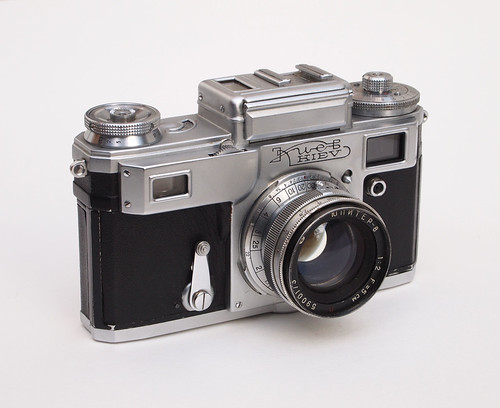
Kiev-4 rangefinder with Jupiter-8M f2 5cm lens
The Arsenal factory in Kiev produced a range of cameras almost all named after the city itself, in a variety of different film formats: 35mm, medium format, and subminiature; the model which began Arsenal's sixty-year history as a camera manufacturer was the Kiev rangefinder. Unlike many other Soviet-era productions, the Kiev rangefinder was not reverse engineered from existing cameras - like the FED and the later Zorki Leica copies - but instead was created from the drawings, dies, tools, and (initially) parts of the pre-war Zeiss Ikon Contax cameras. It's debatable as to whether the Kiev rangefinder should be strictly described as a Contax copy, as it was rather a direct continuation of the pre-war Contax, with a long, drawn-out diminution of quality during its extensive production run. The Kiev Survival Site has probably the most comprehensive history of the camera available online.

The first Kiev rangefinders are named Kiev II and Kiev III to correspond with the Contax II and III: both models designated III have an uncoupled selenium lightmeter. The Kiev cameras were then slightly modified by the addition of a PC socket for flash: these became the IIa and IIIa. The next iterations were the Kiev-4 (with light meter) and 4A (without meter), followed by the last cameras in the series, the 4M and 4AM. (There was also a Kiev-5, a comprehensive redesign from the Contax-based original, which had a relatively short production run). All the different models appear to have overlapping production dates, according to the details provided on SovietCams.com; the 4M and 4AM variants of the Kiev rangefinder were produced until the mid-1980s, remarkable for the fact that, although there were many changes during production, it was still recognisably Zeiss Ikon's camera of fifty years earlier.

Zeiss Ikon produced the first Contax rangefinder in 1932 as a direct response to the Leica. Later known as the Contax I, it was very much a work in progress with numerous changes to the camera while in production; the Contax II from 1936 demonstrated Zeiss Ikon's determination to better Leica in almost all specifications (Cameraquest has a detailed comparison between them), yet the Contax doesn't have the same legendary name or status that the Leica has achieved. Perhaps this is in part due to the post-war legacies of both companies: Leica concentrated on their famous rangefinder, aimed at a small section of the luxury camera market, while Zeiss Ikon AG had a large product range, attempting to cover all aspects of consumer photography, and were essentially put out of business by Japanese competition. Although Zeiss Ikon AG were relatively quick to produce the post-war Contax in 1950, as a camera system it wasn't subsequently supported and developed, while Leica produced the M3 in 1954 - which incorporated a number of features that the pre-war Contax had, with improvements in other areas.

In part due to cost, I'd never bought into the cult of the Leica. However, the Contax, and probably even more, the Kiev rangefinders have a following of their own - for example, there's a wealth of websites dedicated to the Kiev (see bottom of this post): the Kiev gives one a taste of the Contax at a fraction of the price (similarly, with Leica, there are also the FED and Zorki copies; and both the Contax and Leica have numerous cameras inspired by their designed, sometimes combined into one - like the Nikon). Late last year, a box arrived from Ukraine containing a Kiev rangefinder: I'd researched the model I wanted, and spent some time looking online before buying. Unsurprisingly, the Kiev is still largely to be found in its country of origin, and, although not expensive, the postage was half the price of the camera.


I'd found a relatively early version of the Kiev-4 model. The first two letters of the serial number designate the year of production: my camera dates from 1960, with a the standard Jupiter-8M 5cm f2 lens from a year earlier. According to Fotoua, this Kiev-4 is a Type 2b, defined by not having a stop bolt on the accessory shoe, and the "lines of rigidity" on the meter (the raised 'T' shape between the accessory shoe and the meter window). My initial impressions were that I had been expecting the camera to be bigger - it's smaller than an SLR such as the Canon A-1 for example - but also, externally at least, the quality and finish of the body are of a high standard; the aluminium lens barrel less so. Many of the comments in this post relating to the functions of the Kiev-4 are probably equally applicable to the design of the original Contax II/III, including some of its quirks, with a few caveats.
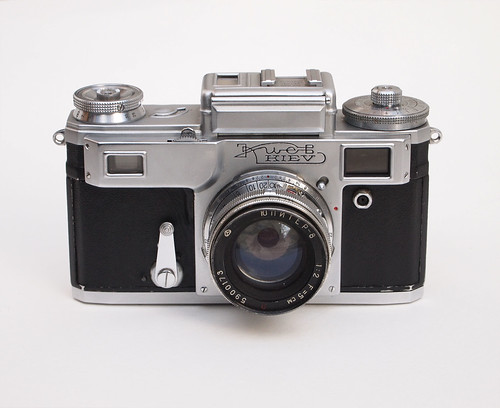
Kiev-4 with Jupiter-8M f2 5cm lens
I'd chosen the Kiev-4 partly thanks to the built-in light meter; early models appear to be fairly common, while it has some refinements over the IIIa. There may be reasons for preferring the meter-less versions, but I decided it might prove a useful feature. Presumably without any direct contact, the post war Contax IIIa prompted the Kiev-4 redesign, with a smaller, lower and simplified meter, and a smaller rewind knob and calculator dial alongside it (the Contax IIIa also had a smaller body with a shorter rangefinder base, neither of which influenced the Kiev-4 design).
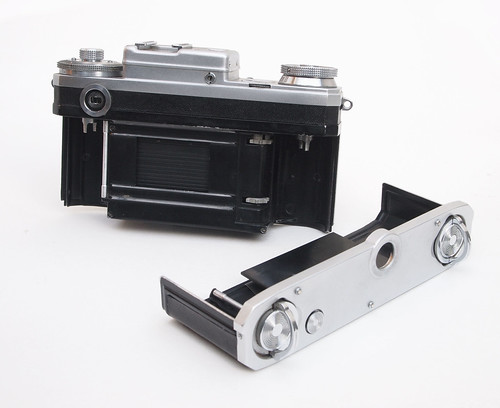
Kiev-4 with back removed for loading
The back removes entirely to load the camera; two flip-up, rotating handles on the camera base unlock the back. The original Contax camera was designed without a fixed take-up spool to provide flexibility: as well as Contax reloadable cassettes, which could be loaded in each chamber, removing the need to rewind the film, there were also 'Contax spools', with the film not in a cassette or cartridge, but with a paper leader and a trailer (rather like the 220 version of medium format rollfilm), this also did not need rewinding but required a removable take up spool; the camera could of course be also used with the (then new) Kodak daylight loading 35mm cassette. The Contax film spool does not appear in the post-war Contax IIIa manual, presumably having been discontinued. The Kiev rangefinders replicated this arrangement, including the metal reloadable cassettes, until the 4M and 4AM versions, which had fixed spools.

My camera came with a metal removable spool with a central slot for the film leader, and to use this would mean either cutting the film leader to a point, or taping it to the spool. Neither approach is entirely impractical but perhaps undesirable when out in the field. Initially, I attempted to use two 35mm cassettes, with the take-up cassette made up in mirror image, much like with the Belomo Agat18k, but this first roll of film tore as the sprocket holes in the film did not quite match up with the sprocket teeth.
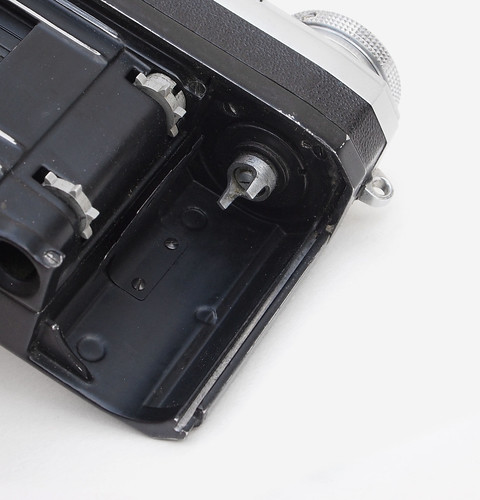
Take up chamber with film advance claw
On close inspection of both the metal spool and the camera itself, I could see why the film wasn't properly aligned: there is a raised rim around the base of the film advance 'claw' (as the Contax III manual describes it), shown above. This raised rim prevents a spool from a standard 35mm cassette aligning perfectly with the film path. I adapted the solid plastic internal spool from a 35mm cassette to use in the take up chamber, in a slightly different fashion than the advice on making a replacement Contax spool from Mike Elek's site, which appears on a number of Kiev/Contax rangefinder sites. In addition to cutting a slot in the plastic with a hacksaw to locate the film leader, I also removed the protruding rim around the base, to make this flush, as with the metal Kiev spool, illustrated below. This was a detail I'd not found while researching online; perhaps the Kiev is different from the Contax in this respect, perhaps not, but sometimes the internet isn't quite so good for minutiae such as this.
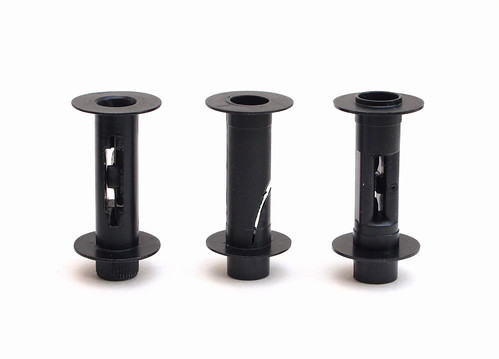
Left to right: original Kiev spool; modified solid spool; unmodified spool
Once loaded, the film counter has to be set manually, and counts up (I have read elsewhere that it counts down, so perhaps this isn't consistent). Shutter speeds are set on the film advance knob, in the centre of which is the shutter release; turning the knob to advance the film also cocks the shutter. To set the shutter speed, the knob is pulled up and rotated to locate an internal pin, which has to be done after the shutter has been cocked. If this is done once the shutter has been released, this internal pin might not be correctly located. As on the Contax II/III, the highest speed is 1/1250th, down to 1/2th, and 'B' (the later 4/4A models and the 4M/4AM versions had the top speed reduced to 1/1000th). On the Contax, using the 'B' setting with the self-timer achieved a shutter speed of 1 second; on the Kiev, this is a rather-less-than-precise range of 1-3 seconds: the Kiev manual recommends to "check its value before using". On my camera, it is around the three-second mark. The focal plane shutter comprises two curtains that are constructed from a series of interlocking vertical metal slats. These are remarkably quiet above 1/50th; at 1/50th and below, the shutter has a muted 'zip' sound.
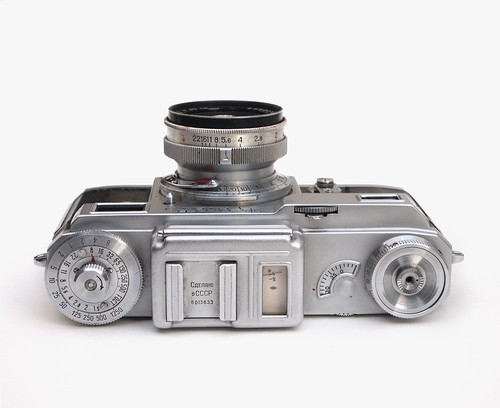
Kiev-4 rangefinder, view of top plate
The Kiev/Contax rangefinder has a very long base - 90mm - and this distance between the two windows makes for very accurate focussing. There are compromises with this: ergonomically, it's easy to cover up the rangefinder window while holding the camera (thus making the 'Contax grip' necessary and the Contax manuals describe how to place the user's right hand to take advantage of this); also, with the standard 5cm lens, the rangefinder's accuracy provides a high degree of rotation to change the focus from infinity to 0.9m. In comparison, the focus lever on the Kodak Retina IIa rotates 90º from infinity down to 3.5 feet, while on the Kiev-4 the 5cm lens rotates 270º from infinity to 0.9m. This makes switching from infinity to close focus not as rapid as it might otherwise be, notably when using the focus wheel on the body.

The Contax/Kiev lens mount has an internal and external bayonet: the internal bayonet is used by the 50mm lenses and has a built-in helical; other lenses use the external mount and this means that the entire 5cm Jupiter-8M lens rotates as it focus. The lens aperture ring thus rotates away from the user until it can no longer be seen from the top of the camera. Some 50mm lenses had the aperture scale engraved twice around the lens to ensure it's always visible, but my lens has only one scale. As the 50mm lenses do not focus themselves, the internal bayonet mount also has focus and depth of field scales engraved around it. There is an infinity lock on the focus, which has two release levers: the tab above the focus wheel on the body, and the sliding pin by the lens itself. To change lenses with the internal bayonet, the lens must be locked at infinity.

For writing this blog post, I've only been using the standard Jupiter-8M f2 5cm lens that came with my camera, but Arsenal duplicated the Contax range of Zeiss lenses, with the f1.5 50mm lenses - both the Zeiss Sonnar and the Jupiter-3 version - being most sought after and commanding the highest prices. With the 50mm lenses, both the wheel on the body or rotating the lens barrel can be used to focus the lens once the infinity lock has been released. It's not recommended to use the focus wheel on the body for other lenses due to their inertial weight. The rangefinder is clear and easy to use (the viewfinder has no frame lines or parallax indication, merely the square superimposed rangefinder patch), and I did find that I was deliberately choosing subjects to make use of its accuracy, isolating near objects and using wide apertures to throw backgrounds out of focus. The Jupiter-8M lens has a nine-bladed aperture diaphragm that no doubt helps in the smooth rendering of out-of-focus areas, such as in the shot below.
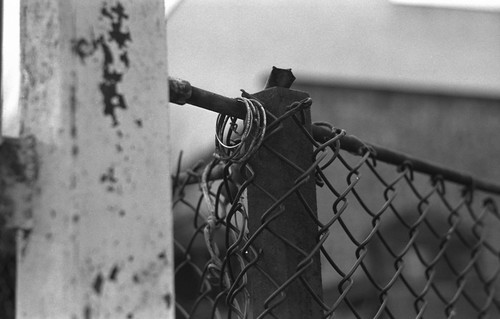
Kiev-4 with Adox Silvermax
For most of the shots taken to illustrate this blog post, I've trusted the built in light meter: cross-referencing with the 'Sunny-16' rule, the meter appeared to be functioning with sufficient accuracy for black and white negative film. As mentioned above, the Kiev-4's meter was based on that of the post-war Contax IIIa, although it differs from it in having 2x and 4x exposure marks, while the Contax IIIa only had one mark for correct exposure. The original Contax III had a light meter scale with markings for multiplying factors of 2, 5, 10, 20, and 40: I imagine that at the highest end of the scale, there's a potential for greatly magnifying a margin of error when using with insufficient light.
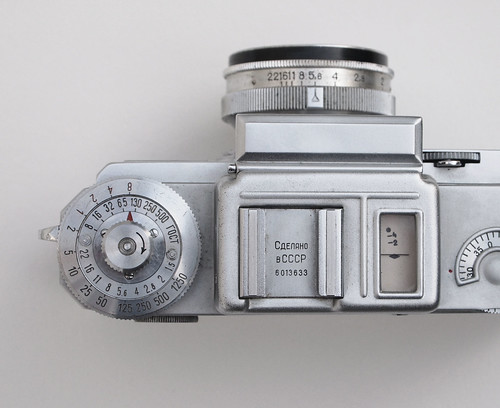
Kiev-4 lightmeter and exposure calculator
To use the Kiev-4's light meter, a pin by the cover's hinge releases the cover, which operates as a shade against the sky skewing meter readings. On the exposure calculator, film sensitivity is marked in the USSR's GOST scale, which is about one tenth less than the comparative ISO. The meter needle can be moved by rotating the outer ring of the calculator until it aligns with the rhombus in the meter window, or, in lower light, to the 2x or 4x exposure compensation marks, and then aperture and shutter speed combinations can be read off the lower side of the calculator dial. There's also a small circle to zero the meter, with a tiny screw on the back of the meter housing for adjustment. Although not very useful for low light situations, I haven't found selenium light meters to deserve the negative reputation that appears to be quite common online; perhaps I've been exceptionally lucky to get camera after camera with working meters.

Having used the Kiev-4 for just a couple of months, and with the standard Jupiter-8M lens only, this is by no means a comprehensive review of the camera. However, the results I've had so far have largely shown the camera to perform very well (the best perhaps are those shot on Adox Silvermax). Once I'd worked out exactly how to adapt a spool for the take-up side, using the camera was largely trouble free, although on a couple of occasions the frame spacing has been erratic, once with larger gaps than normal at the start of a roll, once with overlapping frames on a short roll of film. Operation of the camera isn't as intuitive as it might be, and takes a little getting used to, especially holding it without obscuring the rangefinder window. I've often found it more convenient to use the lens barrel to focus once the infinity lock has been released, although the wheel on the body is good for fine tuning the focus. I've missed having a yellow filter for some of the shots below, and although I generally use standard focal lengths for most of the photographs I like to take, there is the potential to acquire a range of lenses (and accessories) to take advantage of Zeiss Ikon's eighty-year old conception of this rangefinder as a complete professional system camera.
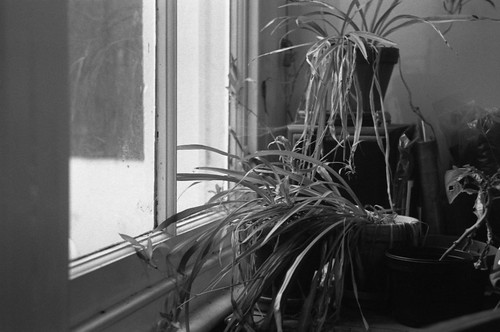
Kiev-4 sample image on Ilford HP5 Plus
Kiev-4 sample image on Ilford FP4
Kiev-4 sample image on Ilford Mark V Motion Picture Film
Kiev-4 sample image on Foma Retropan 320
Kiev-4 sample image on expired colour print film
Kiev-4 sample image on Adox Silvermax

Sources/further reading:
SovietCams.com overview of the Kiev/Contax
Kiev-4 manual translated into English
Kiev Survival Site
Kiev-4 schematics on USSRPhoto
Kiev-4 on Photoethnography
Kiev-4 on Matt's Classic Cameras
Kiev-4 on Camerajunky 
Kiev-4 on Early Photography
Kiev-4 on Classic Cameras
Contax manuals from Butkus.org