Showing posts with label Zeiss. Show all posts

Sunday, 29 January 2017

127 Day January 2017

Zeiss Ikon Ikonta 520/18 with Agfapan Agfa APX 100
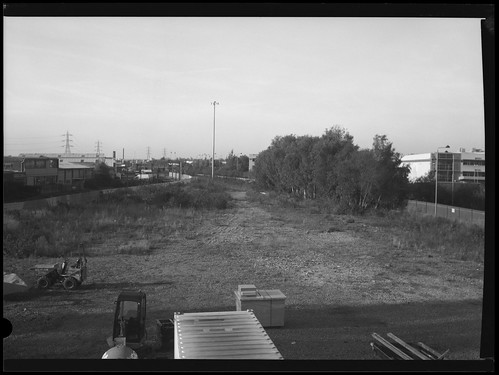
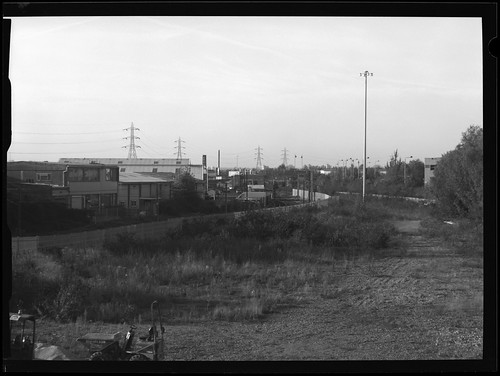
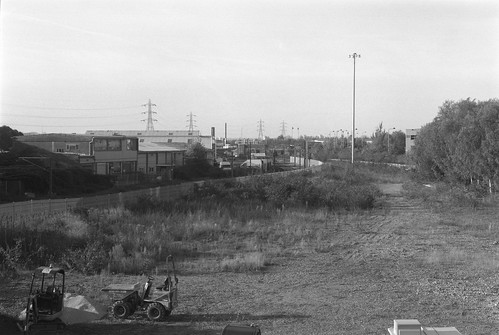
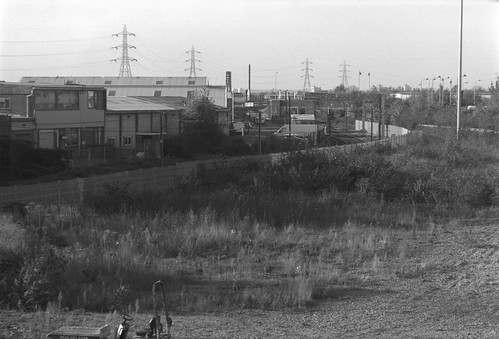
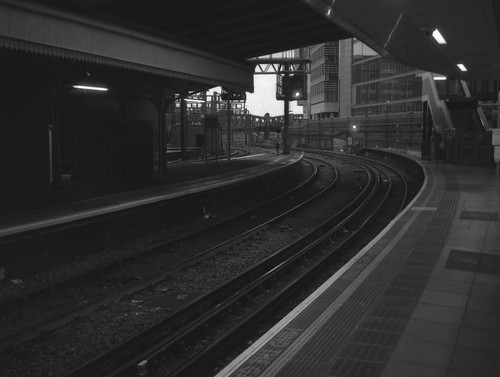
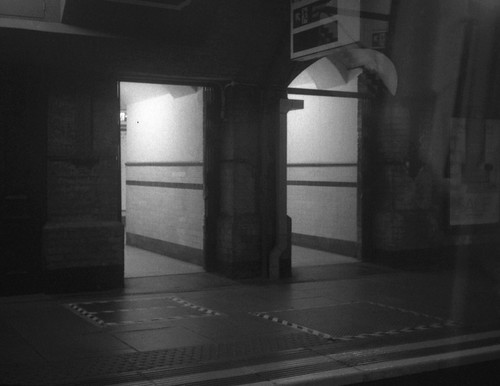
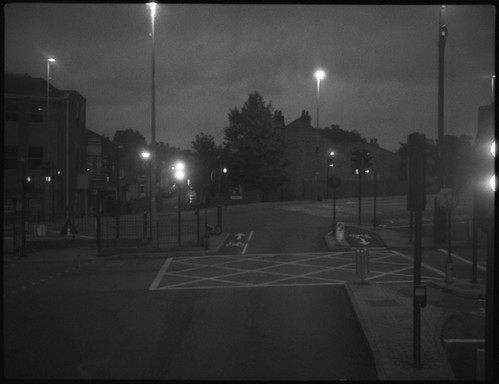
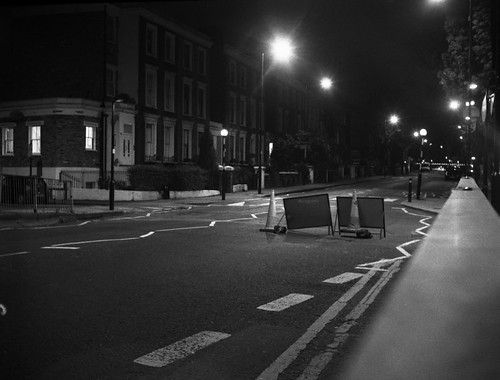
For last Friday's 127 Day, I shot just the one roll of film, cut down medium format Agfapan APX 100 with a 'develop before' date of January 2009. I used the Baby Ikonta again; given the weather conditions and short daylight hours, a number of the shots were long exposures on the 'T' setting. With smaller apertures, generally around f16, the Novar lens performs well, against the hand held shots three or four stops wider; I rated the APX 100 at box speed, being less than ten years past its 'develop before' date, although ideally a faster film would have been more appropriate for the day.


Tuesday, 22 March 2016

Zeiss Ikon Ikoflex Ic

Zeiss Ikon Ikoflex Ic
The twin-lens reflex has been eclipsed by the popularity of single-lens reflex cameras. Excellent results are possible with some models of this design, however, and they often represent the least expensive way for a photographer to begin working in medium format.
Ansel Adams, The Camera, 1980
Twin lens focus cameras were around for many years before Franke & Heideke introduced the Rolleiflex, but, like the Leica with 35mm film, it became the archetype - and inspiration - for the many twin lens reflex cameras that followed, as well as establishing the 6x6cm square negative format. TLR cameras were produced by many different manufacturers for decades, the majority were made between the 1930s and 1950s, but the twin-lens reflex design fell out of favour from the early 1960s (notable exceptions such as the Mamiya C series and the Rolleiflex itself, as more fully-featured, prestige cameras, were made until the 1990s and 2010s respectively).

I bought my original Zeiss Ikon Ikoflex Ic in March 1996. It was my entry into medium format as a student, being significantly cheaper than a Rolleiflex or MPP's contemporary Microcord/Microflex cameras, and a fraction of the price of medium format SLR cameras at the time. It cost £99 as a commission sale from a camera shop which meant there was no secondhand guarantee. A tutor at college described it as being "two-and-a-quarter-inch", and, although at that point I knew of medium format, I'd not heard it described as such before.

Zeiss Ikon Ikoflex Ic with HP5 Plus
The above image is from the first roll of black and white film I shot with the camera. It's one of several shots made standing the Ikoflex on the floor for long exposures, easy to do with the typical twin-lens reflex waist level finder. The Ikoflex Ic I'd bought had a 75mm Novar lens, a cheaper triplet lens made by other manufacturers under license for Zeiss Ikon; it was also available with a f3.5 Tessar, but at the time I wouldn't have known to distinguish between a Novar and a Tessar. (Edit 30/11/18: looking through my images with this first Ikoflex - and images of the camera itself - I'm now sure that this was with the Tessar lens - although, again, I wouldn't have known the reputation of the lens at the time).

Zeiss Ikon Ikoflex Ic with HP5 Plus
The immediate difference in image quality with the shift from 35mm to medium format (even with a cheaper lens), and also the changing relationship of depth of field with longer lenses on the format, was clear from the first few prints I made from the negatives from the camera. The photograph above shot in May 1996 after I'd had the camera for a couple of months embodied these qualities almost perfectly - almost, as there appears to be a small amount of either a fall off in definition from the lens to the corners, or possibly a little camera shake in a twisting motion, nonetheless the quality of images like that above suddenly looked more professional. Another student at college had a Lubitel 166B, and it was very clear that the images, with vignetting and light leaks, were poorer quality in comparison to the Ikoflex.

Zeiss Ikon Ikoflex Ic with HP5 Plus
The Ikoflex also served as my introduction to night photography, using the camera on 'B' with a tripod. To calculate exposure times, I set my Praktica SLR to the same aperture and counted how many seconds between the shutter opening and closing, without factoring in reciprocity loss. This method worked well enough with regard to the Ikoflex's selenium meter being unusable at night. While at college I mostly shot Ilford HP5 Plus in the Ikoflex. On my contact sheets from the time I didn't write down developing details (curiously, I did so for most contemporary 35mm contact sheets). The developer at college would have been ID11, and usually used 1+1. Although I didn't write down any information about the developing, I also didn't push process any of the medium format at the time, which I had begun doing in 35mm. Later, once outside college and not having access to a darkroom, I shot a wider variety of films which I had professionally processed, mostly at Jessops. One film that I did use was Delta 3200 (the film itself hadn't been introduced until after I left college) for some handheld night shots, possibly shot on 1/10th. I used the Ikoflex much less when I bought my first Canon A-1: I last used it frequently in 2000, and it was stolen in 2003. Unlike the Canon A-1 or Olympus Pen EE3, I didn't feel the need to replace the camera as soon as I could, (or even, much later, the Brownie). However, a few weeks ago I saw an Ikoflex Ic in an online auction for half the price I paid for it twenty years ago, and bidding it up by a few pounds to nearer two-thirds that price, I won the camera. Ideally, I should have probably waited for a version with a Tessar, or the last Ikoflex model, the Favorit, but in replacing the Ikoflex Ic two decades on from first buying it provided a sense of resolution.

Ikoflex Ic with viewing hood and meter cover open
The Ikoflex Ic was the penultimate model in Zeiss Ikon's TLR series. It has a typical frame size of 6x6cm on 120 medium format film, with a 75mm Novar or Tessar f3.5 lens, stopping down to f16. The viewing lens is a 75mm f3.5 Teronar. The Prontor SVS shutter has a full range of speeds from 1-300, plus B, and a switch marked VXM for self timer (V), electronic flash (X), and flash bulbs (M). The self timer on my camera doesn't work, and in my experience rarely works on Prontor shutters from fifty to sixty years ago. The shutter can appear stuck if the switch is inadvertently knocked on V, easy to do, but switching to X releases the shutter (I have wasted a few frames with my new camera this way). Both lenses are provided with screw threads, but in different diameters. The taking lens has a 35.5mm thread; externally, it will take 37mm push-on filters or hoods. Two windows around the taking lens display aperture and shutter speeds; the aperture settings have a red dot for a hyperfocal distance between f8 and f11.

The focus knob is on the left hand side of the camera when holding it. On my camera it's marked in feet denoting an export model. Close focus runs down to 3.6 feet, with depth of field markings, and a hyperfocal dot on the scale between 48 and 15 feet to correspond with the dot on the aperture scale. On the right hand of the camera is the shutter release - lower on the body than older Ikoflex models - and the cable release socket in the top corner position where the older cameras had the shutter release. The release pivots outwards for shooting, with the shutter locked when it is pushed in. This shutter release is key to the ergonomics of the Ikoflex: the weight of the camera is taken in the right hand while focusing with the left hand, but the thumb of the right hand operates the shutter and also helps steady the camera between both hands. I haven't used older Ikoflex cameras, but I can imagine having a shutter release on the top of the camera makes it less easy to use handheld. The right hand side of the camera also has the frame advance knob, with a film reminder with "PAN/IR/ORTHO COLOR NEG/POS" inscribed on it, the COLOR section doubled, presumably for tungsten or daylight film and the frame counter, with its reset dial, and a PC socket for flash.

The waist level viewfinder hood is nicely sprung to pop open when the catch is released on the body. Rather than just plain ground glass, the viewing screen is actually a fresnel lens (fine concentric lines can just be made out). There's a flip up magnifier lens for fine focusing, and the cover of the viewing hood with the nameplate itself flips up to create an eye-level sports finder. The viewing screen has ruled horizontal and vertical lines to aid composition, and also displays the lightmeter needle. The Ikoflex Ic's built in lightmeter was one of the reasons for buying it (not heard of the 'sunny 16' rule at the time). The cover on the front of the camera flips up, and the needle in the viewfinder has EV markings from 2-16; on the focusing knob there is a calculator on focus knob with ASA settings from 5-320, including -2 -4 adjustments for filter factors, where the EV numbers can be read off against shutter speed and aperture combinations. Exposure times are listed up to 60 seconds; whole seconds are marked in green, and can be seen appearing at the far end of the calculator in fast film settings with a high EV, which the manual warns about. The selenium meters on both cameras I've had worked perfectly well with black and white and colour negative film; there are some references online referring to the Ikoflex Ic having a CDS meter, but I've found nothing conclusive, perhaps some cameras were customised with CDS cells replacing the selenium meter.

The Ikoflex Ic has an automatic frame counter with double exposure prevention. This was initially confusing, and, with no manual available when I bought my first camera, had to be worked out by trial and error. The man in the shop when I bought the camera loaded it for me, and the frame counter reset fooled him initially: he got this to return to 1 after having wound a whole film through the camera. I found the very first film from the camera had only part of one frame exposed. The correct way to load the camera is to ensure the frame counter has passed '12', which will then freely rotate (this may have to be done manually). On loading the camera, the film is advance to the first frame using the red window on the bottom plate, then the frame counter is reset to '1'. Once the shutter has been fired, there is an interlock which prevents the shutter firing again before the film is advanced (it's possible to cock the shutter without advancing the film, but it will not fire).

Zeiss Ikon Ikoflex Ic with Ilford Delta 400
Zeiss Ikon Ikoflex Ic with Ilford XP2
Zeiss Ikon Ikoflex Ic with Kodak Tri-X
Zeiss Ikon Ikoflex Ic with Kodak Portra 160VC 
Zeiss Ikon Ikoflex Ic with Ilford Delta 3200
When I first used the Ikoflex twenty years ago, the square format was a novelty and provoked more care taken over composition. This is partly helped by the lateral reversal of the image in the viewing screen, which does need some experience to become familiar. Although typically twin lens reflex images were often cropped when used professionally, composing to a full, square format is more challenging; picking up the camera again after many years brought this back with a distant sense memory of how it felt to use. It has also been an excuse to sort through old negatives, many of which I had never previously printed or scanned. Except for Kodak Portra 160, I didn't use any film slower than 400 ISO with my first Ikoflex camera - which was the case generally, in 35mm as well as medium format. Twenty years after first using the Ikoflex Ic, I recently shot some slower, finer grained films with the new camera: Agfa Superpan 200, Ilford FP4 Plus (rated 200), Rollei RPX 25 and a roll of Kodak Plus-X with a develop before date of 03/2006, which I happened to finish on Expired Film Day 2016.

Zeiss Ikon Ikoflex Ic with Agfa Superpan 200
Zeiss Ikon Ikoflex Ic with Ilford FP4 Plus at 200
Zeiss Ikon Ikoflex Ic with Rollei RPX 25
Zeiss Ikon Ikoflex Ic with Kodak Plus-X (develop before date 03/2006)


Sources/further reading
Ikoflex range on TLR-Cameras.com
Ikoflex Ic on Matt's Classic Cameras
Ikoflex Ic on Early Photography
Ansel Adams, The Camera, 1980 

Monday, 13 July 2015

127 Day - Summer 2015

Baby Ikonta with Rollei RPX25
In my previous post I described how I made a film slitter, to cut down 120 medium format film to the width of 127 format. This was partly to ensure I had some film to shoot on yesterday's 127 Day; I cut down and shot one roll of Ilford Delta 3200, Rollei RPX25 and Fomapan 400 apiece. As the length of 120 film exceeds that of 127, I used the end of each length of film for a second roll, which was long enough for 3-4 frames with the Baby Ikonta, which shoots 16 3x4cm frames on a normal 127 roll. All films were developed in Ilfotec LC29; as there are no listed times for RPX25 with Ilfotec LC29, I used a similar time and dilution as I had done for R09 One Shot, 1+150 for 15 minutes. The results were thin negatives, but with a good tonal range, reducing the film's inherent contrast.

Baby Ikonta with Ilford Delta 3200
Baby Ikonta with Rollei RPX25
Baby Ikonta with Fomapan 400
Baby Ikonta with Ilford Delta 3200

Thursday, 29 January 2015

The 'Baby' Ikonta

Zeiss Ikon Ikonta 520/18
Having used my Zeiss Ikon Ikonta 520/18 - the Baby Ikonta - for a number of the 127 Film Days over the past few years, I felt it was about time that I dedicated a short post to the camera itself. The reason for it becoming known as the 'baby' Ikonta is simply that it is a scaled down version of Zeiss Ikon's Ikonta 120 medium format cameras, specifically the Ikonta A 520 (the camera was also marketed as the Ikomat 520/18 in the US). Zeiss Ikon appears to have been the manufacturer which devised the 3x4cm frame size on 127 film with the Kolibri, which was first sold a year before the Ikonta 520/18. Previous cameras, such as the Vest Pocket Kodak which introduced the 127 format rollfilm in 1912, used a frame size of 6x4cm; reducing this to a 'half frame' size meant squeezing twice as many pictures on a roll of film and competing in size and convenience with the recent use of 35mm film in still cameras.

Zeiss Ikon Ikonta 520/18
The Ikonta 520/18 was introduced in 1931 and was manufactured until around 1937. Like many cameras of its period it was available with a variety of lens and shutter combinations. My Baby Ikonta has a Compur-Rapid shutter and a Novar f3.5 lens; the top of the range has a Tessar lens, there are also Baby Ikontas with slower Novar lenses and Telma shutters. The serial numbers on my camera date the lens to 1931, and the shutter to 1936. Looking at other examples online, some minor details of the design changed during the production run, but it remained essentially the same. Like most 3x4cm format 127 cameras, the focal length of the Ikonta 520/18 lenses are all 50mm, which gives a slight wide angle of view to the images. When folded the camera is comparable in size to a modern digital compact (see image below), easily pocketable, yet produces a negative around a third larger than the size of a standard 35mm frame.

Size comparison next to a carton of 35mm film
As the Baby Ikonta uses the 3x4cm frame size, the camera shoots in a portrait orientation, 16 frames on a roll of 127 film. Designed for a image twice the size, 127 film has numbers on the backing paper to match, so the camera uses two red windows: each number appears twice, once in each window (120 film originally had the same arrangement of backing numbers, but subsequently the numbers were rearranged on the paper to accommodate the three most common frame sizes, while 127 paper has just two rows of numbers for 6x4 and 4x4 frames). The Baby Ikonta is provided with a simple frame finder, and focus is by estimation. The lens focuses by front cell down to three feet, and the focus scale has a red spot half-way between 24 and 12 feet; this combines with a red spot between f8 and f11 on the aperture scale for a hyperfocal distance

Opened showing red windows and original film decal
When I first shot a number of rolls of film with the camera, I noticed that despite 127 film backing paper having 8 numbers, Efke R100 film had 18 numbers in the film rebate, and quite a lot of film either end of the sequence of negatives. I found it quite easy to shoot a 17th frame on the Baby Ikonta, simply by an extra 3/4 turn on the winding knob after the final number on the paper backing: the winding knob has the words 'Made in Germany' on it to check its position, and looking at whichever letter is at 12 o'clock, I turned this to 9 o'clock to shoot a final frame. Having recently shot a roll of cut down medium format film for this January's 127 Day, there was enough film to get a full 18 frames.

Baby Ikonta with cut down Rollei RPX 400
The Ikonta 520/18 is a solidly made camera from Zeiss Ikon, constructed to precisely the same standards as the company's larger format cameras. Although a version with the Tessar lens would doubtless provide better quality images, the Novar on my camera does a fair job. I had until recently mostly used out of date film with the camera after Fotokemika's production of the last remaining 127 films shut down in 2012 but the possibility of using a wider range of films cut down from 120 format is very appealing.

Baby Ikonta with Efke R100
Baby Ikonta with Efke R100 pushed processed to 200
Baby Ikonta with Agfa Retro 80S
Baby Ikonta with Efke R21/R100, develop before date of August 1995
Baby Ikonta with Kodak Verichrome Pan, develop before date December 1981
Baby Ikonta with Ilford FP4, develop before date December 1976
Sources/further reading:
Instruction manual as the Ikomat 520/18
Ikonta 520/18 on Collections Appareils

Wednesday, 19 November 2014

Distars and Proxars

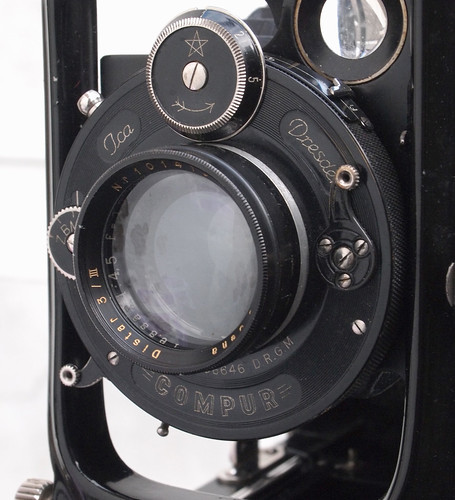
Ica Trona with Distar supplementary lens
Having achieved some good results recently with the Ica Trona, use of the camera's full 9x12cm frame size is limited by the number of plateholders with films sheathes I possess, and also limited to the few films manufactured in the 9x12cm size. Using a rollfilm back with the camera is convenient and means being able to shoot with any medium format film available. However, this leads to cropping the image, or, to put it another way, using the rollfilm back provides an image with a narrower angle of view. For most of the cameras I habitually use, I'm almost always happy shooting everything with the 'normal' focal length lens for the format and most of my cameras have fixed, non-interchangeable lenses. For cameras of a similar age or design to the Ica Trona, if the photographer wanted to use different focal length lenses, there were three approaches to achieve this: more expensive cameras did have interchangeable lenses, often with a bayonet mount, like the Voigtländer Bergheil (although this did require each lens to also have its own shutter); certain lenses were designed to be convertible or combinable, where front and rear lens elements were each sufficiently well corrected to be used individually either behind or in front of the shutter; and there were also supplementary lenses, to be used like filters, which change the focal length of the lens they are attached to. The Ica Trona has a Tessar lens, the design of which does not lend itself to being used as a convertible lens. When writing the blog post for the Trona, the Zeiss catalogues on Camera Eccentric were an invaluable resource; the 1933 catalogue includes a detailed section on Zeiss's supplementary lenses. Zeiss introduced the Distar first (seen in the 1927 catalogue, page 18), which increases the focal length of a lens; this was then added to by the Proxar, decreasing the focal length. The Proxar proved to be the more useful of the two, and was produced to fit many cameras for a number of decades. Other manufacturers also produced supplementary lenses.
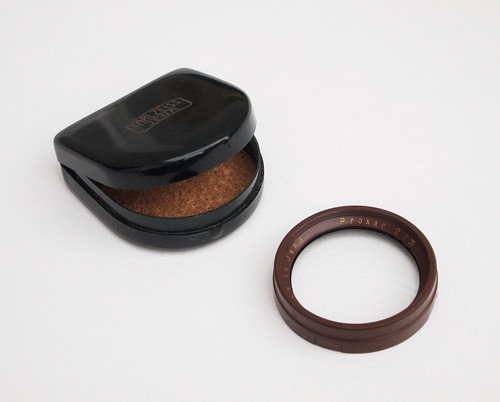
Zeiss Proxar supplementary lens with case
The Distars and Proxars were initially made as push-fit accessories to fit onto a camera lens in the same manner as a filter, in a variety of sizes and different powers of magnification. Both have gold lettering inscribed around the mounts and the pre-war Proxars are brown, perhaps to be easily identifiable at a glance. On the Camera Eccentric website, the reproduced Zeiss lens catalogue from 1933 has both Distars and Proxars listed with a full description and tables for use (the 1929 catalogue also lists both, but the 1933 one has better illustrated examples). To quote from the catalogue:
The Distars are single lens components of small diverging power [...]. When placed in front of the camera lens they increase its focal length with corresponding increase of the camera extension. They thus add to the scope of camera lenses, especially those of an unsymmetrical type, since these, from their very nature, are only adapted for use on cameras with single extension in that their components are not corrected independently for use as long-focus lenses. In conjunction with the Tessars the Distars form wide-range sets of convertible lenses.
[...]
PROXARS are lenses of small converging power [...]. When attached in front of the camera lens, they produce an effect opposite to that of the Distars in that they shorten the focal length. Thus, Tessar F/4.5, f=13.5cm has its focal length reduced to about 13cm, 12.5cm, 12cm, or 11.5cm according to the converging effect of the Proxar selected. The range of uses of the Tessar is thereby widely extended in a twofold direction, viz:

For obtaining large figures of near objects [i.e. close focus images]
[...]
For taking wide-angle photographs at greater distances
Use of the Distar depends on the camera having sufficient bellows extension to achieve infinity focus, the greater the power of the Distar, the longer this distance needs to be, while the Proxars, to focus on infinity, need less bellows extension than the lens would normally require. This last fact is the reason for the Proxar's greater usefulness: on rigid-body cameras, it is usually impossible to reduce the lens-to-film plane distance, meaning that a Proxar could not be used for wide angle photographs ("at greater distances") as the lens would not focus on infinity, but it would still work as a close-up accessory, which Proxars were sold as, post war, no longer brown, as either push-fit accessories or with screw threads for mounting.
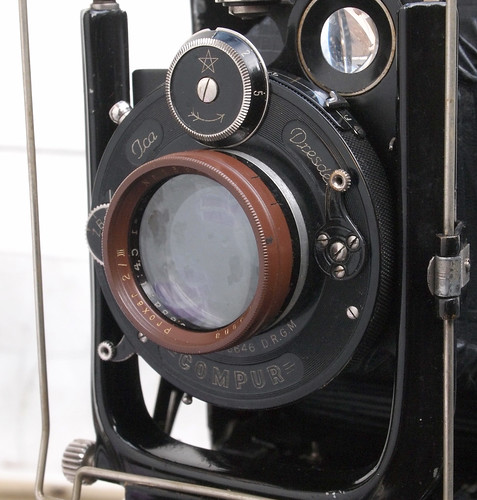

Ica Trona 210 with Proxar supplementary lens
I recently bought one of each: a Distar 3/III and a Proxar 2/III. According to the table in the Zeiss 1933 catalogue, the Distar 3 increases the equivalent focal length of the 13.5cm Tessar lens to 22.5cm, needing a bellows extension of 23cm to focus on infinity; the Proxar 2 reduces the equivalent focal length of the lens to 11cm, with infinity focus at 10.5cm. Reiterating what I've written earlier in this post, one reason I wanted the Proxar was to be able to use the rollfilm back with a 'normal' angle of view: a standard lens for the 6x9cm frame size is 105mm, so 11cm is very close.

The first set of test photographs I made with the Proxar were all out of focus, initially confusing as I'd used the ground glass screen to focus the images. When I shot a second set of test images, I realised where the problem arose: once the image was focussed, I discovered the tendency of the lens to slide forward on its runners when removing the back and replacing it with a plateholder, especially when pointing the camera downwards. On the Trona, the lens is designed to be pulled forwards to the infinity stop at 13.5cm, the focus knob is then used for closer focus and partly as a result of use, the lens moves with relative ease to the infinity stop itself (there is some friction, but perhaps the additional weight of the Proxar helps overcome the inertia). The Distar attachment provided different concerns: what's known as bellows effect, not mentioned in the Zeiss catalogue, which, for purposes of exposure and using the ground glass screen, results in a dimmer image. As the bellows are extended, moving the lens further away from the film plane, the relationship between aperture size and lens to film plane distance are changed significantly. To simplify the numbers for the purposes of giving an example, an aperture of f4 on a lens of 100mm focal length has a diameter of 25mm. If that lens is extended to a distance of 200mm from the film plane, that 25mm diameter of the f4 aperture is now one-eighth rather than one quarter, giving an effective aperture of f8, two stops difference in terms of exposure. Returning to the Distar 3 on my Tessar lens, as the focal length wasn't doubled, being nearer to an increase of half the focal length, for ease of calculation, I increased exposure by one stop (the same effect in reverse would be the case with the Proxar at infinity focus, but a decrease in focal length from 13.5cm to 11cm is not as dramatic, and although logically the image should be brighter, it is not different enough to compensate for in exposure).

The images below were all shot hand held: although for testing the qualities of the Distar and Proxar themselves it would have been better to use a tripod, I wanted to use the supplementary lenses in conditions that I have been using the Ica Trona camera. I push processed the 9x12cm Fomapan 100 to 200 in order to provide an extra stop in exposure, to use a smaller aperture at a faster shutter speed. The images are arranged from shortest focal length to longest.
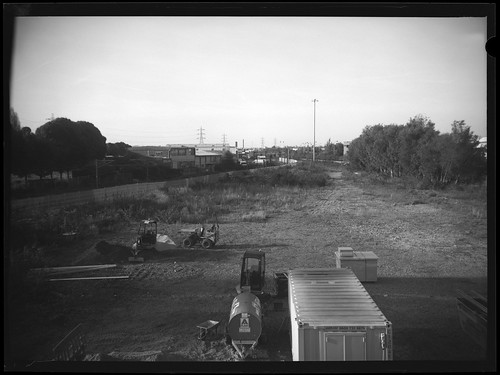
Ica Trona 210 with Proxar supplementary lens, Fomapan 100 rated 200 EI
Ica Trona 210, Fomapan 100 rated 200 EI
Ica Trona 210 with Distar supplementary lens, Fomapan 100 rated 200 EI
When shooting the tests, I focused with the ground glass screen, then used the wire frame finder (the 'Iconometer') for framing once the screen had been replaced with a plateholder. The wire frame finder continues to give a fairly accurate framing as the angle of view changes relative to how near or far the finder is to the eye piece (this is also true with the front rise and cross movements). The top image of the three, taken with the Proxar shows some vignetting and also has a shadow at the left had edge due to the bellows on my camera being slightly deformed. In addition, the bellows on my Trona do not have the clips that many double extension folding plate cameras often possess to gather the bellows when the lens is closer to the film plane, i.e. at or near to infinity focus.

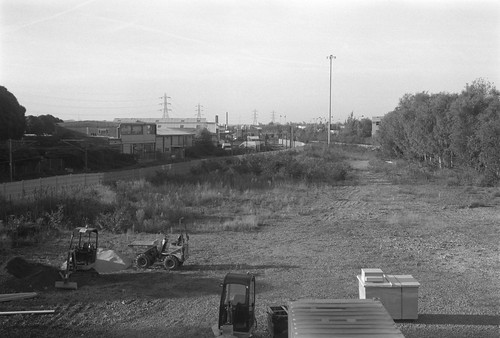
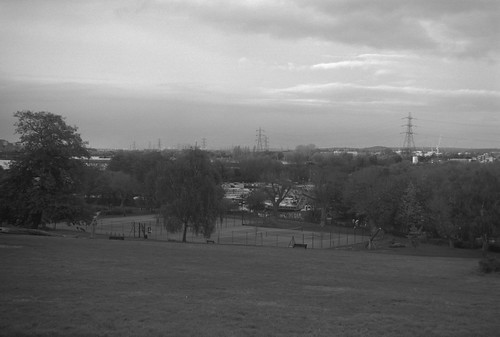
I also shot a sequence of images with the rollfilm back. Using Rollei RPX 400, I gained an extra stop in exposure from the push-processed Fomapan 100 sheet film. On the frames with and without the Proxar, I stopped the lens down further; with the increased focal length using the Distar, I chose a faster shutter speed to guard against camera shake. These provide a better example of the change in angle of view than the sheet film shots above as the framing is more consistent across all three photographs.
Ica Trona 210 with Proxar supplementary lens, Rollei RPX 400 in rollfilm back
Ica Trona 210, Rollei RPX 400 in rollfilm back
Ica Trona 210 with Distar supplementary lens, Rollei RPX 400 in rollfilm back
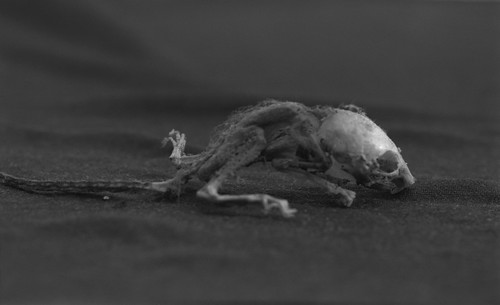
For comparison with the images from the rollfilm back, I also shot the same scene with the Zodel Baldalux: the 6x9cm frame size is the same and the focal length with the Proxar and the rollfilm back is close to the 105mm lens on the Baldalux - the reason for my interest in the supplementary lenses. Using the Proxar as a close up attachment rather than for wide angle, with the double extension bellows on the Trona, it is possible to focus very close to a subject. Bellows effect also applies, as with the Distar, and I also found focus difficult: even with the lens fully opened the image on the ground glass was still dim, and depth of field was extremely shallow. The photograph below was stopped down to f25 and by necessity, this was shot with a tripod (exposure was around 30 seconds). Although the shallow depth of field limits the use of such extreme close up photography, the scale of the mouse on the negative is actually larger than life size.
Ica Trona 210 with Proxar supplementary lens, Rollei RPX 400 in rollfilm back
The 1933 Zeiss catalogue contains an illustration (p30) showing six different views achievable from the same standpoint with a 15cm Tessar and Distars and Proxars of different powers with the caption, "Convert your ZEISS TESSAR at small cost into an objective of wide utility." Most of the remarks about the use of Distars and Proxars in the Zeiss catalogues relate directly to their use with the Tessar lens. The other designs listed under 'Universal Lenses' are Dagors and Protars, the first being symmetrical and the second composed of components of different focal lengths, but both can be used as convertible lenses. The introduction of the Distars and Proxars was intended to add this flexibility to the Tessar;
The Tessar is [...] pre-eminently the lens for hand cameras with single extension. In the course of recent years it has more and more taken the place of symmetrical and semi-symmetrical lenses in cameras with double extension, thanks to the introduction of our Distars and Proxars. These are single attachable front lenses whose curvatures are so computed as to increase or decrease the focal length of the objective within certain limits. They form, therefore, with the Tessar a very comprehensive convertible set, so that it can be used on hand cameras with single extension, and to a still greater extent on cameras with double extension, with a new range of applications. 
Zeiss lens catalogue, 1933
Ica Trona 210 with Proxar supplementary lens, Rollei RPX 400 in rollfilm back

Sources/further reading:
Zeiss Lenses Catalogue 1933
Supplementary lenses on Early Photography