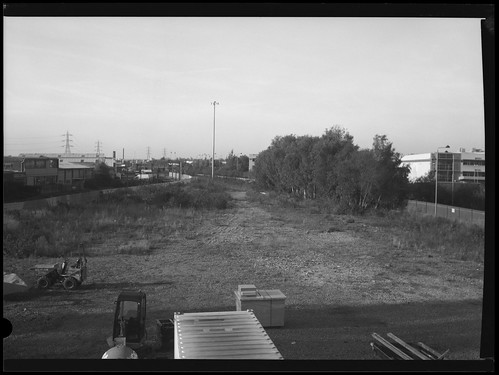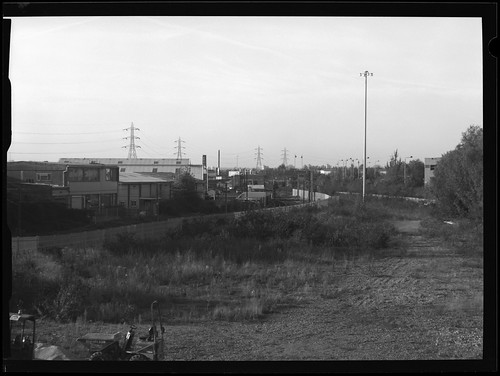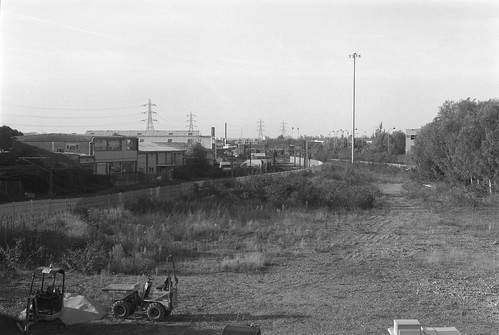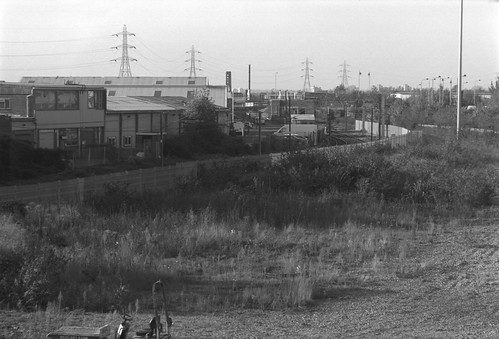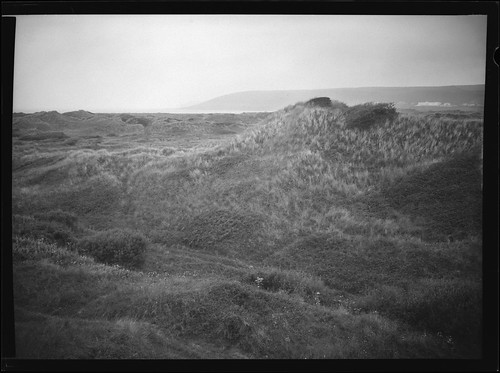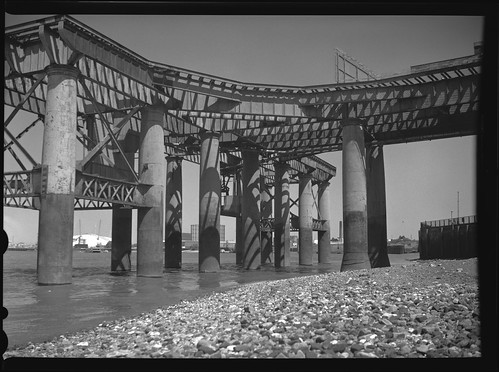
Showing posts with label 9x12. Show all posts

Wednesday, 27 November 2019

Voigtländer Avus

Voigtländer Avus
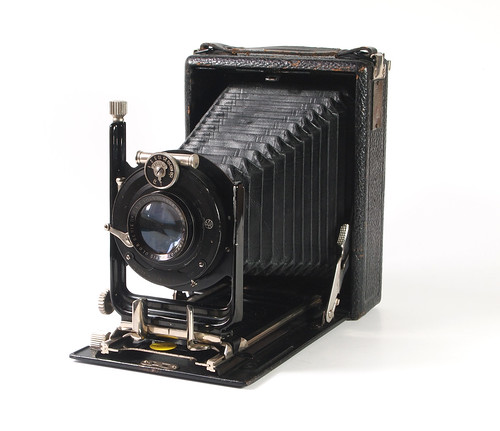
The Voigtländer Avus was my first 9x12cm format folding camera. I initially bought it as a relatively inexpensive and compact large format camera; I did subsequently buy a 4x5 camera not long afterwards, but also found other 9x12cm cameras after the Avus: the Kodak Recomar 33 (which was extremely cheap); the Ica Trona; and the Photo Plait camera (as a format, 9x12cm sheet film is still made: it's essentially the continental European metric equivalent of 4x5 inch film, although not as common). The Avus was the mid-range option of Voigtländer's stable of plate cameras, between the lower-priced Vag cameras and the top-of-the-range Bergheil: the Bergheil cameras seem to have been entirely contemporary with the Avus, while the Vag was introduced later, as a more economical option. The Avus appears to be a relatively common camera, and presumably made in fairly large numbers; it was produced from 1913 to 1934 (some sources give 1914-1935, or -1936), with some minor changes throughout the two decades of that run. My camera is the 9x12cm version that appeared in 1927, clearly identified by the centrally-positioned brilliant finder directly above the lens, rather than offset to one side, as with most plate cameras of this date. Two different origins of the camera's name are given in different sources: one suggestion is that the name is formed from the initials A.V.U.S., as seen on the ground glass back on early versions, derived from "Aktiengesellschaft Voigtländer Und Sohn"; Camera-Wiki states that it was named after an early motor racing circuit in Berlin, the AVUS, also an acronym. This AVUS was under construction when the camera appeared, but not opened until 1921, so it seems highly unlikely that Voigtländer would have been deriving some name recognition from the racetrack's popularity.

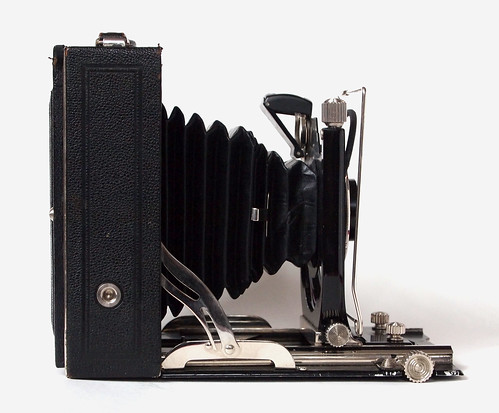
Voigtländer Avus - side view
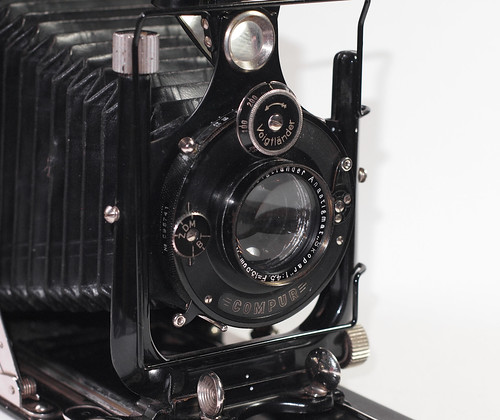
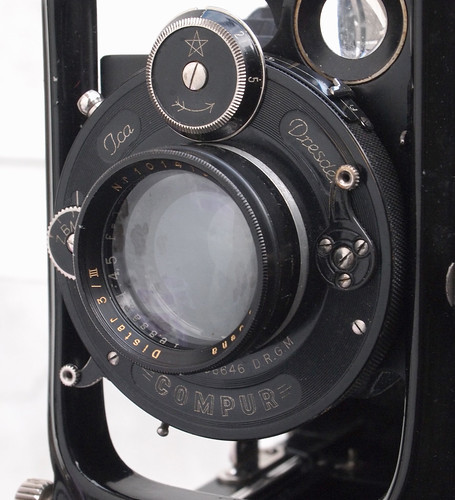
The Avus was made in a number of different formats: there is a horizontal 9x12cm plate version, a 10x15cm, one dual-format version for 9x12cm plates and 122 rollfilm, but the most common sizes are the vertically-oriented folding cameras for 6.5x9cm and 9x12cm plates. Like many folding plate cameras of its time, the Avus was provided with different lens and shutter combinations. My version of the Avus has a 13.5cm f4.5 Skopar lens, Voigtländer's own version of the Tessar, in a Compur dial-set shutter, which together would have been the most expensive options at the time.

Detail with Voigtländer Skopar lens in Compur dial-set shutter
The other features of the Avus are double extension bellows; limited movements in the form of front rise and cross; a rotating brilliant finder with spirit level, and a wire frame viewfinder. Focus is with a ground glass screen; the front standard is focussed with a rack and pinion knob, which pulls out to turn, pushing in to lock the focus. There is also a focus scale on the bed - which needed adjusting, as this was initially out of true: when first using the Avus, I relied on the infinity stop of the focus scale, and found most of the images out of focus as a result (the focus scale can be adjusted with a couple of small screws that, once loosened, can be moved backwards or forwards a small amount). The removable ground glass screen was missing from my camera; ground glass screens, unlike spring backs, have a tendency to get separated from their cameras. I made a ground glass screen from a 9x12cm film pack adaptor which came with the camera, and lacking a focus shade it does have the benefit of opening completely out, without a viewing hood, which I found useful when using the camera for night photography, but, for general use, I have tended to use the ground glass screen from the Recomar.

Avus with bellows extended
Over the years, I've picked up various 9x12cm plate holders, some Voigtländer-branded ones, a number of which came with film sheathes, essential for shooting sheet film with the camera. The Avus is compatible with all the plate holders I have, which is not the case with the Recomar. As the Avus was my introduction to large format, I experimented with paper negatives and Harman Direct Positive paper for ease of loading and development under darkroom safelights. I used a sheet of stiff card behind the photographic paper in the plateholders before I had acquired the necessary film sheathes. When I first started to shoot sheet film with the camera, I attempted tray processing, but found it too difficult to get even development with the negatives and also found it too easy to scratch the film: I had been using Foma film, which in my experience has a soft emulsion compared to others, very easy to damage while wet. I subsequently got a Combi-Plan tank to develop large format film and plates, which I have found much easier to develop sheet film with.

Voigtländer Avus - paper negative, digitally inverted
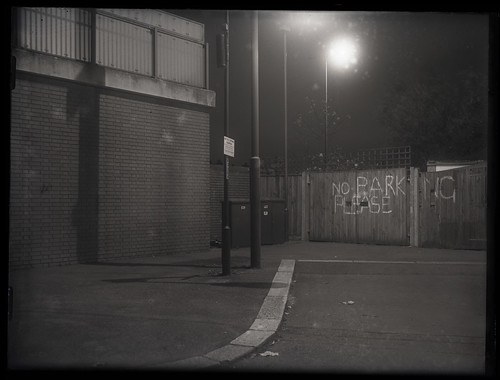
What drew me to the Voigtländer Avus was its compactness in relation to its negative size: the camera is the size of a fat paperback book. Using it handheld, my general procedure was to focus on the ground glass screen, then replace this with a plateholder or rollfilm back, and use the wireframe finder to compose the shot. I've remarked before on my preference for the dial-set Compur shutter over the later rim-set version for ease of use: when focussing with the ground glass screen, with the shutter speed set, the selector for the I/B/T setting can be quickly turned between 'T' to open the shutter and 'I' for taking the shot.

Voigtländer Avus with Agfapan APX100
I also invested in a Rada Plaubel rollfilm back for the 9x12cm format for the ease of using medium format film with the camera, with a much wider selection of films available, as well as being easier to develop.

Voigtländer Avus with Adox CHS 100 in rollfilm back
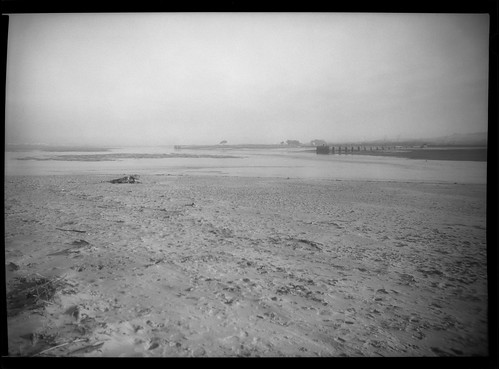
The Proxar and Distar supplementary lenses that I used with the Ica Trona - which I found at the time I bought the Trona - also fit the 37mm lens mount on the Voigtländer Avus; the Proxar lens can be used as both a close up filter and a wide angle one due to fact that it's possible to reduce the distance between the camera's lens and film plane in order to achieve infinity focus. With a full 9x12 frame, there is some vignetting and distortion towards the edges of the frame, as can be seen in the image below; a narrower aperture might reduce this somewhat.

Voigtländer Avus and Proxar with Fomapan 100
With the roll film back, the 6x9cm medium format frame, normally cropped of course, approaches an equivalent angle of view as the full 9x12cm frame without the Proxar: the two images below give a good comparison in terms of the difference the Proxar makes. On the 6x9cm frame, the vignetting and distortion lies outside the image area; it does appear to make the image softer however.

Voigtländer Avus with Ilford XP2 Super in rollfilm back
Voigtländer Avus with Ilford XP2 Super in rollfilm back and Proxar lens
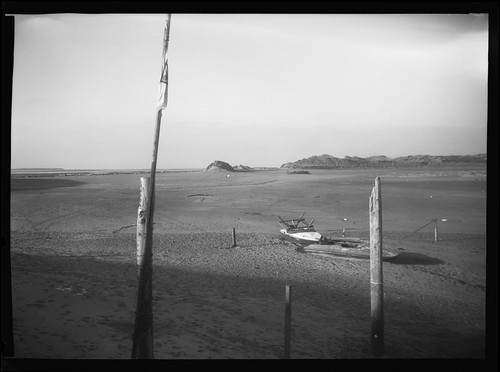
In use, although the Avus is well-made, I found that the front standard on my camera had a tendency to hold the lens a little out of parallel to the focal plane, possibly due to tension or simply the weight of the bellows on the unsupported top of the front standard, with the result that the plane of focus in photographs taken with the Avus would often shift across the scene in front of the camera, less noticeable with smaller apertures of course. As well as this issue, the Skopar lens on the camera, uncoated of course, was very soft, prone to halation: this is clear in the image below with the sky backlighting the subject, creating a haze around the ruin.

Voigtländer Avus with Rollei Superpan 200 in rollfilm back
Although the Kodak Recomar 33 has a slower lens, and a simpler shutter, I have found this easier to use than the Avus. The Recomar has a triplet lens, the Radionar, which is around the same age as the Avus' Skopar, but on my cameras, it gives a better result, and so I've used the Recomar in recent years in preference: although it was my introduction to large format I found the Voigtländer Avus frustrating to use, and I never felt like I quite got the quality of the images from the camera that I felt it promised.

Voigtländer Avus with Adox CHS 100 in rollfilm back
Voigtländer Avus with Ilford HP5 Plus in rollfilm back
Voigtländer Avus with XP2 Super in rollfilm back and Proxar lens
Voigtländer Avus with Ilford Soft Gradation Panchromatic glass plate (label dated to 1947)
Voigtländer Avus with Ilford HP3 glass plate (1950s)
Voigtländer Avus with Ilford HP3 glass plate (1970s)
Voigtländer Avus with Fomapan 400
Voigtländer Avus with HP5 Plus
Sources/further reading:
Full range of Voigtländer Avus Models

Voigtländer Avus on Camera-Wiki 
Early Photography on the Avus
Voigtländer Avus on J. Noir Cameras
Voigtländer Avus on Collection-Appareils
Camaras sin Fronteras - Avus (with manuals and original adverts) (in Spanish)
Voigtländer Avus manual

Tuesday, 7 June 2016

Paris flea market finds (2)

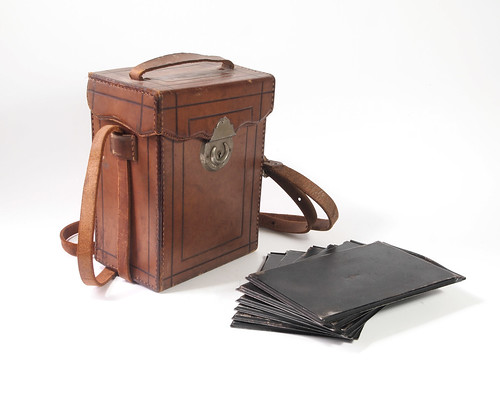
Plate camera box and plateholders
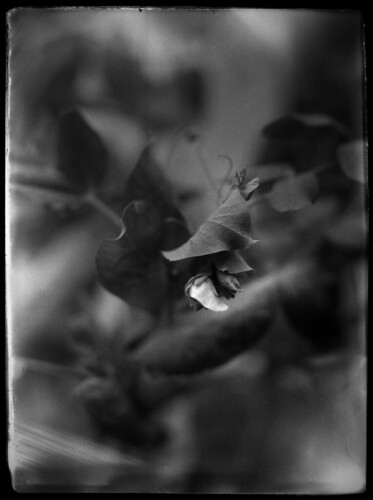
One of my first posts on this blog was describing what I'd found in the Porte de Vanves flea market in Paris five years ago; the weekend before last I revisited this flea market on my way through Paris to the south. There were a few cameras of interest to me, but none without one problem or another. However, I did find a stall which had a couple of plate camera boxes containing plate holders. These were 9x12cm-size plate holders, which, having a few cameras in the size, such as the Ica Trona and the Kodak Recomar, it's always useful to have more. The stallholder wanted €25 for six holders; I did try to barter down to €20, but he wouldn't move on the price. I then asked for the box too, and was told the price was €10 for the box alone, but he gave me the box and plate holders for €30. If my French had been better, I'd have asked him how often he sells glass plate holders, as I don't imagine these items sell which any frequency in the flea market. The plate holders are all stamped AP Paris, some with a craquelure finish on the darkslide; none had film sheathes inside, but one did contain a glass plate negative, shown below.

Found glass plate
A few days later, in Toulouse, a window display of a shop on the Rue Pargaminières drew my attention, with, amongst other secondhand cameras, a Contax IIIa. The shop was Photos Signe Des Temps - the website is limited, but the shop itself had a good stock of film, and film cameras, including a whole cabinet of classic SLRs, and a glass case of all kinds of old cameras. One camera which caught my eye was a folding plate camera with a 165mm lens.

Photo-Plait branded 9x12cm plate camera
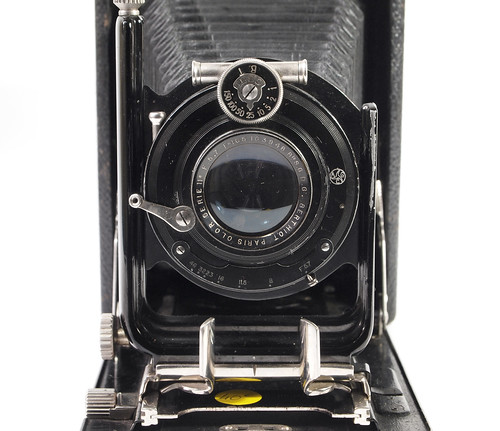
Typically, for a camera of this age, the 165mm focal length would denote a 10x15cm plate size, and at a glance, it looked as though it was larger than a typical 9x12cm camera - which it turned out to be - due to the wooden body. The lens itself was a Berthiot Olor Series IIa, reputedly a Tessar clone, with a maximum aperture of f5.7 in an Ibso shutter - the eight-speed version with 1/150th, rather than the more common seven-speed shutter, up to 1/100th. The shutter gave some indication of the camera's date: according to Camera-Wiki, the Ibso was made by Gauthier between 1908-1926. However, I suspect that the lens and shutter unit may not be original to the body, and not simply due to it being an unusual focal length for the negative format. Some of the features are clearly missing, such as the focus scale, and, at infinity, the 165mm lens is drawn out so much that the metal indicator at the base of the lens standard is beyond where the focus scale would need to be in order to read this. It is also missing a wire frame finder, and a brilliant finder: the latter appears as though it may have been carefully sawn away, with the metal cut into a continuation of the curve around the lens standard. As a typical mid-range folding plate camera, it has rise and cross movements, and rack and pinion focus with double extension bellows - a necessity given the focal length. The bellows were in good condition, and the ground glass intact. The lens was dirty but appeared otherwise good, and, by ear, the shutter fired at all speeds fairly close to each setting.

Berthiot Olor Series IIa lens in Ibso shutter
The camera was priced at €40, and although it did have some missing features, the serendipity of having found the plate holders and camera box in the flea market earlier in the week prompted me to buy it. Needless to say, the plate holders did fit, and the camera itself fitted into the box with the six plate holders too. Even if the lens and shutter were original, there was little on the body to identify the camera, except for a metal plaque with 'Photo-Plait Paris'. This Paris-based dealer would have affixed this small plaque to the cameras that they sold (including, in this discussion thread, a Leica), but it appears that some cameras were manufactured for Photo-Plait and sold under their own name. The distinctive thumb-grips on the two locking levers for the base board were some help in getting close to an identification: French cameras are something of a lacuna for me, but after a detailed trawl through www.collection-appareils.fr, with a different lens, and some removed features, it looks closest to the Photo-Plait Splendor model.

Tuesday, 8 December 2015

Kodak Recomar 33

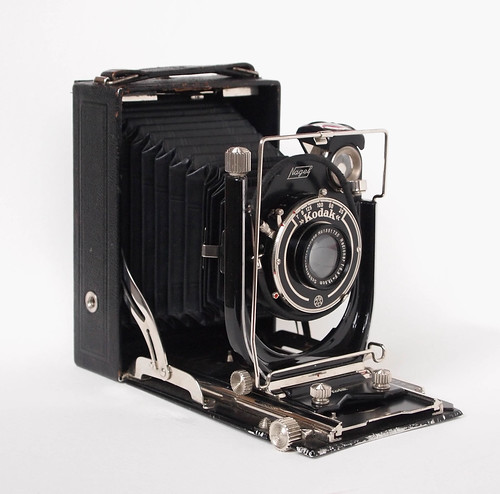
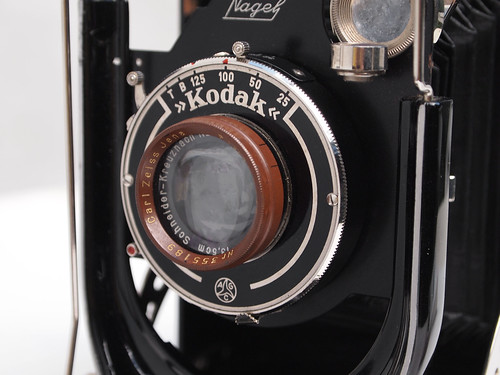
Kodak Recomar 33 with Schneider-Kreuznach Radionar f6.3 135mm lens
After writing about the Ica Trona 210 last year as a "small large format camera", towards the end of summer this year, I took a Kodak Recomar 33 on holiday. Most of the remarks about using the Ica Trona are equally applicable to the Recomar; with a small number of 9x12cm plateholders (oddly, the two Kodak-made holders I have don't fit the Recomar), and fewer film sheathes (just eight), a week away meant taking a dark bag to change the sheet film after exposure, and an empty box to store exposed film. I also took four plate holders without film sheathes, loaded with Ilford HP3 glass plates from the 1970s, which I wrote about last year in the post, 'Some large format glass plates'. I took a box of Fomapan 400 and some old Agfapan APX 100 with a develop before date of January 2004 (I didn't take my 9x12cm rollfilm back, and only shot sheet film while away). As the two different types of film had different notch codes, I used the same box to store them after exposure; I did also find a common development time with one particular dilution of Ilfotec LC29, meaning that I could develop both at the same time in the same tank, but could also distinguish which film was which if I wanted to use a different developer or dilution.

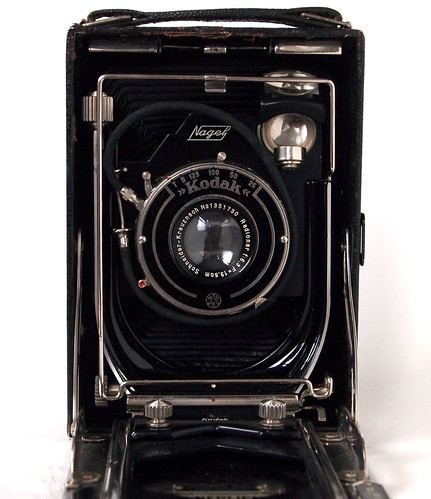
Kodak Recomar 33 with Schneider-Kreuznach Radionar f6.3 135mm lens
The Recomar camera was first produced by Nagel around 1928, shortly before the company was bought out by Kodak in 1931; production by Kodak A.G. in Germany was continued until 1940. The Recomar camera was available in two plate sizes: as the Recomar 33 in 9x12cm format and the Recomar 18 as 6.5x9cm. My camera is the larger 9x12cm format, and came with a Schneider-Kreuznach f6.3 Radionar lens (datable to 1938), in the standard 135mm focal length for the format, with a Gauthier Telma four-speed shutter (1/125th. 1/100th, 1/50th, 1/25th, as well as 'T' and 'B)'. The camera features all-metal construction, double extension bellows, wire frame sportsfinder, brilliant viewfinder with spirit level, ground-glass back, and both rise/fall and cross lens movements. It also came with a cloth covered cable release, possibly original. It's the most compact of my three 9x12cm folding cameras, just a few millimetres smaller than the Trona in its height and width at 15.8x10.8x5cm.

Kodak Recomar 33 with Schneider-Kreuznach Radionar lens
Looking at other images of Recomar cameras on Flickr, this has an unusual lens and shutter combination in the Radionar and Telma, and features Nagel on the front standard where other Recomars have the name Kodak. It does prominently state «Kodak» on the front plate of the shutter, and also on the bed alongside a dealer's decal (J. L. Nerlien, Oslo). The serial number inside the body is 14914Z; whether this is early or late in the production run I don't know, but it is tempting to speculate that the front standard could be old Nagel stock left over from the time of Kodak's takeover, although the late date of the lens' serial number raises more questions than answers. Kodak's manual lists the cameras having f4.5 Xenar lenses, in both the 18 and 33 sizes; the only example of a Recomar 33 with a slower f6.3 lens I've found online is a Nagel one from 1929 (incidentally, the Nagel-branded front standard on my camera cannot fit a wider aperture lens as the shutter/lens flange is much smaller than that for a f4.5 lens). The camera cost just £16 on a well-known auction site, perhaps partly due to its slow(er) triplet lens; given the size of the 9x12cm negative, the quality of lens as compared to the usual Xenar Anastigmat (a Tessar-design) may not be quite so obvious, although when open wide, there does appear to be a falling off in definition towards the corners. The main drawback with the slower lens is a less-bright image when using the ground glass screen to focus, making this more difficult in low-light situations.

Although generally in very good condition for being over seventy years old, I did initially have a slight problem with the underside of the bellows being a little crushed and creased. This meant that this side of the bellows curved up and slightly inwards, and would cast a shadow just interfering with the projected image; this can be seen in the last photograph at the end of this post, shot on HP5 Plus: on the right hand side, the curving, slightly out of focus border is caused by this. I had this show in a number of the first shots taken with the Recomar, before realising that it could be easily rectified by gently pushing out the bellows from the inside, simply done at the point of changing the ground glass screen for a plateholder before making an exposure. As provided with double-extension, there's plenty of 'give' in the bellows, and after gentle encouragement, they tend to stay in position; like some other folding cameras I have, especially with double-extension bellows, when first opened, the mass of the bellows has a tendency to gather at the back of the camera.

Kodak Recomar 33 with Proxar III
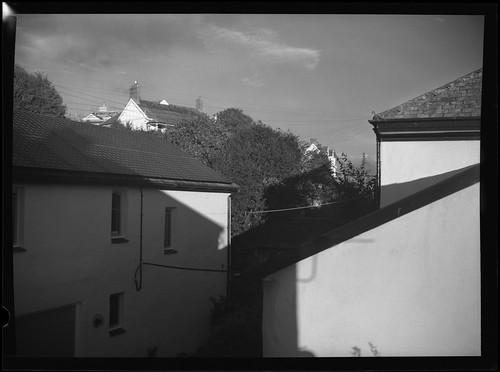
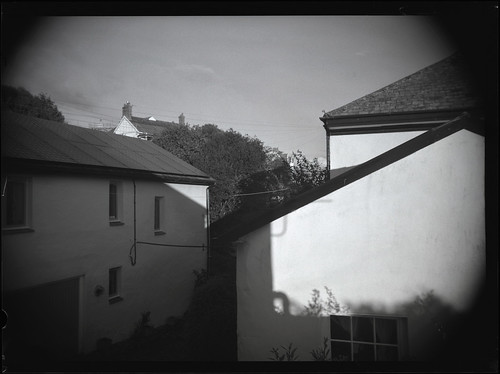
Following my experiences with the Ica Trona, I bought a 32mm Proxar III supplementary lens to use with the Recomar. The 32mm outside dimensions of the f6.3 lens appears to be a common size: I have medium format cameras with f4.5 105mm lenses which can take a 32mm push-fit filter, as well as the Kodak Retina with its f2 50mm lens and the c.180mm f8 Rapid Rectilinear (it's useful to have this standardisation as I already have yellow filters and lens hoods in 32mm). I discovered only later that the coverage of the Radionar lens with the Proxar attached isn't sufficient for 9x12cm when focussed at infinity: using the Proxar, infinity is at 11cm. The two images below shot from the same position demonstrate this, first without and then with the Proxar fitted.

Kodak Recomar 33 with Fomapan 400
Kodak Recomar 33 and Proxar III with Fomapan 400
Depending on the subject, this vignetting caused by the edges of the image circle isn't always a distracting problem, such as in the photograph below. The shots taken with the Proxar attachment appear to show that the image circle was not perfectly centred on the film, although I'm certain that the lens was centred according to the white dots which match on the standard for returning the rise and cross movements: in both images here, the image circle appears shifted a small amount to the left, which would equate to a small amount of rise when the camera is held in portrait orientation. Although pure speculation on my part, perhaps this rise is built-in to the camera design to automatically make a slight correction to the perspective of verticals.

Kodak Recomar 33 and Proxar III with Fomapan 400
The other function of the Proxar supplementary lens, that of a close-up filter or adaptor, does not suffer from vignetting by the simple fact that the further away from the film plane that the lens is extended, the greater the size of the projected image circle. Although shot on a forty-year old glass plate, with the usual signs of the losses in quality of an old emulsion, the image below with the Proxar used for its close focus qualities shows no vignetting in the corners.

Kodak Recomar 33 and Proxar III with HP3 glass plate
One of the main reasons for wanting to use the Proxar attachment was when using the rollfilm back on a 9x12cm camera, the 6x9 frame size becomes near a normal angle of view, reducing the crop factor, as seen in the two photographs below: the second shot, although slightly turned, can be compared to this image on 9x12cm film from more or less the same position (the top image is shot with a yellow filter; the image below uses the Proxar on its own as I was wary of stacking the filters).

Kodak Recomar 33 with HP5 Plus in rollfilm back
Kodak Recomar 33 and Proxar III with HP5 Plus in rollfilm back
The image below also shot with the rollfilm back demonstrates the Proxar as used for close-up purposes. For the benefit of composing on the ground glass screen, especially for shots like this with a tripod, I found it useful to draw the outlines of the 6x9cm aperture from the rollfilm back with a sharp pencil directly onto the ground glass. (Apart from the two close-up shots in this post which used a tripod, all the other photographs were shot hand-held).

Kodak Recomar 33 and Proxar III with HP5 in rollfilm back
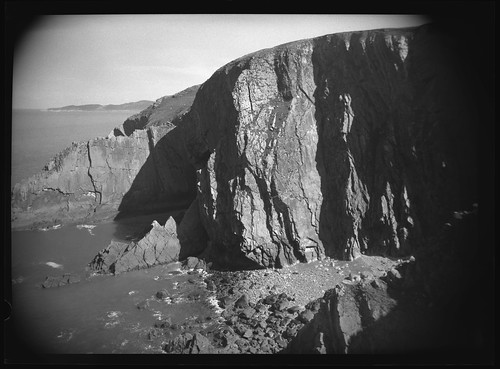
The Recomar 33 is the most robustly made of my 9x12cm cameras: the lens standard is reassuringly rigid once pulled out of the camera body, the rack and pinion focus is tight enough to remain in place even without locking the focus, and the general condition of the camera, despite the bellows, which are quite light-tight, suggests that it hasn't been that well used during its life. The leather on the side of the camera which has the folding sight of the wireframe finder is rather faded, indicative that it may have sat on a shelf, side-on to the light for many years. Ideally, I would perhaps choose a Recomar with a faster lens and a better shutter with a greater range of speeds, but as a 'small large format camera', the recent results demonstrate just how well it has performed for this purpose.

Kodak Recomar 33 with Fomapan 400 in rollfilm back
Kodak Recomar 33 with Rollei RPX 400 in rollfilm back
Kodak Recomar 33 with Ilford HP3 glass plate
Kodak Recomar 33 with Agfapan APX 100
Kodak Recomar 33 with Fomapan 100
Kodak Recomar 33 with Fomapan 400
Kodak Recomar 33 with HP5 Plus

Sources/further reading:
Kodak Recomar 33 on Camera-Wiki
Manual for the Recomar 18 and 33
Kodak's listings of historic cameras

Wednesday, 19 November 2014

Distars and Proxars

Ica Trona with Distar supplementary lens
Having achieved some good results recently with the Ica Trona, use of the camera's full 9x12cm frame size is limited by the number of plateholders with films sheathes I possess, and also limited to the few films manufactured in the 9x12cm size. Using a rollfilm back with the camera is convenient and means being able to shoot with any medium format film available. However, this leads to cropping the image, or, to put it another way, using the rollfilm back provides an image with a narrower angle of view. For most of the cameras I habitually use, I'm almost always happy shooting everything with the 'normal' focal length lens for the format and most of my cameras have fixed, non-interchangeable lenses. For cameras of a similar age or design to the Ica Trona, if the photographer wanted to use different focal length lenses, there were three approaches to achieve this: more expensive cameras did have interchangeable lenses, often with a bayonet mount, like the Voigtländer Bergheil (although this did require each lens to also have its own shutter); certain lenses were designed to be convertible or combinable, where front and rear lens elements were each sufficiently well corrected to be used individually either behind or in front of the shutter; and there were also supplementary lenses, to be used like filters, which change the focal length of the lens they are attached to. The Ica Trona has a Tessar lens, the design of which does not lend itself to being used as a convertible lens. When writing the blog post for the Trona, the Zeiss catalogues on Camera Eccentric were an invaluable resource; the 1933 catalogue includes a detailed section on Zeiss's supplementary lenses. Zeiss introduced the Distar first (seen in the 1927 catalogue, page 18), which increases the focal length of a lens; this was then added to by the Proxar, decreasing the focal length. The Proxar proved to be the more useful of the two, and was produced to fit many cameras for a number of decades. Other manufacturers also produced supplementary lenses.
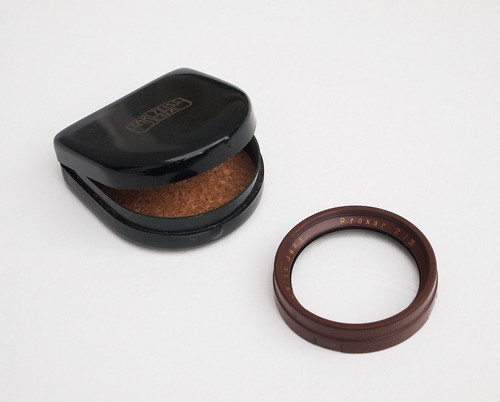
Zeiss Proxar supplementary lens with case
The Distars and Proxars were initially made as push-fit accessories to fit onto a camera lens in the same manner as a filter, in a variety of sizes and different powers of magnification. Both have gold lettering inscribed around the mounts and the pre-war Proxars are brown, perhaps to be easily identifiable at a glance. On the Camera Eccentric website, the reproduced Zeiss lens catalogue from 1933 has both Distars and Proxars listed with a full description and tables for use (the 1929 catalogue also lists both, but the 1933 one has better illustrated examples). To quote from the catalogue:
The Distars are single lens components of small diverging power [...]. When placed in front of the camera lens they increase its focal length with corresponding increase of the camera extension. They thus add to the scope of camera lenses, especially those of an unsymmetrical type, since these, from their very nature, are only adapted for use on cameras with single extension in that their components are not corrected independently for use as long-focus lenses. In conjunction with the Tessars the Distars form wide-range sets of convertible lenses.
[...]
PROXARS are lenses of small converging power [...]. When attached in front of the camera lens, they produce an effect opposite to that of the Distars in that they shorten the focal length. Thus, Tessar F/4.5, f=13.5cm has its focal length reduced to about 13cm, 12.5cm, 12cm, or 11.5cm according to the converging effect of the Proxar selected. The range of uses of the Tessar is thereby widely extended in a twofold direction, viz:

For obtaining large figures of near objects [i.e. close focus images]
[...]
For taking wide-angle photographs at greater distances
Use of the Distar depends on the camera having sufficient bellows extension to achieve infinity focus, the greater the power of the Distar, the longer this distance needs to be, while the Proxars, to focus on infinity, need less bellows extension than the lens would normally require. This last fact is the reason for the Proxar's greater usefulness: on rigid-body cameras, it is usually impossible to reduce the lens-to-film plane distance, meaning that a Proxar could not be used for wide angle photographs ("at greater distances") as the lens would not focus on infinity, but it would still work as a close-up accessory, which Proxars were sold as, post war, no longer brown, as either push-fit accessories or with screw threads for mounting.
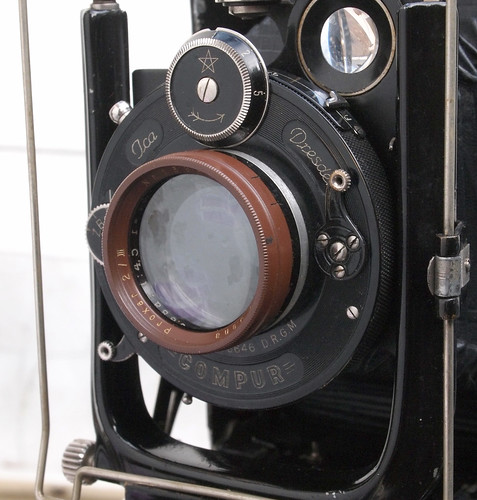

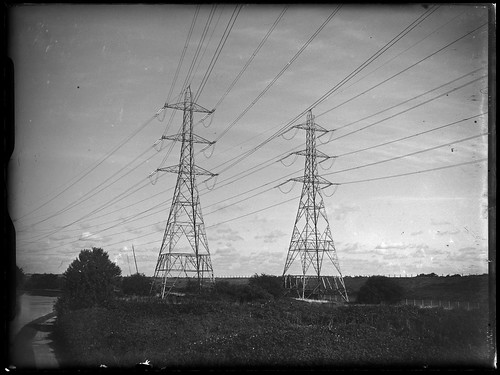
Ica Trona 210 with Proxar supplementary lens
I recently bought one of each: a Distar 3/III and a Proxar 2/III. According to the table in the Zeiss 1933 catalogue, the Distar 3 increases the equivalent focal length of the 13.5cm Tessar lens to 22.5cm, needing a bellows extension of 23cm to focus on infinity; the Proxar 2 reduces the equivalent focal length of the lens to 11cm, with infinity focus at 10.5cm. Reiterating what I've written earlier in this post, one reason I wanted the Proxar was to be able to use the rollfilm back with a 'normal' angle of view: a standard lens for the 6x9cm frame size is 105mm, so 11cm is very close.

The first set of test photographs I made with the Proxar were all out of focus, initially confusing as I'd used the ground glass screen to focus the images. When I shot a second set of test images, I realised where the problem arose: once the image was focussed, I discovered the tendency of the lens to slide forward on its runners when removing the back and replacing it with a plateholder, especially when pointing the camera downwards. On the Trona, the lens is designed to be pulled forwards to the infinity stop at 13.5cm, the focus knob is then used for closer focus and partly as a result of use, the lens moves with relative ease to the infinity stop itself (there is some friction, but perhaps the additional weight of the Proxar helps overcome the inertia). The Distar attachment provided different concerns: what's known as bellows effect, not mentioned in the Zeiss catalogue, which, for purposes of exposure and using the ground glass screen, results in a dimmer image. As the bellows are extended, moving the lens further away from the film plane, the relationship between aperture size and lens to film plane distance are changed significantly. To simplify the numbers for the purposes of giving an example, an aperture of f4 on a lens of 100mm focal length has a diameter of 25mm. If that lens is extended to a distance of 200mm from the film plane, that 25mm diameter of the f4 aperture is now one-eighth rather than one quarter, giving an effective aperture of f8, two stops difference in terms of exposure. Returning to the Distar 3 on my Tessar lens, as the focal length wasn't doubled, being nearer to an increase of half the focal length, for ease of calculation, I increased exposure by one stop (the same effect in reverse would be the case with the Proxar at infinity focus, but a decrease in focal length from 13.5cm to 11cm is not as dramatic, and although logically the image should be brighter, it is not different enough to compensate for in exposure).

The images below were all shot hand held: although for testing the qualities of the Distar and Proxar themselves it would have been better to use a tripod, I wanted to use the supplementary lenses in conditions that I have been using the Ica Trona camera. I push processed the 9x12cm Fomapan 100 to 200 in order to provide an extra stop in exposure, to use a smaller aperture at a faster shutter speed. The images are arranged from shortest focal length to longest.
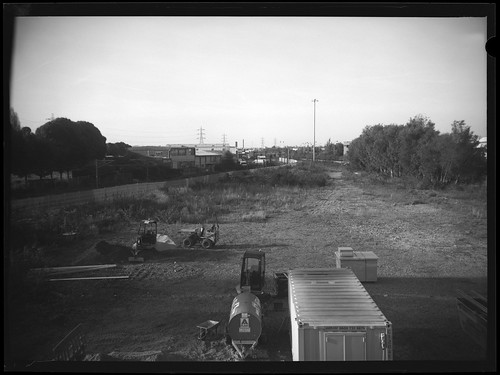
Ica Trona 210 with Proxar supplementary lens, Fomapan 100 rated 200 EI
Ica Trona 210, Fomapan 100 rated 200 EI
Ica Trona 210 with Distar supplementary lens, Fomapan 100 rated 200 EI
When shooting the tests, I focused with the ground glass screen, then used the wire frame finder (the 'Iconometer') for framing once the screen had been replaced with a plateholder. The wire frame finder continues to give a fairly accurate framing as the angle of view changes relative to how near or far the finder is to the eye piece (this is also true with the front rise and cross movements). The top image of the three, taken with the Proxar shows some vignetting and also has a shadow at the left had edge due to the bellows on my camera being slightly deformed. In addition, the bellows on my Trona do not have the clips that many double extension folding plate cameras often possess to gather the bellows when the lens is closer to the film plane, i.e. at or near to infinity focus.

I also shot a sequence of images with the rollfilm back. Using Rollei RPX 400, I gained an extra stop in exposure from the push-processed Fomapan 100 sheet film. On the frames with and without the Proxar, I stopped the lens down further; with the increased focal length using the Distar, I chose a faster shutter speed to guard against camera shake. These provide a better example of the change in angle of view than the sheet film shots above as the framing is more consistent across all three photographs.
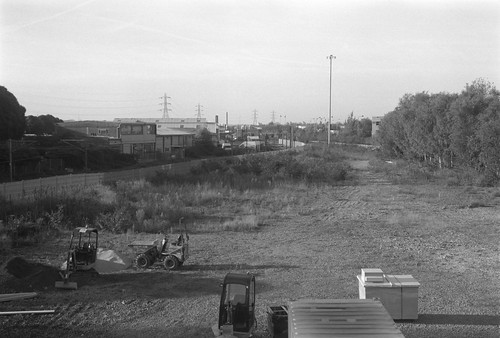
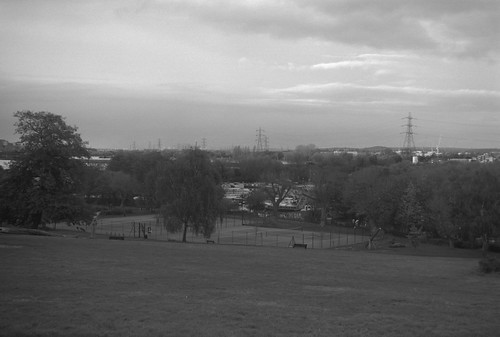
Ica Trona 210 with Proxar supplementary lens, Rollei RPX 400 in rollfilm back
Ica Trona 210, Rollei RPX 400 in rollfilm back
Ica Trona 210 with Distar supplementary lens, Rollei RPX 400 in rollfilm back
For comparison with the images from the rollfilm back, I also shot the same scene with the Zodel Baldalux: the 6x9cm frame size is the same and the focal length with the Proxar and the rollfilm back is close to the 105mm lens on the Baldalux - the reason for my interest in the supplementary lenses. Using the Proxar as a close up attachment rather than for wide angle, with the double extension bellows on the Trona, it is possible to focus very close to a subject. Bellows effect also applies, as with the Distar, and I also found focus difficult: even with the lens fully opened the image on the ground glass was still dim, and depth of field was extremely shallow. The photograph below was stopped down to f25 and by necessity, this was shot with a tripod (exposure was around 30 seconds). Although the shallow depth of field limits the use of such extreme close up photography, the scale of the mouse on the negative is actually larger than life size.
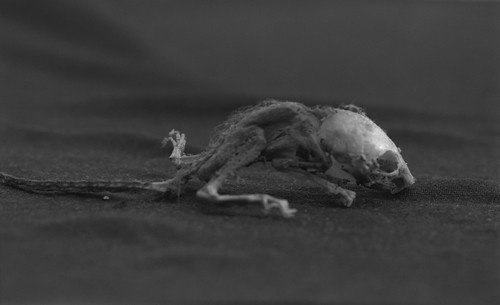
Ica Trona 210 with Proxar supplementary lens, Rollei RPX 400 in rollfilm back
The 1933 Zeiss catalogue contains an illustration (p30) showing six different views achievable from the same standpoint with a 15cm Tessar and Distars and Proxars of different powers with the caption, "Convert your ZEISS TESSAR at small cost into an objective of wide utility." Most of the remarks about the use of Distars and Proxars in the Zeiss catalogues relate directly to their use with the Tessar lens. The other designs listed under 'Universal Lenses' are Dagors and Protars, the first being symmetrical and the second composed of components of different focal lengths, but both can be used as convertible lenses. The introduction of the Distars and Proxars was intended to add this flexibility to the Tessar;
The Tessar is [...] pre-eminently the lens for hand cameras with single extension. In the course of recent years it has more and more taken the place of symmetrical and semi-symmetrical lenses in cameras with double extension, thanks to the introduction of our Distars and Proxars. These are single attachable front lenses whose curvatures are so computed as to increase or decrease the focal length of the objective within certain limits. They form, therefore, with the Tessar a very comprehensive convertible set, so that it can be used on hand cameras with single extension, and to a still greater extent on cameras with double extension, with a new range of applications. 
Zeiss lens catalogue, 1933
Ica Trona 210 with Proxar supplementary lens, Rollei RPX 400 in rollfilm back
Sources/further reading:
Zeiss Lenses Catalogue 1933
Supplementary lenses on Early Photography