 |
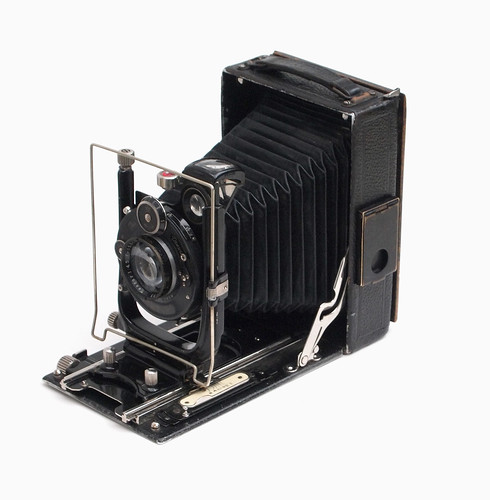
| Ica Trona 210 |
For some time I have been thinking about writing a post on 'small large format', to discuss my 9x12cm folding plate 'hand and stand' cameras, the
Kodak Recomar 33 and Voigtländer Avus, but there always seemed too much information to convey in such a post and I hadn't used either camera enough, for a number of reasons. However, having begun developing films at home over the summer, rather than the darkroom I usually use (which is being refurbished), and having bought an
Ica Trona 210, the ease and speed of turnover for developing sheet film (or glass plates) has meant, in a short space of time, I've used the camera quite a bit. One reason I was going to call the post on 9x12cm cameras 'small large format' was firstly that, although it is open to debate, and opinions differ,
9x12cm is considered the smallest sheet film format to be sufficiently large to be labelled such - if it's considered at all, that is. Many would use 4x5 inches as a starting point, but as 9x12cm is less common in the UK and US, it's hardly thought about as a format (the
Wikipedia entry begins "
Large format refers to any imaging format of 4×5 inches (102×127 mm) or larger..." then adds "Less common formats include [...] metric formats, including 9×12 cm"). Indeed, when I bought the Voigtländer Avus some years ago, I was not aware of it, yet in continental Europe it is not uncommon as a sheet film size (Ilford also manufactures film in 9x12cm, although possibly only during its annual ULF production run). I saw the Ica Trona in an online auction with a prominent warning that
"it is NOT possible to obtain film
which will work in this camera. It is sold for DISPLAY ONLY." At the time I had a mostly full box of Fomapan 100 and three boxes of HP3 glass plates in the size, the buyer's warning was a goad for me to place a bid on the camera, and the auction went for its starting price.
A second reason I was going to call the post 'small large format' was also the size of the cameras. By no means small in themselves, compared to most 4x5 inch cameras, these 9x12cm cameras are compact, being around the size of a thick paperback book (a doorstep airport novel, say): the Trona is 16 x 11.7 x 5cm when folded. One notable reason for these cameras' compactness is that most do not possess rotating backs, a feature which would make the cameras square to the longest dimension of the plate or film holders. My Ica Trona dates to the early 1920s, but the design of these folding plate cameras was remarkably similar across various manufacturers from the early years of the century until the later 1930s, when most of these cameras seem to have been discontinued, their functions being replaced by professional view and press cameras, while for amateur photography all kinds of rollfilm cameras had made the 'hand and stand' camera seem awkward and obsolete (a quick glance at the folding hand page of Early Photography shows how similar many of the cameras are).
I briefly wrote about Ica's history in my post about the Icarette; unlike the Icarette, the Trona was one of the cameras that Ica continued to manufacture from one of its founding companies, and, when Ica became combined into the new Zeiss Ikon, the Trona was continued (alongside many other similar models - Zeiss Ikon's range of cameras in the early 1930s contained numerous near-identical but different models, many of which had come from the once-rival companies which came together to make up Zeiss Ikon). The '210' after the Trona name is the code for the camera's image size - the 210 is 9x12cm, while there was a 6.5x9cm model, the 110 (there was also a quarterplate model, apparently sold in the US and UK markets only). Zeiss Ikon continued these model codes, with variations. The 1925 Ica catalogue reproduced on Camera Eccentric lists the Trona 210 with a f4.5 Tessar at 218 marks, making it one of the more expensive models, after the Niklas and the Ideal.
Conceived in the age of photographic plates, focus is by removable ground
glass screen (the spring back appears to have been a later innovation),
with each photographic plate loaded into individual plate holders. The Trona has features common to many 9x12cm folding plate cameras of a similar age: double extension bellows for a near 1:1 scale image when extended, front rise and cross movements, a rotating brilliant finder with spirit level, and a wire frame viewfinder. As with many pre-war cameras, the Trona was provided with a number of different lens and shutter combinations. My model has what would have been the top-of-the-range f4.5 13.5cm
Tessar in a dial-set Compur shutter (later Zeiss Ikon Tronas were provided with a faster f3.5 Tessar). The shutter's rotating selector is marked 'ZBM', which seems an unusual variant, standing for
Zeit, Bulb, Moment. Other Compur shutters I have of a similar age have 'D' for the German 'Dauer', rather than B,
or 'TBI', standing for Time, Bulb, Instant - and some shutters have both. It appears that later Compur shutters were standardised with the letters representing the English terms.
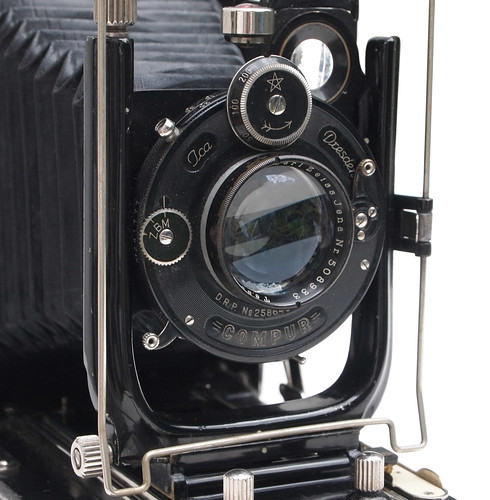 |
| Ica Trona lens and shutter detail |
Although the ground glass screen has a wooden frame, the camera body and drop bed are both metal as are all the 9x12cm plate holders I've picked up over the past few years. Most of these work in all three of my cameras in this size, with the exception of two Kodak holders, which, oddly enough,
do not fit the Kodak Recomar. The inter-war period appears to mark the transition from glass plate negatives to film, although in the 1940s Ilford were still producing many more different types of emulsions as glass plates rather than film. However the folding plate cameras of this era were provided with all the accessories needed to shoot film as well as glass. Firstly,
film sheathes or septums were produced for film holders: to ensure flatness and the correct focal-plane distance, the sheathes hold sheet film in the place of a rigid glass plate. Secondly, film packs were made which held several sheets of film in an arrangement of light tight backing or covering paper (the special backs or holders for film packs often show up with the cameras themselves, not infrequently in the place of the ground glass screen). Thirdly, roll film backs were made to use medium format film.
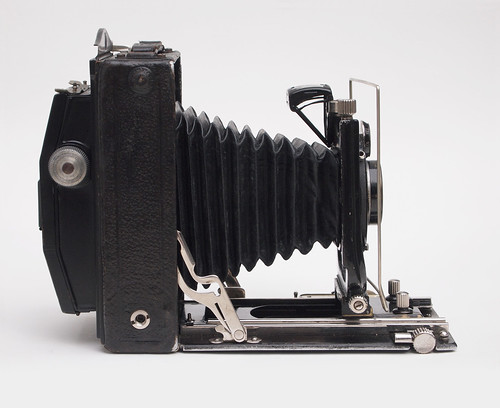 |
| Ica Trona with rollfilm back |
On the 9x12cm size, the rollfilm back does mean the image is cropped to 6x9cm, essentially a 'half-frame' size (one of my rollfilm holders also included masks for 6x6cm and 6x4.5cm frames, but this would mean sacrificing a large amount of the camera's size for a narrow angle of view to get more shots on a roll of film). The Ica Trona has a lever by the focus scale to switch this from
Plate to
Film, which moves the focus scale/infinity stop back by a very small amount. This only affects focus when using the scale itself, as it does not move the lens standard - unless this is locked into the infinity stop. Like most folding cameras from this era, the lens is not self-erecting, the lens needs to be pulled out by hand along the rails as far as the infinity stop, which then needs to be disengaged to use the rack and pinion focus. This is done by pulling out the sliding lever next to the focus knob which is connected to the focus scale on the other side of the drop bed. It can also be used to lock the focus knob at any point by pushing it back inwards.
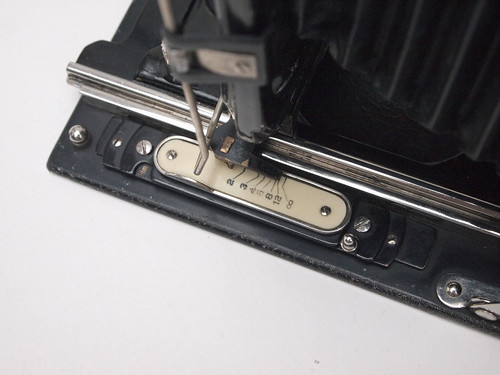 |
| Ica Trona focus scale |
A reason to use such cameras today is their relative compactness for the large negative size, and the ease of hand held use - although historically large format press-type cameras were generally used hand held, I would not want to risk camera shake from trying to use my MPP Micro-Technical camera in the same way (by no means light, the Ica Trona is 1.2kg and the MPP 2.9kg). When shooting hand held, I have been using the ground glass screen to focus, then removing and replacing the screen with either a plateholder or the rollfim back, and framing the shot with the wire frame finder, or for a few shots, using the brilliant finder, holding the camera against my body for stability. The brilliant finder has a feature that I have seen on other cameras, but none of my other cameras with such finders possess: the glass is etched with two small circles which should be aligned to ensure that the framing of the finder is accurate and not at an oblique angle.
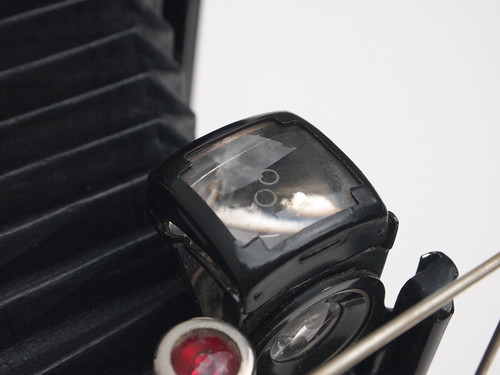 |
| Brilliant finder with etched circles |
Some shots, notably the still life and studio photographs below, required a tripod for stability, but, more importantly, for accurate framing and focus. The Trona has one tripod screw fitting for landscape orientation, and two for portrait - one of these is placed towards the front of the drop bed to balance the camera when the lens is fully extended. The Tessar lens, although uncoated, is still capable of great definition
and character. For initial tests with the camera, I shot a few Ilford HP3 glass plates from the early
1970s, which I was able to use hand held, rating them at 50 to
compensate for age (most of the other plates I've been using are much
slower), and Fomapan 100 sheet film and some rolls of
Rollei RPX 100
in the rollfilm back. The dial-set Compur shutter has one advantage
over the later rim-set designs in that it's useful to be able to switch
between Z and M functions when focussing with the ground glass without
having to change the shutter speeds on the dial.
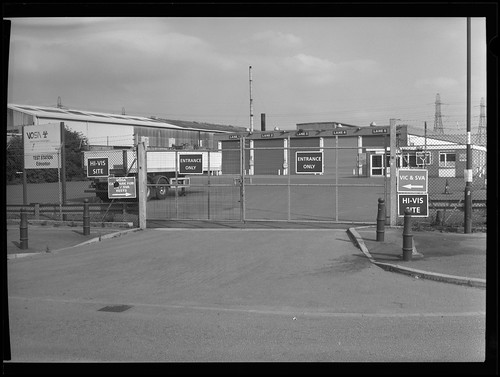 |
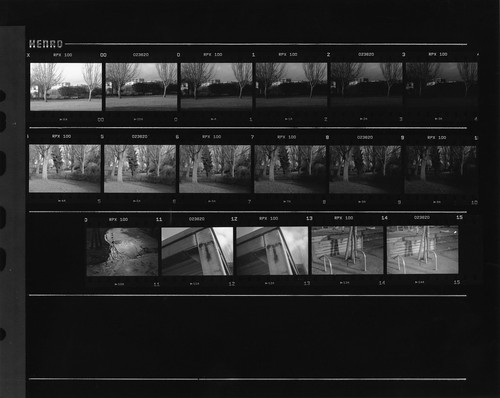
| Ica Trona with Fomapan 100 |
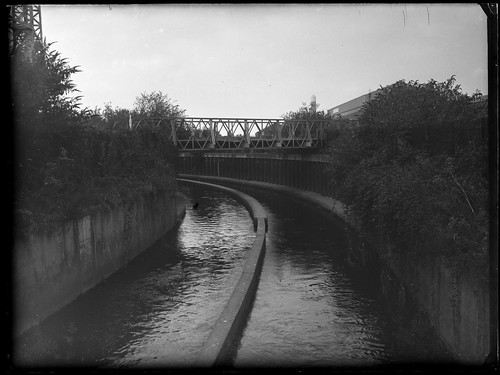 |
| Ica Trona with HP3 glass plate |
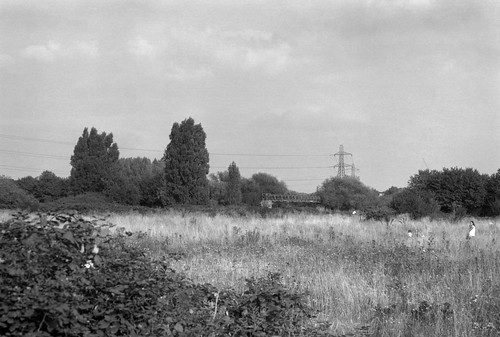 |
| Ica Trona with Rollei RPX100 in rollfilm back |
I was fortunate to have bright sunny weather for the photographs above, taken hand held with the Trona, which meant I was able to use relatively small apertures and faster shutter speeds. On a subsequent occasion, with lighting conditions less favourable, I rated the Fomapan 100 at 200. Developing with Ilfotec LC29, I couldn't find any times for a one stop push online, neither from
Foma nor the
Massive Dev Chart, so with a dilution of 1:19, I estimated a time of 12 minutes at 18ºC. The image below suffers from a lack of detail in the sky which a yellow filter may have helped to a degree, although the sky itself may have just been flat and overcast. The front lens standard is also not as rigid as it could be, and some of the photographs appear to show that, with wide apertures at least, if the lens isn't quite parallel to the film plain, the image isn't in focus across the whole surface of the negative, as the second image below demonstrates, as it becomes out of focus towards the left hand edge (some of my other old folding cameras seem to suffer from the same problem). This may in part be due to inadvertently pulling the lens with a backward motion while tripping the shutter, and being aware of this, with care can be avoided.
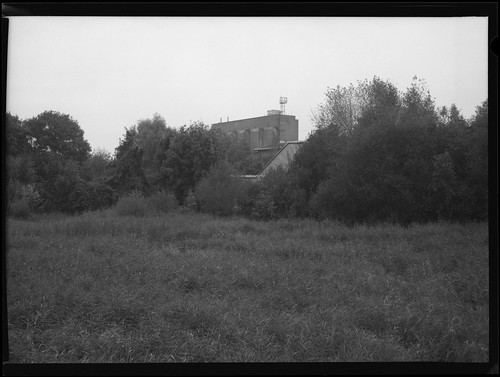 |
| Ica Trona with Fomapan 100, push processed at 200 |
 |
| Ica Trona with Fomapan 100, push processed at 200 |
Although in the past I've used my Kodak Recomar 33 as a more portable large format camera, the Recomar has a more limited four-speed Telma shutter and a slower lens and, although most of the time the lens is stopped down for shooting, a faster lens is useful to focus and compose using the ground glass screen. The Avus had no ground glass screen when I bought it, having an empty film pack back in its place, which I did eventually convert into a ground glass screen, but the Avus also has a very stiff shutter dial, and, although trivial, the small clip which secures the plateholders, ground glass screen or rollfilm backs to the camera is very difficult to move in and out. In comparison, the spring clip on the Trona is designed to allow a plateholder to be inserted without pulling it aside as a separate action. The differences between all three cameras are small, but nonetheless, the Trona feels more sympathetic in use.
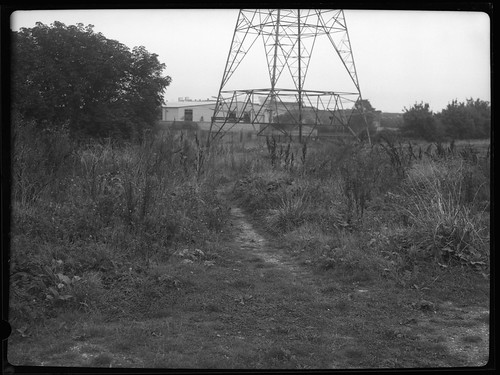 |
| Ica Trona with Fomapan 100, push processed at 200 |
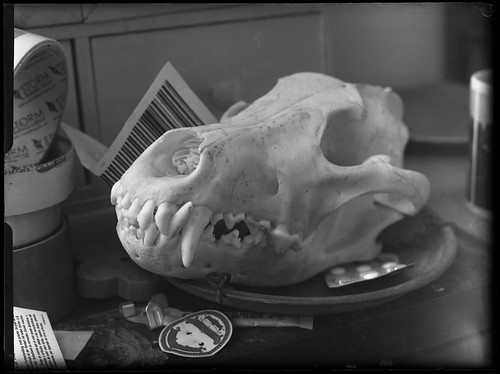 |
| Ica Trona with HP3 glass plate |
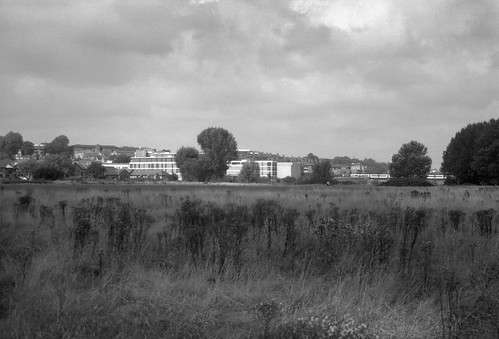 |
| Ica Trona with Rollei RPX 100 in rollfilm adaptor |
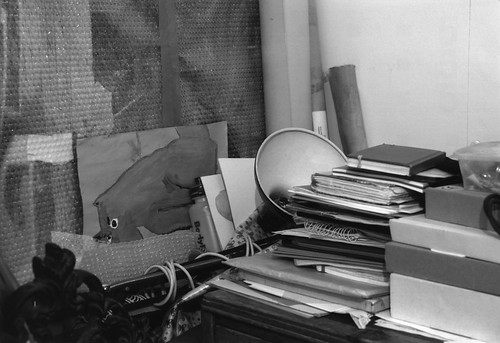 |
| Ica Trona with Rollei RPX 100 in rollfilm adaptor |
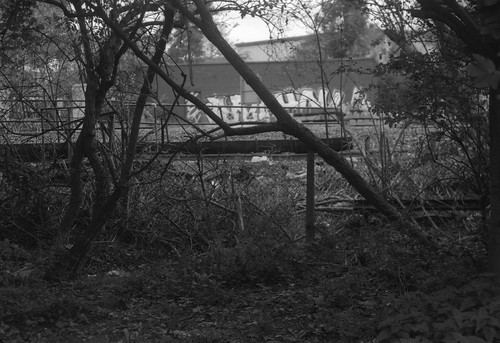 |
| Ica Trona with Rollei RPX 100 in rollfilm adaptor |
Sources/further reading:
Ica Trona on Early Photography
1925 Ica Catalogue